Tawa River, Location, Course, Tributaries, Origin, Importance

Tawa River

Tawa River is one of the most significant tributaries of the Narmada River in central India. Flowing primarily through Madhya Pradesh, the river plays a crucial role in irrigation, biodiversity conservation, and regional livelihoods.

About Tawa River

  • Tawa River is an important left-bank tributary of the Narmada River in central India. 
  • It flows entirely through the state of Madhya Pradesh.
  • Tawa River originates from the Satpura Range, specifically in the Mahadeo Hills near Pachmarhi in Betul District.
  • From its source, the river flows generally northward and westward through forested uplands and agricultural plains. 
  • It passes through several districts including Betul, Harda District, and Narmadapuram District.
  • Finally, the river joins the Narmada River near Bandrabhan. 
  • The river drains the forested and plateau regions of the Satpura hills, contributing to the water system of the Narmada basin.
  • Several small rivers and streams join the Tawa River. Important tributaries include the Denwa River, Malini River, and Sukta River.
  • The Tawa Dam has been constructed on the river near Itarsi in the Narmadapuram district.
  • The dam is part of the Tawa Multipurpose Project, aimed at providing irrigation, hydroelectric power generation, and flood control in the region.
  • The Tawa reservoir supports fishing activities and has played an important role in the livelihood of local communities through the Tawa Matsya Sangh, a cooperative formed by displaced tribal communities.
  • The river basin lies close to the Satpura Tiger Reserve and its tributary Denwa River flows through Satpura National Park.
  • The Tawa River therefore holds importance not only for irrigation and water management, but also for biodiversity conservation, fisheries, and local livelihoods in central India.

Tawa River FAQs

Q1: What is the Tawa River and where does it originate?

Ans: The Tawa River is an important left-bank tributary of the Narmada River. It originates from the Satpura Range, specifically in the Mahadeo Hills near Pachmarhi in Betul District.

Q2: Through which regions does the Tawa River flow?

Ans: The Tawa River flows entirely through the state of Madhya Pradesh, passing through districts such as Betul, Harda District, and Narmadapuram District before joining the Narmada River near Bandrabhan.

Q3: What are the major tributaries of the Tawa River?

Ans: Important tributaries of the Tawa River include the Denwa River, Malini River, and Sukta River, which drain the forested Satpura region and contribute to the river’s flow.

Q4: What is the significance of the Tawa Dam?

Ans: The Tawa Dam, located near Itarsi, forms the Tawa Reservoir. It is part of the Tawa Multipurpose Project, which supports irrigation, hydroelectric power generation, and flood management in the region.

Q5: Why is the Tawa River important for ecology and local communities?

Ans: The river basin lies close to the Satpura Tiger Reserve, and its tributary Denwa flows through Satpura National Park, making the region ecologically significant.

Koppen Climate Classification, Climate Zones, Subtypes, Examples

Koppen Climate Classification

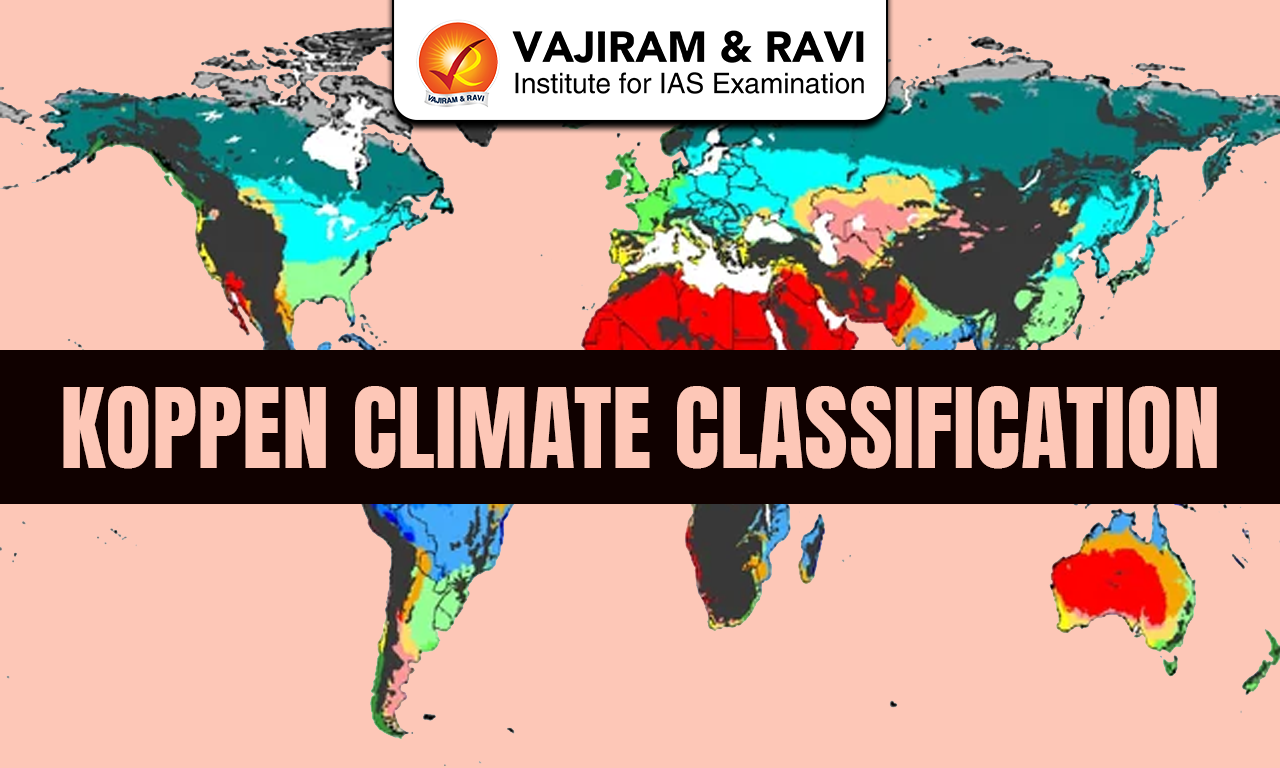
The Koppen Climate Classification system is one of the most widely used methods for classifying the climates of the world. It was developed by the German botanist and climatologist Wladimir Koppen at the end of the nineteenth century. 

Basis of Koppen Climate Classification

The Koppen Climate Classification system classifies climate regions mainly on the basis of temperature, precipitation, and natural vegetation patterns. Koppen observed that vegetation is closely related to climate conditions, since the type of plants that grow in a region depends largely on the amount of rainfall and the prevailing temperature. Therefore, the distribution of vegetation provides a useful indicator for identifying different climate zones across the world.

  • Regions with high rainfall and warm temperatures usually support dense forests.
  • Regions with low rainfall tend to have grasslands or deserts. 
  • Seasonal variations in temperature and precipitation determine subtypes within each major climate group.

By analysing long-term temperature and precipitation data, Koppen divided the world into different climatic zones that correspond to major vegetation types

Koppen Climate Classification System Major Climate Zones

The Koppen Climate Classification divides the world into five major climate zones, each represented by a capital letter.

Tropical Climate (Zone A)

This climate zone occurs mainly near the equator and is characterized by high temperatures throughout the year and abundant rainfall. Dense forests and tropical vegetation dominate these regions. On climate maps, this zone is often represented by shades of blue.

Dry Climate (Zone B)

Dry climates are characterized by low precipitation and high evaporation, which limits vegetation growth. These areas include deserts and semi-arid regions where rainfall is scarce. On maps, this zone is usually shown in shades of red, pink, or orange.

Temperate Climate (Zone C)

Temperate climates are found mainly in the middle latitudes and are characterized by moderate temperatures with distinct seasonal variations. Summers are generally warm while winters are mild. These regions support forests and grasslands and are usually represented by green colors on climate maps.

Continental Climate (Zone D)

Continental climates occur mainly in the interior parts of large continents. These regions experience large seasonal temperature variations, with warm summers and cold winters. On koppen maps, these areas are often shown using purple, violet, or light blue colors.

Polar Climate (Zone E)

Polar climates occur in the high-latitude regions near the poles. These areas experience extremely low temperatures for most of the year and have very limited vegetation. On climate maps they are typically represented by grey shades.

Subdivisions of Climate Zones

Each major climate zone in the Koppen system is further divided into smaller subcategories based on temperature patterns and seasonal rainfall distribution. For example, 

Tropical Humid Climates (A)

  • Af – Tropical Wet (Rainforest Climate):
    • No dry season; rainfall occurs throughout the year.
    • High temperatures persist all year, with minimal variation.
    • Dense evergreen forests with large biodiversity dominate these regions.
    • Examples: Amazon Basin (South America), Western Africa, Andaman & Nicobar Islands (India).
  • Am – Tropical Monsoon Climate:
    • Short dry season; heavy rainfall mainly during the summer.
    • Annual temperature range is low; overall climate hot and humid.
    • Found in regions influenced by the monsoon system.
    • Examples: Indian subcontinent, Northeastern South America.
  • Aw – Tropical Wet and Dry (Savanna Climate):
    • Distinct winter dry season; summer is wet.
    • High temperatures throughout the year with a longer dry season than Af or Am.
    • Vegetation consists of deciduous forests and tree-shredded grasslands.
    • Examples: Parts of India (Odisha, Maharashtra), Central Africa, Brazil.

Dry Climates (B)

  • BSh – Subtropical Steppe:
    • Semi-arid climate with low and highly variable rainfall.
    • Supports sparse grasslands rather than dense forests.
    • Often experiences droughts due to irregular rainfall.
    • Examples: Gujarat, Haryana, interior Rajasthan (India).
  • BWh – Subtropical Desert:
    • Extremely low rainfall and very high temperatures.
    • Soil is often sandy or rocky; vegetation is scarce.
    • Receives occasional short intense thundershowers.
    • Examples: Thar Desert (India), Sahara Desert (Africa).
  • BSk – Mid-latitude Steppe:
    • Semi-arid climate in continental interiors.
    • Winters are cold, summers warm; rainfall insufficient for dense forests.
    • Examples: Central Asia, Great Plains (USA).
  • BWk – Mid-latitude Desert:
    • Cold desert climate with very low rainfall.
    • Large diurnal and seasonal temperature variations.
    • Vegetation is extremely sparse.
    • Examples: Ladakh (India), Gobi Desert (China/Mongolia).

Warm Temperate (Mid-latitude) Climates (C)

  • Cwa – Humid Subtropical Climate:
    • Hot summers, dry winters.
    • Found in areas influenced by summer monsoon winds.
    • Examples: North Indian plains, South China plains.
  • Cfa – Humid Subtropical Climate:
    • No dry season; rainfall occurs throughout the year.
    • Summers are warm and humid, winters mild.
    • Examples: Eastern USA, Southern China.
  • Cs – Mediterranean Climate:
    • Hot, dry summers and mild, rainy winters.
    • Occurs in subtropical western margins of continents.
    • Examples: California, Central Chile, Mediterranean coast.
  • Cfb – Marine West Coast Climate:
    • Mild summers and moderate winters.
    • Rainfall is evenly distributed throughout the year.
    • Examples: Western Europe, New Zealand.

Cold Snow-Forest (Continental) Climates (D)

  • Df – Cold Climate with Humid Winters:
    • Severe winters with snow; no dry season.
    • Large seasonal temperature variation.
    • Examples: Northern Europe, interior USA.
  • Dw – Cold Climate with Dry Winters:
    • Pronounced dryness in winter; monsoon-like reversal of winds in summer.
    • Winters are very severe; summers moderately warm.
    • Examples: Northeastern Asia.

Polar Climates (E)

  • ET – Tundra Climate:
    • Short summer season; permafrost present.
    • Vegetation consists of low-growing mosses, lichens, and some flowering plants.
    • Examples: High Arctic, very high Himalayas.
  • EF – Ice Cap Climate:
    • Permanent ice cover; temperatures below freezing throughout the year.
    • Minimal to no vegetation; glaciers dominate the landscape.
    • Examples: Greenland, Antarctica.

Highland Climate (Zone H)

Some modern revisions of the koppen system also include a sixth category known as Highland Climate (Zone H). This type of climate is found in mountainous regions where temperature and precipitation vary significantly with altitude. High mountain areas often have unique climatic conditions that differ from the surrounding lowlands.

Although Koppen first introduced his climate classification map in the early twentieth century, he continued to revise and improve it throughout his life until his death in 1940. Later climatologists, particularly Rudolf Geiger, further refined the system and updated the climate maps. Because of these improvements, the system is sometimes referred to as the Koppen-Geiger Climate Classification

Koppen Climate Classification System Significance

The Koppen Climate Classification remains highly important in geography, climatology, and environmental studies. 

  • It helps scientists understand global climate patterns, study vegetation distribution, and analyse ecological systems. 
  • The system is also useful in agriculture, environmental planning, and climate change research. 
  • Due to its clear structure and strong link between climate and vegetation, the koppen system continues to be widely used by researchers and geographers around the world.

Koppen Climate Classification FAQs

Q1: What is the Koppen Climate Classification?

Ans: The Koppen Climate Classification is a system used to divide the world’s climates based on temperature, rainfall, and natural vegetation. Developed by Wladimir Koppen, it helps show how climate affects plants and ecosystems in different regions.

Q2: What are the main groups in the Koppen Climate Classification?

Ans: The Koppen Climate Classification has six main groups: Tropical Humid (A), Dry (B), Warm Temperate or Mid-latitude (C), Cold Snow-Forest or Continental (D), Polar (E), and Highland (H) for mountainous areas.

Q3: How does the Koppen Climate Classification divide subtypes?

Ans: Within each group, the Koppen Climate Classification uses small letters to show seasonal rainfall and temperature differences. For example, f means no dry season, m means monsoon, w means winter dry, and s means summer dry. Dry climates also use S for steppe and W for desert.

Q4: Why is the Koppen Climate Classification important?

Ans: The Koppen Climate Classification helps understand global climate patterns, vegetation distribution, and ecological systems.

Q5: What are examples of climate types in India according to the Koppen Climate Classification?

Ans: Tropical Humid climates are found in the Andaman & Nicobar Islands, northeastern India, Odisha, and Maharashtra. Dry climates occur in Gujarat, Haryana, the Thar Desert, and Ladakh. Warm Temperate climates are in the North Indian plains and eastern India, Cold Snow-Forest climates in the Himalayas, and Highland climates in mountainous regions.

Operation Thunder, Highlights, Trends, Legal Framework

Operation Thunder

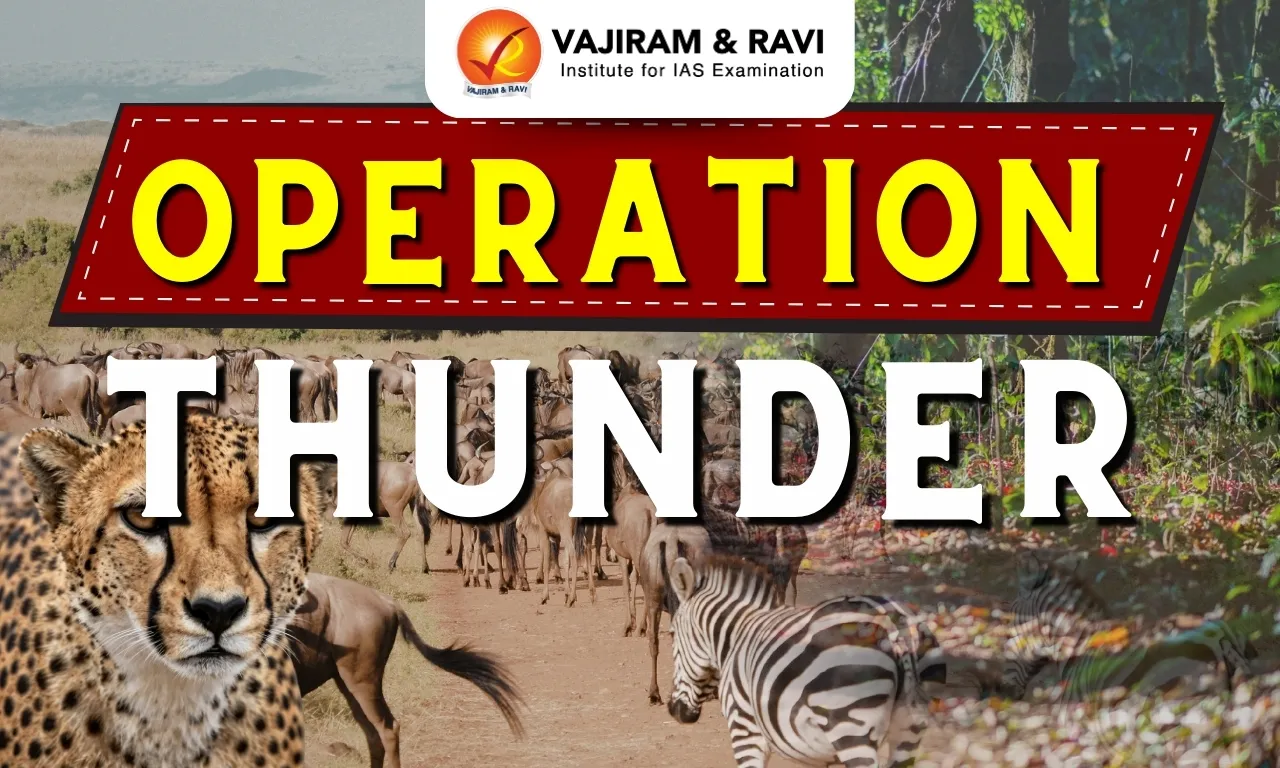
Operation Thunder was a large international operation against wildlife trafficking carried out across 134 countries. It was led by the INTERPOL and the World Customs Organization. The operation resulted in 4,640 seizures of illegal wildlife and wildlife products, revealing the large scale of global wildlife crime. It also showed increasing illegal trade in small animal species, marine life, and plants. The operation helped disrupt international criminal networks that threaten biodiversity, biosecurity, and the livelihoods of many communities around the world.

Operation Thunder Key Highlights

  • Global Participation: The operation involved law enforcement agencies from 134 countries, making it one of the largest global actions against wildlife crime. It was coordinated by INTERPOL and the World Customs Organization.
  • Large Number of Seizures: Authorities made around 4,640 seizures of illegal wildlife and wildlife products. More than 30,000 live animals were rescued during the operation.
  • Marine Species Trafficking: About 245 tonnes and nearly 91,000 pieces of marine life were seized, including around 4,000 shark fins. This shows the growing illegal trade in marine species.
  • Plants and Timber: Officials seized over 10 tonnes of live plants and plant products. Illegal timber trade also remains a major problem, accounting for about 15–30% of global timber trade.
  • Trafficking of Smaller Species: There has been a noticeable increase in the trafficking of smaller species. Authorities seized around 10,500 butterflies, spiders, and insects, many of which are protected under the CITES.
  • Coordinating Agencies
    • INTERPOL: Facilitates international police cooperation to fight cross-border crime.
    • World Customs Organization: Supports customs authorities in detecting and preventing illegal trade.
    • International Consortium on Combating Wildlife Crime: Provides policy support, training, and coordination to combat wildlife and forest crimes.

Evolving Trends in Wildlife Trafficking

  • Use of Online Platforms: Wildlife traffickers increasingly use social media and e-commerce platforms to sell endangered animals and their body parts, making it harder for authorities to track them.
  • Shift to Lesser-Known Species: While animals like elephants and rhinos are still targeted, there is a growing demand for reptiles, amphibians, insects, and other exotic species for the global exotic pet trade.
  • Links with Other Organized Crimes: Wildlife trafficking is often connected with other transnational crimes, such as drug smuggling, arms trafficking, and human trafficking. Criminal networks use the same routes and logistics systems.
  • Role of Corruption: Criminal groups sometimes bribe officials to obtain permits, avoid customs checks, or escape legal action, which helps illegal trade continue.

India’s Legal and Institutional Framework for Wildlife Protection

  • Wild Life (Protection) Act, 1972: The Wild Life (Protection) Act, 1972 is the main law for protecting wildlife in India. It provides legal protection to wild animals, birds, and plants, and regulates hunting, trade, and possession of wildlife products. The Act also provides for the creation of national parks, wildlife sanctuaries, and conservation reserves to protect biodiversity. The Act was amended in 2022 to strengthen wildlife protection and bring India’s laws in line with international agreements such as the CITES.
  • Key Provisions of the 2022 Amendment:
    • Implementation of CITES: The amendment ensures that India’s domestic laws follow the rules of CITES regarding international trade in endangered species.
    • Rationalisation of Schedules: The number of schedules for protected species has been reduced from six to four, making classification simpler and improving enforcement.
    • Control of Invasive Alien Species: The Central Government has the power to regulate or ban the import, trade, or possession of invasive alien species that may harm native wildlife and ecosystems.
    • Stronger Penalties: Punishments and fines for wildlife crimes have been increased to discourage illegal hunting and wildlife trafficking.
  • Wildlife Crime Control Bureau (WCCB): The Wildlife Crime Control Bureau was established in 2007 under the Ministry of Environment, Forest and Climate Change. It is a statutory multi-disciplinary body responsible for preventing and controlling wildlife crime in India.
  • Functions of WCCB:
    • Acts as the nodal agency for combating organized wildlife crime in the country.
    • Collects and analyzes intelligence on wildlife trafficking.
    • Coordinates with state forest departments, police, customs authorities, and international agencies.
    • Maintains a centralized wildlife crime database and supports enforcement agencies in investigations.

Operation Thunder Significance

Operation Thunder supports international efforts under the CITES, which regulates trade in endangered species. It strengthens global cooperation against environmental crimes and sends a strong warning to illegal wildlife traders. By disrupting trafficking networks, the operation helps protect biodiversity, maintain ecological balance, and safeguard the livelihoods of communities that depend on natural resources.

Operation Thunder FAQs

Q1: What is Operation Thunder 2025?

Ans: Operation Thunder 2025 is a global law-enforcement operation against wildlife trafficking conducted across 134 countries to combat illegal wildlife trade.

Q2: Which organizations led Operation Thunder?

Ans: The operation was led by INTERPOL and the World Customs Organization with support from the International Consortium on Combating Wildlife Crime.

Q3: What were the major results of the operation?

Ans: Authorities made 4,640 seizures of illegal wildlife products and rescued over 30,000 live animals.

Q4: What types of wildlife were seized during the operation?

Ans: Seizures included marine species, plants, timber, and small species such as butterflies, spiders, and insects, many protected under CITES.

Q5: What new trends in wildlife trafficking were identified?

Ans: Traffickers increasingly use online platforms, trade in lesser-known species, and operate through organized international crime networks.

Yangtze River, Origin, Course, Tributaries, Basin, Ecology

Yangtze River

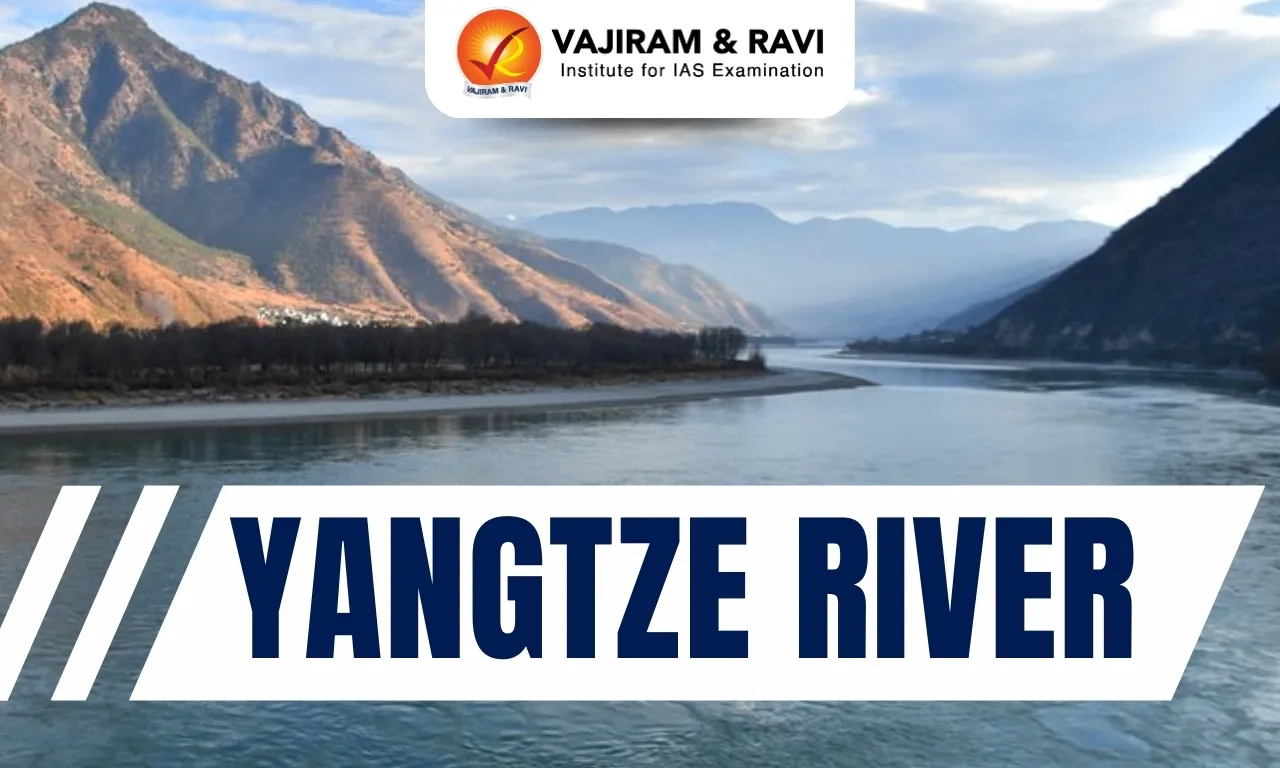
The Yangtze River is the longest river in China and the third-longest river in the world after the Nile River and the Amazon River. It has a total length of about 6,300 kilometres, making it the most important river system in China. It is the country’s most important river system, serving as a major waterway, agricultural region, and home to nearly one-third of China’s population.

Yangtze River Origin and Course

  • The Yangtze River originates from glaciers in the Tanggula Mountains on the Tibetan Plateau.
  • It flows eastward across China before emptying into the East China Sea.
  • The river flows through several provinces and major cities including Chongqing, Wuhan, and Shanghai.

Yangtze River Major Tributaries

The Yangtze River has eight major tributaries that contribute to its large water volume.

  • Left bank tributaries include: Yalung River, Min River, Jialing River and Han River.
  • Right bank tributaries include: Wu River, Yuan River, Xiang River, Gan River.

These tributaries form a vast river network that supports agriculture and water supply in different regions.

Yangtze River Basin 

  • Yangtze river basin supports nearly one-third of China’s population and plays a crucial role in agriculture, transportation, and economic development. 
  • Its river basin is around 1.8 million sq km - almost a fifth of China's land area.
  • The Yangtze basin is often referred to as China’s great granary. It contributes nearly half of the country’s total crop production.
  • Major crops grown in the region include Rice, Wheat, Cotton, Corn, Barley, Beans.
  • The fertile soil, abundant rainfall, and extensive irrigation systems make the basin one of the most productive agricultural regions in Asia.
  • The Yangtze River basin is the economic backbone of China. 
  • It supports major industries, trade, and transportation routes.
  • The river is widely used for inland water transport, connecting several industrial cities and ports.

Yangtze River Ecological Importance

The Yangtze River basin is rich in biodiversity and supports many plant and animal species. It provides habitat for rare and endangered species such as the Yangtze Finless Porpoise. Wetlands and lakes connected to the river are important for migratory birds and aquatic ecosystems.

Yangtze River Dams 

The Yangtze River has several large dams built mainly for hydroelectric power generation, flood control, irrigation, and improved navigation. These dams play an important role in China’s economic development and energy production.

  • Three Gorges Dam: The world’s largest hydroelectric dam (22,500 MW), completed in 2006; built for power generation, flood control, and improved navigation.
  • Baihetan Dam: second-largest hydropower station in the world (after Three Gorges)
  • Gezhouba Dam: The first major dam on the Yangtze, completed in 1988. 
  • Xiluodu Dam: One of the largest hydropower stations on the upper Yangtze (Jinsha River section); completed in 2014.
  • Xiangjiaba Dam: A major hydropower project completed in 2012 that contributes significantly to electricity production.
  • Wudongde Dam: A modern hydroelectric dam completed in 2020 as part of China’s large-scale renewable energy development.

Yangtze River Navigation and Transport

  • Yangtze River is the principal inland waterway of China. 
  • About 2,700 km of the river is intensively used for navigation. 
  • Large cargo ships can travel deep into the interior, connecting inland cities to coastal ports.
  • The river is also connected to the Grand Canal, one of the longest artificial canals in the world, linking northern and southern China.

Yangtze River FAQs

Q1: Which is the longest river in China?

Ans: The Yangtze River is the longest river in China and the third-longest in the world after the Nile River and the Amazon River.

Q2: Where does the Yangtze River originate?

Ans: The river originates from glaciers in the Tanggula Mountains on the Tibetan Plateau and flows eastward into the East China Sea.

Q3: Why is the Yangtze River basin important for China?

Ans: Yangtze basin supports nearly one-third of China’s population and is a major centre for agriculture, industry, transportation, and trade.

Q4: Which is the largest dam built on the Yangtze River?

Ans: The Three Gorges Dam is the largest hydroelectric dam on the Yangtze River and the biggest hydropower station in the world.

Q5: Why is the Yangtze basin called China’s “great granary”?

Ans: The basin produces nearly half of China’s agricultural output, especially rice, due to fertile soil and favourable climate.

Mountain Soil, Characteristics, Distribution in India, Crops

Mountain Soil

Mountain Soil refers to soils developed in highland and mountainous environments. In India, these soils occur mainly on the slopes and valleys of the Himalayan region and other hill systems. Their properties change significantly with altitude, vegetation cover and climatic conditions, which creates considerable variation in soil colour, texture and fertility within short distances. 

Mountain Soil Characteristics

Mountain Soils show wide variation in physical and chemical properties depending on altitude, vegetation cover and slope conditions.

  • Occurrence: commonly occur in valleys and hill slopes of the Himalayas at elevations between 2500 and 3000 metres.
  • Soil Development: These soils are generally considered immature soils. Their formation is still ongoing because environmental factors such as slope movement, rainfall erosion and climatic variability continuously reshape the soil layers.
  • Appearance: These soils generally appear dark brown in colour due to the presence of organic matter derived from forest vegetation.
  • Nutrient Composition: Despite the presence of organic matter, these soils are generally deficient in important nutrients such as potash, phosphorus and lime. As a result, agricultural productivity often requires substantial fertilizer application.
  • Drainage: Mountain Soils typically allow rapid drainage because of their loose structure and slope based position. While this ensures good aeration, it also increases vulnerability to soil erosion during heavy rainfall.
  • Temperature Influence: Low temperatures at higher elevations slow down the decomposition of organic materials. As a result, organic matter remains partially decomposed in many alpine regions above the tree line.

Mountain Soil Crops

Mountain Soils support various agricultural and plantation crops depending on climatic conditions, altitude and regional vegetation.

  • Tea Plantations: widely practiced particularly in humid hill regions.
  • Coffee Cultivation: grown in the peninsular hill regions.
  • Spice Production: Several spices are common in forested hill regions of peninsular India.
  • Temperate Fruit Farming: In Himalayan mountain regions, temperate fruits are cultivated because cooler climates and well drained soils provide suitable conditions for fruit orchards.
  • Cereal Crop Cultivation: Crops such as wheat, maize and barley are grown in several Himalayan valleys.
  • Potato Farming: Potatoes are widely grown in mountain regions due to their adaptability to cool climates and well drained soils that reduce the risk of water stagnation.

Also Read: Soils of India

Mountain Soil Distribution in India

Mountain Soils are widely distributed in different hill regions across India where altitude and forest vegetation influence soil development.

  • Coverage: Forest and Mountain Soils together cover approximately 2.85 lakh square kilometres, representing about 8.67% of India’s total geographical area.
  • Himalayan Valleys: Mountain Soils are commonly found in valleys and relatively gentle slopes of the Himalayan region.
  • North Facing Slopes: In the Himalayan mountains, north facing slopes support better soil formation because they experience relatively lower erosion and retain moisture more effectively.
  • Lower Himalayan Ranges: Several districts such as Dehradun, Almora and Garhwal contain Mountain Soils formed under forest cover in lower and middle Himalayan ranges.
  • Eastern Himalayan Region: Mountain Soils also occur in eastern Himalayan areas including regions of Assam and Darjeeling where heavy rainfall and dense vegetation support soil formation.
  • Cold Desert Regions: Some Mountain Soils are present in high altitude cold regions such as Ladakh and Lahaul-Spiti where climatic conditions strongly influence soil properties.
  • Western Himalayan Areas: Regions such as Kinnaur also contain Mountain Soils where forest vegetation and mountain terrain shape soil formation processes.
  • Peninsular Hills: Apart from the Himalayas, Mountain Soils are found in the Western Ghats including the Nilgiri hills where forest ecosystems influence soil characteristics.
  • Southern Hills: The Annamalai and Cardamom hills also contain Mountain Soils formed under forest vegetation and humid climatic conditions.

Mountain Soil Significance

Mountain Soils play an important role in the following ways:

  • These soils provide a natural foundation for forest vegetation that plays a critical role in maintaining biodiversity and ecological stability in mountainous regions.
  • Despite nutrient deficiencies, Mountain Soils support cultivation of cereals, fruits and plantation crops in several highland regions when proper soil management practices are applied.
  • Mountain Soils support forestry and lumbering activities where timber production and forest resource management contribute significantly to regional economies.
  • Their slope based structure ensures good air circulation and water drainage, which benefits crops requiring well drained soil conditions.
  • Steep slopes make Mountain Soils highly susceptible to erosion, highlighting the importance of conservation measures such as afforestation and terrace farming.
  • Forest vegetation growing on Mountain Soils helps control landslides and prevents rapid soil erosion in fragile mountain ecosystems.
  • A research of March 2026 indicates that soil loss in the Aravalli mountain system increased by about 13.8% between 2017 and 2024 due to urban expansion and mining activities.
  • Mountain Soils also support horticultural crops including various fruits grown in cooler mountain climates where soil aeration and drainage remain favourable.
  • In some mountainous areas, shifting cultivation practices are observed where soil fertility declines after two to three years of cultivation due to continuous nutrient depletion.
  • Due to limited agricultural possibilities on steep slopes, mountain regions often support silvi-pastoral systems combining forestry and grassland activities.

Mountain Soil FAQs

Q1: What is Mountain Soil?

Ans: Mountain Soil is a type of soil found in mountainous and hilly regions, especially in areas with forest vegetation.

Q2: What type of vegetation is commonly associated with Mountain Soils?

Ans: Mountain soils are commonly associated with forest vegetation. Deciduous forests at lower altitudes, coniferous forests in middle altitudes and alpine meadows are found in very high mountain regions.

Q3: What are the main characteristics of Mountain Soil?

Ans: Mountain Soils are usually shallow, immature and poorly developed. They often have loamy or silty texture in valleys and coarse texture on slopes. These soils are rich in organic matter but generally deficient in nutrients like potash, phosphorus and lime.

Q4: Which crops are grown in Mountain Soils?

Ans: Wheat, maize, barley and temperate fruits are common in the Himalayas, while tea, coffee, spices and various fruits are grown in peninsular hill regions.

Q5: Where are Mountain Soils distributed in India?

Ans: Mountain Soils are mainly found in the Himalayan region including Ladakh, Kinnaur, Darjeeling, Dehradun, etc and in the Western Ghats, Nilgiri hills, Annamalai hills and Cardamom hills.

UPSC Daily Quiz 12 March 2026

UPSC Daily Quiz 12 March 2026

UPSC Daily Quiz FAQs

Q1: What is the Daily UPSC Quiz?

Ans: The Daily UPSC Quiz is a set of practice questions based on current affairs, static subjects, and PYQs that help aspirants enhance retention and test conceptual clarity regularly.

Q2: How is the Daily Quiz useful for UPSC preparation?

Ans: Daily quizzes support learning, help in revision, improve time management, and boost accuracy for both UPSC Prelims and Mains through consistent practice.

Q3: Are the quiz questions based on the UPSC syllabus?

Ans: Yes, all questions are aligned with the UPSC Syllabus 2025, covering key areas like Polity, Economy, Environment, History, Geography, and Current Affairs.

Q4: Are solutions and explanations provided with the quiz?

Ans: Yes, each quiz includes detailed explanations and source references to enhance conceptual understanding and enable self-assessment.

Q5: Is the Daily UPSC Quiz suitable for both Prelims and Mains?

Ans: Primarily focused on Prelims (MCQ format), but it also indirectly helps in Mains by strengthening subject knowledge and factual clarity.

Kancha Gachibowli Forest, Significance, Recent Issues

Kancha Gachibowli Forest

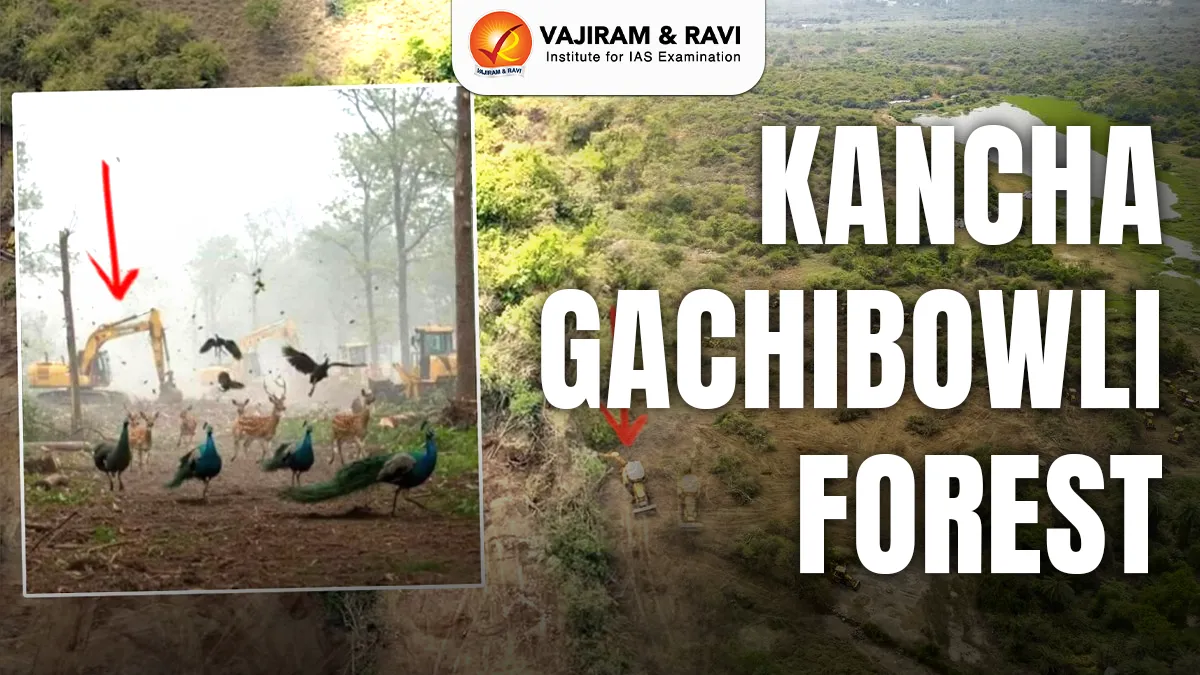
Kancha Gachibowli Forest near the University of Hyderabad is an ecologically important urban forest known for its rich biodiversity and climate-regulating role, which recently became controversial after the Government of Telangana proposed development on part of the land, leading to protests and an interim halt on tree felling by the Supreme Court of India.

About Kancha Gachibowli Forest

  • Kancha Gachibowli Forest is a natural forest area located near the University of Hyderabad in Hyderabad. 
  • The forest is part of the Deccan scrub ecosystem, which includes dry deciduous vegetation, scrub forests, rocky outcrops, grasslands, and small water bodies.
  • It supports rich biodiversity, with more than 700 species of flowering plants, several species of mammals, reptiles, insects, and more than 200 species of birds recorded in the region.
  • The forest also includes natural habitats around water bodies such as Peacock Lake, which attracts migratory birds and supports aquatic life.
  • Several animals such as star tortoises, monitor lizards, porcupines, snakes, and many bird species have been observed in the area, showing its ecological diversity.

Kancha Gachibowli Forest Significance 

  • Kancha Gachibowli Forest is one of the few remaining natural green spaces in the rapidly growing IT corridor of the city.
  • It acts as a “green lung” for Hyderabad by improving air quality and absorbing carbon dioxide.
  • The forest helps reduce the urban heat island effect, thereby regulating temperature in the surrounding urban areas.
  • The vegetation and rocky landscape support groundwater recharge and help maintain the water balance of nearby lakes and catchments.
  • Urban forests like Kancha Gachibowli are important for biodiversity conservation, climate regulation, and ecological balance in cities.

Kancha Gachibowli Forest Recent Issue

Kancha Gachibowli Forest recently became controversial after the Government of Telangana announced plans to auction around 400 acres of land in the area for development projects. The plan involved large-scale cutting of trees, this led to protests by students and faculty of the University of Hyderabad and environmental groups. Taking note of the issue, the Supreme Court of India issued an interim order in April 2025 stopping further tree felling in the area.

Kancha Gachibowli Forest FAQs

Q1: What is Kancha Gachibowli Forest?

Ans: Kancha Gachibowli Forest is a natural urban forest located near the University of Hyderabad in Hyderabad. It is part of the Deccan scrub ecosystem and is known for its biodiversity and ecological importance.

Q2: Why is Kancha Gachibowli Forest ecologically important?

Ans: The forest supports rich biodiversity with hundreds of plant species and many animals, birds, and reptiles. It also helps regulate temperature, improve air quality, and maintain groundwater balance in the city.

Q3: What kind of wildlife is found in Kancha Gachibowli Forest?

Ans: Several species such as star tortoises, monitor lizards, porcupines, snakes, and more than 200 bird species have been recorded in the forest and nearby areas like Peacock Lake.

Q4: Why did Kancha Gachibowli Forest become controversial?

Ans: The controversy began when the Government of Telangana proposed auctioning about 400 acres of land in the area for development projects, which required cutting a large number of trees.

Q5: What action did the Supreme Court take regarding Kancha Gachibowli Forest?

Ans: The Supreme Court of India issued an interim order in April 2025 stopping further tree felling in the area after protests by students, environmentalists, and local communities.

Laterite Soil, Formation, Characteristics, Distribution, Crops

Laterite Soil

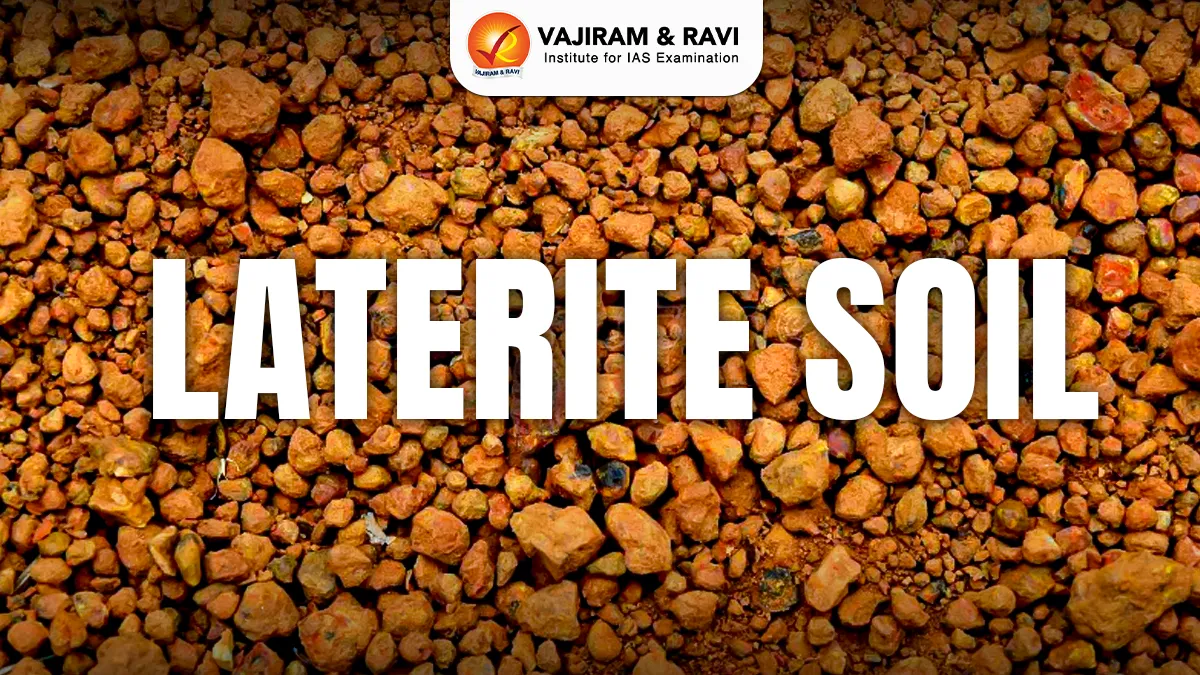
Laterite Soil is a reddish-brown tropical soil formed through intense chemical weathering and leaching under hot and humid climates. It is rich in iron and aluminium oxides but poor in essential plant nutrients. The term originates from the Latin word “Later,” meaning brick, because the soil becomes extremely hard and brick like after drying in air.

Laterite Soil Formation

The process and factors affecting the formation of Laterite Soil has been listed below:

  • Laterite Soil forms through the Laterization Process. It is a process of strong chemical weathering where soluble minerals are removed from the parent rock by rainfall, leaving behind concentrated iron and aluminium oxides in the upper soil layers.
  • Laterite Soils originate from various rock types including granite, basalt, sandstone, limestone, gneiss and schists. Over thousands of years, intense weathering converts these rocks into a thick lateritic soil profile.

Laterite Soil Characteristics

Laterite Soil possesses distinct chemical and physical properties. The key highlighting features of the Laterite Soil has been listed below:

  • Appearance: Laterite Soil usually appears red, reddish-brown, or rusty-brown. The coloration occurs due to the presence of high quantities of iron oxide compounds such as hematite and goethite.
  • Chemical Composition: The soil contains high levels of iron oxide (Fe₂O₃) and aluminium oxide (Al₂O₃) but very low concentrations of lime, silica, magnesia, potash and nitrogen because these elements are removed through leaching.
  • Acidic Nature: Laterite Soils are usually acidic. This acidity restricts the growth of many staple crops unless soil treatment and fertilizers are applied.
  • Humus Content: High temperatures accelerate decomposition of organic matter by bacteria. Combined with heavy rainfall washing away nutrients, this results in relatively low humus levels.
  • Porosity and Drainage: Laterite Soil is highly porous and allows rapid water drainage. Because of this characteristic, it cannot retain moisture for long periods, creating challenges for water intensive crops.
  • Hardening Property: When moist, laterite is soft and can be cut easily with simple tools. However, exposure to air causes it to harden significantly, forming durable brick like blocks.

Laterite Soil Crops

Laterite Soil is generally low in fertility but can support several plantation and commercial crops when fertilizers and irrigation are properly applied.

  • Tea Cultivation: Tea plantations thrive in well drained Laterite Soils found in high rainfall regions.
  • Coffee Production: Coffee cultivation is successful in laterite regions of Karnataka and other plateau areas.
  • Cashew Nut Farming: Cashew plantations grow effectively in the Laterite Soils of Kerala, Tamil Nadu and coastal peninsular regions.
  • Rubber Cultivation: With proper manure and fertilizers, soil provides suitable conditions for rubber plantations in tropical regions.
  • Spice Crops: Spices such as pepper and arecanut are cultivated in lateritic soils, particularly in southern India.
  • Root Crops: Crops like tapioca (cassava) and certain varieties of yam can grow in Laterite Soils.
  • Fruit and Plantation Trees: Coconut, banana, pineapple and various tropical fruit trees are cultivated in improved Laterite Soils.

Laterite Soil Global Distribution

Laterite Soils are widely distributed across tropical and subtropical regions where climatic conditions favor intense weathering and leaching.

  • Global Coverage: Lateritic Soils cover nearly one-third of the Earth’s continental land area, particularly in equatorial forests and tropical savanna regions.
  • Tropical Belt Distribution: Laterite Soils occur mainly between the Tropic of Cancer and Tropic of Capricorn. These regions experience high temperatures and heavy rainfall necessary for laterization.
  • Africa: Extensive laterite formations occur across parts of West Africa and central Africa where humid tropical climates support deep weathering of rocks.
  • South America: Lateritic soil profiles are widely found across Brazil and other parts of tropical South America on stable continental shields.
  • Australia: Australia contains large laterite deposits on its ancient shield regions where prolonged weathering under tropical climates has occurred for millions of years.
  • Southeast Asia: Countries such as Indonesia, Philippines, Cambodia and Vietnam contain widespread Laterite Soils and laterite stone deposits used historically in construction.

Laterite Soil in India

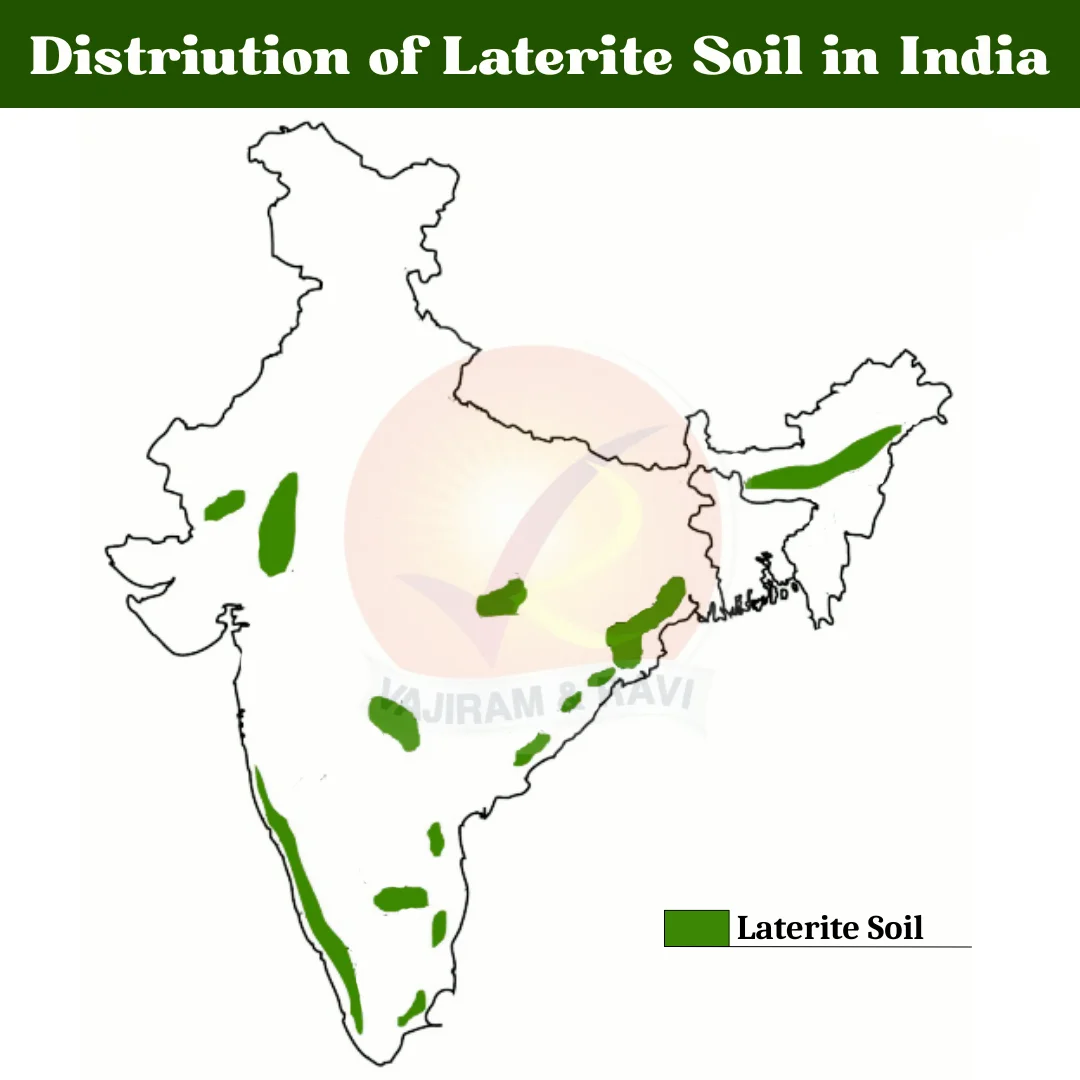
Laterite Soils occur mainly in regions with heavy rainfall and elevated plateau surfaces across several parts of the Indian subcontinent. The map for the Distribution of Laterite Soil in India has been given below:

Laterite Soil in India

  • Laterite Soils occupy approximately 2.48 lakh square kilometres in India, representing about 4.30% of the country’s total geographical area.
  • Continuous stretches of Laterite Soil occur on the summits of the Western Ghats between 1000 and 1500 metres above sea level across Maharashtra, Karnataka and Kerala.
  • Lateritic soils are present in the Eastern Ghats and surrounding regions of Odisha, particularly on elevated hill slopes and plateau surfaces.
  • Parts of Tamil Nadu, Andhra Pradesh and Madhya Pradesh contain Laterite Soils formed through prolonged weathering of plateau rocks.
  • Lateritic deposits are found in the Rajmahal Hills, Vindhyan ranges, Satpura ranges and Malwa plateau due to long term tropical weathering.
  • The laterite plateau of Kerala is one of the most well developed laterite regions where the soil supports plantation crops and coconut cultivation.
  • Smaller patches of Laterite Soil occur in Gujarat’s Panchmahal district and Jharkhand’s Santhal Pargana region as isolated lateritic formations.

Laterite Soil Significance

Laterite Soil holds significant agricultural, geological and economic importance due to its mineral composition and physical characteristics.

  • Source of Ores: Laterite deposits contain bauxite minerals, Iron-rich laterites which contain minerals like hematite and goethite and approximately 70% of the world’s land based nickel resources occur in lateritic deposits.
  • Architecture: Laterite stones were used in the construction of large monuments such as the temple complexes of Angkor between the 9th and 13th centuries in Southeast Asia.
  • Road Construction: Crushed laterite has been used in road construction projects in countries such as Cambodia, Kenya and Malawi because it can serve as a durable base layer.
  • Water Storage Capacity: Thick laterite layers are porous and slightly permeable, allowing them to function as natural aquifers that store groundwater in tropical rural regions.
  • Environmental Applications: Laterite materials have been used in wastewater treatment systems to remove phosphorus and heavy metals due to their high iron and aluminium content.

Laterite Soil FAQs

Q1: What is Laterite Soil?

Ans: Laterite Soil is a reddish-brown tropical soil rich in iron and aluminium oxides. It forms under conditions of heavy rainfall, high temperature and intense leaching, which removes soluble nutrients and leaves behind iron-rich material.

Q2: In which climate does Laterite Soil form?

Ans: Laterite Soil develops mainly in hot and humid tropical climates with heavy rainfall and alternating wet and dry seasons, which promote strong chemical weathering and leaching processes.

Q3: Which crops grow well in Laterite Soil?

Ans: Plantation crops such as tea, coffee, rubber and cashew grow well in Laterite Soils. With proper irrigation and fertilizers, crops like coconut, arecanut, pepper and tapioca are also cultivated.

Q4: What is the distribution of Laterite Soil in India?

Ans: Laterite Soils are mainly found in the Western Ghats, Eastern Ghats, Kerala plateau, parts of Maharashtra, Karnataka, Tamil Nadu, Odisha, Madhya Pradesh, Gujarat and Jharkhand.

Q5: Which minerals are mainly found in Laterite Soil?

Ans: Laterite Soil mainly contains iron oxides and aluminium oxides which remain after soluble minerals are washed away during laterization.

Sittanavasal Cave, Background, Architecture, Key Details

Sittanavasal Cave

The Sittanavasal Caves are one of the most important examples of ancient rock-cut architecture and mural painting in South India. These caves are located in the small village of Sittanavasal in the Pudukkottai district. The cave complex dates back to around the 2nd century CE and is closely associated with the Jain religious tradition.

The main monument in the complex is a rock-cut shrine known as Arivar Koil, which means “Temple of the Arhats” (enlightened Jain saints). The name Sittanavasal in Tamil literally means “abode of the great saints”, indicating that the site was once an important centre for Jain monks and spiritual practices.

Sittanavasal Cave Historical Background

The Sittanavasal Caves developed as an important Jain religious center between the 1st century BCE and 9th century CE. The cave temple was built during the rule of Mahendravarman I and later restored by the Pandya dynasty, reflecting the region’s strong Jain cultural influence.

  • The cave temple known as Arivar Koil was constructed during the reign of Mahendravarman I (580-630 CE).
  • The temple was later renovated by Pandyan rulers, possibly Maran Sendan or Arikesari Maravarman in the 7th century.
  • Jain stone beds on the hilltop indicate that monks lived and meditated there for centuries.
  • The area served as a Jain pilgrimage and monastic center until about the 9th century CE.
  • Archaeological discoveries in Pudukkottai district also reveal older megalithic burial sites, suggesting ancient human settlement in the region.

Sittanavasal Cave Architecture

The Sittanavasal Caves are an excellent example of early rock-cut cave architecture in South India. It combines simple structural design with rich mural paintings and Jain religious symbolism.

  • The cave temple was carved into a north–south running hill and faces the western direction, which was common in many early rock-cut temples.
  • The original structure mainly consisted of two parts, the Garbhagriha (sanctum) and the Ardha-mandapa (semi-hall) used for worship and meditation.
  • Later, a Mukha-mandapa (front hall) was added during the rule of the Pandya dynasty, though part of it collapsed over time.
  • In the 20th century, a pillared veranda was constructed in front of the cave with support from the Maharaja of Pudukkottai to protect the monument.
  • The interior of the cave has simple stone pillars and sculptures of Jain Tirthankaras, reflecting the religious purpose of the site.
  • The ceilings and walls of the Ardha-mandapa are decorated with 7th-century mural paintings created using the fresco-secco technique.

Sittanavasal Cave FAQs

Q1: Where are the Sittanavasal Caves located?

Ans: The Sittanavasal Caves are located in the Pudukkottai district in the southern Indian state of Tamil Nadu.

Q2: What is the other name of the Sittanavasal Cave temple?

Ans: The cave temple is popularly known as Arivar Koil, which means “Temple of the Arhats” in Jain tradition.

Q3: Which religion is associated with the Sittanavasal Caves?

Ans: The caves are mainly associated with Jainism and served as a center for Jain monks and spiritual practices.

Q4: Who built the Sittanavasal Cave temple?

Ans: The cave temple was built during the reign of Mahendravarman I in the 7th century CE.

Q5: What is special about the paintings in the Sittanavasal Caves?

Ans: The caves contain 7th-century fresco paintings made with natural mineral and vegetable colors, depicting lotus ponds, animals, birds, and scenes related to Jain philosophy.

Lepakshi Paintings, Characteristics, Technique, Lepakshi Temple

Lepakshi Paintings

Lepakshi Paintings are important mural artworks of the Vijayanagara Empire found in the Veerabhadra Temple, Lepakshi, known for their mythological themes, vibrant natural colours, and detailed depiction of social and cultural life in medieval South India.

About Lepakshi Paintings

Lepakshi Paintings are famous mural paintings found on the ceilings and walls of the Veerabhadra Temple, Lepakshi. These paintings were created during the 16th century under the patronage of the Vijayanagara Empire.

Lepakshi paintings are an important example of the South Indian temple mural tradition and provide valuable insights into the religious beliefs, social life, costumes, jewellery, and cultural practices of medieval South India.

Lepakshi Paintings Characteristics

Lepakshi paintings are known for their bright natural colours, graceful human figures, elaborate ornaments, and detailed costumes. Key characteristics of Lepakshi paintings include:

  • Lepakshi murals mainly depict scenes from the Ramayana, Mahabharata and various Hindu Puranas.
  • Important illustrations depicted in Lepakshi paintings include the marriage of Shiva and Parvati, Arjuna winning Draupadi, and Shiva and Parvati playing the game of dice.
  • The paintings also provide valuable information about the social life, clothing, jewellery, dance, and cultural practices of the time.
  • Lepakshi paintings follow the stylistic traditions of Vijayanagara art, characterized by slender and graceful human figures, elaborate costumes, detailed jewellery, decorative headgear, almond-shaped eyes, round faces, and well-defined noses.
  • The clothing of the figures such as dhotis, sarees, and tunics is shown with great detail, especially in the folds and pleats, highlighting the artistic skill of the painters.
  • The murals contain decorative elements such as floral motifs, stylised plant designs, geometric patterns, and ornamental borders. 
  • Many paintings have reddish-orange backgrounds, giving them a vibrant appearance.
  • Common colours used in Lepakshi paintings include red, yellow ochre, black, green, white, and grey etc.
  • These colours were prepared using natural materials such as vegetable extracts, limestone, clay, and mud, giving the paintings an earthy tone.

Lepakshi Paintings Technique 

The granite surfaces of the temple walls and ceilings were first cleaned and smoothened. A layer of plaster made from sandy clay, red mud, and limestone was then applied, sometimes mixed with honey or liquid molasses to bind the materials. After the surface was levelled and prepared, artists sketched the outlines using red ochre and later filled them with colours made from natural pigments.

About Lepakshi Temple

  • Lepakshi Temple, also known as the Veerabhadra Temple, is an important historical temple located in Lepakshi in the Anantapur district, Andhra Pradesh.
  • The Lepakshi Temple was constructed during the reign of Achyuta Deva Raya, a ruler of the Vijayanagara Empire.
  • The temple was built by two royal officers of the empire, Virupanna Nayaka and Veeranna, who served as governors in the region.
  • It is dedicated to Veerabhadra, a fierce form of Shiva.

Lepakshi Paintings FAQs

Q1: What are Lepakshi Paintings?

Ans: Lepakshi Paintings are famous mural paintings created during the 16th century under the Vijayanagara Empire and are found on the walls and ceilings of the Veerabhadra Temple, Lepakshi.

Q2: Where are Lepakshi Paintings located?

Ans: These paintings are located in Lepakshi in the Anantapur district, inside the Veerabhadra Temple complex.

Q3: What themes are depicted in Lepakshi Paintings?

Ans: The murals mainly depict mythological stories from the Ramayana, Mahabharata and various Hindu Puranas.

Q4: What are the main characteristics of Lepakshi Paintings?

Ans: Lepakshi paintings are known for their bright natural colours, slender human figures, elaborate ornaments, detailed costumes, decorative motifs, and reddish-orange backgrounds.

Q5: How were Lepakshi Paintings created?

Ans: The paintings were made by first preparing the granite walls with a plaster mixture of clay, red mud, and limestone, after which artists sketched outlines using red ochre and filled them with colours made from natural pigments.

Rural and Urban Development, Meaning, Necessity, Govt Schemes

Rural and Urban Development

Rural and Urban Development is a crucial part of economic and social development in a country. It focuses on improving the quality of life, infrastructure, and economic opportunities for people living in villages and cities. Balanced development of both rural and urban areas ensures sustainable growth, reduces poverty, and promotes inclusive development.

Rural Development Meaning

Rural Development refers to the process of improving the economic and social conditions of people living in rural areas. It aims to enhance living standards by providing employment opportunities, basic infrastructure, education, healthcare, and access to essential services.

Rural development mainly focuses on reducing poverty, increasing agricultural productivity, and improving infrastructure such as roads, electricity, irrigation systems, and communication networks. It also involves empowering rural communities and promoting participatory decision-making in development programs. 

Necessities of Rural Development

Rural development is essential for improving the living standards of people in villages and ensuring balanced economic growth.

  • Basic Infrastructure: Development of roads, electricity, irrigation, drinking water, and communication facilities in rural areas.
  • Poverty Reduction: Rural development programs help reduce poverty by improving income sources and employment opportunities.
  • Agricultural Growth: Improving agricultural productivity through modern farming techniques and better irrigation facilities.
  • Employment Generation: Creation of jobs through agriculture, small-scale industries, and rural enterprises.
  • Access to Education and Healthcare: Ensuring availability of schools, hospitals, and health services in rural regions.
  • Balanced Regional Development: Rural development reduces migration to cities and promotes balanced growth across regions.

Major Areas of Rural Development

Rural development focuses on improving key sectors that influence the economic growth and social well-being of people living in villages. These areas aim to strengthen livelihoods, increase productivity, and provide essential services and infrastructure to rural communities.

  • Agricultural Development: Increasing farm productivity through irrigation, modern technology, quality seeds, fertilizers, and better farming practices.
  • Rural Infrastructure: Development of roads, electricity, irrigation facilities, drinking water supply, housing, and digital connectivity in villages.
  • Rural Industrialization: Promotion of cottage industries, small-scale industries, and agro-based industries to generate employment and diversify rural income.
  • Education and Skill Development: Improving literacy and providing vocational training to enhance employment opportunities for rural youth.
  • Healthcare and Sanitation: Establishing health centers, improving medical facilities, sanitation systems, and access to clean drinking water.
  • Financial Inclusion: Expanding access to banking services, credit, insurance, and financial support for farmers and rural entrepreneurs.
  • Social Welfare and Poverty Reduction: Implementing welfare schemes, empowering women, and supporting marginalized communities to reduce poverty and inequality.

Government Schemes Supporting Rural Development

The Government of India has launched several schemes to improve rural infrastructure, generate employment, and enhance the quality of life in villages.

  • Pradhan Mantri Gram Sadak Yojana: Aims to provide all-weather road connectivity to rural villages, improving access to markets, education, and healthcare.
  • Pradhan Mantri Awas Yojana – Gramin: Provides financial assistance to rural poor families for building permanent houses with basic amenities.
  • Deendayal Antyodaya Yojana – National Rural Livelihood Mission: Promotes self-employment and women-led Self-Help Groups (SHGs) to improve livelihoods and reduce rural poverty.
  • Swachh Bharat Mission – Gramin: Focuses on construction of toilets and improving sanitation facilities in rural areas to eliminate open defecation.
  • Sansad Adarsh Gram Yojana: Encourages Members of Parliament to develop model villages with improved infrastructure, education, and social development.
  • Vanbandhu Kalyan Yojana: Aims to improve the socio-economic conditions of tribal communities through better infrastructure, education, and livelihood opportunities.

Urban Development Meaning

Urban Development refers to the planned growth and improvement of towns and cities to ensure better living conditions, efficient infrastructure, and sustainable economic growth.

Urban areas are characterized by high population density, modern infrastructure, and diversified economic activities such as industry, trade, and services. Urban development involves improving housing, transportation, sanitation, water supply, healthcare, education, and environmental management. 

Necessities of Urban Development

Urban development is necessary to manage the rapid growth of cities and to ensure better living conditions for urban populations. It focuses on improving infrastructure, public services, and economic opportunities in urban areas.

  • Infrastructure Development: Expansion of roads, public transport, electricity, water supply, and communication systems to support growing urban populations.
  • Housing Facilities: Development of affordable and adequate housing to address the problem of slums and overcrowding in cities.
  • Employment Opportunities: Urban development promotes industries, businesses, and services that create jobs and support economic growth.
  • Urban Planning: Proper city planning helps manage land use, transportation, and public spaces efficiently.
  • Sanitation and Waste Management: Effective waste disposal systems and sanitation facilities help maintain public health and cleanliness.
  • Environmental Protection: Urban development includes pollution control, green spaces, and sustainable resource management.
  • Improved Public Services: Better access to healthcare, education, transportation, and other essential services for urban residents.

Major Areas of Urban Development

Urban development focuses on improving essential sectors that support the growth and functioning of cities. These areas aim to provide better infrastructure, services, and living conditions for the increasing urban population.

  • Urban Infrastructure: Development of roads, bridges, public transport systems, electricity supply, water supply, and communication networks to support urban life.
  • Housing and Urban Planning: Construction of affordable housing and planned urban expansion to reduce slums and overcrowding.
  • Transportation Systems: Development of efficient public transport such as buses, metro rail, and improved road networks to reduce traffic congestion.
  • Water Supply and Sanitation: Ensuring safe drinking water, proper sewage systems, and sanitation facilities for urban residents.
  • Waste Management: Proper collection, recycling, and disposal of solid waste to maintain cleanliness and environmental health.
  • Economic and Industrial Development: Promotion of industries, businesses, and service sectors to create employment opportunities in cities.
  • Environmental Sustainability: Protection of urban green spaces, pollution control, and promotion of sustainable urban development practices.

Government Schemes Supporting Urban Development

The Government of India has launched several schemes to improve infrastructure, housing, sanitation, and public services in cities. These initiatives aim to manage rapid urbanization and ensure sustainable and planned urban growth.

  • Smart Cities Mission: Launched in 2015 to develop 100 smart cities with modern infrastructure, digital governance, sustainable transport, and improved public services.
  • Atal Mission for Rejuvenation and Urban Transformation (AMRUT): Focuses on improving urban infrastructure such as water supply, sewerage systems, drainage, and green spaces in cities.
  • Pradhan Mantri Awas Yojana – Urban: Aims to provide affordable housing for the urban poor, especially economically weaker sections and low-income groups.
  • Swachh Bharat Mission – Urban: Promotes cleanliness, waste management, and sanitation infrastructure in urban areas to improve public health.
  • Deendayal Antyodaya Yojana – National Urban Livelihood Mission: Focuses on reducing urban poverty by providing skill development, employment opportunities, and support for self-employment.
  • HRIDAY Scheme: The Heritage City Development and Augmentation Yojana aims to preserve and develop heritage cities through infrastructure improvement and cultural conservation.

Rural and Urban Development FAQs

Q1: What is rural development?

Ans: Rural development refers to the process of improving the economic conditions, infrastructure, and quality of life of people living in rural areas.

Q2: What is urban development?

Ans: Urban development refers to the planned improvement of infrastructure, housing, services, and economic activities in cities and towns.

Q3: Why is rural development important?

Ans: Rural development is important because it reduces poverty, increases agricultural productivity, creates employment, and improves living standards in villages.

Q4: Why is urban development necessary?

Ans: Urban development is necessary to manage population growth in cities and to provide better infrastructure, housing, transportation, and public services.

Q5: What is the difference between rural and urban development?

Ans: Rural development focuses on improving villages and agriculture-based economies, while urban development focuses on cities, infrastructure, and industrial or service-based economies.

Ningbo Zhoushan Port, Features, Significance, Key Details

Ningbo Zhoushan Port

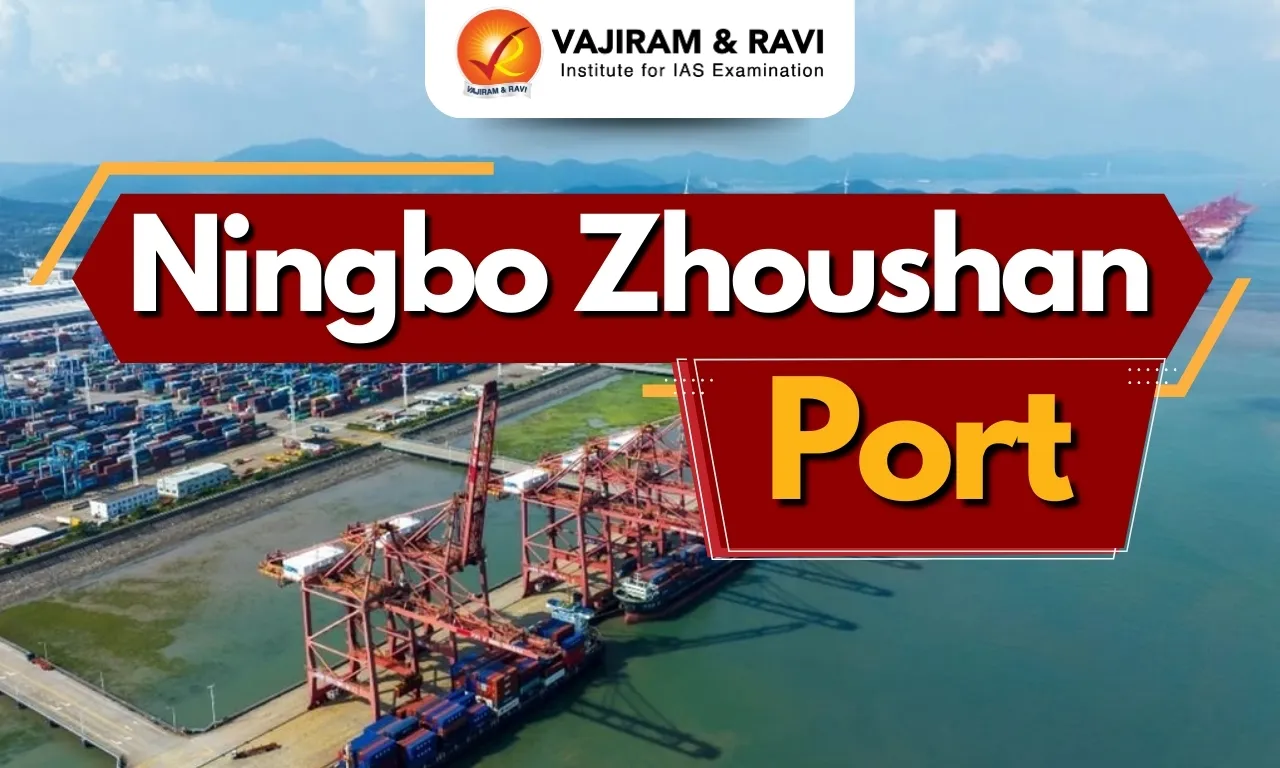
Ningbo-Zhoushan Port is one of the largest and busiest seaports in the world, located on the eastern coast of China along the East China Sea. It was formed by the merger of the Ningbo and Zhoushan ports and plays a major role in global maritime trade by handling a very large volume of cargo each year. Its strategic location and deep-water facilities make it an important hub for international shipping and trade.

Ningbo Zhoushan Port Key Features

Ningbo-Zhoushan Port is located in Zhejiang Province on the eastern coast of China along the East China Sea. It is one of the largest and busiest ports in the world and has remained the world’s busiest port in terms of cargo tonnage for many years. The port was formed by merging the ports of Ningbo and Zhoushan.

  • Location and Geographical Importance: The port lies near Hangzhou Bay and faces Shanghai. It is located at the intersection of major north-south coastal shipping routes and inland waterways. The port is also connected to inland China through the Yangtze River.
  • Structure and Port Areas: Ningbo-Zhoushan Port consists of several important port areas, including:
    • Beilun - a major deep-water seaport
    • Zhenhai - an estuary port
    • Old Ningbo Harbour - an inland river port
  • In addition, the port includes modern development areas such as Meishan Bonded Port Area, Zhoushan Islands New Area, and Daxie Development Zone. The port has more than 200 deep-water berths, allowing very large ships to dock.
  • Cargo Handling and Trade: Ningbo-Zhoushan Port handles a wide variety of cargo, including iron ore, crude oil, coal, containers, and chemical products. In recent years, the port has handled over 1.4 billion tons of cargo annually, making it the largest port in the world by cargo throughput. 
  • Connectivity and Technology: The port is highly modern and uses advanced technologies such as automation, 5G networks, and satellite navigation systems to improve efficiency. It has strong sea-rail intermodal connectivity, with freight train routes connecting the port to many provinces in China. The port is linked to over 700 ports in more than 200 countries and regions, making it a major hub for global trade.

Also Read: Major Ports in India

Ningbo Zhoushan Port Significance

Ningbo-Zhoushan Port is one of the most important ports in the world and a major hub of global maritime trade. Located on the eastern coast of China near Shanghai, it serves as a key gateway for the Yangtze River Delta region. The port connects inland China to international markets through the Yangtze River and handles large volumes of cargo such as iron ore, crude oil, and containers. Due to its strategic location and modern infrastructure, it plays a crucial role in China’s economic growth and global shipping networks.

Ningbo Zhoushan Port FAQs

Q1: Where is Ningbo-Zhoushan Port located?

Ans: It is located in Zhejiang Province on the eastern coast of China along the East China Sea, near Hangzhou Bay and facing Shanghai.

Q2: Why is Ningbo-Zhoushan Port important globally?

Ans: It is the world’s busiest port by cargo tonnage, handling over 1.4 billion tons of cargo annually.

Q3: How was Ningbo-Zhoushan Port formed?

Ans: The port was formed by the merger of the Ningbo Port and Zhoushan Port.

Q4: How is the port connected to inland China?

Ans: It is connected to inland regions through the Yangtze River and other inland waterways, enabling transport of goods to global markets.

Q5: What are the major port areas of Ningbo-Zhoushan Port?

Ans: Major areas include Beilun (deep-water seaport), Zhenhai (estuary port), and Old Ningbo Harbour (inland river port).

Article 332 of Indian Constitution, Provisions, Amendments

Article 332 of Indian Constitution

The Article 332 of the Constitution of India is an important constitutional provision that ensures political representation for marginalized communities in India. It provides for the reservation of seats for Scheduled Castes (SCs) and Scheduled Tribes (STs) in the State Legislative Assemblies.

The purpose of this article is to guarantee that historically disadvantaged communities have a voice in state-level lawmaking and governance. By ensuring representation in legislative bodies, Article 332 strengthens social justice, equality, and democratic participation in India.

Article 332 of Indian Constitution Provisions

The Article 332 of Constitution of India provides for the reservation of seats for Scheduled Castes (SCs) and Scheduled Tribes (STs) in the State Legislative Assemblies to ensure their political representation and participation in governance.

  • Reservation of Seats: Article 332 mandates that seats shall be reserved for Scheduled Castes and Scheduled Tribes in the Legislative Assembly of every state to ensure adequate representation of these communities in state legislatures.
  • Proportionate Representation: The number of seats reserved for SCs and STs in a state assembly is determined in proportion to their population in that particular state.
  • Special Provision for Assam: Article 332 includes a special provision to ensure representation of Scheduled Tribes from the autonomous districts of Assam in the State Legislative Assembly.
  • Delimitation of Reserved Constituencies: The constituencies that are reserved for Scheduled Castes and Scheduled Tribes are identified and determined by the Delimitation Commission of India based on census data and population distribution.
  • Eligibility of Candidates: In constituencies reserved under Article 332, only candidates belonging to the respective Scheduled Caste or Scheduled Tribe community can contest elections, while voters from all communities can vote.
  • Extension of Reservation: The reservation of seats for Scheduled Castes and Scheduled Tribes in State Legislative Assemblies has been extended from time to time through constitutional amendments, most recently by the 104th Constitutional Amendment Act, 2019, which extended the provision until 2030.

Article 332 of Indian Constitution Amendments

Article 332 of Constitution of India has been affected by several constitutional amendments that mainly extended the reservation of seats for Scheduled Castes (SCs) and Scheduled Tribes (STs) in State Legislative Assemblies. These amendments were introduced to continue political representation for these communities as the original reservation provision was meant to be temporary.

  • 8th Constitutional Amendment Act, 1960: This amendment extended the reservation of seats for Scheduled Castes and Scheduled Tribes in the Lok Sabha and State Legislative Assemblies for another ten years beyond the original period of 1960.
  • 23rd Constitutional Amendment Act, 1969: This amendment further extended the reservation of seats for SCs and STs in legislative bodies and made special provisions related to representation in certain northeastern states.
  • 45th Constitutional Amendment Act, 1980: This amendment extended the period of reservation of seats for Scheduled Castes and Scheduled Tribes in the Lok Sabha and State Legislative Assemblies until 1990.
  • 62nd Constitutional Amendment Act, 1989: This amendment again extended the reservation of seats for SCs and STs in Parliament and State Assemblies for another ten years, up to the year 2000.
  • 79th Constitutional Amendment Act, 1999: This amendment continued the reservation of seats for Scheduled Castes and Scheduled Tribes in the Lok Sabha and State Legislative Assemblies until 2010.
  • 95th Constitutional Amendment Act, 2009: This amendment extended the reservation of seats for SCs and STs in legislative bodies for another ten years, up to 2020.
  • 104th Constitutional Amendment Act, 2019: This amendment further extended the reservation of seats for Scheduled Castes and Scheduled Tribes in Parliament and State Legislative Assemblies until the year 2030.

Article 332 of Indian Constitution FAQs

Q1: What does Article 332 of the Indian Constitution provide for?

Ans: Article 332 provides for reservation of seats for Scheduled Castes and Scheduled Tribes in State Legislative Assemblies.

Q2: Who decides which constituencies are reserved under Article 332?

Ans: The Delimitation Commission of India determines reserved constituencies based on population data.

Q3: Is the reservation under Article 332 permanent?

Ans: No, it was initially temporary but has been extended periodically through constitutional amendments.

Q4: Which amendment extended SC/ST reservation in assemblies till 2030?

Ans: The 104th Constitutional Amendment Act, 2019 extended the reservation until 2030.

Q5: Why was Article 332 included in the Constitution?

Ans: It was included to ensure political representation and social justice for Scheduled Castes and Scheduled Tribes.

India-ASEAN Relations, Evolution, Area of Cooperation, Challenges

India-ASEAN Relations

India-ASEAN Relations represent a crucial pillar of India’s foreign policy and its broader Indo-Pacific strategy. Over the past three decades, the partnership has evolved from limited diplomatic engagement into a comprehensive strategic relationship. ASEAN consists of ten Southeast Asian countries. For India, strengthening ties with ASEAN is essential for implementing the Act East Policy, expanding trade and investment, ensuring maritime security and promoting stability in the Indo-Pacific region.

India-ASEAN Relations Evolution

India-ASEAN Relations has gradually evolved since the early 1990s through diplomatic partnerships, economic agreements and strategic cooperation.

  • India formally began institutional interaction with ASEAN in 1992 when it became a Sectoral Dialogue Partner. This development coincided with India’s economic liberalisation and the launch of the Look East Policy under Prime Minister P. V. Narasimha Rao, which aimed to strengthen economic and diplomatic ties with Southeast Asia.
  • In 1995, India’s status was upgraded to a full Dialogue Partner of ASEAN. This elevation allowed India to participate in broader discussions with ASEAN foreign ministers and expand cooperation across political, economic and cultural domains.
  • India joined the ASEAN Regional Forum (ARF) in 1996, a key platform for dialogue on political and security issues in the Asia-Pacific region. 
  • During 2002, annual meetings between Indian leaders and ASEAN heads of state institutionalised high level dialogue and accelerated cooperation across sectors.
  • At the third ASEAN-India Summit held in Vientiane in 2004, both sides adopted a partnership roadmap titled “ASEAN-India Partnership for Peace, Progress and Shared Prosperity.
  • The ASEAN-India Trade in Goods Agreement came into effect in 2009, forming the basis of the ASEAN-India Free Trade Area (AIFTA). Later, agreements on services and investments entered into force in July 2015, significantly expanding the scope of economic integration.
  • During the 20 year commemorative summit held in New Delhi in December 2012, India and ASEAN elevated their relationship to a Strategic Partnership. Leaders adopted the ASEAN-India Vision Statement to guide future cooperation in security, economic development and cultural exchange.
  • In 2014, India announced the Act East Policy to deepen engagement with Southeast Asia through enhanced connectivity, trade expansion and defence cooperation.
  • The 25 year anniversary of ASEAN-India relations was celebrated in 2018 through a commemorative summit in New Delhi where leaders adopted the Delhi Declaration.
  • In 2022, both sides celebrated 30 years of relations and upgraded the partnership to a Comprehensive Strategic Partnership. This step expanded cooperation to new areas including digital economy, supply chains, maritime security and emerging technologies.

What is ASEAN?

The Association of Southeast Asian Nations (ASEAN) is a regional organization in Southeast Asia established to promote economic growth, political cooperation and regional stability.

  • ASEAN was established on 8 August 1967 in Bangkok through the Bangkok Declaration. 
  • The organisation was initially founded by five countries- Indonesia, Malaysia, Philippines, Singapore and Thailand.
  • Its objective was to promote regional cooperation and reduce geopolitical tensions in Southeast Asia during the Cold War.
  • Over time, it comprises ten member states: Indonesia, Singapore, Philippines, Malaysia, Brunei, Thailand, Vietnam, Laos, Myanmar and Cambodia.
  • ASEAN operates under the motto “One Vision, One Identity, One Community.” 
  • The ASEAN Secretariat is headquartered in Jakarta, Indonesia. 
  • The organisation functions through various councils, ministerial meetings and sectoral bodies responsible for economic, political, socio-cultural and security cooperation.
  • ASEAN follows a consensus based decision making system.
  • ASEAN represents a major economic bloc with a population exceeding 650 million people and a combined GDP of approximately USD 3.2 trillion.

India-ASEAN Relations Area of Cooperation

India-ASEAN Relations cooperate across multiple sectors including trade, connectivity, maritime security, technology, culture and energy. The major areas of engagement among India and ASEAN Countries has been listed below:

  • Trade and Economic Cooperation: ASEAN is one of India’s major trading partners, accounting for about 11% of India’s global trade. Bilateral trade reached around USD 110.39 billion in 2021-22 and further expanded to USD 122.67 billion in 2023-24.
  • Foreign Investment: Singapore plays a crucial economic role as India’s largest trade partner within ASEAN and the sixth largest globally. 
  • Connectivity and Infrastructure Development: ASEAN occupies a central place in India’s connectivity strategy linking South Asia with Southeast Asia. Major projects include the India-Myanmar-Thailand Trilateral Highway and the Kaladan Multi Modal Transit Transport Project.
  • Maritime Security Cooperation: Maritime cooperation is a key dimension of India-ASEAN Relations in the Indo-Pacific region. The first ASEAN-India Maritime Exercise was conducted in the South China Sea in May 2023, focusing on issues such as piracy, illegal fishing, disaster relief and freedom of navigation.
  • Participation in Regional Forums: India actively engages with ASEAN through regional mechanisms such as the East Asia Summit, ASEAN Regional Forum, ASEAN Defence Ministers’ Meeting Plus and the Expanded ASEAN Maritime Forum. These platforms enable dialogue on security, diplomacy and economic cooperation.
  • Supply Chain Resilience: India and ASEAN have strengthened collaboration in sectors such as pharmaceuticals, electronics and automobiles to diversify supply networks and reduce dependence on single production sources.
  • Technology and Innovation Partnerships: ASEAN’s rapidly digitalising economies provide opportunities for collaboration with India’s technology sector. Initiatives such as the ASEAN-India Start-up Festival promote partnerships in fintech, artificial intelligence, e-commerce and digital governance.
  • Science and Technology Cooperation: The ASEAN-India Science and Technology Development Fund supports collaborative research in advanced technologies. India increased the fund to USD 5 million to encourage joint projects in scientific innovation and technological development.
  • Energy Security and Sustainability: Cooperation in renewable energy and sustainable development has expanded significantly. Joint initiatives include research on solar energy, clean technologies and climate resilience, strengthening energy security for both India and ASEAN economies.
  • Cultural Exchanges: Historical cultural connections rooted in the spread of Buddhism and Hinduism have strengthened people to people relations. Initiatives such as the ASEAN-India Artists’ Camp, Music Festival and the ASEAN-India Network of Universities encourage cultural dialogue and academic collaboration.
  • Development Partnerships: India supports ASEAN countries through various development initiatives including training programs, scholarships and infrastructure assistance. Special attention is given to CLMV countries- Cambodia, Laos, Myanmar and Vietnam, to enhance institutional capacity and economic growth.

Also Read: India-Iran Relations

India-ASEAN Relations Challenges

Despite strong cooperation, several structural and geopolitical challenges continue to affect the India-ASEAN Relations.

  • Trade Imbalance: India faces a significant trade deficit with ASEAN countries. In the financial year 2022-23, India’s exports to ASEAN were about USD 44.04 billion while imports reached USD 87.58 billion, creating a large imbalance particularly in sectors such as electronics and machinery.
  • Tariff Asymmetry in Free Trade Agreement: The ASEAN-India Free Trade Agreement created unequal tariff reductions. India eliminated tariffs on about 74% of its tariff lines, while ASEAN members reduced tariffs on only around 56%, creating structural disadvantages for Indian exporters.
  • Non Tariff Barriers to Trade: Indian exports face regulatory challenges including complex certification procedures, strict sanitary and phytosanitary standards and technical barriers. These restrictions particularly affect sectors such as pharmaceuticals and agricultural products.
  • Limited Manufacturing: Several ASEAN economies such as Vietnam and Thailand have highly developed manufacturing sectors with strong global integration. India’s higher logistics costs, estimated around 14% of GDP compared to 5-10% in ASEAN, reduce its competitiveness in manufacturing exports.
  • Weak Integration into Regional Value Chains: ASEAN countries are deeply integrated into global supply chains, particularly in electronics and automobile industries. India’s limited participation in these production networks reduces its ability to capture high value exports in the region.
  • Connectivity Project Delays: Infrastructure initiatives such as the India-Myanmar-Thailand Trilateral Highway and the Kaladan Multi Modal Transit Project have experienced significant delays due to logistical and political challenges, slowing the pace of regional integration.
  • Geopolitical Pressures: China’s expanding economic and strategic presence in Southeast Asia creates complex geopolitical dynamics. Some ASEAN countries welcome India’s role as a balancing power, while others remain cautious about aligning with competing strategic blocs.
  • South China Sea Disputes: Differing positions among ASEAN members on the South China Sea dispute complicate coordinated responses. While countries like Vietnam and the Philippines support a stronger Indian presence, others prefer maintaining strategic neutrality.
  • Barriers in Services Trade: India possesses a comparative advantage in IT and digital services, yet restrictions on professional mobility, absence of mutual recognition agreements and data localization policies in some ASEAN countries limit service exports.
  • Rules of Origin Exploitation: Weak rules of origin under the ASEAN-India FTA allow products from non ASEAN countries, particularly China, to enter India through ASEAN routes. This practice increases India’s trade deficit and undermines domestic manufacturing competitiveness.

India-ASEAN Relations FAQs

Q1: What is ASEAN and when was it established?

Ans: ASEAN (Association of Southeast Asian Nations) is a regional organization formed in 1967 in Bangkok to promote economic cooperation, regional stability and socio-cultural development among Southeast Asian countries.

Q2: When did India-ASEAN Relations establish?

Ans: India began formal engagement with ASEAN in 1992 when it became a Sectoral Dialogue Partner, marking the start of structured diplomatic and economic cooperation.

Q3: What is the current status of India-ASEAN Relations?

Ans: India and ASEAN elevated their ties to a Comprehensive Strategic Partnership in 2026, marking 34 years of diplomatic relations and expanding cooperation in trade, security, connectivity and technology.

Q4: Why is ASEAN important for India’s foreign policy?

Ans: ASEAN is important for India because it provides access to a market of over 650 million people, strengthens Indo-Pacific cooperation, supports India’s Act East Policy and enhances trade, connectivity and maritime security.

Q5: What is the major economic challenge in India-ASEAN Relations?

Ans: The main economic challenge is the large trade deficit. For example, in 2022-23 India exported about USD 44.04 billion to ASEAN but imported around USD 87.58 billion, creating a significant imbalance.

Two Nation Theory, Events Leading to Two-Nation Theory, Impact

Two Nation Theory

The Two Nation Theory was strongly promoted by Muhammad Ali Jinnah, the leader of the All-India Muslim League, who argued that Muslims and Hindus had distinct identities and political interests. According to him, Muslims needed a separate homeland to safeguard their political and cultural rights.

What is Two Nation Theory?

The Two-Nation Theory stated that religion was the main basis of nationality in the Indian subcontinent. Supporters of this theory believed that Muslims and Hindus belonged to two different civilizations with separate laws, traditions, and social customs.

According to this ideology:

  • Muslims and Hindus followed different religions and cultural practices.
  • Their social systems, traditions, and historical experiences were different.
  • Political representation under a single state could lead to conflict because one community might dominate the other.

Because of these reasons, the theory proposed that Muslims should have their own independent state separate from Hindu-majority India.

Events from 1905 to 1947 Leading to the Two-Nation Theory

Several political developments between 1905 and 1947 contributed to the rise of communal politics and eventually strengthened the Two-Nation Theory.

  1. Partition of Bengal (1905)
    The partition of Bengal was carried out by Lord Curzon in 1905. The province was divided into two parts mainly for administrative reasons, but many Indian leaders believed the British intended to weaken the growing nationalist movement by dividing Hindus and Muslims. This event created communal tensions and is often seen as the first step toward the policy of dividing communities in colonial India.
  2. Morley-Minto Reforms (1909)
    The Morley-Minto Reforms introduced the system of separate electorates for Muslims. Under this system, Muslims could vote only for Muslim candidates in reserved constituencies. This reform institutionalized communal representation and reinforced the belief that Hindus and Muslims had different political interests.
  3. Government of India Act 1919 (Montagu-Chelmsford Reforms)
    The Government of India Act 1919 expanded the system of communal representation by increasing reserved seats for Muslims and other communities. Although the act introduced limited self-governance through the system of diarchy, it continued the policy of separating communities in political representation.
  4. Non-Cooperation Movement and Khilafat Movement (1919–1922)
    During the Non-Cooperation Movement led by Mahatma Gandhi and the Khilafat Movement, there was a temporary phase of Hindu-Muslim unity against British rule. However, after the violent Chauri Chaura incident in 1922, Gandhi decided to withdraw the movement. This decision disappointed many Muslim leaders and gradually weakened the unity between the two communities.
  5. Muhammad Iqbal’s Proposal for a Muslim State (1930)
    In 1930, Muhammad Iqbal proposed the idea of a separate Muslim state in north-western India during his presidential address to the All-India Muslim League. He argued that Muslims and Hindus had distinct cultural and political identities and therefore required separate political arrangements.
  6. Communal Award (1932)
    The Communal Award introduced by Ramsay MacDonald further strengthened communal representation by extending separate electorates to several communities. This policy deepened divisions among different religious groups and encouraged communal politics.
  7. Lahore Resolution (1940)
    In 1940, the Lahore Resolution passed by the Muslim League under the leadership of Muhammad Ali Jinnah formally demanded the creation of independent states for Muslims in the north-western and eastern regions of India. This resolution became the political foundation for the demand for Pakistan.
  8. Cripps Mission (1942)
    The Cripps Mission proposed granting dominion status to India after World War II and allowed provinces the option to separate from the Indian Union. Although the mission failed, it indirectly strengthened the possibility of partition.
  9. Direct Action Day (1946)
    On 16 August 1946, the Muslim League declared Direct Action Day to press for the creation of Pakistan. This led to large-scale communal riots in cities such as Kolkata, Mumbai, and other parts of India, intensifying tensions between Hindus and Muslims.
  10. Mountbatten Plan and Partition (1947)
    Finally, Lord Mountbatten announced the 3 June Plan, which accepted the demand for partition. As a result, two independent dominions, India and Pakistan, were created in August 1947, marking the culmination of the Two-Nation Theory.

Two Nation Theory Impact

  • Partition of the Subcontinent (1947): The theory resulted in the division of India and the creation of Pakistan after the end of British colonial rule.
  • Mass Migration of Population: Millions of Hindus, Muslims, and Sikhs migrated across the newly formed borders, making it one of the largest human migrations in history.
  • Communal Violence and Loss of Lives: The partition triggered widespread communal riots in several regions, causing significant loss of life and property.
  • Long-Term Political Tensions: The division created long-term political and diplomatic tensions between India and Pakistan.
  • Formation of National Identities: The theory influenced the development of separate national identities based on religion and political ideology in the subcontinent.

Two Nation Theory FAQs

Q1: What is the Two-Nation Theory?

Ans: The Two-Nation Theory is a political ideology that states Hindus and Muslims in the Indian subcontinent are two separate nations with different religions, cultures, and traditions.

Q2: Who proposed the Two-Nation Theory?

Ans: The Two-Nation Theory was strongly advocated by Muhammad Ali Jinnah, the leader of the All-India Muslim League.

Q3: When was the Two-Nation Theory formally expressed?

Ans: The demand for a separate Muslim state was formally expressed in the Lahore Resolution passed in 1940.

Q4: What were the main reasons behind the Two-Nation Theory?

Ans: The main reasons behind the Two-Nation Theory included British divide-and-rule policies, separate electorates, and growing communal tensions between Hindus and Muslims.

Q5: What was the result of the Two-Nation Theory?

Ans: The Two-Nation Theory led to the partition of India and the creation of Pakistan in 1947.

New Moth Species

New Moth Species

New Moth Species Latest News

Zoological Survey of India scientists recently discovered two new lichen moth species—Caulocera hollowayi and Asura buxa—in the eastern Himalayas.

About Caulocera hollowayi and Asura buxa

  • They are two new lichen moth species discovered from the eastern Himalayas.
  • Caulocera hollowayi was identified from specimens collected near Golitar in Sikkim. 
    • Researchers distinguished this species through its unique wing patterns, colour bands, and specific microscopic body features that differentiate it from previously known moths of the same genus.
  • Asura buxa, was discovered from specimens collected at Panijhora in West Bengal. 
    • Scientists noted that the moth possesses distinctive colour patterns on its wings along with unique internal anatomical characteristics that confirmed it as a new species.
  • Lichen moths play an important ecological role because their caterpillars feed on lichens, organisms that are highly sensitive to environmental pollution.
  • Because lichens are affected by polluted air, the presence or absence of these moths can help scientists monitor air quality and environmental health, particularly in fragile mountain ecosystems like the Indian Himalayas.

Source: DEVD

New Moth Species FAQs

Q1: Caulocera hollowayi and Asura buxa belong to which group of insects?

Ans: Lichen moths.

Q2: From which region were the newly discovered moth species Caulocera hollowayi and Asura buxa reported?

Ans: Eastern Himalayas.

Q3: Where was Caulocera hollowayi discovered?

Ans: Near Golitar in Sikkim.

Q4: Where was Asura buxa discovered?

Ans: Panijhora in West Bengal.

Q5: Why are lichens important indicators of environmental conditions?

Ans: They are highly sensitive to air pollution.

Tephra

Tephra

Tephra Latest News

Kīlauea has been erupting episodically within Hawaiʻi Volcanoes National Park since December 23, 2024, and although lava flows remain confined to the caldera, tephra from lava fountains may impact downwind communities.

About Tephra

  • Tephra, a volcanology term for ash, is small rock fragments ejected from a volcano into the atmosphere, which is then deposited around and downwind of the volcano. 
  • The size of particles that fall out is largest near the volcano and gets progressively smaller further from the volcano
  • Tephra produces a wide range of hazards. 
    • When the ejected material is in the atmosphere, it is electrically charged and often produces lightning. 
    • Several people have been killed by lightning from volcanic eruption clouds. 
    • Other hazards are produced when the ash is deposited on the ground.
    • Ash can disrupt electricity, television, radio, and telephone communication lines; bury roads and other manmade structures; damage machinery; start fires; and clog drainage and sewage systems. 
    • It kills crops, damages machinery, and is a hazard to aviators. 
    • Tephra is heavy - a significant accumulation on a rooftop could collapse a building. 
    • In addition, it often blocks out the sun, creating darkness and unnecessary panic.
    • Ash can produce poor visibility and cause respiratory problems.

Source: USGS

Tephra FAQs

Q1: What is tephra in volcanology?

Ans: Small rock fragments or ash ejected from a volcano into the atmosphere.

Q2: How are tephra particles distributed around a volcano after eruption?

Ans: Larger particles fall near the volcano, while smaller particles travel farther away.

Q3: What electrical phenomenon is often produced by tephra in the atmosphere?

Ans: Lightning.

Q4: Why can volcanic eruption clouds produce lightning?

Ans: Because the ejected material becomes electrically charged in the atmosphere.

Fiscal Health Index

Fiscal Health Index

Fiscal Health Index Latest News

Recently, the NITI Aayog released the second annual edition of the “Fiscal Health Index 2026” in New Delhi.

About Fiscal Health Index

  • It was introduced by NITI Aayog, provides a systematic framework to evaluate the fiscal performance of 18 major Indian states, 10 North-Eastern and Himalayan states.
  • It provides a comprehensive and comparable assessment of the fiscal performance of Indian states.
  • The Index has been designed as a data-driven framework to evaluate fiscal soundness, guide reforms, and promote evidence-based fiscal policymaking across states.
  • It is built on five key pillars of fiscal health: Quality of Expenditure, Revenue Mobilisation, Fiscal Prudence, Debt Index, and Debt Sustainability.
  • The index classifies states into four tiers.
    • Achievers: These are states with strong fiscal discipline, high own-tax revenues, low deficits, and manageable debt;
    • Front Runners: These states maintain broadly sound finances but fall short of the top tier on one or more indicators;
    • Performers: They occupy the middle ground, with mixed results across the five pillars.
    • Aspirational: These states are those facing the most significant fiscal stress, characterised by persistent deficits, high debt, and limited revenue capacity. 

Key Highlights of Fiscal Health Index (FHI) 2026

  • Odisha, Goa and Jharkhand have been categorised as achievers.
  • Karnataka and Telangana moved from front runner to performer, and Kerala and Tamil Nadu slipped further to the aspirational group.
  • Among northeastern and Himalayan states, Arunachal Pradesh has topped in the index, followed by Uttarakhand, Tripura, Meghalaya, Assam and Mizoram.

Source: PIB

Fiscal Health Index FAQs

Q1: Who launched the Fiscal Health Index?

Ans: NITI Aayog

Q2: Which states topped the Fiscal Health Index 2026?

Ans: Odisha, Goa and Jharkhand

Kamakhya Temple

Kamakhya Temple

Kamakhya Temple Latest News

The South Central Railway (SCR) will operate Amrut Bharat Express connecting Assam and two Telugu States facilitating devotees to visit Maa Kamakhya temple on Nilachal Hill in Guwahati in Assam.

About Kamakhya Temple

  • It is situated on Nilachal Hill and adjoins the southern bank of the Brahmaputra River in Guwahati, Assam.
  • The temple is dedicated to Goddess Sati, an incarnation of goddess Durga and the consort of Lord Shiva. 
  • It is one of the most revered centres of Tantric practices.
  • It is regarded as one of the oldest of the 51 Shakti Peethas in India. 
  • The former temple was destroyed by Kala Pahar, which was later reconstructed in 1565 by Chilarai, who was the reigning king of the Koch dynasty.
  • Ambubachi Mela is one of the major festivals of this temple. The festival is held every year to commemorate the yearly menstruation of Goddess Kamakhya.

Kamakhya Temple Architecture

  • It had been modelled out of a combination of two different styles, namely, the traditional Nagara, or North Indian, and Saracenic, or Mughal style of architecture.
  • This unusual combination has been named the Nilachala Style of Architecture.
  • It has a unique structural style that is shaped in the form of a beehive surrounded by different sculptures of different gods.
  • This is the only temple of Assam having a fully developed ground plan.
  • It consists of five chambers, garbhagriha or sanctuary, antarala or vestibule, Jagan Mohan or principal chamber, bhogmandir or ritual chamber and natmandir or opera hall for performing traditional dance and music associated with sukti temples.
  • It is interesting to note that the superstructure of each of the above chambers exhibits different architectural features.

Source: DC

Kamakhya Temple FAQs

Q1: Where is the Kamakhya Temple located?

Ans: It is located on Nilachal Hill near the southern bank of the Brahmaputra River in Guwahati.

Q2: The Kamakhya Temple is dedicated to which goddess?

Ans: It is dedicated to Goddess Sati, an incarnation of goddess Durga and the consort of Lord Shiva.

Q3: Who reconstructed the Kamakhya Temple in 1565?

Ans: Chilarai.

Q4: Which major festival is celebrated annually at the Kamakhya Temple?

Ans: Ambubachi Mela.

LPG Supply Crunch in India: Rising Imports and Weak Storage Threaten Energy Security

LPG Supply Crunch in India

LPG Supply Crunch in India Latest News

  • India is facing an LPG supply shortage as the country significantly expanded LPG consumption—especially among poorer households—primarily through increased imports without building adequate long-term storage reserves.
  • With over 85% of LPG imports passing through the Strait of Hormuz, disruptions have quickly affected supply due to limited backup storage. 
  • Unlike crude oil, where India maintains strategic reserves covering about two months of consumption, the LPG system is designed mainly for continuous operational flow rather than stockpiling, which the International Energy Agency (IEA) has identified as a major infrastructure weakness.

Rising LPG Imports in India

  • India’s LPG imports have increased threefold, rising to about 20 million tonnes between 2011–12 and 2024–25, with imports now meeting around 60% of domestic demand. 
  • Import dependency has increased from 47% in 2015 to current levels.
  • India consumes about 3 million tonnes of LPG per month, making it the second-largest LPG consumer globally. 
  • However, existing storage facilities can meet less than half of the monthly requirement, with most storage located in import terminal tanks such as Ennore.

Inadequate Strategic Reserves

  • India has only two underground LPG storage caverns at Mangaluru and Visakhapatnam, with a combined capacity of 1.4 lakh tonnes, equivalent to less than two days of national consumption. 
  • The Mangaluru cavern, with 80,000 tonnes capacity, equals roughly one day’s consumption.

Growth in Domestic LPG Consumption

  • India’s daily LPG consumption is about 80,000 tonnes, with over 85% used by households. 
  • The country has 33 crore domestic LPG connections, including around 10 crore added since 2017 under the Pradhan Mantri Ujjwala Yojana (PMUY).

Role of the Ujjwala Scheme

  • The PMUY scheme expanded LPG access to poor households by providing deposit-free connections and subsidies, helping shift from traditional fuels like firewood and kerosene. 
  • However, it also contributed to the rapid increase in LPG consumption and import dependence.

Import Diversification Efforts

  • India has signed an agreement with the United States to import 2.2 million tonnes of LPG annually. 
  • However, shipments from the U.S. take about 45 days to arrive, compared to much faster supplies from the Persian Gulf region.

Underground Caverns as a Storage Solution

  • Expanding underground gas storage caverns is considered a potential solution to India’s LPG supply vulnerability. 
  • Such facilities allow countries to store large volumes of gas and ensure supply security during disruptions.

Global Practices in Gas Storage

  • In Europe, underground gas storage plays a major role in energy security. 
  • The region can store about 25% of its annual gas consumption, and its underground storage capacity equals around 150% of annual LNG import volumes. 
  • Following the Ukraine war in 2022, the European Union mandated that storage facilities should reach 90% filling levels before winter to avoid supply shortages.

Geological Zones Suitable for Storage in India

  • The Peninsular Shield, covering much of southern India, is the most suitable geological zone for underground storage. 
  • It consists of stable granite and gneiss formations, which already host the LPG caverns at Visakhapatnam and Mangaluru. 
  • These caverns use proven engineering techniques and demonstrate that the rock formations are suitable for storage.

Deccan Traps

  • The Deccan Traps, a large basalt plateau across western and central India, present more engineering challenges for cavern construction. 
  • Projects designed by Engineers India Limited (EIL) have faced difficulties due to geological conditions.

Salt Caverns in Rajasthan

  • The Bikaner–Barmer salt formations in Rajasthan offer another promising option. Salt caverns are cheaper, quicker to build, naturally impermeable, and allow rapid gas injection and withdrawal. 
  • EIL has partnered with Germany’s DEEP to develop technology for such storage.

Depleted Gas Reservoirs

  • Another potential option under study is the use of depleted gas reservoirs in the Krishna–Godavari, Cambay, and Mumbai offshore basins for underground gas storage.

Conclusion

  • Developing underground storage caverns across suitable geological zones could significantly strengthen India’s LPG storage capacity and improve energy security against supply disruptions.

Source: TH

LPG Supply Crunch in India FAQs

Q1: Why is an LPG supply crunch in India becoming a concern?

Ans: The LPG supply crunch in India is emerging due to rising import dependence, growing household consumption, limited strategic storage capacity, and supply vulnerabilities linked to the Strait of Hormuz.

Q2: How dependent is India on LPG imports?

Ans: India meets around 60% of its LPG demand through imports, with annual imports rising sharply over the past decade due to expanded access to cooking gas among households.

Q3: Why is the Strait of Hormuz important for LPG supply to India?

Ans: More than 85% of India’s LPG imports pass through the Strait of Hormuz, making the country vulnerable to geopolitical tensions, shipping disruptions, or regional conflicts affecting energy supply.

Q4: What is the main infrastructure weakness in India’s LPG system?

Ans: India’s LPG system focuses on continuous supply rather than strategic stockpiling, leaving the country with limited storage reserves that can cover only a small fraction of national consumption.

Q5: What solutions can address the LPG supply crunch in India?

Ans: Developing underground storage caverns, expanding strategic reserves, diversifying import routes, and strengthening domestic infrastructure can help India mitigate risks associated with LPG supply disruptions.

Asteroid 2024 YR4

Asteroid 2024 YR4

Asteroid 2024 YR4 Latest News

Recently, NASA has officially ruled out the possibility of asteroid 2024 YR4 asteroid 2024 YR4 colliding with the moon in 2032.

About Asteroid 2024 YR4

  • It is classified as an Apollo-type asteroid, meaning its orbit crosses Earth's orbit but spends most of its time beyond it.
  • Origin: The study reveals YR4 is a solid, stony type that likely originated from an asteroid family in the central Main Belt between Mars and Jupiter,
  • It was discovered in 2024, by the Asteroid Terrestrial-impact Last Alert System (ATLAS) telescope in Chile.
    • The Y in the asteroid’s name indicates that it was discovered in the last half of December.
    • The R4 indicates that it was the 117th asteroid found in that period.

Features of Asteroid 2024 YR4

  • It is a near Earth asteroid.
  • Size: It is somewhere between 174 to 220 feet (53 to 67 meters) in diameter.
  • It has an orbital period of 4.011 years, or 1,468 days.
  • The asteroid’s rotation period is 19.46 minutes.
  • Type: It is most likely an S-type asteroid, which means that it is probably made up primarily of silicates and nickel-iron.

Source: TH

Asteroid 2024 YR4 FAQs

Q1: What is Asteroid YR4 and when was it discovered?

Ans: It is a Near-Earth Asteroid (NEA) discovered in December 2024.

Q2: What are Near-Earth Objects (NEOs)?

Ans: NEOs are asteroids or comets whose orbits bring them close to Earth’s orbit and are monitored for impact risks.

Nauradehi Wildlife Sanctuary

Nauradehi Wildlife Sanctuary

Nauradehi Wildlife Sanctuary Latest News

Nauradehi wildlife sanctuary, spanning over three districts of Madhya Pradesh, will receive cheetahs in two months.

About Nauradehi Wildlife Sanctuary

  • It is located in the state of Madhya Pradesh.
  • It is spread over an area of 1187 sq.km. It is the largest wildlife sanctuary in Madhya Pradesh.
  • Situated on a plateau in the upper Vindhyan range, it serves as an important ecological corridor connecting Panna, Satpura, and Bandhavgarh Tiger Reserves.
  • It is classified under the Deccan peninsula biogeographic region.
  • Drainage
    • Three-fourths of Nauradehi Wildlife Sanctuary falls in the Yamuna [Ganges] basin, and one-fourth of the sanctuary falls in the Narmada basin.
    • The north-flowing Kopra River, Bamner River, and Bearma River, which are tributaries of the Ken River, are the major rivers of this sanctuary.
  • Vegetation: It is rich with lush green vegetation, small grasslands, and dense tropical dry and mixed deciduous forests.
  • Flora: Teak, Saja, Dhaora, Bhirra, Ber, Bel, Mahua, Tendu, Gunja, Amla, etc. Teak dominates the forested region.
  • Fauna
    • It supports diverse wildlife, including Indian wolves, Bengal tigers, leopards, sloth bears, sambar deer, nilgai, chinkara, and various bird species. 
    • It has been selected for the Cheetah reintroduction Project in India.

Source: DC

Nauradehi Wildlife Sanctuary FAQs

Q1: In which state is Nauradehi Wildlife Sanctuary located?

Ans: Madhya Pradesh.

Q2: On which range is Nauradehi Wildlife Sanctuary situated?

Ans: Upper Vindhyan Range plateau.

Q3: Which two major river basins drain the Nauradehi Wildlife Sanctuary?

Ans: Yamuna (Ganga) basin and Narmada basin.

Q4: What type of vegetation is commonly found in Nauradehi Wildlife Sanctuary?

Ans: Tropical dry and mixed deciduous forests with small grasslands.

Jhelum River

Jhelum River

Jhelum River Latest News

The Kashmir Valley is witnessing one of its most unusual early springs in decades, with the river Jhelum, its lifeline, dropping below the zero-gauge level while temperatures surge to record highs.

About Jhelum River

  • It is an important river that flows through northwestern India and eastern Pakistan. 
  • It is a tributary of the Indus River.
  • The river is also known as Vitasta in Sanskrit, Hydaspes in Greek, and Bidasp in Persian.
  • It is the lifeline of Kashmir, the region where it flows for most of its course. 
  • It is the largest and most western of the five rivers of Punjab and passes through the Jhelum District in the North of Punjab province, Pakistan.
  • Course:
    • It originates at the Verinag Spring at Anantnag, at the foot of the Pir Panjal range in the Kashmir Valley.
    • The river meanders northwestward from the northern slope of the Pir Panjal Range through the Vale of Kashmir to Wular Lake at Srinagar, which controls its flow.
    • The river makes a deep, narrow gorge on its way to Pakistan.
    • It joins the Chenab River near Trimmu, Pakistan.
  • Length: It has a total length of about 725 km.
  • The hydrology of the Jhelum River is largely controlled by snowmelt from the Karakoram and Himalaya ranges in the spring and the southwest monsoon on the Indian subcontinent that brings heavy rains from June to September. 
  • Major Tributaries:
    • The largest tributary of the Jhelum is the Kishenganga (Neelum) River, which joins near Muzaffarabad and enters the Punjab province, Pakistan.
    • The Kunhar River is the second largest tributary of the river, which connects Pakistan-occupied Kashmir (PoK) and Pakistan on the Kohala Bridge of the Kanghan valley.
    • Other tributaries include the Sandran River, Bringi River, Arapath River, Watlara River, Lidder River, and Veshaw River.

Source: DTE

Jhelum River FAQs

Q1: Through which two countries does the Jhelum River flow?

Ans: India and Pakistan.

Q2: The Jhelum River is a tributary of which major river?

Ans: Indus River.

Q3: From where does the Jhelum River originate?

Ans: It originates at the Verinag Spring at Anantnag, at the foot of the Pir Panjal range in the Kashmir Valley.

Q4: What is the approximate total length of the Jhelum River?

Ans: About 725 km.

Mozambique

Mozambique

Mozambique Latest News

Recently, India has shipped 500 metric tonnes (mt) of rice to Mozambique following severe flooding that has impacted several central and southern provinces.

About Mozambique

  • Location: It is a country in Southern Africa and is located in the Southern and Eastern Hemispheres of the Earth.
  • Bordering countries: Zimbabwe (west), Eswatini and South Africa (south and southwest), Zambia, Malawi (north west), and Tanzania (North). 
  • Water Bodies: It  has a coastline on the Indian Ocean to the east.
  • The island countries and territories of Madagascar, Comoros, and Mayotte are separated from Mozambique by the Mozambique Channel.
  • Capital City: Maputo

Geographical Features of Mozambique

  • Climate: The climate in most of Mozambique is tropical and warm. 
  • Rivers: The River Zambezi being the largest and other rivers are Limpopo, Licungo, Lurio, Rovuma etc.
  • Major Lakes: Lake Malawi (Nyasa) is the country’s major lake. 
  • Highest Peak: Mount Binga
  • Natural Resources: The country’s principal natural resources are natural gas, coal, mineral, sand, hydropower, and most likely oil.

Source: News On Air

Mozambique FAQs

Q1: What is the Capital city of Mozambique?

Ans: Maputo

Q2: Which Ocean Borders Mozambique?

Ans: Indian Ocean

Daily Editorial Analysis 12 March 2026

Daily-Editorial-Analysis

Holding Up Half the Sky on India’s Farms

Context

  • The celebration of International Women’s Day on March 8 highlights the achievements and struggles of women across sectors.
  • In the same spirit, the Food and Agriculture Organization declared the International Year of the Woman Farmer, drawing attention to the vital yet often unrecognized role of women in agriculture.
  • In India, women form a backbone, pillar, and essential workforce of the agricultural economy, contributing significantly to crop cultivation, livestock rearing, and agricultural labour.
  • Despite this central role, women farmers remain undercounted, underpaid, and economically marginalized.

The Challenge of Counting Women Workers

  • Accurate measurement of women’s participation in agriculture remains difficult due to the informal nature of rural economies.
  • Much of women’s labour is home-based, seasonal, intermittent, and closely linked with care work, making it difficult for surveys to capture their actual contribution.
  • Many women perform multiple tasks such as childcare, animal care, and farm work within a single day, which often leads to their labour being unreported.
  • Nevertheless, available data indicates a rise in rural women’s workforce participation. Among rural women aged 15 and above, participation increased from 35% in 2011–12 to 46.5% in 2023–24.

The Scale of Women’s Participation in Agriculture

  • Crop Production
    • Women play a critical role in crop production. Field studies conducted by the Foundation for Agrarian Studies show that women contribute a substantial share of labour in farming activities.
    • In several villages across Tamil Nadu and Uttar Pradesh, women accounted for about one-third of family labour in crop cultivation.
    • When both family and hired labour are combined, women’s contribution becomes even more prominent.
    • In some villages, women represented more than half of the total agricultural labour, reaching up to 61% in certain regions.
    • These patterns illustrate the dependence of farming systems on women’s labour and their active involvement in sowing, transplanting, weeding, and other farm operations.
  • Livestock Rearing
    • The livestock sector is one of the fastest-growing segments of agriculture and relies heavily on women’s labour.
    • Activities such as feeding animals, collecting fodder, cleaning sheds, and milking are largely performed by women within rural households.
    • Households that own milch cattle almost always involve women in daily livestock care.
    • With nearly 40 million rural households owning milch animals, millions of women spend several hours each day performing livestock-related tasks.
    • Despite their continuous labour, women rarely receive direct financial recognition or economic compensation for these contributions.
  • Agricultural Wage Labour
    • Women also participate as casual wage labourers in agricultural operations.
    • However, mechanisation and changes in agricultural practices have reduced the overall demand for manual labour, particularly affecting women workers.
    • The share of women in casual agricultural labour varies across regions but remains substantial in many villages.
    • Women workers often come from manual labour households or small peasant families, where agricultural wage work is essential for household survival and livelihood security.

Persistent Challenges Faced by Women Workers

  • Inequality in Wages and Earnings
    • Despite their extensive participation, women agricultural workers receive low wages, limited earnings, and face a significant gender wage gap.
    • In many rural regions, women earn less than ₹300 per day for agricultural work.
    • In some areas, women’s wages are less than half of men’s wages, demonstrating strong wage inequality.
    • National statistics reveal a similar pattern: the average daily wage for women in agricultural tasks such as sowing and weeding is approximately ₹384, with variations across states.
    • Even where wages are higher, inflation-adjusted earnings have shown little improvement over the past decade.
  • Structural Inequality and Lack of Asset Ownership
    • A major structural barrier is the limited ownership of productive assets, especially agricultural land.
    • Although women constitute nearly half of the agricultural workforce, only about 10% of rural women own land.
    • Without land ownership, women face restrictions in accessing institutional credit, government schemes, agricultural subsidies, and decision-making power within farming households.
    • This lack of ownership reinforces patterns of economic dependency and gender inequality.

Conclusion

  • Women sustain India’s agricultural economy through their extensive involvement in crop farming, livestock management, and rural labour markets.
  • Their work supports food production, household livelihoods, and the broader rural economy. Yet their contributions remain largely invisible, undervalued, and poorly compensated.
  • Addressing these inequalities requires improved data collection, recognition of women as farmers and workers, expansion of fair wages, and greater access to land ownership and economic rights.
  • Strengthening these measures is essential for achieving inclusive rural development, ensuring gender equity, and acknowledging the vital role women play in sustaining India’s agricultural system.

Holding Up Half the Sky on India’s Farms FAQs

Q1. Why is women’s agricultural work often undercounted in India?
Ans. Women’s agricultural work is often undercounted because it is informal, home-based, seasonal, and frequently combined with childcare and other domestic responsibilities.

Q2. What proportion of rural women participated in the workforce in 2023–24?
Ans. About 46.5% of rural women aged 15 years and above participated in the workforce in 2023–24.

Q3. Which agricultural sector relies heavily on women’s labour besides crop cultivation?
Ans. The livestock sector relies heavily on women’s labour for tasks such as feeding animals, collecting fodder, and milking cattle.

Q4. How do women’s agricultural wages compare to men’s wages?
Ans. Women’s agricultural wages are generally much lower than men’s wages and can be less than half of what male workers earn.

Q5. Why is land ownership important for women farmers?
Ans. Land ownership is important for women farmers because it provides access to credit, government schemes, and greater economic and decision-making power.

Source: The Hindu


From Women’s Development to Women-Led Growth

Context

  • India’s development narrative is shifting from women’s development to women-led development, where women are seen not merely as beneficiaries of welfare schemes but as active leaders shaping the nation’s progress.
  • Women’s empowerment, or Nari Shakti, is increasingly driving India’s growth, particularly in knowledge-based sectors such as STEM (Science, Technology, Engineering and Mathematics), which are crucial for achieving the vision of a Viksit Bharat.
  • This article highlights India’s transition from women’s development to women-led development, focusing on the growing participation of women in education, STEM fields, research, and innovation as key drivers of the Viksit Bharat 2047 vision.

Strengthening Girls’ Education in STEM

  • India has strengthened the foundation for women in science through greater access to education and improved school participation.
  • The Gender Parity Index has reached 0 at foundational, preparatory and middle levels, and 1.1 at the secondary level, indicating equal or higher participation of girls compared to boys.
  • Declining dropout rates show better student retention.
  • Initiatives such as early skill development programmes and Atal Tinkering Labs provide practical exposure to technology and innovation, encouraging girls to pursue STEM fields from an early stage.

Rising Female Participation in Higher Education

  • India’s higher education sector has expanded significantly, with institutions increasing from 51,534 to over 60,000 and enrolment rising from 3.42 crore to 4.46 crore since 2014–15.
  • Women have played a key role in this growth, with female enrolment increasing from 1.57 crore to 2.18 crore and the Female Gross Enrolment Ratio rising from 22.9 to 30.2, indicating steady progress in women’s access to higher education.

Growing Participation of Women in STEM

  • Women’s participation in STEM education in India has increased significantly, accounting for 43% of total enrolment in higher education, one of the highest shares globally.
  • However, women represent 6% of the national R&D workforce, highlighting the need to strengthen the transition from education to research careers.
  • Policy initiatives such as supernumerary seats for women in IITs and NITs have improved their representation from below 10% a decade ago to over 20% in recent years.

Rising Participation of Women in Research

  • Women’s involvement in academic research in India has increased significantly.
  • Postgraduate enrolment rose from 19.8 lakh in 2014–15 to 32 lakh in 2022–23, while doctoral enrolment increased from about 47,000 to over 1.12 lakh, reflecting a growth of more than 135%.
  • Increasing Representation in STEM Research
    • Women accounted for over 53% of STEM fellows under the UGC NET–Junior Research Fellowship in 2024–25, with 7,293 of the 13,727 recipients pursuing doctoral research.
    • This indicates growing female participation in advanced research fields.
  • Women in the National R&D Ecosystem
    • Within India’s research and development ecosystem, about 45.87% of women researchers work in government institutions, 27.62% in higher education, and 26.51% in industry, showing their expanding presence across sectors.

Policy Support and Fellowships

  • Government initiatives have strengthened women’s participation in research.
  • The Prime Minister’s Research Fellowship has supported over 3,500 scholars, including 35% women, and aims to fund 10,000 fellowships in the next five years.
  • The Anusandhan National Research Foundation further supports the expansion of India’s research ecosystem.
  • Government initiatives, including the Union Budget 2026 proposal to establish safe and affordable hostels for girls pursuing STEM education, aim to encourage more women to build careers in science.
  • As emerging fields such as artificial intelligence, quantum technology, and data science grow, women’s participation will be crucial for strengthening India’s innovation ecosystem.

Women at the Core of the Viksit Bharat Vision

  • As India moves towards becoming a Viksit Bharat by 2047, women are expected to play a leading role in this transformation.
  • With increasing participation across sectors and emerging technologies, Nari Shakti will drive India’s knowledge economy and development journey.

From Women’s Development to Women-Led Growth FAQs

Q1. What does the shift from women’s development to women-led development signify?

Ans. The shift signifies recognising women not merely as beneficiaries of welfare schemes but as active leaders driving economic growth, innovation, and social transformation in India’s development journey.

Q2. How has India improved girls’ participation in education and STEM?

Ans. India has achieved near gender parity in school enrolment, reduced dropout rates, and introduced initiatives like Atal Tinkering Labs and skill programmes to encourage girls’ interest in STEM fields.

Q3. What trends show rising female participation in higher education in India?

Ans. Female enrolment in higher education increased from 1.57 crore to 2.18 crore, while the Female Gross Enrolment Ratio rose from 22.9 to 30.2 since 2014–15.

Q4. How are women contributing to research and innovation in India?

Ans. Women’s postgraduate and doctoral enrolment has grown significantly, with more women receiving STEM fellowships and increasing participation in government institutions, academia, and industry research sectors.

Q5. Why is women’s participation important for achieving the Viksit Bharat vision?

Ans. Greater participation of women in education, science, and emerging technologies will strengthen innovation, productivity, and knowledge-based growth, making them central to India’s Viksit Bharat 2047 vision.

Source: IE


GDP Growth vs Employment Reality - Re-centering India’s Economic Policy on Jobs

Context

  • The release of a new GDP series with revised growth estimates has renewed debate about the state of the Indian economy.
  • While the revised figures reinforce the narrative of India as the “fastest-growing major economy,” economists argue that excessive emphasis on GDP growth masks a critical issue — persistently high unemployment, especially among youth.

New GDP Series and the “Double-Deflation” Method

  • Key methodological change:
    • The latest GDP estimates adopt the double-deflation method for calculating Gross Value Added (GVA).
    • This method separately deflates output and input prices, giving a more accurate measure of real production.
  • Revisions in growth estimates:
    • The 2024–25 growth rate is revised upwards slightly, reinforcing growth optimism, while the 2023–24 growth rate is significantly revised downward.
    • Despite revisions, India continues to be portrayed as the fastest-growing major economy globally.
  • Critical observation:
    • While methodological improvements are welcome, the policy discourse remains disproportionately focused on production (GDP) rather than employment generation.

Unemployment - The Understated Indicator

  • Rising unemployment trends:
    • Data from surveys such as the Periodic Labour Force Survey (PLFS) indicate that unemployment remains higher than historical benchmarks.
    • For example, unemployment Rate (Current Weekly Status) in 2011-12 was 3.7%, while it stands at an average of 2% (in the 10 months before Jan 2026).
    • 2011-12 serves as a reasonable benchmark since the effects of the 2008 Global Financial Crisis and the Mukherjee Stimulus had largely subsided.
    • Since then, unemployment has remained consistently higher, though it has moderated slightly in recent years.
  • Youth unemployment:
    • The situation is more severe for young people (15–29 years). For example, the youth unemployment rate (Usual Status) in 2011-12 was 7.7%, while it reached 10.2% 2023-24.
    • This indicates that economic growth has not translated proportionately into job creation, pointing to the phenomenon of “jobless growth.”

Inflation Trends - Policy or Agricultural Luck?

  • Official narrative: The Economic Survey claims that government policies have pushed the growth frontier, and tamed and anchored inflation.
  • Alternative explanation: Evidence suggests that the decline in inflation may not primarily be due to monetary policy.
  • Role of agriculture:
    • Food prices, a major component of inflation, largely determine the inflation trajectory.
    • The agricultural growth in 2024-25 was 4.2%, an unusually strong performance.
    • Higher agricultural output reduces food price inflation, thereby lowering overall inflation.
  • Key issue: It remains unclear whether the current low inflation is the result of policy intervention, or favourable agricultural conditions (benign monsoon, natural factors).

Selective Presentation of Economic Indicators

  • A key criticism concerns the asymmetry in official communication. For example,
    • The Economic Survey presents detailed inflation data from 2011 onwards, highlighting its decline.
    • However, unemployment data for the same period is not similarly emphasised.
  • If comparable unemployment data were presented, it would reveal that unemployment today remains higher than historic levels, contradicting the optimistic narrative of economic performance.

Methodological Puzzle in Unemployment Data

  • An unusual pattern emerges from PLFS data. During 2020-21 (COVID-19 pandemic), though the GDP contracted by ~7%, unemployment declined.
  • Global comparison: In countries like the United States, unemployment surged during the pandemic despite a smaller GDP contraction.
  • Implication: This anomaly suggests a need for greater methodological scrutiny and clarification from the National Statistical Office (NSO) to enhance credibility of unemployment data.

Key Challenges and Way Forward

  • Overemphasis on GDP growth: As the primary economic indicator.
    • Reorient economic policy towards employment: Shift focus from growth-centric policy to employment-intensive growth.
  • Persistent unemployment: Particularly among youth.
    • Promote labour-intensive sectors: Such as manufacturing (especially MSMEs), construction, agro-processing, and labour-intensive exports such as textiles and footwear.
  • Jobless growth: Where production increases without proportional employment generation.
    • Strengthen agricultural productivity: Sustained agricultural growth helps control food inflation and supports rural employment.
  • Selective economic narrative: Highlighting favourable indicators while downplaying others.
    • Balanced economic monitoring: Economic assessment should give equal importance to GDP growth, inflation, and employment.
  • Data credibility concerns: Due to unexplained statistical patterns.
    • Improve labour market data: Greater transparency in PLFS methodology. Clarification of anomalies such as declining unemployment during economic contraction.

Conclusion

  • India’s strong GDP growth narrative does not fully capture the realities of the labour market.
  • While methodological improvements in GDP estimation strengthen economic statistics, persistent unemployment — particularly among youth — remains a critical concern.
  • A sustainable economic strategy must therefore move beyond celebrating growth figures and prioritise employment generation, data transparency, and balanced policy evaluation.
  • Only then can India’s growth translate into broad-based economic well-being and inclusive development.

GDP Growth vs Employment Reality FAQs

Q1. Why has the adoption of the “double-deflation” method in GDP estimation been considered significant?

Ans. It improves the accuracy of real GDP estimates by separately deflating output and input prices while measuring GVA.

Q2. Why is GDP growth alone considered an inadequate indicator of economic performance in India?

Ans. Because strong GDP growth has not translated into sufficient employment generation, leading to concerns of jobless growth.

Q3. What trend does recent labour market data reveal about unemployment in India since 2011–12?

Ans. Unemployment rates have remained consistently higher than the 2011–12 benchmark despite recent economic growth.

Q4. How does agricultural performance influence inflation trends in India?

Ans. Higher agricultural growth reduces food price, which significantly lowers overall inflation due to food’s large weight in the CPI basket.

Q5. Why has the decline in India’s unemployment rate during the COVID-19 pandemic raised methodological concerns?

Ans. Because unemployment fell even when GDP contracted sharply, contradicting global trends.

Source: IE

Daily Editorial Analysis 12 March 2026 FAQs

Q1: What is editorial analysis?

Ans: Editorial analysis is the critical examination and interpretation of newspaper editorials to extract key insights, arguments, and perspectives relevant to UPSC preparation.

Q2: What is an editorial analyst?

Ans: An editorial analyst is someone who studies and breaks down editorials to highlight their relevance, structure, and usefulness for competitive exams like the UPSC.

Q3: What is an editorial for UPSC?

Ans: For UPSC, an editorial refers to opinion-based articles in reputed newspapers that provide analysis on current affairs, governance, policy, and socio-economic issues.

Q4: What are the sources of UPSC Editorial Analysis?

Ans: Key sources include editorials from The Hindu and Indian Express.

Q5: Can Editorial Analysis help in Mains Answer Writing?

Ans: Yes, editorial analysis enhances content quality, analytical depth, and structure in Mains answer writing.

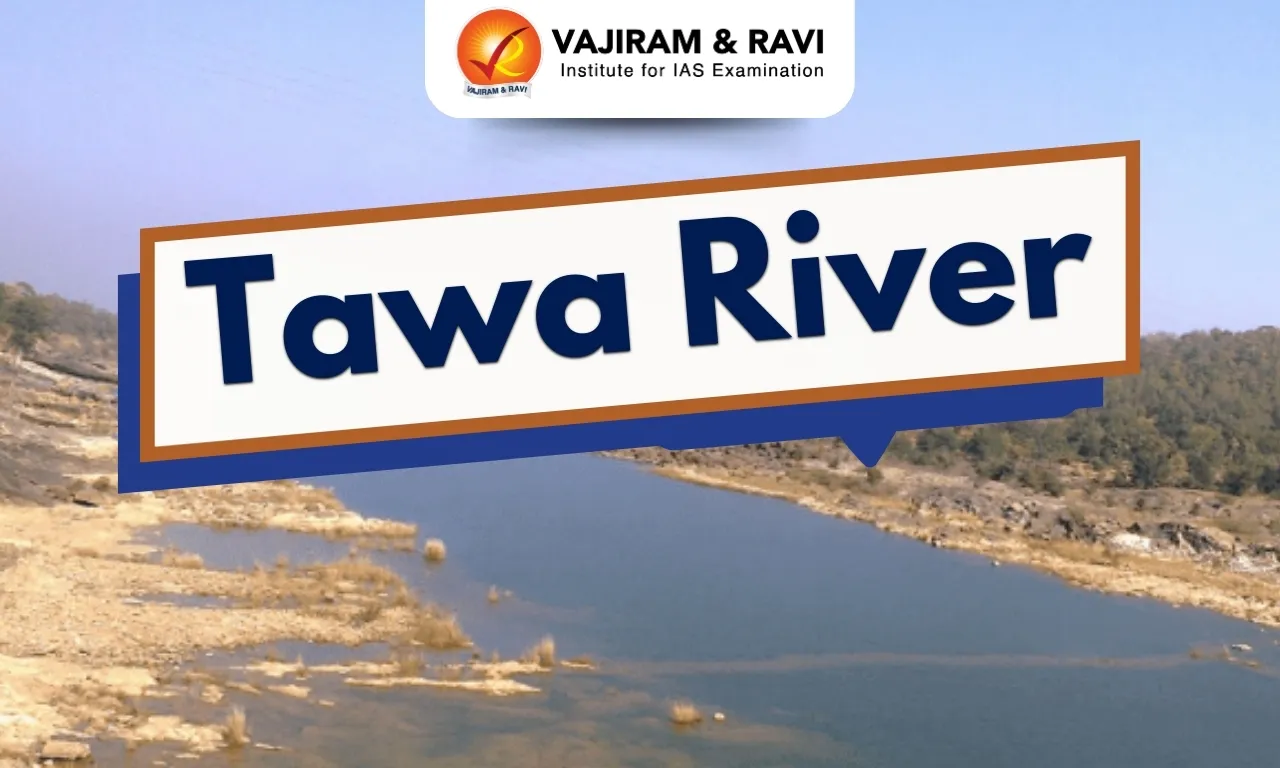
INS Trikand

INS Trikand

INS Trikand Latest News

Indian Naval Ship INS Trikand will participate in the 58th National Day celebrations of Mauritius.

About INS Trikand

  • It is a Talwar-class guided-missile frigate of the Indian Navy.
  • It is the third and final ship of the second batch of Talwar-class frigates ordered by the Indian Navy.
  • It was built by the Yantar shipyard in Kaliningrad, Russia.
  • It was commissioned into the Indian Navy on 29 June 2013 at Kaliningrad, Russia.
  • It is part of the Indian Navy’s Western Fleet and operates under the Western Naval Command headquartered at Mumbai.
  • Features of INS Trikand
    • Armory: It carries a supersonic BRAHMOS missile system, advanced surface-to-air missiles Shtil, an upgraded A190 medium-range gun, electro-optical 30 mm close-in weapon system, anti-submarine weapons such as torpedoes and rockets, and an advanced electronic warfare system.
    • The weapons and sensors are integrated through a Combat Management System ‘Trebovanie-M’, which enables the ship to simultaneously neutralise multiple surface, sub-surface, and air threats. 
    • It is powered by four gas turbines.
    • It is capable of speeds more than 30 knots and is configured to carry a Kamov 31 helicopter.

Source: News On Air

INS Trikand FAQs

Q1: What type of warship is INS Trikand?

Ans: Guided Missile Frigate

Q2: Where is INS Trikand is based?

Ans: Western Naval Command

European Free Trade Association

European Free Trade Association

European Free Trade Association Latest News

  • Recently, the Trade and Economic Partnership Agreement (TEPA) between India and the member states of the European Free Trade Association (EFTA) has completed two years since its signing.
  • About European Free Trade Association
  • It is an intergovernmental organisation established in 1960 by the Stockholm Convention.
  • Objective: Promotes free trade and economic integration between its members within Europe and globally.
  • Member Countries: Iceland, Liechtenstein, Norway, and Switzerland.
  • The members of this organization are all open, competitive economies committed to the progressive liberalisation of trade in the multinational arena as well as in free trade agreements. 
  • In contrast to the European Union (EU), it is not a customs union. 
  • Headquarters: EFTA Secretariat is located in Geneva.
  • It assists the EFTA Council in the management of relations between the 4 EFTA States and deals with the negotiation and operation of EFTA’s FTAs.
  • Governance
    • EFTA Council: Its highest governing body is the EFTA. It generally meets 8 times a year at the ambassadorial level and twice a year at the ministerial level.
    • EFTA Surveillance Authority (ESA): It monitors compliance with European Economic Area (EEA) rules in Iceland, Liechtenstein and Norway. 
    • EFTA Court: It is based in Luxembourg and has the competence and authority to settle internal and external disputes regarding the implementation, application or interpretation of the EEA agreement.

Source: PIB

European Free Trade Association FAQs

Q1: Which countries are part of European Free Trade Association?

Ans: Iceland, Liechtenstein, Norway, and Switzerland

Q2: When was European Free Trade Association established?

Ans: 1960

Passive Euthanasia in India: Supreme Court Allows Withdrawal of Treatment for Harish Rana

Passive Euthanasia

Passive Euthanasia Latest News

  • The Supreme Court permitted the withdrawal of life-sustaining treatment for Harish Rana, a 32-year-old man who has been in a vegetative state since 2013 after a severe head injury. 
  • This marks the first Indian court order approving passive euthanasia in such a case.
  • A bench of Justices J. B. Pardiwala and K. V. Vishwanathan allowed the withdrawal of medical treatment, including clinically assisted nutrition, being provided to Rana. The Court directed AIIMS to implement a palliative end-of-life care plan, ensuring that his final stage is managed with comfort and dignity.

Background of the Case

  • Harish Rana has been in a vegetative state since 2013 following a fall that caused severe head injuries.
  • In 2024, his father approached the Delhi High Court seeking permission to withdraw life-sustaining treatment.
  • The High Court rejected the plea, stating that Rana was not terminally ill.
  • The family subsequently approached the Supreme Court, which reconsidered the case based on medical assessments.
  • In 2025, the Supreme Court constituted primary and secondary medical boards to assess Rana’s condition. 
  • Both boards concluded that his condition was irreversible with negligible chances of recovery, supporting the decision to withdraw treatment.

Court’s Ethical Perspective

  • The Supreme Court emphasised that the decision was not about ending life but about avoiding the artificial prolongation of life without hope of recovery. 
  • It described the case as lying at the intersection of love, loss, medicine, and compassion, stressing that dignity must guide end-of-life decisions.

Legal Position on Euthanasia in India

  • India distinguishes between assisted dying (active euthanasia) and withdrawal of life-sustaining treatment (passive euthanasia), with different legal implications.

Assisted Dying and Criminal Liability

  • Assisted dying involves intentionally causing death through methods such as a lethal injection. 
  • In India, this is illegal and may amount to culpable homicide under the Bharatiya Nyaya Sanhita. 
  • If a doctor assists a patient in ending their life, it may also attract criminal liability for abetment to suicide. 
  • Attempted suicide remains an offence, although courts have emphasised the need for care and support rather than punishment.

Passive Euthanasia and the Right to Dignity

  • Passive euthanasia refers to withdrawing or withholding life-sustaining treatment, allowing the illness or injury to take its natural course. 
  • The Supreme Court has treated this differently because it does not actively cause death but ends medical intervention that artificially prolongs life.

Constitutional Basis

  • The legal framework stems from Article 21 of the Constitution, which guarantees the right to life. 
  • The Supreme Court has interpreted this right to include the right to live with dignity, which also extends to dignity in end-of-life decisions.
  • For terminally ill patients or those in a persistent vegetative state, the Court has recognised the right to refuse invasive or futile medical treatment, allowing them to avoid unnecessary suffering when recovery is unlikely.

Supreme Court’s Rulings on Euthanasia in India

  • The Supreme Court’s decision permitting the withdrawal of treatment for Harish Rana marks the first practical application of India’s passive euthanasia framework, which has largely evolved through judicial rulings on end-of-life decisions.

Aruna Shanbaug Case (2011): Foundation of Passive Euthanasia

  • In Aruna Ramchandra Shanbaug v. Union of India (2011), the Supreme Court laid down the initial framework for passive euthanasia.
  • The Court reaffirmed its earlier ruling in Gian Kaur v. State of Punjab (1996) that Article 21 does not recognise a general “right to die.”
  • Active euthanasia or assisted dying remained illegal.
  • However, the Court recognised that the right to live with dignity may, in certain situations, include the right to die with dignity, particularly for patients in a terminal condition or persistent vegetative state.

Distinction Between Active and Passive Euthanasia

  • The Court clarified an important distinction:
    • Active euthanasia (assisted dying): Actively causing death; remains illegal.
    • Passive euthanasia: Withdrawing or withholding life-sustaining treatment; may be permitted in limited circumstances.

Guidelines Laid Down in the Shanbaug Case

  • Since no law existed on euthanasia at the time, the Court created interim guidelines:
    • The request for withdrawal of treatment could be made by family members, doctors, or a “next friend” acting in the patient’s best interest.
    • Approval from the High Court was required.
    • A two-judge bench would decide the case after consulting a committee of three doctors.
  • Despite setting guidelines, the Court did not allow withdrawal of treatment in Shanbaug’s case, noting that she still showed signs of life and the hospital staff caring for her opposed the request.

Common Cause Case (2018): Recognition of Right to Die with Dignity

  • In Common Cause v. Union of India (2018), a Constitution Bench expanded the legal framework.
  • Key rulings included:
    • The right to die with dignity is part of Article 21 (Right to Life).
    • Withdrawal or withholding of life-sustaining treatment is permissible because it allows the natural process of death to occur.
    • The Court recognised Advance Medical Directives (living wills), allowing individuals to specify in advance whether they want life-prolonging treatment.

Practical Difficulties in Implementation

  • The 2018 framework had complex safeguards, including:
    • Advance directives signed by two witnesses and countersigned by a judicial magistrate.
    • Multiple approvals from medical boards and authorities.
  • These procedures made implementation difficult.

Simplification of the Process in 2023

  • In 2023, the Supreme Court simplified the process for passive euthanasia.
  • Key changes included:
    • Advance Directives can now be attested before a notary or gazetted officer.
    • They can be stored in digital health records.
    • Hospitals must form two medical boards (primary and secondary) with experienced doctors.
    • The Collector’s role and mandatory magistrate visits were removed, though hospitals must still inform the magistrate before withdrawing treatment.
  • As of March 2026, the Parliament of India has not enacted a comprehensive, dedicated law governing euthanasia or end-of-life care, relying instead on evolving guidelines established by the Supreme Court of India.

Source: IE | IE

Passive Euthanasia FAQs

Q1: What is passive euthanasia in India?

Ans: Passive euthanasia in India refers to withdrawing or withholding life-sustaining medical treatment for patients with no hope of recovery, allowing natural death while ensuring dignity and palliative care.

Q2: Why did the Supreme Court allow passive euthanasia for Harish Rana?

Ans: The Supreme Court allowed passive euthanasia after medical boards confirmed that Harish Rana’s vegetative condition was irreversible and recovery chances were negligible, making continued artificial support medically futile.

Q3: What ethical principle guided the Supreme Court’s decision?

Ans: The Court emphasized dignity in end-of-life care, stating that passive euthanasia is not about ending life but about avoiding artificial prolongation of suffering without realistic prospects of recovery.

Q4: What role do medical boards play in passive euthanasia cases?

Ans: Medical boards assess the patient’s condition and recovery prospects. Their expert opinion helps courts determine whether withdrawal of life-sustaining treatment is medically justified and legally permissible.

Q5: How has the legal framework on euthanasia evolved in India?

Ans: Passive euthanasia in India evolved through Supreme Court judgments that recognized the right to die with dignity, allowed living wills, and established safeguards involving medical boards and judicial oversight.

India’s New GDP Series – Revision and Economic Implications

GDP Series

GDP Series Latest News

  • India recently released a revised GDP series with 2022-23 as the base year, which shows a modest reduction in the estimated size of the economy and changes in sectoral composition. 

Understanding Gross Domestic Product (GDP)

  • Gross Domestic Product is the most widely used measure of the size and performance of an economy. 
  • It represents the total value of all final goods and services produced within a country during a given year, after accounting for intermediate inputs. 
  • GDP estimates are compiled using large datasets on production, prices, consumption, and investment. These calculations follow the global standards prescribed by the United Nations System of National Accounts (UNSNA)
  • In India, the National Statistical Office (NSO) prepares the National Accounts Statistics (NAS), which include GDP estimates, national income, savings, and investment indicators.
  • Since economies evolve over time, statistical methods and data sources also change. To reflect these changes accurately, the base year used for calculating GDP is revised periodically.

Importance of Revising the Base Year

  • The base year is the reference year used to measure economic growth and price changes.
  • Revising the base year is necessary for several reasons:
    • It incorporates new economic activities and sectors that may not have existed earlier.
    • It updates data sources and statistical methods used to estimate production.
    • It reflects changes in the structure of the economy, including shifts in sectoral contributions.
    • It improves the accuracy and reliability of economic statistics.
  • Typically, countries revise their GDP base year every five to ten years. In India, the previous revision took place in 2015 with 2011-12 as the base year. The latest revision introduces 2022-23 as the new base year, after a gap of more than a decade. 

Background to the GDP Revision

  • The earlier GDP series with base year 2011-12 had generated significant debate among economists and policymakers.
  • Several analysts argued that the growth rates reported under this series were unusually high and not fully consistent with other economic indicators.
  • For example, manufacturing growth in the 2011-12 series appeared stronger than suggested by alternative data sources. In addition, the estimated contribution of the private corporate sector to GDP was significantly larger than in previous estimates. 
  • These concerns led to questions about the reliability of India’s national accounts statistics.
  • The issue gained further attention when the International Monetary Fund (IMF) reviewed the quality of economic statistics across countries and assigned India a ‘C’ grade for the quality of its national accounts data. 
  • Against this background, the release of the new GDP series was widely anticipated.

Key Findings of the New GDP Series

  • The revised GDP series introduces several notable changes in India’s economic estimates.
  • Reduction in the Size of GDP
    • The new estimates show that the absolute size of India’s GDP is about 3-4% smaller compared with estimates based on the previous series. 
    • This result is somewhat surprising because base-year revisions usually increase GDP by capturing previously unrecorded activities.
    • However, economists argue that the reduction may reflect a correction of earlier overestimations in the 2011-12 series.
  • Similar Growth Rates
    • Despite the reduction in the overall size of the economy, the annual GDP growth rates under the new series remain broadly similar to those in the previous series, differing by roughly one percentage point. 
    • This suggests that while the level of GDP has changed, the overall growth trend of the economy remains largely unchanged.

Changes in the Structure of the Economy

  • Agriculture and Industry
    • The share of agriculture and industry in GDP has increased compared with the previous series.
    • This indicates that these sectors may have been underestimated earlier or that new datasets have improved their measurement.
  • Services Sector
    • At the same time, the share of the services sector has declined slightly under the revised estimates. 
    • Although services continue to dominate India’s economy, the revision suggests a somewhat more balanced sectoral structure.
  • Manufacturing Sector
    • The manufacturing sector’s share has increased slightly from 14.3% to 14.7% of GDP
    • However, the absolute size of manufacturing output has declined by about 1.5-1.6% compared with earlier estimates. 
    • This finding is significant because manufacturing performance has been a major subject of economic debate in India.

Changes in Institutional Sector Contributions

  • The revised GDP estimates also alter the distribution of economic activity among institutional sectors.
  • One important change concerns the non-financial private corporate sector (PCS).
  • The PCS share in GDP has declined from 35.4% to about 33.9% in 2022-23, with an even larger reduction in the following year. 
  • This is noteworthy because the size of the private corporate sector had increased sharply in the previous revision, which had raised questions among economists.
  • Meanwhile, the household or informal sector’s share has increased slightly, partly due to improved measurement of agricultural activity. 

Economic Implications of the Revision

  • Impact on Economic Targets
    • With the revised GDP level being slightly smaller, the timeline for achieving ambitious economic targets, such as becoming a $5 trillion economy, may be extended. 
  • Better Statistical Accuracy
    • If the revision corrects earlier overestimations, it may lead to a more realistic understanding of India’s economic performance.
  • Need for Greater Transparency
    • Economists emphasise that more detailed methodological explanations are needed to fully evaluate the reliability of the revised GDP series.
    • Without transparency in data sources and statistical methods, debates about GDP accuracy may continue.

Source: TH

GDP Series FAQs

Q1: What is GDP?

Ans: GDP is the total value of all final goods and services produced within a country during a specific period.

Q2: Why is the GDP base year revised?

Ans: The base year is revised to incorporate new data sources, improved methods, and changes in the structure of the economy.

Q3: What is the new base year for India’s GDP series?

Ans: The latest GDP series uses 2022-23 as the base year.

Q4: What change has the new GDP series introduced in the size of the economy?

Ans: The revised series estimates India’s GDP to be about 3–4% smaller than in the previous series.

Q5: How has the sectoral composition of GDP changed in the new series?

Ans: The shares of agriculture and industry have increased slightly, while the services sector’s share has declined.

Enquire Now