UPSC Daily Quiz 25 November 2025

UPSC Daily Quiz

The Daily UPSC Quiz by Vajiram & Ravi is a thoughtfully curated initiative designed to support UPSC aspirants in strengthening their current affairs knowledge and core conceptual understanding. Aligned with the UPSC Syllabus 2025, this daily quiz serves as a revision resource, helping candidates assess their preparation, revise key topics, and stay updated with relevant issues. Whether you are preparing for Prelims or sharpening your revision for Mains, consistent practice with these Daily UPSC Quiz can significantly enhance accuracy, speed, and confidence in solving exam-level questions.

[WpProQuiz 31]

UPSC Daily Quiz FAQs

Q1: What is the Daily UPSC Quiz?

Ans: The Daily UPSC Quiz is a set of practice questions based on current affairs, static subjects, and PYQs that help aspirants enhance retention and test conceptual clarity regularly.

Q2: How is the Daily Quiz useful for UPSC preparation?

Ans: Daily quizzes support learning, help in revision, improve time management, and boost accuracy for both UPSC Prelims and Mains through consistent practice.

Q3: Are the quiz questions based on the UPSC syllabus?

Ans: Yes, all questions are aligned with the UPSC Syllabus 2025, covering key areas like Polity, Economy, Environment, History, Geography, and Current Affairs.

Q4: Are solutions and explanations provided with the quiz?

Ans: Yes, each quiz includes detailed explanations and source references to enhance conceptual understanding and enable self-assessment.

Q5: Is the Daily UPSC Quiz suitable for both Prelims and Mains?

Ans: Primarily focused on Prelims (MCQ format), but it also indirectly helps in Mains by strengthening subject knowledge and factual clarity.

International Day for the Elimination of Violence Against Women

International Day for the Elimination of Violence Against Women

The International Day for the Elimination of Violence Against Women, observed on 25 November every year serves as a powerful reminder of the global fight to end gender-based violence. Recognised by the United Nations General Assembly in 2000, the day marks the beginning of the 16 Days of Activism (Nov 25-Dec 10). In 2025, the global theme is “UNiTE to End Digital Violence Against All Women and Girls.” For UPSC aspirants, this topic is important for GS-1 (Society), GS-2 (Governance), GS-3 (Cyber Security), and Essay.

International Day for the Elimination of Violence Against Women

Violence against women remains one of the most pervasive human-rights violations globally. India, with its vast population and diverse socio-cultural landscape, has made continuous efforts to strengthen laws, institutions, and digital safety frameworks. The increasing rise of cyberbullying, deepfakes, doxxing, cyberstalking, and online hate campaigns has broadened the challenge, making the focus on digital safety more urgent. Against this backdrop, the observance of November 25 highlights India’s commitment to creating a safer physical and digital environment for women and girls.

International Day for the Elimination of Violence Against Women Theme

The theme for the International Day for the Elimination of Violence Against Women 2025 is “UNiTE to End Digital Violence Against All Women and Girls.” It highlights the growing threat of online abuse, including cyberstalking, deepfakes, doxxing, and digital harassment. The theme urges governments, tech platforms, and communities to strengthen digital safety, promote accountability, and create secure online spaces for women and girls.

International Day for the Elimination of Violence Against Women History

The International Day for the Elimination of Violence Against Women was officially designated by the United Nations General Assembly in 2000 to raise global awareness about gender-based violence. The date, 25 November, commemorates the assassination of the Mirabal sisters in 1960, who were activists opposing dictatorship in the Dominican Republic.

  • Declared by the UN General Assembly in 2000 through Resolution 54/134.
  • 25 November chosen to honour the Mirabal sisters, symbols of resistance against oppression.
  • Marks the start of the 16 Days of Activism (Nov 25–Dec 10).
  • Aims to mobilise governments, organisations, and citizens to end gender-based violence globally.

India’s Multi-Layered Approach to Ending Violence Against Women

India adopts a multi-layered approach that combines strong legal protections, institutional mechanisms, technology-driven systems, and comprehensive support services for women. This integrated framework focuses on prevention, timely response, survivor support, and long-term empowerment.

  • Robust legal reforms including Bharatiya Nyaya Sanhita 2023, PWDVA 2005, and POSH Act 2013.
  • Institutional mechanisms like NCW, State Commissions for Women, Fast Track Special Courts, and Women Help Desks.
  • Supportive schemes under Mission Shakti, including One Stop Centres, Swadhar Greh, and Women Helpline (181).
  • Technology-driven tools such as SHe-Box, ITSSO, Cri-MAC, NDSO, and Digital Shakti Campaign for safer digital environments.
  • Integrated emergency systems like ERSS (112) and specialised training programs like Stree Manoraksha for psychosocial support.

Legal Framework to Protect Women in India

India has strengthened its legal architecture with comprehensive laws addressing domestic violence, sexual harassment, cyber harms, and crimes against women and children. These reforms ensure speedy justice, survivor-friendly procedures, and stricter punishments. The introduction of the Bharatiya Nyaya Sanhita (BNS), 2023 marks a major shift in criminal law, with enhanced penalties and technology-enabled processes.

National Commission for Women (NCW)

The National Commission for Women, established on 31 January 1992, is the apex statutory body mandated to protect women’s constitutional and legal rights. It monitors safeguards, suggests law reforms, and addresses complaints online and offline. State Commissions for Women perform parallel roles at the local level. NCW also operates helpline 7827170170 providing 24×7 online support through IVR-based systems for psychological counselling, legal support, and emergency assistance.

Bharatiya Nyaya Sanhita, 2023

Effective from 1 July 2024, BNS replaces the Indian Penal Code (IPC) and introduces stronger provisions for crimes against women. It expands definitions of sexual offences, mandates audio-video recording of victim statements, and ensures that cases involving women and children receive priority in trial proceedings.

  • Life imprisonment for rape of minors under 18.
  • Time-bound trials and improved evidence collection.
  • Wider definitions of sexual assault and exploitation.
  • Survivor-friendly procedures including digital recording.

Protection of Women from Domestic Violence Act, 2005 (PWDVA)

PWDVA legally recognises domestic violence in all forms: physical, sexual, emotional, and economic. It defines an aggrieved person as any woman in a domestic relationship and ensures protection orders, residence rights, and compensation. This Act enables women to seek relief even through Protection Officers and service providers, ensuring a comprehensive support ecosystem.

Sexual Harassment of Women at Workplace Act, 2013 (POSH Act)

The POSH Act provides a robust legal framework to protect women across all workplaces: public, private, organised, and unorganised. It mandates the establishment of Internal Committees (ICs) in workplaces with more than 10 employees and Local Committees (LCs) for smaller establishments. The Ministry of Women and Child Development oversees implementation.

  • Mandatory ICs and LCs for grievance redressal
  • Completion of inquiries within 90 days
  • Accountability mechanisms for employers
  • Access to SHe-Box portal for online complaints

Digital Shakti Campaign

The NCW’s Digital Shakti Campaign aims to make women digitally skilled, aware, and empowered to combat online crimes. It trains women across India in identifying and responding to cyber threats, enhancing their ability to report and safeguard themselves online.

  • Cyber safety training
  • Awareness on digital rights
  • Reporting mechanisms for cybercrimes
  • Data privacy and protection awareness

Institutional Mechanisms for Fast and Survivor-Friendly Justice

India has invested in specialised institutions to speed up justice delivery and improve survivor experience.

  1. Fast Track Special Courts (FTSCs): As of August 2025, 773 FTSCs, including 400 e-POCSO courts, are functional. These courts have disposed over 3.34 lakh cases relating to rape and POCSO.
  2. Women Help Desks (WHDs): As of February 2025, 14,658 WHDs operate in police stations, facilitating easier reporting and improving sensitivity in investigations.
  3. SHe-Box Portal: A unified digital platform that routes workplace harassment complaints to relevant Internal/Local Committees. It offers real-time tracking, data monitoring, and improved accountability.

Technology-Driven Reforms for Women’s Safety

The Government has introduced several digital tools to track offenders, strengthen policing, and enhance coordination between states.

  • Investigation Tracking System for Sexual Offences (ITSSO): Monitors progress of investigations to ensure timely completion.
  • National Database on Sexual Offenders (NDSO): Tracks convicted offenders and helps police identify repeat offenders.
  • Crime Multi-Agency Centre (Cri-MAC): Facilitates real-time sharing of information on heinous crimes across states.

International Day for the Elimination of Violence Against Women FAQs

Q1: When is the International Day for the Elimination of Violence Against Women observed?

Ans: It is observed every year on 25 November to raise global awareness about gender-based violence and mobilise action to end it.

Q2: Why is 25 November chosen for the observance?

Ans: The date marks the assassination of the Mirabal sisters in 1960, who became symbols of resistance against violence and dictatorship in the Dominican Republic.

Q3: What is the theme for 2025?

Ans: The 2025 theme is “UNiTE to End Digital Violence Against All Women and Girls”, focusing on rising threats like cyberstalking, deepfakes, doxxing, and online harassment.

Q4: Who established this international day?

Ans: The United Nations General Assembly (UNGA) officially designated the day in 2000 through Resolution 54/134.

Q5: What global campaign begins on this day?

Ans: The observance marks the start of the 16 Days of Activism Against Gender-Based Violence, ending on 10 December (Human Rights Day).

Auramine O

Auramine O

Auramine O Latest News

India continues to face recurring episodes of chemical adulteration in food, particularly through the use of non-permitted synthetic dyes and one of the most persistent among them is auramine O.

About Auramine O

  • It is a synthetic yellow dye produced from compounds such as dimethylaniline and formaldehyde.
  • The dye appears as yellow flakes or powder and dissolves easily when mixed with solvents.
  • It is not approved for use as a food colour in India, the European Union, and the United States.
  • Applications of Auramine O: It is extensively used in industry, including textile and leather processing, printing inks, paper manufacturing, and certain microbiological staining procedures.
  • Impacts on Human Health: It creates health risks like liver and kidney damage, enlargement of the spleen, mutagenic effects that can alter genetic material, and potential carcinogenic outcomes.
  • Global context: Regulators in the U.S., EU, and East Asian nations classify auramine as an industrial dye, and its presence in consumables triggers product recalls and import alerts.
    • The International Agency for Research on Cancer (IARC) classifies auramine as a substance that is possibly carcinogenic to humans.

Source: TH

Auramine O FAQs

Q1: What is the chemical nature of Auramine O?

Ans: It is a synthetic organic compound.

Q2: In which products is Auramine O commonly used?

Ans: Textiles and leather products

Postojna Cave

Postojna Cave

Postojna Cave Latest News

Researchers from Poland, the United States, and Slovenia recently worked out exact equations for stalagmite shapes, then checked them on real cave specimens from Postojna Cave in Slovenia.

About Postojna Cave

  • It is located in western Slovenia.
  • It is a 24 km long cave carved out by the Pivka River over millions of years. 
  • It’s made of limestone, and each 1 cm of growth takes around 100 years.
  • The Pivka River enters the Postojna cavern 18 m below its mouth, runs underground, and reappears as a spring in the Planina Plain.
  • The caves were officially discovered in the 1800s (although graffiti in the caves dates back to as early as the 1200s), and have been open as a tourist attraction since 1819.
  • It is the only karst cave with a railway, which was built more than 140 years ago. 
  • The cave system hosts Proteus anguinus — a blind, colorless, snake-like amphibian about 30 cm long, with both lungs and gills, feeding on snails and worms.

Source: EARTH

Postojna Cave FAQs

Q1: Postojna Cave is located in which country?

Ans: Slovenia

Q2: Which river carved out the Postojna Cave over millions of years?

Ans: Pivka River

Q3: What is the approximate length of the Postojna Cave system?

Ans: 24 km

Q4: Postojna Cave is primarily made of which rock type?

Ans: Limestone

Pazhayar River

Pazhayar River

Pazhayar River Latest News

Rampant discharge of sewage and untreated water into the Pazhayar river at several places in Nagercoil has raised serious concerns among residents about the river’s future and measures being taken to curb the pollution.

About Pazhayar River

  • It is a major river flowing in the Kanniyakumari district of Tamil Nadu.
  • Course:
    • It originates from the slopes of Mahendragiri hills at an altitude of 800 m above M.S.L.
    • It flows towards southwestern direction and joins the Arabian Sea near Manakudi. 
  • The total length of the river is 40 km. 
  • Alathurayar, Poigaiyar, Thadaveyar, Koya odai, and Ulakkaruviyar are the major tributaries of the Pazhayar River.
  • Chattupythur dam, Chettothoppu dam, Cholanmkattu dam, Kutty dam, Kumari dam, Mission dam, Pallikondam dam, Pillaipetha dam, Salari dam, Veerapuli dam, and Veeranarayanamangalam are some of the dams constructed in the Pazhayar River.
  • The Manakudi Estuary at its mouth is ecologically sensitive and rich in mangroves, birds, and marine life.

Source: TH

Pazhayar River FAQs

Q1: Pazhayar River flows through which Indian state?

Ans: Tamil Nadu

Q2: Pazhayar River ultimately drains into which water body?

Ans: Arabian Sea

Q3: The Pazhayar River originates from which hill region?

Ans: Mahendragiri Hills

Q4: What is the approximate length of the Pazhayar River?

Ans: 40 km

HAMMER Weapon System

HAMMER Weapon System

HAMMER Weapon System Latest News

Recently, Bharat Electronics Limited and Safran Electronics and Defence (SED) signed a joint venture cooperation agreement for the production of the HAMMER Weapon System in India.

About HAMMER Weapon System

  • The HAMMER (Highly Agile and Manoeuvrable Munition Extended Range) is an air-to-ground precision-guided weapon system developed by Safran, a French aerospace and defence company.
  • It is also known as a glide bomb.

Features of HAMMER Weapon System

  • Range: HAMMER precision-guided munitions have a range of up to 70 km.
  • It can be fitted to standard bombs of 250kg, 500kg, and 1,000kg weights.
  • It is resistant to jamming, and capable of being launched from low altitudes over rough terrain.
  • It is difficult to intercept and can penetrate fortified structures.
  • Design and Capabilities: It is a precision-guided weapon system known for its high accuracy and modular design, making it adaptable for multiple platforms, including the Rafale and Light Combat Aircraft Tejas.

 What is a Precision-Guided Weapon System?

  • It is a guided weapon intended to destroy a point target and minimize collateral damage.
  • These are also known as "smart bombs,"
  • These systems incorporate a guidance system (typically in the front of the precision munition), a payload, and fins.

Source: IE

HAMMER Weapon System FAQs

Q1: What is the range of HAMMER precision-guided munitions?

Ans: Up to 70 km

Q2: Which company developed the HAMMER weapon system?

Ans: Safran, France

Information Security Education and Awareness Project

Information Security Education and Awareness Project

Information Security Education and Awareness Project Latest News

Recently, the Ministry of Electronics and Information Technology (MeitY) launched the Cyber Security Innovation Challenge (CSIC) 1.0 under the Information Security Education and Awareness (ISEA) Project of MeitY.

About Information Security Education and Awareness Project

  • It is an initiative of the Ministry of Electronics and Information Technology (MeitY), Government of India.
  • It was started in 2005 and currently in its third phase since Oct. 2023 onwards.
  • Purpose: Generating human resources in the area of Information Security and creating general awareness on cyber hygiene/cyber security among the masses.
  • Aim: It is aimed at human resources development for safe, trusted, and secure cyber space.

Implementation of Information Security Education and Awareness Project

  • The project is implemented through select 50 institutions in a hub-n-spoke mode, comprising:
    • Premier Academic Institutions i.e. IITs, NITs, IIITs, etc.
    • Autonomous Organizations of MeitY i.e. C-DAC & NIELIT
    • Technical Universities

Key Facts about Cyber Security Innovation Challenge (CSIC) 1.0

  • It is an initiative of the Ministry of Electronics and Information Technology (MeitY)
  • It was launched for students and researchers to work upon real-world cyber challenges.
  • It is strategically designed to foster indigenous, research-driven cyber security solutions from the academic ecosystem.
  • The Innovation Challenge would focus on problem statements across 10 domains;
    • Computer & Network Security; Mobile Device Security; Systems & Software Security; Hardware Security; Security in Futuristic Technologies; Cryptography; Security in Distributed Wireless Networks; Cyber Forensics; Governance, Operations & Services; and Fintech Security. 

Source: PIB

Information Security Education and Awareness Project FAQs

Q1: Which ministry launched the Information Security Education and Awareness Project?

Ans: Ministry of Electronics and Information Technology

Q2: What is the primary objective of the Information Security Education and Awareness Project?

Ans: To enhance cybersecurity awareness among citizens.

Asian and Pacific Centre for Development of Disaster Information Management

Asian and Pacific Centre for Development of Disaster Information Management

Asian and Pacific Centre for Development of Disaster Information Management Latest News

Recently, the 10th Session of the Asian and Pacific Centre for Development of Disaster Information Management (APDIM) on Inclusive Disaster Risk Data Governance was held in New Delhi.

About Asian and Pacific Centre for Development of Disaster Information Management

  • It is a regional institution of the United Nations Economic and Social Commission for Asia and the Pacific (ESCAP). 
  • Vision: To ensure effective disaster risk information is produced and used for sustainable development in Asia and the Pacific
  • Mandate: To reduce human and material losses due to natural hazards and contribute to the effective design, investment and implementation of disaster risk reduction and resilience policies.
  • Governance: It is governed by a Governing Council consisting of eight ESCAP member countries elected for a period of three years (India is one of the members for a period from 2022 to 2025).
  • Headquarter: Tehran, Iran.

Functions of Asian and Pacific Centre for Development of Disaster Information Management

  • Risk Information and Knowledge Repository: It functions as a regional facility to strengthen the science-policy interface.
  • Information Capacity and Application: It facilitates the exchange of expertise, experiences, and knowledge in disaster information management between and within the countries of the region.
  • Regional Cooperation and Coordination for Disaster Risk Information: It promotes effective regional cooperation, facilitates dialogue, 

Source: PIB

Asian and Pacific Centre for Development of Disaster Information Management FAQs

Q1: What is the primary objective of APDIM?

Ans: To enhance disaster risk reduction and management in the region

Q2: Where is the Asian and Pacific Centre for Development of Disaster Information Management (APDIM) headquartered?

Ans: Tehran, Iran

Hayli Gubbi Volcano

Hayli Gubbi Volcano

Hayli Gubbi Volcano Latest News

Recently, the Hayli Gubbi volcano erupted for the first time after 10,000 years.

About Hayli Gubbi Volcano

  • Location: It is located in Ethiopia’s Afar region about 800km northeast of Addis Ababa near the Eritrean border.
  • It is a shield volcano that sits within Ethiopia’s Danakil Depression, one of the hottest and most remote areas on the planet.
  • It is the southernmost volcano in the Erta Ale range.
    • The Erta Ale range is known for its persistent lava lakes and is primarily made up of shield volcanoes.
  • Hayli Gubbi has no previously recorded eruptions in modern history.

Key Facts about Shield Volcano

  • They are the largest volcanoes on Earth.
  • They are built by repeated eruptions that occurred intermittently over vast periods of time
  • Shield volcanoes contain almost exclusively basalt (a type of lava that is very fluid when erupted).
  • These volcanoes are not steep. They are broad volcanoes with gentle slopes.

What is Ash Cloud?

  • It forms when a volcano erupts and sends volcanic materials into the atmosphere. 
  • It contains fine volcanic ash, sulphur dioxide, and tiny fragments of rock and glass.
  • It has an adverse effect on human health, causing respiratory problems, eye irritation and skin discomfort.

Source: TH

Hayli Gubbi Volcano FAQs

Q1: Where is the Hayli Gubbi Volcano located?

Ans: Ethiopia

Q2: What is the type of Hayli Gubbi Volcano?

Ans: Shield Volcano

Cyclone Senyar, Origin, Naming, Significance, Impact

Cyclone Senyar

Cyclone Senyar is a developing cyclonic system over the Bay of Bengal, closely monitored by the India Meteorological Department due to its potential to intensify into a severe storm. It originated as a low-pressure area over the southern Andaman Sea and the Strait of Malacca, where favorable sea surface temperatures and atmospheric conditions contributed to its formation. 

Once it reaches cyclonic storm strength, it has been named Senyar, meaning “lion,” a name contributed by the United Arab Emirates as part of the North Indian Ocean cyclone naming list.

The cyclone is expected to bring very heavy rainfall, strong winds, and potential flooding, particularly in the Andaman & Nicobar Islands, Tamil Nadu, Kerala, and parts of Andhra Pradesh / Yanam, with low-lying areas vulnerable to inundation and disruptions to transport, fishing, and daily life.

Cyclone Senyar

Cyclone Senyar is a cyclonic system forming over the Bay of Bengal, currently being closely monitored by the India Meteorological Department (IMD). It originated from a low-pressure area over the Strait of Malacca and the southern Andaman Sea. The system is expected to intensify into a cyclonic storm, bringing heavy rainfall, strong winds, and rough seas in the coming days. Authorities are alerting coastal and island regions for preparedness measures.

Cyclone Senyar Origin

The origin of Cyclone Senyar can be traced to a well-marked low-pressure area over the southern Andaman Sea. This circulation is moving west-northwestwards and is expected to strengthen gradually over the Bay of Bengal. An additional upper-air cyclonic circulation near the southern tip of India is influencing its formation. Such post-monsoon cyclonic formations are typical in this region due to favorable sea surface temperatures and atmospheric conditions.

Cyclone Senyar Naming

If the system intensifies into a cyclonic storm, it will be officially named Senyar. The name, meaning “lion,” was contributed by the United Arab Emirates as part of the rotating list of names for cyclones in the North Indian Ocean. Cyclone naming is done when a system reaches wind speeds of 34 knots or more. This practice helps in easy identification and communication of warnings to the public. Naming also aids in international coordination and disaster management efforts in the region.

Also Read: Amphan Cyclone

Areas and States Affected by the Cyclone Senyar

The Andaman & Nicobar Islands are expected to be the first and most affected region, with very heavy rainfall forecasted. Mainland regions likely to be impacted include Tamil Nadu, Kerala, Andhra Pradesh / Yanam, and parts of Lakshadweep. Coastal districts, especially delta regions in Tamil Nadu, are on alert for potential flooding. Authorities are monitoring rainfall and wind intensity to mitigate the impact on vulnerable communities.

  • Andaman & Nicobar Islands: very heavy rainfall expected.
  • Tamil Nadu: delta districts on orange alert for heavy rain.
  • Kerala and Mahe: forecasted heavy rainfall.
  • Andhra Pradesh / Yanam and Lakshadweep: moderate rainfall likely.

Tropical Cyclone Formation

Tropical cyclones form over warm ocean waters near the equator, where sea surface temperatures are above 26-27°C. They develop from low-pressure areas due to intense heat and moisture, which create rising air and strong winds. The Coriolis force causes the system to rotate, while low vertical wind shear allows it to strengthen. These cyclones are most common in the pre-monsoon and post-monsoon seasons in the North Indian Ocean.

  • Require sea surface temperature above 26-27°C.
  • Originate from low-pressure areas over oceans.
  • Coriolis force causes the rotation of the system.
  • Low vertical wind shear allows intensification.
  • Common during pre-monsoon (April-June) and post-monsoon (October-December).

Early Warning Systems and Preparedness Measures

The IMD has issued alerts for heavy to very heavy rainfall in affected regions. Fishermen have been advised against venturing into the Andaman Sea and southwest Bay of Bengal due to rough sea conditions. Local administrations are actively monitoring the situation, advising residents to follow official weather bulletins, and preparing for potential evacuations in low-lying areas. Disaster management authorities are coordinating with state governments for relief measures.

  • Heavy rainfall alerts issued for multiple regions.
  • Fishermen advised to avoid dangerous sea zones.
  • Evacuation preparedness in low-lying coastal areas.
  • Authorities monitoring real-time weather updates.

Cyclone Senyar Significance

Cyclone Senyar is significant as it reflects the recurring pattern of post-monsoon cyclones in the Bay of Bengal. It poses risks to life, property, and livelihoods, especially in island and coastal areas. The system also tests early warning mechanisms, emergency preparedness, and disaster response capacities of states.

  • Represents post-monsoon cyclonic activity in the Bay of Bengal.
  • Highlights risks to life, infrastructure, and livelihoods.
  • Tests disaster response and early warning systems.
  • Indicative of climate change impacts in the region.

Also Read: Cyclone Montha

Cyclone Senyar Impact

Cyclone Senyar is expected to bring heavy rainfall, strong winds, and potential flooding in coastal and island regions. Wind speeds are initially around 35–45 km/h, with gusts up to 55 km/h, and may intensify further. Low-lying areas are vulnerable to flooding, while transport, fishing, and daily life could face disruptions. Precautionary measures, including school closures in affected districts, have already been implemented to ensure safety.

  • Very heavy rainfall expected, especially in Andaman & Nicobar Islands.
  • Winds initially 35-45 km/h, gusting up to 55 km/h.
  • Flooding risk in low-lying coastal areas.
  • Disruptions to transport, fishing, and daily life.
  • Schools closed in vulnerable districts for safety.

Cyclone Senyar FAQs

Q1: When is Cyclone Senyar expected to intensify?

Ans: It may become a depression around November 25 and a cyclonic storm within 48 hours.

Q2: Why is it named “Senyar”?

Ans: The name was contributed by the UAE and means “lion.” It follows international naming conventions for North Indian Ocean cyclones.

Q3: Which areas are most at risk?

Ans: Andaman & Nicobar Islands, Tamil Nadu, Kerala, Andhra Pradesh / Yanam, and Lakshadweep.

Q4: What precautions have been advised?

Ans: Avoid fishing or venturing into rough seas. Follow official IMD updates and local advisories. Evacuations may be conducted in low-lying and flood-prone areas.

Q5: Why is Cyclone Senyar important?

Ans: It highlights the challenges of disaster management, tests preparedness systems, and underscores climate change-related risks.

Bharat NCAP

Bharat NCAP

Bharat NCAP Latest News

The Ministry of Road Transport and Highways (MoRTH) recently released a comprehensive draft for Bharat NCAP 2.0, a significantly expanded version of the country’s crash test rating programme.

About Bharat NCAP

  • The Bharat New Car Assessment Programme (Bharat NCAP) is an indigenous star-rating system for crash testing cars, under which vehicles will be assigned between one to five stars, indicating their safety in a collision. 
  • It is an ambitious joint project between the Government of India (GoI) and Global NCAP, the regulatory body behind the safety crash test ratings.
  • It was launched on 22 August 2023 and commenced on 1 October 2023.
  • Objective: To help consumers make an informed decision before purchasing a car, thereby spurring demand for safer cars.
  • Under the Bharat NCAP, cars voluntarily nominated by automobile manufacturers will be crash tested as per protocols laid down in the Automotive Industry Standard (AIS) 197.
  • Vehicles tested under the Bharat NCAP are evaluated across three critical safety domains: adult occupant protection, child occupant protection, and safety assist technologies.
  • Applicability:
    • Only right-hand drive passenger vehicles on sale in India and weighing less than 3,500 kg are eligible for consideration. 
    • Base variants of cars are to be tested, and ratings will be applicable for four years.
    • Besides internal combustion engine (ICE) models, CNG cars as well as battery-powered electric vehicles are eligible to undergo the safety test.
  • It is a voluntary programme under which the cost of the car for assessment for star rating and the cost of such assessment are borne by the respective vehicle manufacturer or importer.
  • Bharat NCAP is overseen by the Ministry of Road Transport, but is an independent body.
  • The current Bharat NCAP regulations remain valid until September 30, 2027, after which Bharat NCAP 2.0 is expected to be implemented by October 2027.

Bharat NCAP 2.0 Proposed Guidelines

  • It brings in fresh mandatory tests, revised scoring methods, and updated safety verticals. 
  • Notably, for the first time, vehicles will be assessed on vulnerable road user protection.
  • The Bharat NCAP 2.0 proposal introduces a 100-point rating system across five pillars: Crash Protection, Vulnerable Road-User Protection, Safe Driving, Accident Avoidance, and Post-Crash Safety. 
  • The crash test will be expanded from two to five and will now have Male, female, and child dummies for testing. 
  • The cars will go through offset frontal impact, full-width frontal impact, side impact, pole side impact, and rear impact.
  • Electronic stability control (ESC) and curtain airbags will be compulsory for any model seeking a star rating. 
  • Autonomous emergency braking (AEB) remains optional. Models with side-facing seats will not be eligible for a rating.
  • From 2027-29, a 5-star rating will require 70 points, and this would rise to 80 points from 2029-31
  • Minimum scores will also apply across each pillar.

Source: IT

Bharat NCAP FAQs

Q1: What does Bharat NCAP primarily assess?

Ans: Safety rating through crash tests.

Q2: Who bears the cost of the car and assessment under Bharat NCAP?

Ans: Vehicle manufacturer or importer.

Q3: Star ratings under Bharat NCAP are valid for how long?

Ans: What is the maximum star rating a car can receive under Bharat NCAP?

Special Leave Petition

Special Leave Petition

Special Leave Petition Latest News

The Jammu & Kashmir and Ladakh High Court recently observed that dismissal of a Special Leave Petition (SLP), whether by a speaking or non-speaking order, does not lead to merger of the impugned order with the Supreme Court's order.

About Special Leave Petition

  • A SLP is a request made to the Supreme Court of India seeking special permission to appeal against any judgment, order, or decree from any court or tribunal (except military tribunals), even when the law does not provide a statutory right of appeal.
  • In other words, SLP is not a right—it's a privilege granted by the Supreme Court at its discretion.
  • Article 136 states that the Supreme Court may, in its discretion, grant special leave to appeal from any judgment, decree, determination, or order from any court or tribunal in India.
  • It can only be exercised when a substantial question of law or gross injustice has been committed.
  • A judgement, decree, or order need not be final for an SLP. An interim or interlocutory order, decree, or judgement can also be challenged.
  • It is a discretionary/optional power of the SC, and the court can refuse to grant the appeal at its discretion. 
  • The aggrieved party can’t affirm a special leave to offer under Article 136 as a right.
  • SLP can be filed by:
    • Any aggrieved party (individual or business)
    • Government bodies
    • Public sector undertakings
    • NGOs or associations (in relevant cases)
      • The key requirement is that the party must be aggrieved by the impugned judgment or order.
      • An SLP can be filed for any civil or criminal matter, etc.
  • SLP can be filed against judgments from:
    • High Courts
    • Tribunals (except those under armed forces)
    • Quasi-judicial bodies
  • Time limit to file SLP:
    • It can be filed against any judgment of the High Court within 90 days from the date of judgment or
    • It can be filed within 60 days against the order of the High Court refusing to grant the certificate of fitness for appeal to SC.
  • Procedure for a SLP:
    • A SLP must contain all the facts upon which the SC is to decide, which revolve around the grounds on which an SLP can be filed. 
    • The said petition needs to be duly signed by an Advocate-on-Record.
    • The petitioner must include a statement within the SLP stating that no other petition has been filed in a High Court.
    • Once the petition is filed, the SC will hear the aggrieved party and depending upon the merits of the case, will allow the opposite party to state their part in a counter affidavit.
    • After the hearing, if the court deems the case fit for further hearing, it will allow the same; otherwise it will reject the appeal.

Source: LL

Special Leave Petition FAQs

Q1: Special Leave Petition is governed under which Article of the Indian Constitution?

Ans: Article 136

Q2: Within how many days can an Special Leave Petition be filed against a High Court judgment?

Ans: 90 days

Q3: Can Special Leave Petition be filed in both civil and criminal matters?

Ans: Special Leave Petitions can be filed for both civil and criminal matters

Daily Editorial Analysis 25 November 2025

Daily Editorial Analysis

The Amplitude of Gubernatorial Discretion

Context

  • Walter Bagehot’s reminder that the British monarch has no veto and must even sign her own death-warrant underscores the democratic expectation that the nominal head of state functions without independent political will.
  • This principle illuminates the contemporary debate over the role of the Indian Governor under Article 200, where ambiguity about discretion has repeatedly strained Centre–State relations.
  • The Supreme Court’s recent advisory opinion attempts clarification, yet its implications reveal deeper tensions between constitutional design and political practice.

Historical Foundations and Constitutional Intent

  • The Government of India Act, 1935 vested substantial discretionary power in Governors, including the ability to assent, withhold assent, or return Bills.
  • The framers of the Indian Constitution consciously departed from this colonial model.
  • During the evolution of draft Article 175, the Constituent Assembly removed references to discretion, signalling a commitment to a parliamentary system in which the Governor acts on the aid and advice of the Council of Ministers.
  • This intended transformation placed the Governor as a figurehead akin to Bagehot’s constitutional monarch, with no personal political mandate.
  • Yet practice has never fully aligned with this vision.
  • Shifts in political alliances, party discipline, and the potential for partisan interference have kept the question of gubernatorial authority unresolved and often contentious.

Judicial Interpretation and the Expansion of Discretion

  • The Supreme Court recently considered whether the Governor possesses implied discretion under Article 200 and whether timelines can be imposed for decisions on Bills.
  • The Court affirmed that discretion exists in assenting, withholding, or reserving Bills, and concluded that mandatory timelines cannot be judicially prescribed. Judicial review is limited to cases of prolonged, unexplained, or indefinite delay.
  • This stance reintroduces discretionary space that the framers had consciously excluded. The Court argued that the anti-defection law and strict party whips ensure unified legislative action, making it unlikely that a Bill could pass without cabinet support.
  • Therefore, the Governor may need discretion if advice is unconstitutional or contrary to the text.
  • However, this reasoning overlooks politically plausible scenarios where coalitions shift, and a new ministry may legitimately reconsider a Bill passed under a previous alliance.
  • Constitutional advisor N. Rau noted such situations, cautioning against assumptions of stable legislative intent.
  • Moreover, safeguards already exist: a Governor confronted with blatantly unconstitutional advice may act under Article 356 without relying on ministerial recommendation.

Political Realities and Institutional Friction

  • Expansive discretion becomes problematic in a political context where Governors are often perceived as extensions of the Union executive.
  • Soli Sorabjee’s criticism of the office becoming a consolation prize for burnt-out politicians highlights concerns about impartiality.
  • When different parties control the Union and the State, the Governor’s actions, particularly strategic delays or reservations of Bills, can escalate tensions.
  • Historical evidence shows repeated misuse of delays. Former Karnataka Chief Minister Ramakrishna Hegde documented that 74 Bills awaited presidential assent for years, with some pending for six to seven years.
  • Such delays amount to a de facto veto, despite the Constitution providing none.

Risks of Over-Broad Discretion: Toward Gubernatorial Governance?

  • By affirming implied discretion and placing many actions beyond judicial review, the Court’s opinion risks enabling a form of gubernatorial governance where unelected officers influence legislative outcomes.
  • This development contradicts the democratic architecture in which the legislature and its accountable executive should dominate policy-making.
  • Doctrinal uncertainty also emerges. The advisory opinion diverges from reasoning in the earlier Tamil Nadu case, potentially encouraging broader assertions of discretion unless constitutional amendments define tighter boundaries.
  • A system that permits significant delays or unilateral gubernatorial decisions threatens the federal balance and weakens the authority of elected State governments.

A Path Forward: Timelines and Reduced Discretion

  • A stable federal structure requires clearer limits on gubernatorial authority.
  • Introducing constitutional timelines for assent would prevent obstruction through delay and enhance transparency.
  • Reinforcing the principle that discretion exists only in the narrow exceptions envisaged by the framers would restore alignment with parliamentary conventions.
  • Additionally, revisiting the mode of appointment, as recommended by multiple commissions, would mitigate perceptions of partisanship and strengthen institutional legitimacy.

Conclusion

  • The relationship between the legislature and the constitutional head in a parliamentary system demands clarity, restraint, and respect for democratic accountability.
  • Gubernatorial authority under Article 200 remains one of the most significant unresolved constitutional challenges in India.
  • Without reforms, especially defined timelines and narrowed discretion, the risk persists that an office intended to be ceremonial will continue to shape legislation in ways neither envisioned by the framers nor conducive to healthy federalism.

The Amplitude of Gubernatorial Discretion FAQs

 Q1. What constitutional issue arises from Article 200 regarding the Governor’s role?
Ans. The issue arises from the ambiguity over the Governor’s discretionary power in assenting to or delaying Bills passed by the State legislature.

Q2. Why did the framers remove references to discretion from the draft Article 175?
Ans. They removed those references to ensure the Governor functions as a ceremonial head who acts on the aid and advice of the Council of Ministers.

Q3. What concern is raised by prolonged delays in granting assent to Bills?
Ans. Prolonged delays create a de facto veto that undermines democratic decision-making and disrupts State governance.

Q4. How does political partisanship affect the functioning of the Governor’s office?
Ans. Political partisanship affects the office because Governors are often perceived as aligned with the Union, creating friction when the State is ruled by an opposing party.

Q5. What reform is suggested to reduce conflicts between the State and the Governor?
Ans. A reform suggested is the introduction of clear constitutional timelines for the Governor’s actions on Bills.

Source: The Hindu


Bridging India's Numeracy Gap

Context

  • The National Education Policy (NEP) 2020 emphasises Foundational Literacy and Numeracy (FLN) as the basis for all future learning.
  • Through the NIPUN Bharat Mission, this vision has shifted from focusing on inputs to prioritising measurable learning outcomes.
  • As a result, foundational learning — stagnant for years — is now showing notable improvement, as seen in both government and independent assessments.
  • However, a significant challenge remains: numeracy is consistently weaker than literacy. ASER 2024 highlights this gap — while 48.7% of Class 5 students can read fluently, only 30.7% can solve a basic division problem.
  • Importantly, no State in India reports higher numeracy scores than literacy. This persistent disparity makes strengthening numeracy essential for achieving comprehensive foundational learning.

Why Numeracy Lags Behind: The Cumulative Nature of Math

  • Mathematics is hierarchical — each new concept depends on mastering earlier ones.
  • If foundational ideas like place value are not understood in early grades, students struggle later with addition, decimals, and more complex operations.
  • Unlike language, partial understanding doesn’t allow progress in math, so gaps expand over time.
  • Curriculum Progression vs. Learning Levels

    • Traditional syllabus-driven teaching moves ahead regardless of whether students have understood earlier concepts.
    • Evidence from Teaching at the Right Level (Pratham) shows that instruction must match the child’s learning level, not the textbook.
    • Without such alignment, most learners fall behind, widening learning disparities.
  • Real-Life Application Gap

    • Research reveals a disconnect between classroom math and everyday problem-solving.
    • Students who perform well on school math tests struggle with market-based calculations.
    • Children familiar with real-world arithmetic (e.g., shop work) often cannot transfer these skills to classroom-style math problems.
    • This two-way gap underscores the need for integrated, practical learning.

Consequences of Weak Numeracy

  • Poor foundational numeracy leads to difficulties in math and science, both of which have higher failure rates in board exams.
  • Many students drop out in middle or secondary school not due to lack of interest, but because learning gaps make classroom teaching incomprehensible.
  • Fear of math blocks access to higher education for many who cannot clear Class 10 or leave school earlier.

Way Forward

  • Extend Foundational Interventions Beyond Class 3

    • The current FLN focus up to Class 3 is insufficient since 70% of Class 5 and over 50% of Class 8 students still cannot do basic division.
    • Extending interventions up to Class 8 — as successfully demonstrated in Dadra & Nagar Haveli and Daman & Diu — is essential to bridge learning gaps, especially after COVID-19 disruptions.
  • Introduce FLN+ Skills for Higher Grades

    • Beyond foundational numeracy, upper primary children need fractions, decimals, percentages, ratios and integers to succeed in board exams and progress academically.
    • With most Class 5 students unable to do division, they also lack these higher-level skills — making FLN+ indispensable.
  • Reform Pedagogy to Match Learning Levels

    • Teaching must shift from rigid, grade-based syllabi to activity-based, child-friendly methods used in FLN.
    • Instruction should be aligned with students’ learning levels, not just the curriculum, especially at higher grades where gaps widen sharply.
  • Integrate Real-Life Problem-Solving

    • Classrooms should embed numeracy and literacy in real-life contexts.
    • Connecting learning to everyday situations strengthens comprehension, improves transfer of skills, and increases student engagement.

Why This Matters: Urgency for India’s Future

  • The numeracy gap deepens as students advance through school and leads to:
    • poor learning outcomes,
    • high board exam failure rates,
    • rising dropouts, and
    • weakened employability and equity.
  • The NIPUN Bharat Mission has proven that large-scale improvement is possible.
  • The next step is to expand this progress to upper primary classes and FLN+, ensuring continuity of learning and preparing students for future academic and economic opportunities.

Bridging India's Numeracy Gap FAQs

Q1. Why does numeracy lag behind literacy in India?

Ans. Numeracy lags because math is cumulative; missing early concepts like place value blocks progress. Traditional syllabus-based teaching advances too quickly, widening learning gaps over time.

Q2. How does real-life application influence numeracy learning?

Ans. Studies show students often fail to apply school math in real-life situations, while real-world arithmetic skills don’t easily transfer to classroom problems, highlighting a two-way disconnect.

Q3. What are the consequences of weak foundational numeracy?

Ans. Weak numeracy leads to difficulties in math and science, higher board exam failures, rising dropouts, and reduced access to higher education, limiting long-term opportunities.

Q4. Why must foundational interventions extend beyond Class 3?

Ans. Since most Class 5 and half of Class 8 students cannot do basic division, interventions must continue through middle school to close persistent and widening gaps.

Q5. What reforms are essential to strengthen numeracy outcomes?

Ans. India needs FLN+ skills, activity-based teaching aligned to learning levels, and real-life problem-solving integration to improve comprehension and ensure lasting numeracy gains.

Source: TH


Modernising India’s Labour Regulation - Significance of the New Labour Codes

Context

  • India has replaced 29 fragmented labour laws with four consolidated Labour Codes—wages, social security, industrial relations, and occupational safety & health.
  • The reform seeks to reduce regulatory complexity, encourage formalisation, and enhance ease of doing business, forming an institutional pillar for Viksit Bharat 2047.

Background and Rationale for Reform

  • Fragmented regulatory landscape

    • Earlier labour regimes evolved without coordination, resulting in inconsistencies across definitions, thresholds, and state-level rules.
    • This generated ambiguity, compliance burden, and “interpretive fog”.
  • Consolidation into four codes

    • Uniform definitions across states.
    • Written appointment letters mandatory.
    • Clearer rules for timely wage payments.
    • Recognition of gig and platform workers.
    • Updated health, safety, and working conditions.
    • National-level simplified compliance architecture.

Transforming the Business Environment

  • Closing the “Tax on Scale”

    • Ambiguity earlier acted as a disincentive to growth.
    • Firms stayed small to avoid triggering new compliance thresholds, leading to “missing middle” phenomenon.
    • Uniform rules reduce uncertainty, enabling expansion across states.
  • Enhancing ease of doing business

    • Predictability matters more than subsidies.
    • Lower risk of accidental non-compliance will boost investor confidence.
    • Simplified registration, single licence, and unified national returns reduce administrative friction.

Promoting Formalisation and Labour-Market Efficiency

  • Strengthening formal employment

    • Appointment letters and clear wage definitions discourage informal arrangements.
    • Improves worker retention, skill development, and productivity.
    • Better workforce planning for firms.
  • Digital and platform economy inclusion

    • Recognises gig and platform workers for the first time.
    • By opening pathways to social protection, the Codes reduce the disconnect between the structure of work and the structure of regulation.
    • This brings India in line with many OECD economies, better equipped to sustain innovation.
  • Women’s labour-force participation

    • Relaxation of restrictions on night work with safety provisions, expanding economic opportunities and supporting inclusive growth.

Economic Logic - Lowering Transaction Costs

  • High transaction costs previously: Firms avoided hiring, formalisation, and expansion. Compliance complexity was a shadow tax on business.
  • New compliance architecture: Clearer rules, online systems, and uniform standards reduce friction. Encourages formal economic behaviour and sustainable enterprise growth.

Institutional Importance

  • Earlier regime: Fragmented laws resulted in risk-averse, defensive firms.
  • New regime: Coherent, predictable framework will lead to ambitious, growth-oriented behaviour.
  • Institutions shape economic behaviour: Supports a modern, competitive labour market aligned with economic transformation goals.

Challenges Ahead

  • Implementation bottlenecks

    • States must notify rules in harmony with the Centre.
    • Robust digital platforms required for registration and compliance.
    • Inspectorate reforms needed to prevent discretion-based enforcement.
    • Awareness gaps among MSMEs and workers.
  • Transition management

    • Shift from legacy systems to new Codes may initially create confusion. Ensuring social protection coverage for gig/platform workers is a long-term challenge.

Way Forward

  • Strengthen state capacity to implement rules uniformly.
  • Ensure seamless digital integration for registration, licensing, and compliance.
  • Build awareness and training for MSMEs, start-ups, gig workers, and labour officers.
  • Promote social security portability, especially for gig/platform workforce.
  • Continuous feedback loops to refine Codes based on ground realities.
  • Gender-sensitive infrastructure to support increased female labour participation.

Conclusion

  • India’s four Labour Codes mark a historic institutional shift, replacing outdated and fragmented statutes with a coherent, predictable, and modern labour framework.
  • They promote formalisation, reduce compliance uncertainty, support women and gig workers, and strengthen the ease of doing business—key pillars for building a Viksit Bharat 2047.
  • While successful implementation remains critical, the Codes lay a strong foundation for an inclusive, competitive, and resilient labour market that benefits both workers and entrepreneurs.

New Labour Codes FAQs

Q1. How do the new Labour Codes address the “missing middle” problem in India’s industrial structure?

Ans. By providing uniform definitions, predictable rules, and simplified compliance, the Labour Codes remove scale-related regulatory disincentives.

Q2. How the Labour Codes strengthen the ease of doing business in India?

Ans. They reduce regulatory ambiguity through unified registration, single licences, and clear compliance norms.

Q3. What is the significance of recognising gig and platform workers under the new Labour Codes?

Ans. Recognition extends social security pathways to a fast-growing workforce segment, aligning India’s labour regulation with global trends.

Q4. In what way do the Labour Codes support formalisation and labour-market efficiency?

Ans. Mandatory appointment letters, harmonised wage definitions, and uniform categories reduce informal arrangements.

Q5. Why is effective implementation critical for realising the benefits of the new Labour Codes?

Ans. Because uniform state rules, non-discretionary enforcement are essential to ensure that Codes translate into tangible economic and labour-market gains.

Source: IE

Daily Editorial Analysis 25 November 2025 FAQs

Q1: What is editorial analysis?

Ans: Editorial analysis is the critical examination and interpretation of newspaper editorials to extract key insights, arguments, and perspectives relevant to UPSC preparation.

Q2: What is an editorial analyst?

Ans: An editorial analyst is someone who studies and breaks down editorials to highlight their relevance, structure, and usefulness for competitive exams like the UPSC.

Q3: What is an editorial for UPSC?

Ans: For UPSC, an editorial refers to opinion-based articles in reputed newspapers that provide analysis on current affairs, governance, policy, and socio-economic issues.

Q4: What are the sources of UPSC Editorial Analysis?

Ans: Key sources include editorials from The Hindu and Indian Express.

Q5: Can Editorial Analysis help in Mains Answer Writing?

Ans: Yes, editorial analysis enhances content quality, analytical depth, and structure in Mains answer writing.

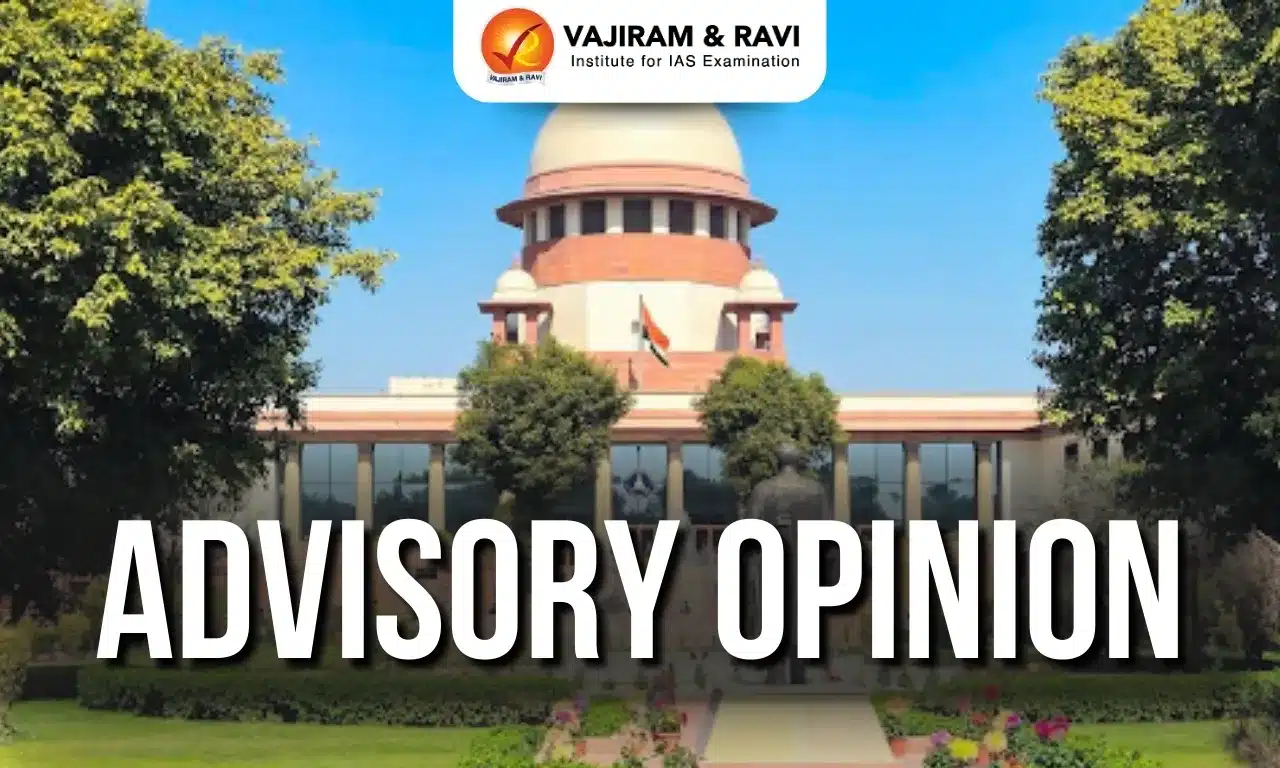
Supreme Court’s Advisory Opinion on Governor’s Powers

Advisory Opinion

Advisory Opinion Latest News

  • The Supreme Court has issued a significant advisory opinion under Article 143 of the Constitution, responding to a Presidential reference triggered by a two-judge Bench judgment from April 2025 related to delays in assent to State Bills. 

Background to the Presidential Reference

  • The Presidential reference arose due to the Supreme Court’s April 2025 judgment in State of Tamil Nadu vs. Governor of Tamil Nadu, which:
    • Mandated a three-month timeline for Governors and the President to act on Bills,
    • Declared such decisions judicially reviewable,
    • Exercised Article 142 powers to grant “deemed assent” to several pending Tamil Nadu Bills.
  • This ruling generated constitutional uncertainty, prompting the Union government to seek clarification on:
    • Whether courts can prescribe timelines,
    • Whether presidential inaction is justiciable,
    • Whether the Supreme Court’s Article 142 powers can override constitutional provisions. 

Scope of Questions Raised in the Reference

  • The reference placed 14 constitutional questions before a Constitution Bench, primarily relating to:
    • Interpretation of Article 200 and Article 201 regarding assent to State Bills,
    • Whether courts can intervene before a Bill becomes law,
    • The justiciability of delays,
    • The permissible boundaries of Article 142. 
  • These questions went to the heart of India’s federal structure and the functional relationship among State legislatures, Governors, and the Union.

Key Takeaways from the Supreme Court’s Advisory Opinion

  • The five-judge Bench delivered a comprehensive opinion, which reshapes constitutional understanding on several fronts.
  • Governor’s Options Under Article 200
    • The Court clarified that a Governor has three constitutionally recognised choices when presented with a Bill:
      • Assent,
      • Reserve the Bill for Presidential consideration,
      • Withhold assent and return the Bill to the legislature with observations.
        These options are explicitly grounded in the constitutional text. 
  • Discretion of the Governor
    • The Court held that the Governor enjoys discretion in choosing among these options and is not bound by the aid and advice of the Council of Ministers regarding assent-related decisions. 
    • This interpretation marks a significant shift from earlier decisions such as Shamsher Singh (1974) and Nabam Rebia (2016), which emphasised the primacy of ministerial advice. 
  • Limited Justiciability
    • Governor’s actions under Article 200 are generally not justiciable,
    • However, in cases of “glaring prolonged and unexplained inaction”, courts may issue a limited mandamus directing the Governor to act,
    • Courts cannot review the validity of the Governor/President’s decision before a Bill becomes law. 
  • No Judicial Timelines
    • A key reversal of the April 2025 judgment: the Court held that in the absence of constitutional timelines, the judiciary cannot prescribe time limits for Governors or the President to act on Bills. 
  • No ‘Deemed Assent’
    • The Court strongly rejected the concept of “deemed assent,” holding that the judiciary cannot substitute executive authority through Article 142. Assent-related decisions belong exclusively to the Governor or President. 

Issues Arising from the Opinion

  • Potential Undermining of Legislative Intent
    • The Court’s recognition of wide gubernatorial discretion contradicts earlier judicial positions and expert committee recommendations.
    • The Sarkaria Commission (1987) held that reserving Bills for the President should occur rarely, and only in cases of clear unconstitutionality.
    • Earlier Supreme Court cases insisted that Governors act on ministerial advice, not independent discretion.
    • The current opinion risks allowing Governors to delay or derail the legislative agenda of elected State governments. 
  • Concerns Over Lack of Timelines
    • The Punchhi Commission (2010) recommended a six-month limit for gubernatorial decisions.
    • The Supreme Court itself had earlier set non-textual timelines (e.g., in K.M. Singh, three months for Speakers to decide disqualification petitions).
    • Thus, critics argue that judicially crafted timelines can be constitutionally permissible when required to uphold democratic functioning. 
    • The current advisory opinion rejects such purposive interpretation. 

Way Forward

  • While the Governor represents the Union and the ideal of national unity, federalism is a basic structure of the Constitution. Moving forward:
    • Governors must exercise constitutional powers with responsible urgency,
    • The Centre must ensure the office is not used to thwart State governments,
    • Judicial oversight must remain available to prevent constitutional paralysis while respecting the separation of powers. 

Source: TH

Advisory Opinion FAQs

Q1: What triggered the Presidential reference?

Ans: A 2025 judgment prescribing timelines and granting deemed assent to pending Bills.

Q2: What options does a Governor have under Article 200?

Ans: Assent, return the Bill, or reserve it for the President.

Q3: Can courts set timelines for Governors or the President?

Ans: No, the Court held timelines cannot be judicially prescribed.

Q4: Is gubernatorial discretion subject to judicial review?

Ans: Only in extreme cases of prolonged unexplained inaction.

Q5: Can the Supreme Court grant ‘deemed assent’?

Ans: No, Article 142 cannot substitute constitutional powers of Governors/President.

Melghat Malnutrition Crisis: Why Infant Deaths Persist and What Experts Recommend

Melghat Malnutrition Crisis

Melghat Malnutrition Crisis Latest News

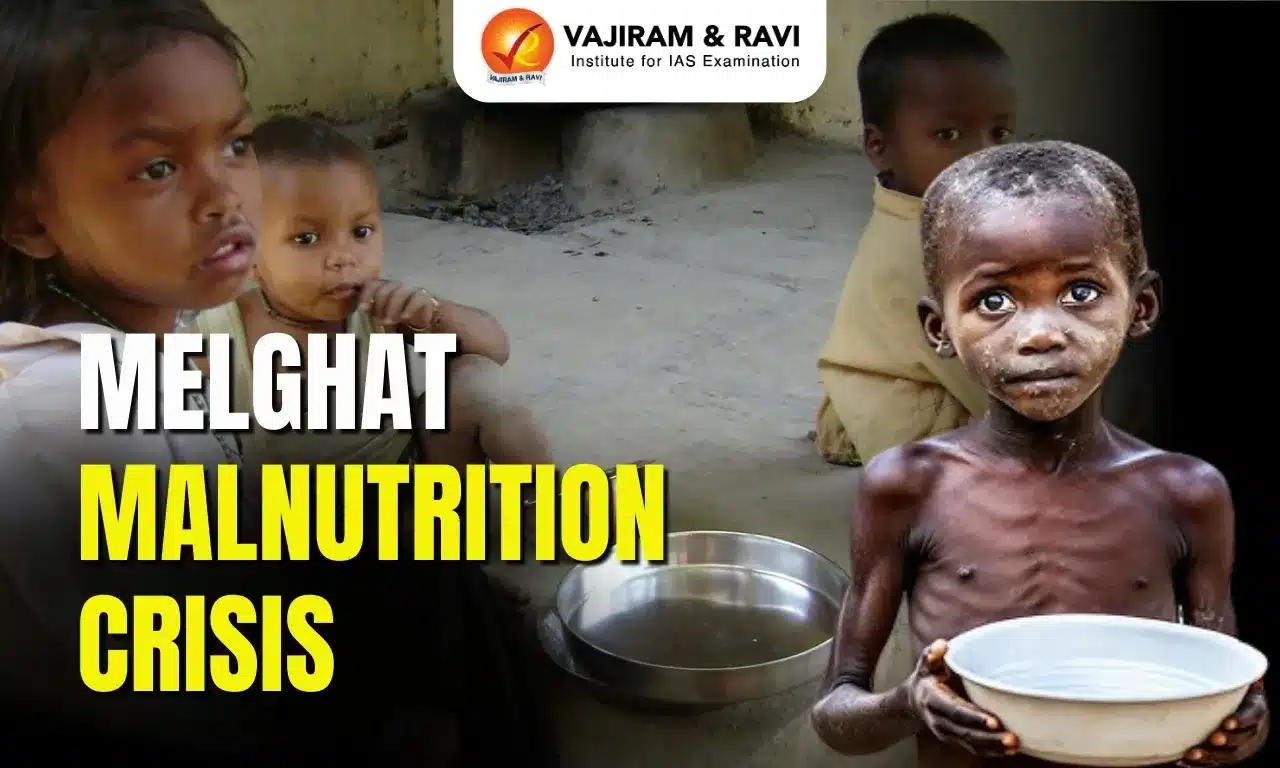
  • Recently, the Bombay High Court sharply criticised the Maharashtra and Union governments for their extremely casual handling of the alarming rise in malnutrition-related infant deaths in Melghat, a tribal-dominated region in Amravati district.
  • A petitioner informed the court that 65 infants (0–6 months) had died due to malnutrition between June 2025 and now, and over 220 children were currently classified as Severe Acute Malnutrition (SAM) — with half at risk of dying without immediate intervention.

Melghat’s Persistent Malnutrition Crisis: Current Status

  • For over three decades, Melghat, home to predominantly Korku tribal communities, has struggled with chronic infant and maternal deaths linked to malnutrition and poor healthcare access. 
  • Despite multiple government schemes, malnutrition remains widespread due to:
    • Food insecurity
    • High infection rates
    • Poor access to healthcare
    • Severe anaemia

Infant Deaths: Fluctuating but Persistently High

  • Melghat comprises Dharni and Chikhaldara talukas with 324 villages. Infant deaths remain worryingly high.
  • Officials argue deaths stem not only from malnutrition but also:
    • Anaemia
    • Sickle cell disease
    • Pneumonia
    • Delayed treatment due to poor connectivity
  • However, the petitioner maintains that malnutrition exacerbates these illnesses, making them fatal without timely care.

Alarming Malnutrition Numbers

  • An affidavit submitted to the High Court shows:
    • 10,000 children identified with malnutrition (SAM) in November 2024
      • Dharni: 1,290 children
      • Chikhaldara: 788 children
  • The district administration claims interventions like:
    • Hot cooked food scheme (eggs & bananas 4 times a week)
    • Village Child Development Centres (VCDC)
  • But also acknowledges persistent “peripheral issues” like connectivity and healthcare delays.

Statewide Malnutrition Landscape

  • According to Maharashtra's Women & Child Welfare Minister (Poshan Tracker data, Feb 2025):
    • 1.82 lakh malnourished children in the state
    • 30,800 Severe Acute Malnutrition (SAM)
    • 1,51,643 Moderate Acute Malnutrition (MAM)
  • IIPS Mumbai also reports Maharashtra’s poor nutrition indicators:
    • 35% stunted
    • 35% underweight
    • 26% wasted
  • These figures show systemic shortcomings beyond Melghat.

Persistent Challenges Fueling Melghat’s Malnutrition and Infant Mortality Crisis

  • Melghat faces severe infrastructural deficits that delay urgent medical care:
    • Poor road conditions make reaching hospitals on time difficult.
    • Inadequate electricity supply affects homes and healthcare facilities.
    • Shortage of fully functional PHCs, forcing dependence on distant hospitals.
  • These gaps contribute directly to preventable infant and maternal deaths.

Fragmented Governance and Poor Coordination

  • Experts note that various government departments work in silos, leading to:
    • Irregular supply of nutrition supplements
    • Weak monitoring of malnutrition cases
    • Poor coordination in implementing policies
  • This fragmentation undermines even well-designed interventions.

Severe Shortage of Doctors and High Absconding Rates

  • Melghat continues to struggle with recruiting and retaining medical professionals - High absenteeism among doctors.
  • Despite improved salaries and incentives, difficult working conditions deter medical staff.

Cultural Preference for Traditional Healing

  • A large section of the tribal community still depends on bhoomkas (traditional healers).
  • Methods like damma (burning skin with hot iron tongs) delay scientific treatment and worsen conditions, particularly in sick infants.

Intergenerational Malnutrition Cycle

  • Health challenges often begin before birth:
    • Many tribal women enter pregnancy underweight and anaemic
    • They give birth to low-birth-weight babies with weak immunity
    • Limited healthcare access means infections go untreated, raising mortality risks
  • This perpetuates a cycle of malnutrition across generations.

Expert-Backed Solutions to Tackle Malnutrition in Melghat

  • Experts emphasise that eliminating malnutrition requires far more than food distribution. It demands a holistic, coordinated, and systems-based approach.
  • Strengthen the Healthcare Ecosystem
    • Build a robust maternal and child healthcare system.
    • Ensure timely care for infections, anaemia, and other co-morbidities.
    • Upgrade civic and health infrastructure across Melghat.
  • Empower ASHA Workers with Strong Training
    • Create a well-trained cadre of ASHA workers skilled in early identification of malnutrition.
    • Equip them to initiate timely referrals and follow-up interventions.
  • Integrate Health and Nutrition Interventions
    • Combine nutrition support with treatment of associated illnesses.
    • Implement coordinated health–nutrition programmes rather than isolated initiatives.
  • Promote Community-Centred Behaviour Change
    • Engage communities to shift harmful practices and strengthen trust in modern healthcare.
    • Encourage awareness on maternal health, child feeding, and hygiene.
  • Ensure Interdepartmental Convergence
    • Experts stress that lasting solutions require all departments to work together:
    • Health, Women & Child Development, Rural Development, Tribal Welfare, Social Welfare, PWD
    • Coordinated action prevents gaps and improves service delivery.
  • Fix Doctor Recruitment and Retention
    • Enforce due diligence during appointments.
    • Ensure doctors serve full tenures, backed by improved working conditions and monitoring.

Conclusion

  • Melghat’s crisis is not just about food scarcity but a complex mix of poor infrastructure, healthcare gaps, cultural practices, and administrative weaknesses. 
  • Without systemic, coordinated reforms, infant deaths and malnutrition will persist.
  • Ending malnutrition in Melghat requires a synchronised, multi-sector effort — strong healthcare systems, empowered frontline workers, integrated programmes, community engagement, and strict accountability in staffing.

Source: TH | HT

Melghat Malnutrition Crisis FAQs

Q1: Why is Melghat witnessing persistent infant deaths?

Ans: Melghat faces chronic malnutrition, weak healthcare access, infections, anaemia, and delays in treatment due to poor roads and inadequate medical infrastructure.

Q2: What did the Bombay High Court observe about Melghat’s situation?

Ans: The court criticised the Maharashtra and Union governments for a casual approach and demanded detailed action-taken reports on rising infant deaths and SAM cases.

Q3: What systemic challenges worsen Melghat’s malnutrition crisis?

Ans: Poor roads, weak electricity supply, shortage of doctors, fragmented departmental coordination, and continued reliance on traditional healers worsen the crisis.

Q4: How widespread is malnutrition in Maharashtra according to Poshan Tracker?

Ans: Maharashtra has over 1.82 lakh malnourished children, including 30,800 SAM and 1.5 lakh MAM cases, indicating deep structural nutrition issues beyond Melghat.

Q5: What expert-backed solutions can help reduce infant deaths in Melghat?

Ans: Experts recommend strengthening healthcare, training ASHA workers, integrating health-nutrition interventions, improving infrastructure, and ensuring interdepartmental convergence.

Red Fort Blast Explained: How IEDs Work and Why India Needs a Counter-IED Policy

IED

IED Latest News

  • A deadly blast near the Red Fort Metro Station in Delhi on November 10 killed 13 people and injured several others, likely caused by an improvised explosive device (IED). 
  • While official details are still emerging, experts explain that IEDs are dangerous, easily assembled weapons capable of causing mass harm. 
  • They emphasise that IEDs reflect the darkest impulses of human intent and highlight the urgent need for a comprehensive national counter-IED strategy to prevent future attacks.

Why Terrorists Rely on IEDs

  • IEDs remain the preferred weapon for terrorists because they are low-risk, high-impact, and easy to assemble using widely available materials. 
  • An IED typically consists of a container, battery, detonator, switch, and explosives, with added fragments like ball bearings or nails to increase lethality. 
  • Except for the detonator, most components can be improvised from everyday items. 
  • While most groups use commercially made detonators for reliability, some extremists have experimented with unstable homemade versions. 
  • Overall, the ease of fabrication and devastating potential make IEDs a go-to tool for terror attacks.

How IEDs Reveal the ‘Signature’ of the Terror Group

  • IED components often carry identifiable patterns that help investigators trace the group behind an attack. 
  • The type of explosive used — military-grade like RDX/TNT, commercial explosives, or homemade mixtures such as ANFO (Ammonium Nitrate Fuel Oil) — offers key clues, since terror groups usually stick to familiar materials and methods.
  • The triggering mechanism also narrows down suspects. Whether the device is command-operated, timer-based, or victim-operated (like suitcase or transistor bombs) reflects the group’s typical modus operandi. 
  • Additionally, the method of placement — vehicle-borne, suicide-borne, or person-borne — further refines the analysis.
  • Together, these elements form a distinct “bomb signature,” enabling agencies to link an attack to likely perpetrators. 
  • The National Bomb Data Centre of the NSG maintains detailed blast records and provides expert assessments to support such investigations.

Declining Patterns in IED Attacks Across Conflict Zones

  • IED attacks in India have shown a steady decline across major conflict areas, including Jammu & Kashmir, Naxal-affected regions, and the hinterland. 
  • In J&K, recent blasts have often used a mix of military-grade, commercial, and homemade explosives — as seen in the 2019 Pulwama attack, which combined RDX from Pakistan with locally sourced commercial explosives and fertiliser-based materials. 
  • Drone-dropped magnetic IEDs from Pakistan, once a concern in J&K and Punjab, have also reduced significantly.
  • In Naxal-affected regions, IED incidents have sharply fallen, with most devices relying on commercially available explosives. 
  • In the rest of the country, only a few significant incidents have occurred, such as the 2024 Bengaluru Rameshwaram Café blast using low-grade explosives. 
  • Overall, jihadi groups now increasingly mix different explosive types to assemble devices, even as the overall frequency of attacks declines.

Sources of Explosives: A Persistent Cat-and-Mouse Battle

  • Military-grade materials largely enter India through Pakistan-backed channels — via drones or human couriers. 
  • Despite stronger border surveillance, agencies must intercept every attempt, while handlers need only one success. 
  • This creates an unending cat-and-mouse dynamic requiring continuous technological upgrades and vigilance.

Commercial Explosives: Pilferage from Licensed Supply Chains

  • Commercial explosives and detonators used in mining, construction and road projects are regulated by the Petroleum and Explosives Safety Organization (PESO).
  • Although PESO enforces strong safety standards, its limited manpower leads to gaps at the last-mile. 
  • In insurgency-prone zones, pilferage occurs through coercion or collusion with end-users, making enforcement a challenge.

Homemade Explosives: Misuse of Precursor Chemicals

  • Terrorists often extract explosive material from precursor chemicals and commonly available substances such as fertilisers.
  • While Indian fertilisers include safeguards that make “cooking” difficult, the threat persists due to the wide availability of precursor items. 
  • Experts recommend identifying such chemicals clearly and mandating vendors to report bulk purchases to local police.
  • This layered sourcing — border smuggling, local pilferage, and chemical extraction — underscores the need for tighter monitoring, inter-agency coordination, and proactive regulation.

Toward a National Counter-IED Policy Framework

  • A comprehensive National Counter-IED Policy is urgently needed to unify strategy, clarify responsibilities, and strengthen coordination among all stakeholders involved in preventing and responding to explosive threats.
  • The Red Fort blast appears to involve a nitrate-based mix, but speculating further is premature. 
  • The Nowgam police station explosion highlights critical gaps in safe handling
    • Such blasts can occur either due to an embedded detonator accidentally triggering upon friction or because contaminated, confined ammonium nitrate detonates when exposed to sustained heat.
  • The key lesson is clear: all recovered explosives, blast remnants, and devices must be “rendered safe” exclusively by trained Bomb Detection and Disposal Squads before any evidence collection begins.
  • The account also underscores the exemplary actions of the Srinagar doctor-cop whose meticulous investigation dismantled a new terror module — a reminder of the critical role of skilled, alert personnel in counter-terror operations.

Source: IE | BS

IED FAQs

Q1: What caused the Red Fort blast according to initial assessments?

Ans: The Red Fort blast was likely triggered by a nitrate-based improvised explosive device (IED), though full details are still under investigation by security agencies.

Q2: Why are IEDs popular among terrorist groups?

Ans: IEDs are cheap, easy to assemble from common materials, involve low risk for attackers, and can create large-scale destruction, making them ideal weapons.

Q3: How do investigators identify the terror group behind an IED blast?

Ans: Investigators analyse the explosive type, triggering mechanism, and placement method to determine a group’s unique “bomb signature” and trace likely perpetrators.

Q4: What are the key trends in IED attacks in India?

Ans: IED attacks have declined across J&K, Naxal regions, and the hinterland, but groups now commonly use mixed explosive materials, including military, commercial, and homemade components.

Q5: Why does India need a national counter-IED policy?

Ans: A unified policy would streamline responsibilities, improve coordination, strengthen explosive monitoring, and ensure safe handling of recovered devices to prevent accidental detonations.

Enquire Now