Thornthwaite Climatic Classification, Divisions, Indian Regions

Thornthwaite Climatic Classification

Thornthwaite Climatic Classification is a climate classification system developed by American climatologist Charles Warren Thornthwaite in 1931. It categorises climatic regions based on precipitation effectiveness, temperature efficiency and water balance. Revised in 1948, the system introduced potential evapotranspiration to assess moisture availability and explain climatic variations in relation to vegetation and soil moisture.

What is Thornthwaite Climatic Classification?

Thornthwaite Climatic Classification is a quantitative method of classifying climates according to the relationship between precipitation, evaporation and thermal conditions. Its central focus is the availability of water for plant growth, making it useful for understanding moisture regimes and climatic conditions.

Thornthwaite Climatic Classification Features

The original Thornthwaite Climatic Classification used precipitation effectiveness and temperature efficiency, while the revised system incorporated potential evapotranspiration and moisture indices.

  • Precipitation Effectiveness (P/E) Index: It measures the effectiveness of precipitation in supporting vegetation by comparing monthly precipitation with evaporation. Its cumulative value determines five major humidity regions, ranging from per humid to arid climates.
  • Humidity Regions: The P/E index identifies five climatic categories: A (Wet), B (Humid), C (Sub humid), D (Semi arid) and E (Arid), associated respectively with rainforest, forest, grassland, steppe and desert vegetation.
  • Temperature Efficiency (T/E) Index: It measures thermal efficiency using average temperature conditions and divides climates into six thermal provinces: A' (Tropical), B' (Subtropical), C' (Temperate), D' (Taiga), E' (Tundra) and F' (Frost).
  • Seasonal Rainfall Distribution: The classification uses additional symbols to represent rainfall patterns. The symbols include r for heavy rainfall throughout the year, s for summer rainfall scarcity, w for winter rainfall scarcity and d for scarcity in all seasons.
  • 1948 Modified Classification: The revised system introduced Potential Evapotranspiration (PE), which estimates atmospheric water loss through soil evaporation and plant transpiration under unlimited water supply conditions.
  • Moisture Indices: The modified method uses the Aridity Index (Ia), Humidity Index (Ih) and Moisture Index (Im) to assess water deficiency, surplus and overall moisture availability.
  • Water Balance: It compares precipitation with potential evapotranspiration. When precipitation exceeds PE, water surplus occurs, whereas PE exceeding precipitation indicates moisture deficit.

Thornthwaite Climatic Classification of India

Thornthwaite Climatic Classification identifies Indian climatic regions according to variations in precipitation, potential evapotranspiration and moisture availability.

  • Per humid Region (A): It includes the Western Ghats, Malabar coast and most parts of northeastern India, where abundant precipitation supports high moisture availability.
  • Humid Region (B): This zone occurs around the per humid belt and includes adjoining areas receiving sufficient precipitation to maintain relatively favourable moisture conditions.
  • Moist Sub humid Region (C1): It comprises a narrow belt adjoining the humid Western Ghats region and parts of eastern India, particularly West Bengal and Odisha.
  • Dry Sub humid Region (C2): It covers parts of the northern Ganga basin, Uttar Pradesh, Bihar, Madhya Pradesh, Chhattisgarh, Jharkhand, western Maharashtra and southern Gujarat.
  • Semi arid Region (D): It includes parts of Punjab and Haryana, eastern Rajasthan, Maharashtra, Karnataka, Telangana and western Tamil Nadu, where moisture availability is comparatively limited.
  • Arid Region (E): It covers western Rajasthan, parts of western Gujarat, western Himalayan areas and rain shadow regions of the Western Ghats, characterised by significant moisture deficiency.

Thornthwaite Climatic Classification Significance

The Thornthwaite Climatic Classification provides a quantitative understanding of climatic moisture conditions and helps explain the relationship between water availability, vegetation and agricultural requirements.

  • Agricultural Planning: It helps assess moisture availability and water requirements, supporting decisions related to crop suitability, irrigation planning and agricultural resource management.
  • Water Resource Management: Its water balance approach helps identify regions experiencing water surplus or deficit, supporting hydrological studies and regional water resource planning.
  • Vegetation Assessment: By connecting precipitation effectiveness with vegetation types, it explains the influence of climatic moisture conditions on the distribution of natural vegetation.
  • Quantitative Climate Assessment: The use of potential evapotranspiration and moisture indices provides a measurable basis for comparing climatic conditions across different geographical regions.

Thornthwaite Climatic Classification Criticism

Despite its quantitative approach, Thornthwaite Climatic Classification has limitations related to computational complexity, data requirements and inadequate consideration of atmospheric and geographical factors.

  • Complex Methodology: Calculating potential evapotranspiration, moisture indices and soil water balance involves several variables, making the classification difficult to apply and interpret.
  • Data Limitations: The system requires reliable and continuous meteorological observations, particularly temperature, precipitation and evaporation related data, which may not be available across all regions.
  • Neglect of Atmospheric Factors: It does not adequately consider prevailing winds, air masses, atmospheric pressure and relative humidity, which significantly influence climatic conditions.
  • Limited Regional Applicability: The system is considered more suitable for North American conditions, with comparatively limited effectiveness in tropical and semi arid regions due to climatic variations.
  • Neglect of Relief and Solar Factors: It gives insufficient importance to topography, altitude and variations in solar radiation, which influence regional temperature and precipitation patterns.
  • Limited Contemporary Application: Its framework does not explicitly incorporate changing climatic conditions, global warming and the increasing occurrence of extreme weather events.

Thornthwaite Climatic Classification FAQs

Q1: Who proposed the Thornthwaite Climatic Classification?

Ans: Charles Warren Thornthwaite, an American climatologist, proposed the Thornthwaite Climatic Classification in 1931. He revised the system in 1948 by introducing potential evapotranspiration.

Q2: What are the five humidity regions in Thornthwaite Climatic Classification?

Ans: The five humidity regions are A (Per humid), B (Humid), C (Sub humid), D (Semi arid) and E (Arid), identified using the precipitation effectiveness index.

Q3: What is the role of potential evapotranspiration in Thornthwaite Climatic Classification?

Ans: Potential evapotranspiration estimates the combined water loss through soil evaporation and plant transpiration under unlimited water availability. It helps determine moisture surplus, moisture deficit and climatic moisture conditions.

Q4: Which climatic region of India is classified as arid under Thornthwaite Climatic Classification?

Ans: Western Rajasthan, parts of western Gujarat, western Himalayan areas and rain shadow regions of the Western Ghats are included in the arid climatic category.

Q5: What is the main difference between Thornthwaite's 1931 and 1948 classifications?

Ans: The 1931 classification primarily used precipitation effectiveness and temperature efficiency, whereas the 1948 revision introduced potential evapotranspiration, water balance and moisture indices for a more quantitative assessment of climate.

International Day for the Abolition of Slavery, Theme, Significance

International Day for the Abolition of Slavery

The International Day for the Abolition of Slavery is observed every year on 2 December to highlight the need to eliminate slavery and human exploitation. The day focuses on addressing modern forms of slavery, including forced labour, human trafficking, debt bondage and forced marriage. It also reinforces the international commitment to protecting human dignity, fundamental rights and freedom from exploitation.

International Day for the Abolition of Slavery 2026

The International Day for the Abolition of Slavery 2026 will be observed on Wednesday, 2 December 2026. This year marks 100 years of the 1926 Slavery Convention, highlighting the continuing need for international cooperation to eliminate slavery and protect vulnerable populations from exploitation.

International Day for the Abolition of Slavery Theme 2026

The International Day for the Abolition of Slavery Theme 2026 focuses on “100 Years on: Fulfilling the Promise of Abolition.” It marks the centenary of the 1926 Slavery Convention and calls for stronger efforts by governments, businesses and civil society to end modern slavery and ensure justice and protection for survivors.

International Day for the Abolition of Slavery Historical Background

The International Day for the Abolition of Slavery 2026 observance has its roots in the United Nations' efforts to eliminate slavery through international conventions and human rights commitments.

  • 1926 Slavery Convention: Adopted on 25 September 1926 in Geneva, it established an international framework for suppressing slavery and the slave trade, recognising freedom from slavery as a fundamental human right.
  • UN General Assembly Resolution 317(IV): On 2 December 1949, the UN General Assembly adopted the Convention for the Suppression of the Traffic in Persons and of the Exploitation of the Prostitution of Others.
  • Date of Observance: The International Day for the Abolition of Slavery is observed annually on 2 December.
  • International Labour Organisation Protocol: The ILO adopted a legally binding Protocol to strengthen efforts against forced labour, which entered into force in November 2016.
  • 2026 Centenary: The year 2026 marks 100 years of the 1926 Slavery Convention, renewing international attention towards eliminating contemporary forms of slavery.

What is Slavery?

Slavery refers to situations where individuals are exploited and cannot refuse or leave because of coercion, threats, violence, deception or abuse of power. The several forms of Modern Slavery include:

  • Forced Labour: It involves compelling individuals to work against their will through threats or coercion. It occurs in sectors such as agriculture, construction, domestic work, manufacturing and services.
  • Debt Bondage: Individuals are forced to work to repay debts under exploitative conditions, often without a realistic opportunity to clear their obligations or regain freedom.
  • Human Trafficking: It involves recruiting, transporting, transferring, harbouring or receiving people through coercion or other means for exploitation, including forced labour and sexual exploitation.
  • Child Labour: Children are engaged in economically exploitative or hazardous work that affects their education, health and overall development, violating their rights and protection.
  • Forced Marriage: Individuals are compelled to enter marriages without free and informed consent, often through threats, coercion or exploitation, particularly affecting women and girls.
  • Sexual Exploitation: Individuals are subjected to sexual activities through force, coercion or trafficking for the benefit of exploiters, violating their dignity and basic human rights.
  • Forced Recruitment of Children: Children are forcibly recruited or used in armed conflicts, exposing them to violence and exploitation and violating international child protection standards.

International Day for the Abolition of Slavery Significance

The International Day for the Abolition of Slavery highlights the continuing prevalence of modern slavery and the need for effective international action to safeguard human rights and eliminate exploitation.

  • Protection of Human Rights: It reinforces freedom, equality and human dignity by drawing attention to exploitation that deprives individuals of their liberty, security and basic rights.
  • Global Prevalence of Modern Slavery: According to ILO estimates, approximately 50 million people were living in modern slavery worldwide in 2021, including 27.6 million in forced labour.
  • Economic Consequences: Forced labour generates an estimated US$236 billion in illegal annual profits globally, resulting in stolen wages, reduced government revenue and stronger criminal networks.
  • Vulnerability of Women and Children: Women and children face disproportionate risks of exploitation, particularly through forced marriage, trafficking, sexual exploitation and child labour.
  • International Cooperation: It encourages governments, businesses and civil society to strengthen prevention, improve victim protection, ensure accountability and address the conditions that facilitate exploitation.
  • Regional Distribution of Forced Labour: Asia and the Pacific recorded the highest number of forced labour victims at 15.1 million in 2021, followed by Europe and Central Asia with 4.1 million.
  • Strengthening Justice and Accountability: The observance promotes access to justice and remedies for survivors while emphasising the need to prevent exploitation and hold perpetrators accountable.
  • Addressing Economic Exploitation: It highlights the importance of placing human rights above profit and ensuring fair working conditions, particularly for migrant workers and economically vulnerable communities.

International Day for the Abolition of Slavery FAQs

Q1: When is the International Day for the Abolition of Slavery observed?

Ans: The International Day for the Abolition of Slavery is observed annually on 2 December to promote efforts against modern slavery and human exploitation.

Q2: What is the theme of the International Day for the Abolition of Slavery 2026?

Ans: The 2026 theme is “100 years on: Fulfilling the promise of abolition”, marking the centenary of the 1926 Slavery Convention.

Q3: Which UN resolution led to the observance of the International Day for the Abolition of Slavery?

Ans: The observance commemorates the adoption of the Convention for the Suppression of the Traffic in Persons and of the Exploitation of the Prostitution of Others through UN General Assembly Resolution 317(IV) on 2 December 1949.

Q4: When was the 1926 Slavery Convention adopted?

Ans: The 1926 Slavery Convention was adopted on 25 September 1926 in Geneva to establish an international framework for suppressing slavery and the slave trade.

Q5: How many people are estimated to be living in modern slavery worldwide?

Ans: According to ILO estimates, approximately 50 million people were living in modern slavery worldwide in 2021, including victims of forced labour and forced marriage.

Iwo Jima

Iwo Jima

Iwo Jima Latest News

Japan's Meteorological Agency recently detected an underwater volcanic eruption off the shores of Iwo Jima. 

About Iwo Jima

  • Iwo Jima, now officially known as Iwo To,  is a small Japanese island in the Pacific Ocean.
  • It is located approximately 1223 km from mainland Japan.  
  • The island is volcanic in origin, and the name Iwo Jima means ‘’Sulfur Island’’ in Japanese. 
  • The island was created by the twin cones of a volcano rising from the sea, and it still sits on an active volcano that frequently has small eruptions.
  • Iwo Jima is part of a chain of three islands called the Volcano Islands. 
  • It is 8 kilometers long and 4 kilometers wide at its broadest point. 
  • It is characterized by its rugged terrain, including the prominent Mount Suribachi (an extinct volcano).
  • Although the island had a small population historically, it was evacuated during World War II and has since seen limited civilian presence, as it is primarily controlled by the Japanese military.  
  • Access to the island is restricted, with visits allowed only under specific conditions. 
  • Additionally, recent volcanic activity has raised concerns, with eruptions leading to the emergence of a new island named Niijima.  
  • It is known for its significant role in World War II, particularly during the intense 36-day Battle of Iwo Jima.

Key Facts about Battle of Iwo Jima

  • It was fought during World War II between the United States and Japan. 
  • It took place from 19 February to 26 March 1945.
  • The battle was part of the US strategy of advancing towards Japan through the Pacific.
  • The US military operation was code-named Operation Detachment.
  • The island was strategically important because its airfields could support US fighter escorts for B-29 bombing missions and provide emergency landing facilities for damaged aircraft returning from Japan.
  • The battle commenced on February 19, 1945.
  • The struggle for possession of the island continued for almost a month before it was officially declared captured by the United States.  
  • It resulted in heavy casualties on both sides. About 18,500 Japanese troops were killed during the battle, while some 6,800 U.S. Marines were killed and 19,200 were wounded. 
  • The iconic image of the U.S. Marines raising the flag on Mount Suribachi during this battle has become a symbol of American military courage and is commemorated by the Marine Corps War Memorial in Arlington, D.C. 
  • This picture was widely reprinted, and statues, paintings, and a U.S. postage stamp were based on it. 
  • Iwo Jima and the other Volcano Islands were administered by the United States from 1945 until they were returned to Japan in 1968.

News: SP

Iwo Jima FAQs

Q1: In which ocean is Iwo Jima located?

Ans: Pacific Ocean.

Q2: What is the geological origin of Iwo Jima?

Ans: Volcanic origin.

Q3: Which country's military primarily controls Iwo Jima today?

Ans: Japan.

Q4: Why is Iwo Jima historically significant?

Ans: Because of its important role in World War II, particularly the Battle of Iwo Jima.

Q5: Between which two countries was the Battle of Iwo Jima fought?

Ans: The United States and Japan.

G V Mavalankar, Biography, Contributions, First Lok Sabha Speaker

G V Mavalankar

G V Mavalankar, popularly known as Dadasaheb, was an Indian freedom fighter and parliamentarian who became the First Speaker of the Lok Sabha. He played a significant role in developing India's parliamentary institutions, establishing legislative procedures and strengthening the democratic functioning of Parliament after Independence.

G V Mavalankar Birth Anniversary 2026

G V Mavalankar Birth Anniversary 2026 was observed on November 27th 2026, marking his 138th birthday. G V Mavalankar was born on 27 November 1888 in Baroda, present day Gujarat. On 27 November 2026, Lok Sabha Speaker Om Birla paid floral tributes to G V Mavalankar, the First Speaker of the Lok Sabha, at Samvidhan Sadan. Deputy Chairman of Rajya Sabha Harivansh, Members of Parliament and other dignitaries also paid homage. 

His contribution to parliamentary democracy remains significant, particularly his role in establishing the conventions and practices of the Lok Sabha.

G V Mavalankar Biography

G V Mavalankar, also known as Ganesh Vasudev Mavalankar, was a lawyer, freedom fighter, social worker and prominent parliamentary leader who shaped India's legislative institutions.

  • Early Life: Born on 27 November 1888 in Baroda, Mavalankar completed his graduation in Science from Gujarat College, Ahmedabad, in 1908 and obtained his law degree in 1912.
  • Legal Career: He began practising law in 1913 and established himself as a successful lawyer. His professional and social activities brought him into contact with Mahatma Gandhi and Sardar Vallabhbhai Patel.
  • Political Association: He joined the Indian National Congress through the Non Cooperation Movement and served as Secretary of the Gujarat Provincial Congress Committee during 1921-22.
  • Municipal Administration: He was associated with Ahmedabad Municipality from 1919 and served as its President during 1930-33 and 1935-36, contributing to local administration and public affairs.
  • Legislative Career: Elected to the Bombay Legislative Assembly from Ahmedabad in 1937, he became its Speaker and continued in the position until 1946.
  • Achievements: He became the first Speaker of the Lok Sabha in 1952.
  • Death: He passed away on 27 February 1956 in Ahmedabad, at the age of 67.

G V Mavalankar Contributions

The Contributions of G V Mavalankar extended beyond the freedom movement to parliamentary development, legislative administration, education and social service in independent India.

1. Political and Social Contributions

  • Indian National Congress: Mavalankar became associated with the Congress through the Non Cooperation Movement and served as Secretary of the Gujarat Provincial Congress Committee in 1921-22, strengthening organisational activities in the region.
  • Swaraj Party Association: He was briefly associated with the Swaraj Party during the 1920s before returning to Gandhi's Civil Disobedience Movement and participating in the Salt Satyagraha in 1930.
  • Legislative Leadership: His election to the Bombay Legislative Assembly in 1937 marked the beginning of his major legislative responsibilities, where he served as Speaker for nearly nine years.
  • Social Relief Activities: He contributed to famine and flood relief operations in Gujarat, connecting nationalist activities with public welfare and providing assistance to affected communities.

2. Contributions to the Freedom Struggle

  • Non Cooperation Movement: He actively participated in the Non Cooperation Movement led by Mahatma Gandhi, which encouraged his association with the national movement and brought him into active Congress politics.
  • Kheda Satyagraha: He participated in the Kheda campaign, popularly associated with the no revenue movement, which mobilised peasants against revenue collection during conditions of agricultural distress.
  • Association with National Leaders: His close association with Mahatma Gandhi and Sardar Vallabhbhai Patel strengthened his involvement in Gujarat's political and social movements during the freedom struggle.

3. Parliamentary Contributions and Role as the First Speaker of the Lok Sabha

  • First Speaker of Lok Sabha: On 15 May 1952, he was unanimously elected as the first Speaker of the Lok Sabha after the formation of the First Lok Sabha, becoming a key figure in India's parliamentary history.
  • Constituent Assembly (Legislative): He was elected Speaker of the Constituent Assembly (Legislative) on 17 November 1947, presiding over its functioning as a legislative body after Independence.
  • Provisional Parliament: Following the adoption of the Constitution on 26 November 1949, he became Speaker of the Provisional Parliament and continued in this position until the First Lok Sabha was constituted in 1952.
  • Central Legislative Assembly: He presided over the Central Legislative Assembly from 1946 until 14-15 August 1947, overseeing its functioning during the final phase of British rule.
  • Strengthening Question Hour: He helped establish Question Hour as an important parliamentary practice, enabling members to question the government and seek accountability regarding executive functioning.
  • Parliamentary Discussions: He encouraged structured parliamentary discussions, including proceedings on the President's Address and the Motion of Thanks, strengthening legislative deliberation.
  • Parliamentary Committees: He established important committees, including the Rules Committee, Business Advisory Committee, Committee of Privileges and Committee on Private Members' Bills and Resolutions, strengthening parliamentary functioning.
  • Non Partisan Conduct: Despite his association with the Congress, he maintained impartiality as Speaker and prioritised the dignity, independence and orderly functioning of the House.

4. Educational Contributions

G V Mavalankar considered education essential for social development and contributed to the establishment and growth of educational institutions in Gujarat.

  • Ahmedabad Education Society: He played an important role in establishing the Ahmedabad Education Society along with Kasturbhai Lalbhai and Amritlal Hargovindas, supporting the development of higher education.
  • Gujarat Education Society: He served as its Honorary Secretary and contributed to educational development through institutional activities and public engagement.
  • Gujarat Vernacular Society: He served as its President, supporting the promotion of education and the development of regional language learning.

5. Literary Contributions

Mavalankar also contributed to literature through his writings in Gujarati and English, documenting his experiences, social observations and association with the national movement.

  • Manavatana Jharna: This Gujarati work contains stories concerning prisoners and reflects his interest in human experiences and social issues.
  • Sansmarano: In this work, he recorded his recollections of Mahatma Gandhi and his communications with the national leader, providing insights into their association.
  • Other Writings: His other important works include My Life at the Bar, A Great Experiment and G.V. Mavalankar Speeches and Writings, reflecting his experiences and public life.

G V Mavalankar FAQs

Q1: Who was G V Mavalankar?

Ans: G V Mavalankar, popularly known as Dadasaheb, was an Indian freedom fighter and parliamentarian who became the first Speaker of the Lok Sabha on 15 May 1952.

Q2: When and where was G V Mavalankar born?

Ans: G V Mavalankar was born on 27 November 1888 in Baroda, present day Gujarat.

Q3: Who was the First Speaker of the Lok Sabha in India?

Ans: Ganesh Vasudev Mavalankar was the first Speaker of the Lok Sabha. He was elected to the position on 15 May 1952.

Q4: Why is G V Mavalankar known as the Father of the Lok Sabha?

Ans: Pt. JL Nehru called G V Mavalankar as the Father of the Lok Sabha because he established several parliamentary procedures, committees and conventions that strengthened the functioning of India's lower House.

Q5: When did G V Mavalankar die?

Ans: G V Mavalankar died on 27 February 1956 in Ahmedabad, Gujarat, at the age of 67.

KN-23 Missile

KN-23 Missile

KN-23 Missile Latest News

Ukraine's military intelligence agency recently said that North ​Korea has temporarily halted some military cooperation with Russia, including deliveries of KN-23 ballistic missiles, following ‌diplomatic tensions between the allies.

About KN-23 Missile

  • The KN-23, also known as Hwasong-11Ga, is a North Korean road-mobile short-range ballistic missile (SRBM).
  • It was first revealed during a North Korean military parade in 2018 and entered service around 2019-2020. 
  • It bears conceptual similarities to the Russian Iskander and the South Korean Hyunmoo 2.

KN-23 Missile Features

  • It is a single-stage, solid-fuel missile fitted with a cluster munition warhead.
  • The missile measures approximately 7.5 m in length, 0.95 m in diameter, and weighs 3415 kg in total. 
  • It can carry a nuclear, chemical, or conventional warhead weighing around 500 kg. 
  • With a range of 600-700 km and a circular error probable (CEP) of 5 to 30 meters, the missile is notably accurate.
  • The weapon features fins that enable it to swerve in flight, complicating the work of interceptor missiles. 
  • Its relatively low, quasi-ballistic trajectory and terminal-phase manoeuvres can make interception by conventional missile defence systems more difficult.

News: REUT

KN-23 Missile FAQs

Q1: What is the KN-23 missile?

Ans: A North Korean road-mobile short-range ballistic missile (SRBM).

Q2: What is the alternative name of the KN-23 missile?

Ans: Hwasong-11Ga.

Q3: What type of propulsion system does the KN-23 missile use?

Ans: A single-stage, solid-fuel propulsion system.

Q4: What is the approximate range of the KN-23 missile?

Ans: 600–700 km.

Q5: Why is the KN-23 missile difficult for conventional missile defence systems to intercept?

Ans: Because of its relatively low quasi-ballistic trajectory and terminal-phase manoeuvres.

INS Vindhyagiri

INS Vindhyagiri

INS Vindhyagiri Latest News

Recently, INS Vindhyagiri (Yard 3024) was delivered to the Indian Navy at GRSE, Kolkata.

About INS Vindhyagiri

  • It is the seventh and final ship of the Nilgiri class frigate developed under Project 17A.
  • It is built by Garden Reach Shipbuilders and Engineers Ltd (GRSE).
  • Project 17A frigates are versatile multi-mission platforms, designed to address current and future challenges in the maritime domain.
  • It is named after the Vindhyagiri mountain range in Karnataka, the ship is a reincarnation of the erstwhile INS Vindhyagiri, a Leander-class frigate.
  • It is designed by the Warship Design Bureau (WDB) and overseen by the Warship Overseeing Team (Kolkata).

Key Features of INS Vindhyagiri

  • Armaments: It is equipped with BrahMos anti-ship and land-attack cruise missiles, along with Barak 8 anti-aircraft missiles.
  • Propulsion: The ships are configured with Combined Diesel or Gas (CODOG) propulsion plants, comprising a diesel engine and a gas turbine that drive a Controllable Pitch Propeller (CPP) on each shaft, and a state-of-the-art Integrated Platform Management System (IPMS).
  • Capacity: It is capable of anti-air, anti-surface, and anti-submarine warfare operations. The platform offers advanced survivability and improved operational capabilities.
  • The potent and technologically advanced weapons and sensors suite significantly enhances the ships’ multi-dimensional warfare capabilities.

Source: PIB

International Commission for the Conservation of Atlantic Tunas

International Commission for the Conservation of Atlantic Tunas

International Commission for the Conservation of Atlantic Tunas Latest News

Recently, fishing nations belonging to the International Commission for the Conservation of Atlantic Tunas (ICCAT) have agreed on new measures to enforce a ban on shark finning, following eight days of negotiations.

About International Commission for the Conservation of Atlantic Tunas

  • It is a regional fisheries management organisation responsible for the conservation of tuna and tuna-like species in the Atlantic Ocean and adjacent seas.
  • History: It was established at a Conference of Plenipotentiaries, which prepared and adopted the International Convention for the Conservation of Atlantic Tunas signed in Rio de Janeiro, Brazil, on 14 May 1966. 
  • After a ratification process, the Convention entered formally into force on 21 March 1969.
  • Objective: The main objective of ICCAT is maintaining the populations of tuna and tuna-like species found in the Atlantic Ocean and the adjacent seas at levels, which will permit the maximum sustainable catch for food and other purposes.
  • Member Countries: At present there are 56 Contracting Parties.
    • India is not a Contracting Party to this organisation..
  • Governance Structure: ICCAT consists of the Commission, the Council, the Secretariat, the Committees, the Panels and the Working Groups
  • Headquarter: The Secretariat has its headquarters in Madrid, Spain 

Also Read: Indian Ocean Tuna Commission (IOTC)

Functions of International Commission for the Conservation of Atlantic Tunas

  • Collecting and analysing statistical information relating to the current conditions and trends of the tuna fishery resources of the Convention area;
  • Studying and appraising information concerning measures and methods to ensure maintenance of the populations of tuna and tuna-like fishes in the Convention area
  • Recommending studies and investigations to the Contracting Parties;
  • Provides a mechanism for Contracting Parties to agree on management measures, and produces relevant publications;
  • Publishing and otherwise disseminating reports of its findings and statistic

Source: DTE

International Commission for the Conservation of Atlantic Tunas FAQs

Q1: Where is the secretariat of International Commission for the Conservation of Atlantic Tunas is located?

Ans: Madrid, Spain 

Q2: What is International Commission for the Conservation of Atlantic Tunas?

Ans: It is a regional fisheries management organisation responsible for the conservation of tuna and tuna-like species in the Atlantic Ocean and adjacent seas.

Brine Pools

Key Facts About Brine Pools

Brine Pools Latest News

More than a mile beneath the surface of the Red Sea, scientists recently discovered rare underwater lakes called brine pools that could reveal secrets about Earth's ancient oceans and the possibility of alien life.

About Brine Pools

  • Brine pools are hypersaline (extremely salty) and anoxic (oxygen-depleted) bodies of water that form on the seafloor.
  • They are often referred to as “underwater lakes” or “brine lakes” because they appear as distinct pools, separate from the surrounding seawater due to their high salinity and density.
  • Brine pools are formed when salt deposits beneath the seafloor dissolve and rise, mixing with seawater, producing highly concentrated brine.
    • The dense brine accumulates in depressions on the seafloor and does not readily mix with the surrounding seawater.
    • It creates its own body of water with a distinct surface and shoreline-like boundaries on the ocean floor. 
  • Brine pools can be three to eight times saltier than normal seawater.
  • Only a small number of brine pools have ever been documented, and they are concentrated in just three regions of the world: the Gulf of Mexico, the Mediterranean Sea, and the Red Sea. 
    • The deepest-known brine pool lies in the Orca Basin in the Gulf of Mexico, some 2,200 m below sea level. 
  • They contain almost no oxygen and are far too saline for animals to survive. 
  • Some brine pools also contain toxic chemicals, such as hydrogen sulfide, aside from methane, 
  • Their extreme salinity and chemical composition make them hostile to most marine animals, earning them various nicknames such as “Jacuzzi of despair” and “pit of despair” and “hot tub of despair”.  
  • But certain highly adapted chemosynthetic organisms have found ways to survive and even thrive on the shores of these undersea lakes.

News: SD

Brine Pools FAQs

Q1: What are brine pools?

Ans: Hypersaline (extremely salty) and anoxic (oxygen-depleted) bodies of water found on the seafloor.

Q2: Why are brine pools often called “underwater lakes” or “brine lakes”?

Ans: Because they appear as distinct pools separated from the surrounding seawater due to differences in salinity and density.

Q3: How are brine pools formed?

Ans: They form when underground salt deposits beneath the seafloor dissolve and mix with seawater, producing highly concentrated brine.

Q4: How much saltier can brine pools be compared to normal seawater?

Ans: Approximately three to eight times saltier.

Q5: Which three major regions of the world are known for brine pools?

Ans: The Gulf of Mexico, the Mediterranean Sea and the Red Sea.

Indian Ocean Rim Association

Indian Ocean Rim Association

Indian Ocean Rim Association Latest News

Recently, India hosted the 25th Indian Ocean Rim Association (IORA) Council of Ministers Meeting in New Delhi.

About Indian Ocean Rim Association

  • It was established in 1997 as an intergovernmental organisation of States on the rim of the Indian Ocean.
  • It was formerly known as the Indian Ocean Rim Initiative and the Indian Ocean Rim Association for Regional Cooperation (IOR-ARC).
  • Objectives of IORA 
    • To promote sustainable growth and balanced development of the region and member states.
    • To focus on those areas of economic cooperation which provide maximum opportunities for development, shared interest and mutual benefits.
    • To promote liberalisation, remove impediments and lower barriers towards a freer and enhanced flow of goods, services and investment within the Indian Ocean Rim.
  • Member countries
    • It has members from Africa, West Asia, South Asia, Southeast Asia, Europe and Oceania.
    • It currently comprises 23 member states and 12 dialogue partners.
      • Asia: India, Bangladesh, Indonesia, Iran, Malaysia, Maldives, Oman, Singapore, Sri Lanka, Thailand, United Arab Emirates and Yemen.
      • Africa: Kenya, Madagascar, Mozambique, Somalia , South Africa, Tanzania, Comoros, Mauritius, Seychelles.
      • Oceania: Australia.
      • Europe: France
    • Dialogue Partners: China, Egypt, the European Union, Germany, Italy, Japan, Russia, Saudi Arabia, South Korea, Türkiye, the United Kingdom, and the United States.
  • Six priority areas of IORA: Trade and Investment, Maritime Safety and Security, Fisheries Management, Disaster Risk Management and Blue Economy. 

Governance of Indian Ocean Rim Association 

  • Its apex body is the Council of Foreign Ministers (COM) which meets annually.
  • The secretariat is based in Ebène Mauritius and is overseen by a secretary-general who is appointed for a three-year period.

Source: IE

Indian Ocean Rim Association FAQs

Q1: Where is Indian Ocean Rim Association's secretariat is located?

Ans: Ebène Mauritius

Q2: What is the objective of Indian Ocean Rim Association?

Ans: To promote sustainable growth and balanced development of the region and member states.

Kinnerasani Wildlife Sanctuary

Kinnerasani Wildlife Sanctuary

Kinnerasani Wildlife Sanctuary Latest News

Recently, nine persons were taken into custody in a wildlife poaching case in Kinnerasani Wildlife Sanctuary. 

About Kinnerasani Wildlife Sanctuary

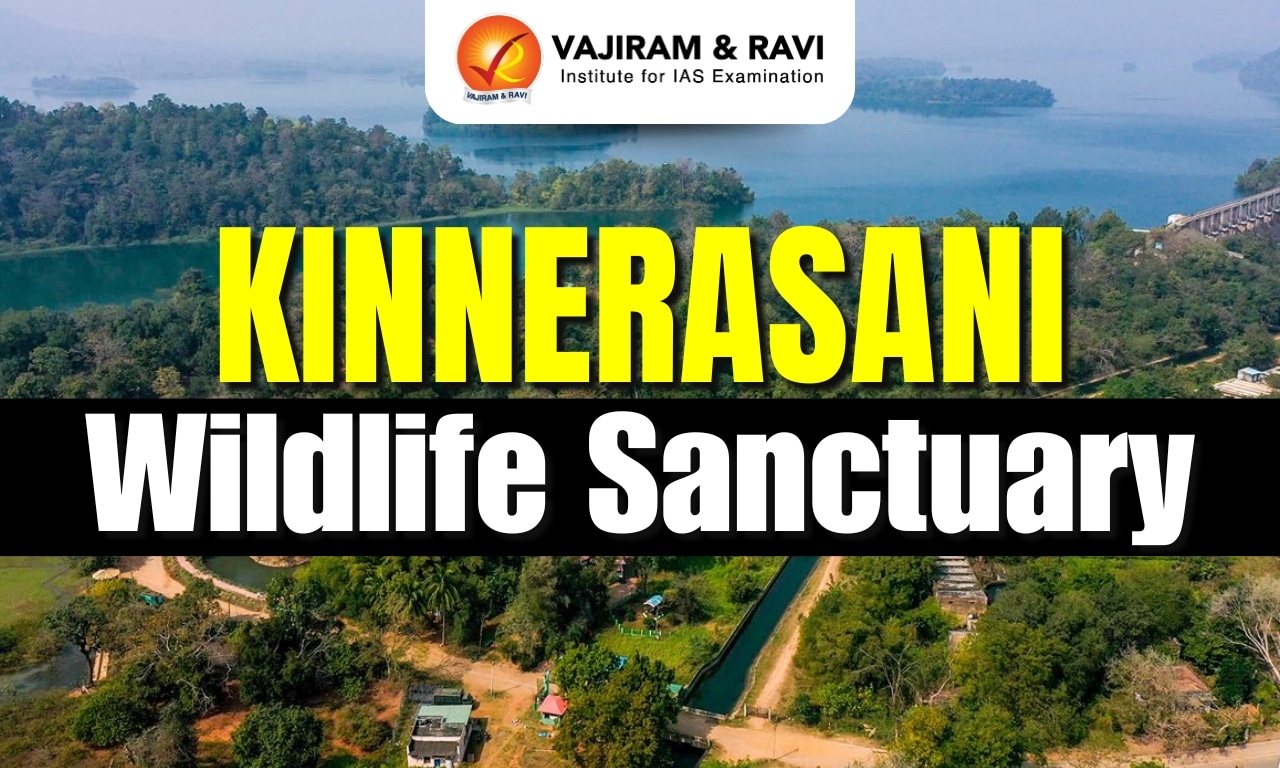
  • It is located in the Bhadradri Kothagudem district, Telangana, on the right bank of the Godavari River.
  • It derives its name from the perennial Kinnerasani River, which flows through the heart of the forest and eventually joins the Godavari River.  
  • It is also part of Dandakaranya Forest and lies close to the Kinnerasani Dam. 
  • It is spread over an area of 635.4 sq km with the picturesque Kinnerasani Lake and densely forested islands in the middle of the sanctuary.  
  • Tribal Community: It is predominantly inhabited by tribal communities like Koyas and Gonds.
  • Vegetation: The forest comprises dry deciduous vegetation.
  • Flora: Teak (Tectona grandis), bamboo, Terminalia, Anogeissus, Pterocarpus, and medicinal plants.  
  • Fauna: It is home to an impressive diversity of fauna, including Bengal Tigers, Indian Leopards, Sloth Bears, Indian Gaurs, Dholes, Sambar, Cheetal, Chinkara, Chousingha (Four-horned antelope), Blackbucks, Wild Boars, Hyenas, and Jackals.

Source: TT

Kinnerasani Wildlife Sanctuary FAQs

Q1: Where is Kinnerasani Wildlife Sanctuary located?

Ans: Telangana

Q2: What type of vegetation is found in Kinnerasani Wildlife Sanctuary?

Ans: The forest comprises dry deciduous vegetation.

Malus and Clawback Provisions: Executive Accountability in India

Malus and clawback provisions

Malus and Clawback Provisions Latest News

  • India's financial sector is increasingly using malus and clawback provisions to hold senior executives financially accountable for governance failures, risk mismanagement, and financial misreporting. 
  • IndusInd Bank's recent action against former CEO Sumant Kathpalia has renewed focus on these mechanisms — but enforcement remains strikingly rare, revealing a wide gap between regulatory intent and real-world implementation.

What Are Malus and Clawback?

  • These are mechanisms allowing companies to revisit executive compensation when later events reveal the underlying performance was flawed, or when misconduct is established.
  • Malus (Latin for "bad" or "wrong"): Refers to the cancellation, reduction, or withholding of unpaid or deferred compensation — including bonuses or variable pay — before it is paid out.
  • Clawback: Involves recovering compensation already paid. Typically triggered when: 
    • Financial statements are restated.
    • Misconduct is established.
    • An executive is found to have contributed to losses or institutional failures.
  • Key Distinction: Malus is easier to implement (since payment hasn't occurred yet), while clawback often leads to legal disputes, as executives challenge the recovery's basis.
  • The RBI's compensation framework for banks mandates that remuneration structures incorporate both provisions — introduced in 2019.

IndusInd Bank: A Rare Banking Clawback

  • In March 2025, IndusInd Bank disclosed that an internal review of its derivatives portfolio found discrepancies with a potential adverse impact of ~2.35% on net worth (as of December 2024).
  • The disclosure triggered a 27% stock crash; losses were estimated at nearly Rs 2,000 crore.
  • Kathpalia resigned weeks later, citing "moral responsibility" for acts of commission/omission.
  • SEBI banned Kathpalia and four others from accessing the securities market, and its interim order directed impounding of Rs 19.78 crore — allegedly earned by senior executives trading the bank's shares while holding unpublished price-sensitive information.
  • This is only the third known clawback instance in Indian banking since RBI's 2019 framework — highlighting how rarely these provisions are actually invoked.

ICICI Bank–Chanda Kochhar: The Landmark Case

  • One of India's most prominent executive compensation recovery disputes.
  • In January 2019, following an investigation led by former Supreme Court judge B N Srikrishna into the Videocon loan controversy, ICICI Bank's board treated Chanda Kochhar's exit as termination for cause.
  • The bank sought to recover bonuses paid to her between April 2009 and March 2018: 
    • Quantified at approximately Rs 7.41 crore (court documents); earlier media estimates put it at Rs 9.82 crore.
    • The bank also revoked stock options and other entitlements.
  • Kochhar challenged both the termination and the recovery. The Bombay High Court dismissed her writ petition in March 2020; ICICI Bank separately pursued recovery through a civil suit.
  • This case demonstrated that clawback enforcement can become a prolonged legal battle.

IL&FS: A Rs 185.87 Crore Recovery Struggle

  • Infrastructure Leasing & Financial Services (IL&FS) approached the National Company Law Tribunal (NCLT), Mumbai, seeking to recover Rs 185.87 crore in excess managerial remuneration from former directors of IL&FS, IFIN, and ITNL.
  • Recovery outcome so far: Of Rs 187.01 crore identified as refundable, only Rs 91.08 lakh (less than 0.5%) has actually been recovered.
    • The October 2026 application names 23 former directors/managerial personnel.
  • Background: The recovery relates to remuneration paid between 2013-14 and 2017-18, when the companies reported profits — but a forensic recasting of accounts (ordered by NCLT in January 2019, recast accounts taken on record June 2024) revealed these were actually substantial losses.
  • The Ministry of Corporate Affairs backed the recovery push, directing companies in February 2024 to initiate recovery, and reiterating in March 2026 that even independent directors must return excess remuneration.
  • Former Directors' Defence: Remuneration was approved/paid based on audited financial statements, and recast accounts cannot retrospectively invalidate those payments.

The Core Problem: Rarely Enforced Mechanisms

  • Despite regulatory push, India Inc. has not seen a significant wave of malus/clawback actions — the few cases that exist involve exceptional governance controversies or major institutional failures.
  • RBI's requirement for banks to disclose the number of cases where these provisions were exercised could improve transparency.
  • However, the limited number of known cases suggests these provisions function more as a regulatory safeguard on paper than as a widely used accountability tool in practice.
  • The real test, as the article notes, is whether companies are willing to actually enforce these provisions when executives are implicated — not merely embed them in compensation policy documents.

Conclusion

  • Malus and clawback provisions represent an important regulatory step toward executive accountability, but India's experience — from IndusInd to ICICI to IL&FS — shows these remain exceptions rather than the rule. 
  • Genuine accountability will depend not on having these clauses on paper, but on institutions' willingness to enforce them against powerful executives, even when it means years of litigation.

Source: IE 

Malus and Clawback Provisions FAQs

Q1: What are malus and clawback provisions?

Ans: Malus and clawback provisions allow companies to reduce unpaid compensation or recover bonuses already paid when misconduct, financial misreporting or institutional failures emerge.

Q2: How do malus and clawback provisions differ?

Ans: Malus and clawback provisions differ because malus reduces deferred compensation before payment, whereas clawback recovers remuneration already received by executives.

Q3: Why was IndusInd Bank's action against its former CEO significant?

Ans: IndusInd Bank's action highlighted malus and clawback provisions as rarely enforced mechanisms, following discrepancies in its derivatives portfolio and governance concerns.

Q4: What does the ICICI Bank–Chanda Kochhar case reveal about clawback enforcement?

Ans: The ICICI Bank–Chanda Kochhar dispute demonstrates how malus and clawback provisions can trigger prolonged litigation over executive termination and compensation recovery.

Q5: Why are malus and clawback provisions rarely enforced in India?

Ans: Malus and clawback provisions face implementation challenges because executives contest recovery claims, legal proceedings remain prolonged and institutions often hesitate to pursue accountability.

India Likely to Miss 2026 Measles Rubella Elimination Target

Measles Rubella

Measles Rubella Latest News

  • WHO experts have said India is unlikely to meet the regional target of eliminating measles and rubella by 2026, even though the country has made "extraordinary gains" in immunisation. 
  • The projection came with the release of a global report on progress towards measles elimination.
  • At the same time, India has dropped out of the world's top 10 countries with the most unvaccinated children, for the first time since these estimates began in 2001.

About Measles and Rubella Elimination

  • Measles is a highly contagious viral disease that mainly affects children. 
  • Rubella is a related viral infection, and the two are tackled together through a combined vaccine.
  • A country can be declared measles-free only after it shows that the disease has not been spreading locally (indigenous transmission) for 3 continuous years.
  • "Elimination" does not mean zero cases. It means that cases no longer spread within the country on their own, though imported cases can still occur.

India's Immunisation Progress: Strong Coverage, Fewer Unvaccinated Children

  • India reached 98% coverage for the first dose and 95% for the second dose of measles-containing vaccine, according to WHO and UNICEF data. 
  • Experts consider these levels necessary to stop local transmission.
  • India's coverage is well above the global average of 84% for the first dose and 77% for the second dose.
  • This is notable because India has a very large birth cohort of nearly 23 million children every year, yet it has exited the list of the 10 countries with the highest number of unvaccinated children.
  • WHO officials described this as the result of hard-earned investment over many years.

Why India Is Still Likely to Miss the 2026 Target

  • Measles cases fell from 65,150 in 2023 to 17,995 in 2025, but the number is still significant.
  • Cases in 2026 also remain high, concentrated in pockets and certain areas within the country.
  • High national coverage can hide small groups of children who remain unreached because of distance from health facilities, community-level barriers or other reasons. As long as such pockets exist, measles can keep spreading.
  • WHO officials stressed that the country will remain at risk until every child is reached, regardless of the size of the community or its distance from a health facility.

The Revised Timeline: 2029 and 2032

  • 2026 was the regional deadline for measles and rubella elimination, and it will not be met.
  • WHO sees progress towards stopping local transmission of measles by 2029, followed by verification of elimination in 2032.
  • WHO has cautioned that this is not the time to ease efforts. If investment and effort decline, coverage will fall and children will again be exposed.

The Global Picture: Gains, Setbacks and a New Challenge

  • An estimated 60 million lives have been saved by measles vaccination since 2000.
  • In 2025, around 10 million people were infected with measles worldwide and 72,000 died.
  • Some countries have slipped back. The United States has lost its measles elimination status after outbreaks that followed a fall in immunisation levels. 
  • In the Americas, cases have risen eight-fold since 2000, with about 73,000 people infected in 2025.
  • About 29 million children worldwide remain either unvaccinated or only partly protected.
  • WHO has flagged misinformation and disinformation as a new problem. Heavy social media messaging confuses parents, and its exact impact is not known, but it is clearly having an effect.
  • WHO has urged family elders, political leaders and religious figures to send a clear message that measles vaccines are safe and effective.

Source: IE

Measles Rubella FAQs

Q1: Will India meet the 2026 measles-rubella elimination target?

Ans: No. WHO experts say the 2026 regional target will not be met, though India is on course to stop local transmission by 2029 and seek verification by 2032.

Q2: What is India's measles vaccination coverage?

Ans: 98% for the first dose and 95% for the second dose, compared with global averages of 84% and 77%.

Q3: How many measles cases did India report in 2025?

Ans: 17,995, down from 65,150 in 2023.

Q4: When is a country declared measles-free?

Ans: After it demonstrates that measles has not been spreading locally within the country for three years.

Q5: Why do measles cases continue despite high coverage?

Ans: Because small pockets of unreached children remain, and measles spreads easily wherever immunity gaps exist.

Delimitation 2026: Census, Women’s Reservation and Lok Sabha Seat Allocation

Delimitation 2026

Delimitation 2026: Census, Women's Reservation and Lok Sabha Seat Allocation

Delimitation 2026 Latest News

  • The Centre is set to introduce a fresh Delimitation package, linked with implementing women's reservation, during a special Parliament sitting beginning November 30, 2026. 
  • The Union Cabinet has cleared a Constitutional Amendment Bill proposing a 50% increase in Lok Sabha seats across states, while freezing states' relative seat-share until 2051. 
  • This marks the government's second attempt after a similar package failed to secure the required two-thirds majority in April 2026.

What Is Delimitation and Its Constitutional Basis?

  • Delimitation involves redrawing constituency boundaries and reallocating parliamentary seats among states based on population.
  • Article 81 enshrines the "one person, one vote, one value" principle: 
    • Article 81(2)(a): Seats allocated to each State must maintain, as far as practicable, the same population-to-seat ratio nationwide (exception: very small states with population under 6 million).
    • Article 81(2)(b): Seeks similar uniformity among constituencies within a state.
    • Article 81(3): Defines "population" as per the last published Census.
  • The Constitution mandates delimitation after every decennial Census to uphold this principle.

Why Was Delimitation Frozen Since the 1970s?

  • In 1976, delimitation between states was frozen for 25 years via Constitutional amendment, to ensure states promoting family planning didn't lose political representation to high-population-growth states.
  • This freeze was extended again in 2001 for another 25 years, via a proviso inserted in Article 81(3), fixing the basis as: 
    • 1971 Census for seat allocation among states.
    • 2001 Census for constituency boundaries within states.
  • This freeze automatically expires once data from the ongoing Census is published.
  • Southern States' Concern: Using fresh Census data would reduce their relative seat-share, since states like Bihar and Uttar Pradesh have higher decadal population growth.
  • Counter-Argument: Southern states underwent demographic transition earlier — their population grew faster than northern states for decades after 1881, before stabilising; northern states' growth picked up only around the 1960s.

How Did Delimitation Get Linked to Women's Reservation?

  • Parliament passed the Constitution (106th Amendment) Act in September 2023, providing 33% reservation for women in Lok Sabha and state Assemblies — passed with broad support (only 2 AIMIM MPs opposed in Lok Sabha; unanimous in Rajya Sabha).
  • However, this amendment inserted Article 334A, tying women's reservation's implementation to delimitation after the next Census — creating a two-step hurdle: Census, then Delimitation.
  • Home Minister Amit Shah stated that delimitation would follow the 2029 Lok Sabha elections, after Census completion.

The April 2026 Attempt and Its Failure

  • The Centre introduced three Bills in April 2026:
    • Constitution (131st Amendment) Bill — to amend the Nari Shakti Vandan Adhiniyam, 2023, and expedite women's reservation.
    • A Delimitation Bill — to set up a Delimitation Commission based on the "latest available figures" (i.e., the 2011 Census).
    • A Bill extending women's reservation to Union Territories with Legislative Assemblies.
  • This Bill proposed capping Lok Sabha at 815 members from states + 35 from UTs, and sought to remove the constitutional requirement of delimitation after every Census (amending Article 82).
  • It failed to secure the required two-thirds majority in Lok Sabha. Opposition's objections: 
    • No explicit guarantee that states' relative seat-share would remain unchanged.
    • Concerns that non-family-planning states would be "rewarded" with more seats.
    • A uniform 50% hike would widen the absolute gap between high- and low-population-growth states.
    • Government allegedly refused to call an all-party meeting despite demands.

What's Changed Now: The Cabinet's Revised Approach

  • The new Bill explicitly proposes a uniform 50% seat increase across all states, freezing relative shares until 2051 — directly addressing the April controversy.
  • Potential numbers: Uttar Pradesh would rise from 80 to 120 seats; Bihar from 40 to 60; Kerala from 20 to 30.
  • This would preserve relative representation but not reduce inter-state population disparity — e.g., even after the hike, an average Bihar MP would represent ~17.35 lakh people vs. ~11.14 lakh in Kerala (based on 2011 Census).

Why the 2011 Census, Despite a New One Underway?

  • Implementing women's reservation by 2029 requires completing delimitation beforehand — and a delimitation exercise based on fresh 2027 Census figures would likely miss this deadline, given the extensive public consultation required.
  • Though the digital Census may produce provisional figures within 10 days of enumeration (with verification taking ~6 months), delimitation needs granular data (village/town/ward level, including SC/ST populations) — which takes longer.
  • Added complication: Manipur's Census operations have been put on hold until April 30, 2027 by the High Court.
  • Forming a Delimitation Commission immediately (using 2011 data) gives it over two years; waiting for 2027 data would substantially compress this timeline. The last delimitation (2002-2008) itself took six years.

Pitfalls of Using the 2011 Census

  • The government's own Statement of Objects and Reasons (April Bill) cited uneven population growth and rural-to-urban migration as a problem — but most of this demographic shift has occurred after 2011, especially in expanding metros, satellite towns, and industrial hubs.
  • Example: Telangana's Malkajgiri constituency (Hyderabad metro region) had 37.80 lakh voters in 2024 vs. 22.17 lakh in Hyderabad constituency — Malkajgiri alone added over 6.3 lakh electors between 2019-2024.
  • Using outdated Census data could misallocate seats within states, and SC/ST reserved constituencies could be based on no-longer-contemporary population proportions.

Constitutional Concerns Flagged by Experts

  • Experts note: Article 81(2)(a)'s "one person, one vote, one value" formula remains in force; a Delimitation Commission cannot be instructed to implement a uniform 50% hike unless Article 81 itself is amended with a new formula — requiring all-party consultation.
  • If the 131st Amendment Bill's provision (removing mandatory post-Census delimitation) is retained, there would be no constitutional obligation to conduct another delimitation after the 2027 Census — meaning 2011-based constituencies could persist for several elections.

Conclusion

  • Delimitation 2026 sits at the intersection of constitutional principle, demographic reality, and political arithmetic — balancing the promise of women's empowerment against fears of skewed federal representation. 
  • Whether built on 2011 or 2027 Census data, its true test will be whether India's "one person, one vote" ideal can be reconciled with safeguarding smaller, demographically stable states from political marginalisation.

Source: IE | IE

Delimitation 2026 FAQs

Q1: What is delimitation and which constitutional provision governs it?

Ans: Delimitation 2026 involves redrawing constituency boundaries and reallocating parliamentary seats based on population, guided primarily by Articles 81 and 82.

Q2: Why was inter-state delimitation frozen in India?

Ans: Delimitation 2026 revisits a freeze introduced to prevent states controlling population growth through family planning from losing parliamentary representation.

Q3: How is women's reservation linked to delimitation?

Ans: Delimitation 2026 is linked to the 106th Constitutional Amendment, which made implementation of 33% women's reservation dependent on a Census followed by delimitation.

Q4: Why is the government considering the 2011 Census for delimitation?

Ans: Delimitation 2026 may use 2011 Census data because waiting for granular 2027 Census figures could delay implementation of women's reservation by 2029.

Q5: What are the major concerns surrounding the proposed delimitation exercise?

Ans: Delimitation 2026 raises concerns over outdated population data, unequal representation, federal balance and constitutional compliance with the one person, one vote principle.

Baiga Tribe

Baiga Tribe

Baiga Tribe Latest News

Growing consumption of processed foods and changing modern diets are making residents of urban cities lose what Madhya Pradesh's Baiga tribe has still preserved: a rich diversity of ancestral gut microbes that nourish the body. 

About Baiga Tribe

  • They are an indigenous tribal community found in central India, primarily in the state of Madhya Pradesh, and in smaller numbers in the surrounding states of Uttar Pradesh, Chhattisgarh, and Jharkhand. 
  • They are recognised as a Particularly Vulnerable Tribal Group (PVTG) in India.
  • The largest number of Baiga is found in Baiga-chuk in the Mandla district and Balaghat district of Madhya Pradesh. 
  • They mainly inhabit forested and hilly regions, particularly the Maikal hill ranges.
  • They have sub-castes – Bijhwar, Narotia, Bharotiya, Nahar, Rai Bhaina, and Kadh Bhaina. 
  • The 2011 Census of India reported their number 552,495. 
  • The word ‘Baiga’ means ‘sorcerer-medicine man’ which might have come from their practices of healing illness through rituals, traditional herbs, prayers, and offerings to God. 
  • Language: 
    • It is believed that the ancestors of the Baigas spoke an Austro-Asiatic language; however, no trace of it is left now. 
    • Some Baigas (specifically those from the Mandla district) have mentioned "Baigani" as their mother tongue in the past: Baigani is now recognised as a variety of Chhattisgarhi influenced by Gondi. 
    • Most Baigas speak Hindi, and some of them also know a few local languages, such as Gondi and Marathi, depending on the region where they live.
  • Traditionally, Baiga houses were built around a central shared courtyard where a bonfire blazed during the nights. 
  • Live-in relationships are common among the Baiga. If marriage does take place, the man compensates the woman’s family for the loss of a working member. 
  • A distinguishing feature of the Baiga tribe is that their women are famous for sporting tattoos of various kinds on almost all parts of their body. 
    • Tattoos are made using kajal derived from Ramtilla seeds (Niger seeds).
  • Of the several dance forms of the Baigas, Karma is the most popular one.  
  • Livelihood: 
    • Traditionally semi-nomadic, they practised slash-and-burn cultivation, locally called “Bewar”, and now depend mainly on minor forest produce.
    • Ploughing the earth was prohibited in their tradition—being equated with ploughing the breast of one’s own mother. 
    • Mahua is an important aspect of Baiga's food and drink. It is an intoxicant prepared from the fermentation and distillation of the flowers of the Mahua tree ( Madhuca longifolia) 
  • Beliefs:
    • Most Baiga are Hindu, but they have combined Hindu practices with their own beliefs. 
    • Baigas follow folk beliefs and mix them with taboos.  
  • The Baiga tribe is the first community in India to be granted habitat rights under the Forest Rights Act of 2006, reflecting their deep connection with forests.

News: TOI

Baiga Tribe FAQs

Q1: In which region of India is the Baiga tribe primarily found?

Ans: They are found in central India, primarily in the state of Madhya Pradesh, and in smaller numbers in the surrounding states of Uttar Pradesh, Chhattisgarh, and Jharkhand.

Q2: Which state has the largest population of the Baiga tribe?

Ans: Madhya Pradesh.

Q3: What is the primary language spoken by the Baiga tribe?

Ans: Baigani

Q4: What is the traditional slash-and-burn cultivation practised by the Baiga tribe called?

Ans: Bewar.

United Arab Emirates

Key Facts about United Arab Emirates

United Arab Emirates Latest News

Recently, India and the United Arab Emirates (UAE) have agreed to accelerate cooperation in the co-development and co-production of next-generation defence equipment.

About United Arab Emirates

  • Location: It is a Middle East country that is located on the north east edge of the Arabian Peninsula.
  • Bordering Countries: It is bordered by Saudi Arabia (South and West) and Oman (East).
  • Maritime Boundary: Gulf of Oman (East), Persian Gulf (North).
  • Tropic of Cancer passes through UAE, specifically Abu Dhabi emirate.
  • Capital City: Abu Dhabi

Geographical Features of United Arab Emirates 

  • Terrain: The emirates comprise a mixed environment of rocky desert, coastal plains and wetlands, and waterless mountains. 
  • Climate: The climate is hot and humid along the coast and is hotter still, but dry, in the interior. 
  • Highest point: Jabal Bil ‘Ays 1,905 m Mountain
  • Major Ports: Port Rāshid and Port Jebel Ali
  • Natural Resources: It mainly consists of petroleum and natural gas.

Source: DD News

United Arab Emirates FAQs

Q1: Which city serves as the capital of the UAE?

Ans: Abu Dhabi

Q2: Which strait is critical for UAE’s oil exports and lies near its coast?

Ans: Strait of Hormuz

Daily Editorial Analysis 28 November 2026

Daily-Editorial-Analysis

India’s Place in the Emerging Global Energy Order

Context

  • The global energy system is undergoing a profound transformation due to geopolitical conflicts, climate change, technological advancements and changing consumption patterns.
  • The COVID-19 pandemic, El Niño, wars in Ukraine and the Gulf, and the expansion of renewable energy have exposed the structural weaknesses of the fossil fuel-based energy system.
  • The existing energy order is increasingly inadequate to ensure energy security, affordability and environmental sustainability.

Structural Inequalities and Vulnerabilities in the Global Energy System

  • Growing Energy Demand and Unequal Access

    • Global energy consumption has tripled over the past five decades, driven by population growth, industrialisation and urbanisation.
    • However, approximately 720 million people lack electricity, while two billion depend on polluting cooking fuels.
    • This contrasts sharply with the growing energy requirements of data centres and advanced economies.
    • Such disparities highlight the unequal distribution of energy resources and the developmental challenges confronting the Global South.
  • Excessive Dependence on Fossil Fuels

    • In 2025, fossil fuels accounted for 86.2% of global primary energy supply, comprising oil, coal and natural gas.
    • This dependence creates supply vulnerabilities, price volatility, geopolitical tensions and environmental degradation.
    • Concentration of hydrocarbon resources in particular regions further exposes importing countries to external disruptions.
  • Climate Change and Environmental Unsustainability

    • Global temperatures could rise by approximately 2.5°C by 2100, exceeding the internationally recognised 1.5°C threshold.
    • Extreme weather events, rising cooling requirements and ecological degradation demonstrate the urgency of transitioning towards cleaner energy.
    • International disagreements over fossil fuel phase-out and climate financing further complicate this transition.
  • Geopolitical Conflicts and Energy Insecurity

    • The Iran conflict has particularly threatened the Strait of Hormuz, through which nearly one-fifth of global maritime oil and gas transportation passes.
    • Such disruptions disproportionately affect Asia and Africa, increasing transportation and agricultural costs.

The Global Energy Transition

  • Increasing Electrification of the Global Economy

    • Electricity currently accounts for 23% of global final energy demand, projected to reach 30% by 2035.
    • Electric vehicles, industrial electrification and energy-efficient appliances will accelerate this transformation while reducing dependence on conventional fuels.
  • Expansion of Renewable and Low-Carbon Energy

    • Renewables are becoming increasingly competitive due to technological advancements, declining costs and improved storage.
    • Their share in global electricity generation is expected to reach 50% by 2035.
    • Nuclear energy is also regaining importance, with nearly 90 GW of capacity under construction.
  • Infrastructure and Investment Challenges

    • The energy transition requires substantial infrastructure investment, including 25 million kilometres of new power lines and upgrades to another 15 million kilometres.
    • Smart grids, battery storage and efficient distribution networks will be essential for integrating renewable energy and ensuring reliable electricity supplies.
  • Declining Long-Term Dependence on Fossil Fuels

    • Technological innovation, electrification and supportive government policies could produce an irreversible decline in hydrocarbon consumption.
    • Global oil demand is projected to peak by 2035. However, long-term decarbonisation requires sustained investment rather than temporary crisis-management measures.

India's Rising Energy Appetite

  • India's Growing Position in Global Energy Markets

    • India is the world's third-largest primary energy consumer, accounting for approximately 6.1% of global consumption.
    • Despite relatively low per capita electricity consumption, rapid economic growth will significantly increase its energy requirements.
    • Demand is projected to grow by 2.5% annually until 2035, three times the global average.
  • Factors Driving India's Energy Demand

    • Industrialisation, urbanisation, rising incomes and expanding transportation are accelerating energy consumption.
    • Increasing automobile ownership and cooling requirements will further intensify demand.
    • These developments reflect India's growing developmental aspirations and expanding middle class.
  • Energy Import Dependence and Security Challenges

    • India imports approximately 40% of its energy requirements, including 90% of its crude oil and 50% of its natural gas.
    • Such dependence exposes the economy to international price fluctuations, geopolitical conflicts and supply disruptions.
    • Rising imports could adversely affect inflation, the current account balance and economic stability.
  • India's Energy Transition: Opportunities and Limitations

    • Although renewable capacity exceeds half of India's installed power-generation capacity, fossil fuels still generate approximately 70% of its electricity.
    • By 2035, oil demand is expected to increase by 26%, while coal production may rise by nearly 30%.
    • Balancing growing energy requirements with environmental commitments remains a major challenge.

India's Path Towards Energy Independence by 2047

  • Accelerating Electrification

    • India must expand electrification across transportation, industries and households through electric vehicles, public transport and modern industrial technologies.
  • Expanding Renewable Energy

    • Solar, wind and hydropower must become central to India's energy strategy.
    • Investment in battery storage, green hydrogen and smart grids will improve renewable energy integration.
  • Improving Energy Efficiency

    • Energy-efficient buildings, industrial machinery, appliances and transportation systems can reduce consumption without compromising economic growth.

Conclusion

  • The global energy system requires a fundamental transformation to overcome geopolitical vulnerabilities, unequal access and environmental degradation.
  • India must pursue energy independence by 2047 through electrification, renewable energy, technological innovation and efficiency improvements.
  • Ultimately, energy independence must extend beyond reducing imports to creating a resilient, affordable, self-reliant and environmentally sustainable energy ecosystem that supports inclusive economic growth.

India’s Place in the Emerging Global Energy Order FAQs

Q1. What are the major weaknesses of the existing global energy system?

Ans. The existing energy system suffers from fossil fuel dependence, unequal energy access, geopolitical vulnerabilities and environmental degradation.

Q2. Why is the Strait of Hormuz strategically important?

Ans. The Strait of Hormuz is crucial because nearly one-fifth of global maritime oil and gas transportation passes through it.

Q3. What are the major drivers of the global energy transition?

Ans. Electrification, renewable energy, nuclear power, technological innovation and improved energy efficiency are driving the global energy transition.

Q4. Why is India vulnerable to global energy disruptions?

Ans. India imports approximately 90% of its crude oil and 50% of its natural gas, making it vulnerable to geopolitical conflicts and international price fluctuations.

Q5. How can India achieve energy independence by 2047?

Ans. India can achieve energy independence through renewable energy expansion, electrification, domestic production, technological self-reliance and improved energy efficiency.

Source: The Hindu


A New Model for India’s Neighbourhood Engagement

Context

  • The Gen Z revolution in Nepal and the electoral victory of Balendra Shah, a 36-year-old former rapper and former Mayor of Kathmandu, have created an opportunity to redefine India-Nepal relations.
  • His earlier anti-India remarks presented a diplomatic challenge for New Delhi. However, his first bilateral foreign visit to India on November 23, 2026, marked a shift towards pragmatic engagement.
  • His meeting with Prime Minister Narendra Modi resulted in substantial economic commitments and a new bilateral vision based on mutual respect, economic cooperation and developmental priorities.

A New Approach to India-Nepal Relations

  • Shah's decision to visit India first demonstrated diplomatic pragmatism.
  • Nepal's geographical location, landlocked position and economic interdependence make India an indispensable partner.
  • For India, the visit strengthened its Neighbourhood First policy and reaffirmed its commitment to regional stability.
  • India's assistance following Himalayan floods further demonstrated its role as a dependable neighbour.
  • The engagement also reflected Nepal's changing political expectations.
  • Its younger leadership increasingly seeks equality, economic opportunities and measurable benefits rather than relying exclusively on historical and civilisational ties.

Three Win-Win Outcomes

  • A New Developmental Road Map

    • The two countries adopted the vision document Viksit Bharat and Samunnat Nepal, aiming to strengthen economic cooperation and support India's developed-country ambitions alongside Nepal's aspiration to become a middle-income economy.
    • Its ten pillars include three major priorities:
      • Developmental and economic cooperation to strengthen interdependence.
      • Physical and digital connectivity through improved infrastructure.
      • Energy and climate cooperation, particularly hydropower development.
    • These initiatives can promote trade, employment, energy security and sustainable development.
  • Moving Beyond the Traditional 'Special Relationship'

    • The vision document moves beyond India's traditional emphasis on a special relationship, advocating an aspirational, modern and mutually beneficial partnership
    • This recognises contemporary political, economic and technological realities.
    • Nepal's younger generation expects practical benefits and respect for its sovereignty.
    • India must therefore treat Nepal as an equal partner rather than depend solely on historical familiarity and geographical advantages.
  • Economic Assistance and Political Gains

    • Shah secured important economic commitments, providing a political boost to his government.
    • Major deliverables include:
      • $1.6 billion in grants and lines of credit for economic recovery.
      • Improved air connectivity.
      • New railway links.
      • Increased hydropower investments.
    • These commitments, some delayed for years, demonstrate India's willingness to address Nepal's developmental priorities.
    • They also strengthen Shah's political credibility amid domestic pressures.

Challenges to Consolidating the New Partnership

  • Political Stability in Nepal

    • Shah's ability to consolidate his position within his party and remain in power will influence bilateral commitments.
    • Nepal's political instability has historically obstructed long-term cooperation. India must prioritise institutional continuity rather than depend on individual political leaders.
  • Sustained Political Communication

    • Regular communication can prevent misunderstandings and emerging tensions.
    • Establishing bimonthly direct conversations between the Prime Ministers and an early visit by Modi to Kathmandu would strengthen mutual confidence.
  • Implementation of the Vision Road Map

    • The partnership's success depends on implementation rather than announcements. Reviving a High-Level Monitoring Group could ensure accountability and coordination.
    • Railway links, energy pipelines and hydropower projects require sustained political support and timely execution.
  • Managing Geopolitical Competition and Security Concerns

    • Nepal must balance its relations with India, China and other international powers while protecting its strategic autonomy.
    • India must communicate its legitimate national security concerns, but excessive security restrictions should not undermine economic cooperation.
    • Strategic priorities must remain focused on delivering development to Nepal.

What should be the Model for Bangladesh?

  • Reviving Economic Cooperation

    • Political developments surrounding former Prime Minister Sheikh Hasina have complicated India-Bangladesh relations.
    • Nevertheless, cooperation in trade, transportation, energy and cross-border connectivity has transformed eastern South Asia since 2009.
    • Restoring these mechanisms could benefit both countries, particularly given Bangladesh's economic difficulties and India's interest in regional stability.
  • Political Leadership and Diplomatic Engagement

    • Bangladesh Prime Minister Tarique Rahman has postponed his anticipated visit to New Delhi, delaying normalisation.
    • However, Bangladesh's economic challenges and the success of Shah's visit could encourage renewed engagement.
    • The Nepal experience demonstrates that political leadership can prioritise economic interests over political disagreements and create opportunities for cooperation.

Conclusion

  • Balendra Shah's visit offers an important opportunity to transform India-Nepal relations through pragmatic diplomacy, economic connectivity and mutual respect.
  • The Viksit Bharat and Samunnat Nepal vision provides a framework for cooperation in infrastructure, energy and development.
  • Its success will depend on political stability, sustained communication and effective implementation.
  • India's regional influence must increasingly rest on its ability to act as a dependable development partner rather than relying exclusively on historical ties and security considerations.

A New Model for India’s Neighbourhood Engagement FAQs

Q1. What was the significance of Balendra Shah's visit to India?

Ans. It marked a shift towards pragmatic diplomacy and stronger economic cooperation between India and Nepal.

Q2. What is the vision document adopted by India and Nepal?

Ans. The "Viksit Bharat and Samunnat Nepal" vision document aims to strengthen economic, connectivity, energy and climate cooperation.

Q3. What were the major economic outcomes of Shah's visit?

Ans. Nepal secured $1.6 billion in grants and lines of credit, alongside commitments on railways, air connectivity and hydropower.

Q4. What are the major challenges to India-Nepal relations?

Ans. Political instability, geopolitical competition, security concerns and delays in implementing bilateral projects are major challenges.

Q5. How can the India-Nepal engagement benefit India-Bangladesh relations?

Ans. It can provide a model for rebuilding ties through trade, transportation, energy cooperation and cross-border connectivity.

Source: The Hindu


Delimitation and Women’s Reservation - Towards a More Representative Democracy

Context

  • Parliament’s special session beginning November 30 is expected to revive two major electoral reforms.
  • First, delimitation, to ensure equitable representation of citizens across constituencies, and second, women’s reservation, to address the historical under-representation of women in legislative institutions.
  • Together, these reforms seek to strengthen India’s representative democracy by ensuring both equality of votes and inclusiveness in political participation.
  • The debate should rise above North-South and ruling-opposition political divisions.

The Electoral Journey of Indian Women

  • India’s electoral journey reflects a remarkable transformation in women's political agency.
  • 1951-52 Elections:
    • During the preparation of the first electoral rolls, many women were registered through their relationships with male family members (such as wife or daughter of), rather than their individual names.
    • This reflected their limited social identity and autonomy.
  • 2019 Elections: Women’s voter turnout reached 18%, surpassing male turnout. Several states also recorded more women than men on electoral rolls.
  • The changing reality: Women have moved from being politically invisible voters to active electoral participants. The next step is ensuring their adequate representation in decision-making institutions.

Delimitation - Ensuring 'One Person, One Vote, One Value'

  • Delimitation involves redrawing constituency boundaries and determining the allocation of legislative seats to ensure equitable representation.
  • Why is it necessary?

    • Ensures roughly equal population across constituencies.
    • Prevents significant differences in the value of individual votes.
    • Corrects representational imbalances arising from demographic changes.
    • Strengthens the democratic principle of political equality.
  • Proposed legislative changes: The proposed 131st Constitutional Amendment Bill reportedly seeks to -
    • Increase Lok Sabha strength to 815 seats, along with 35 seats for Union Territories (Total = 850).
    • Implement women's reservation immediately after delimitation rather than waiting for the next Census.
    • Address concerns raised by southern states through appropriate political assurances.
  • Significance: Delimitation is not merely an administrative exercise; it is an instrument of democratic redistribution that seeks to make representation fairer.

Women's Reservation - From Symbolic Presence to Substantive Equality

  • The 106th Constitutional Amendment Act, 2023, popularly known as the Nari Shakti Vandan Adhiniyam, provides for one-third reservation for women in Lok Sabha, State Legislative Assemblies, and Delhi Legislative Assembly.
  • The proposed legislative changes seek to accelerate its implementation.
  • Why does women's representation matter?
    • Correcting historical exclusion: Addresses the structural barriers that have restricted women's participation in political decision-making.
    • Democratic legitimacy: As political theorist Iris Marion Young argues, greater representation of historically excluded groups enhances the democratic legitimacy of institutions.
    • Inclusive policymaking: Women's participation can bring diverse experiences, priorities and perspectives into governance.
    • Gender justice: Moves beyond formal equality towards substantive equality in political institutions.

Evidence from Grassroots Democracy - Why Representation Matters

  • India's experience with women's reservation in Panchayati Raj Institutions demonstrates its transformative potential.
  • Research by economists (Raghabendra Chattopadhyay and Esther Duflo) established that reserving leadership positions for women -
    • Influences local political priorities and decision-making.
    • Improves the allocation of public goods.
    • Makes governance more responsive to community needs.
  • Learning: Political representation is not merely about occupying seats; it can fundamentally influence policy priorities and the distribution of public resources.

Way Forward - Towards a More Inclusive Democracy

  • Political consensus: Address concerns of southern states and ensure that delimitation does not create regional disparities.
  • Timely implementation: Avoid unnecessary delays in operationalising women's reservation.
  • Capacity building: Strengthen women's leadership, political participation and institutional capabilities.
  • Beyond numerical representation: Ensure meaningful participation in parliamentary debates, committees and policymaking.
  • Constitutional commitment: Align electoral reforms with the principles of equality, justice and democratic representation.

Conclusion

  • Delimitation seeks to ensure equality of representation, while women's reservation advances equity in political participation.
  • Together, they offer an opportunity to correct historical imbalances and strengthen India's constitutional commitment to substantive equality.
  • The ultimate objective should be to transform women from being merely the largest electoral constituency into equal partners in shaping India's political and developmental future.

Delimitation and Women’s Reservation FAQs

Q1. What is the significance of delimitation in a representative democracy?

Ans. It ensures equitable constituency representation, upholds the principle of one person, one vote, one value, etc.

Q2. How does women's reservation promote substantive equality in Indian democracy?

Ans. It addresses historical political exclusion, enhances women's participation in decision-making, etc.

Q3. What is the significance of the 106th Constitutional Amendment Act, 2023?

Ans. It provides one-third reservation for women in the Lok Sabha, State Legislative Assemblies and Delhi Legislative Assembly.

Q4. How has women's reservation in PRIs transformed grassroots governance?

Ans. It has influenced local policy priorities, made governance more responsive to community needs, etc.

Q5. What challenges must be addressed to ensure equitable delimitation in India?

Ans. Regional disparities, concerns of southern states, political consensus and fair population-based representation.

Source: IE

Daily Editorial Analysis 2026 FAQs

Q1: What is editorial analysis?

Ans: Editorial analysis is the critical examination and interpretation of newspaper editorials to extract key insights, arguments, and perspectives relevant to UPSC preparation.

Q2: What is an editorial analyst?

Ans: An editorial analyst is someone who studies and breaks down editorials to highlight their relevance, structure, and usefulness for competitive exams like the UPSC.

Q3: What is an editorial for UPSC?

Ans: For UPSC, an editorial refers to opinion-based articles in reputed newspapers that provide analysis on current affairs, governance, policy, and socio-economic issues.

Q4: What are the sources of UPSC Editorial Analysis?

Ans: Key sources include editorials from The Hindu and Indian Express.

Q5: Can Editorial Analysis help in Mains Answer Writing?

Ans: Yes, editorial analysis enhances content quality, analytical depth, and structure in Mains answer writing.

Enquire Now