About TSAT-1A
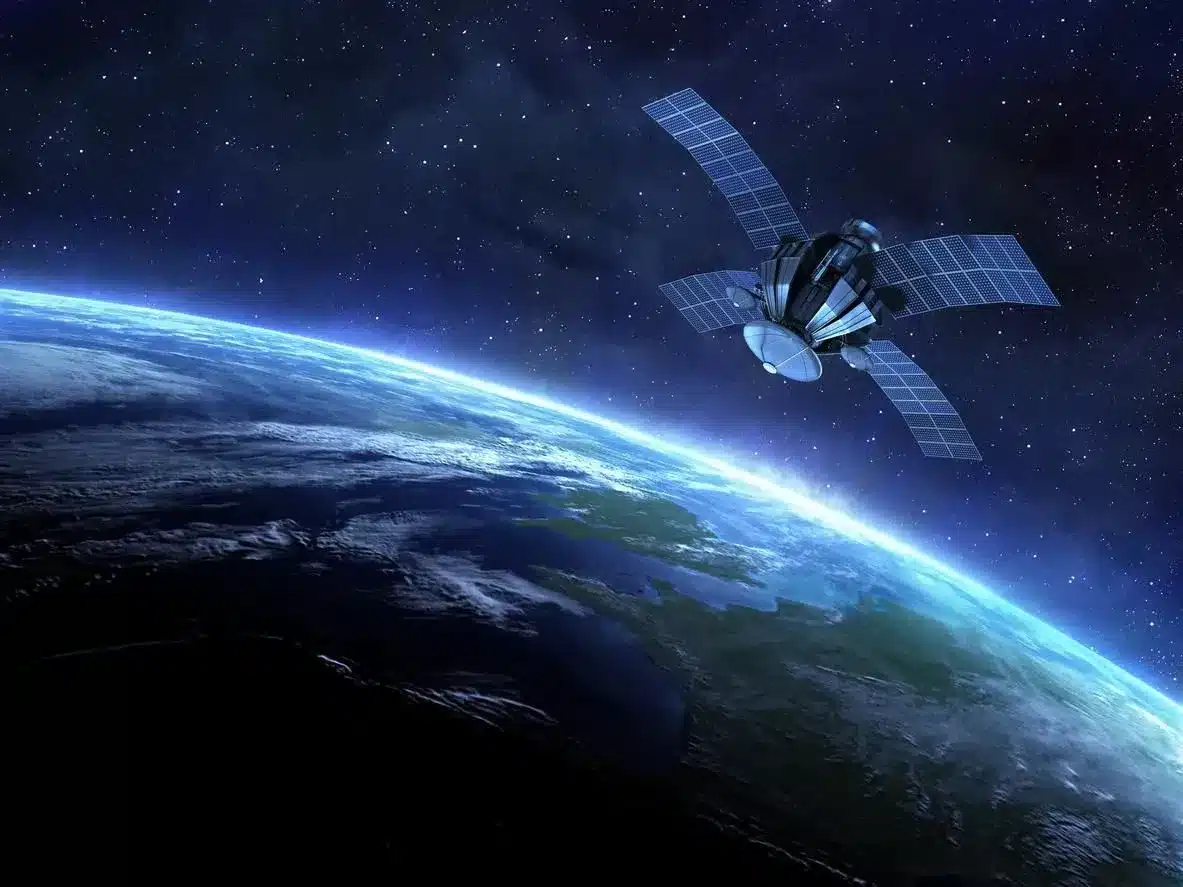
- It is an optical sub-metre-resolution Earth observation satellite.
- It was built by Tata Advanced Systems Limited (TASL) in collaboration with Latin American company Satellogic Inc, following a collaboration agreement between the two companies in late November 2023.
- TSAT-1A was assembled in TASL’s Assembly, Integration, and Testing (AIT) plant at its Vemagal facility in Karnataka.
- It was launched bySpaceX’s Falcon 9 rocket from the Kennedy Space Center, Florida, in the US.
- Features:
- TSAT-1A’s core strength lies in its ability to capture military grade imagery of Earth’s surface with sub-meter resolution.
- It is equipped with both multispectral and hyperspectral imaging capabilities. This technology allows TSAT-1A to collect data across a wide range of wavelengths within the electromagnetic spectrum, providing a deeper and more nuanced understanding of land, water, and various natural resources.
- TSAT-1A boasts greater collection capacity, a wider dynamic range (the ability to capture detail in both very bright and very dark areas), and low-latency delivery of data.
- This satellite will be used by Indian defense forces to gather discreet information, and this information will be shared with friendly nations.
- It can enable defence forces to enhance their preparedness, response capabilities, and strategic decision making.
While India has a few military spy satellites built by ISRO, this is the first such initiative in the private sector.
Q1: What is hyperspectral imaging?
Hyperspectral imaging is the capturing and processing of an image at a very large number of wavelengths. Whereas multispectral imaging might evaluate an image in three or four colors (red, green, blue and near-infrared (NIR), for example), hyperspectral imaging breaks the image down into tens or hundreds of colors. This allows for the identification of objects and materials by analyzing their unique spectral signatures.
Source: TASL announces successful deployment of sub-metre resolution optical satellite TSAT-1A


 Last updated on Oct, 2026
→ UPSC 2027 Notification will be released on 13 January 2027 at upsconline.nic.in.
→ Check Nobel Prize 2026 Winners List here.
→ Download PIB PRiSM Monthly Magazine 2026 here.
→ Check UPSC Monthly Current Affairs Magazine The Recitals here.
→ Check out the latest UPSC Syllabus here.
→ Download UPSC Model Answers for Mains 2026
→ UPSC Mains Question Paper 2026 is out now for Essay & GS Paper 1, 2, 3 & 4.
→ UPSC Calendar 2027 has been released.
→ Enroll in Vajiram & Ravi’s UPSC Mains Test Series 2027 for structured answer writing practice, expert evaluation, and exam-oriented feedback.
→ Join Vajiram & Ravi’s UPSC Mentorship Program 2027 for personalized guidance, strategy planning, and one-to-one support from experienced mentors.
→ Go through the UPSC Mains Previous Year Papers to enhance your preparation.
→ UPSC has released UPSC Toppers List 2025 with the Civil Services final result on its official website.
→ Also check Best UPSC Coaching in India