India Calls for Major UN Reforms to Address Global Crises

UN Reforms

UN Reforms Latest News

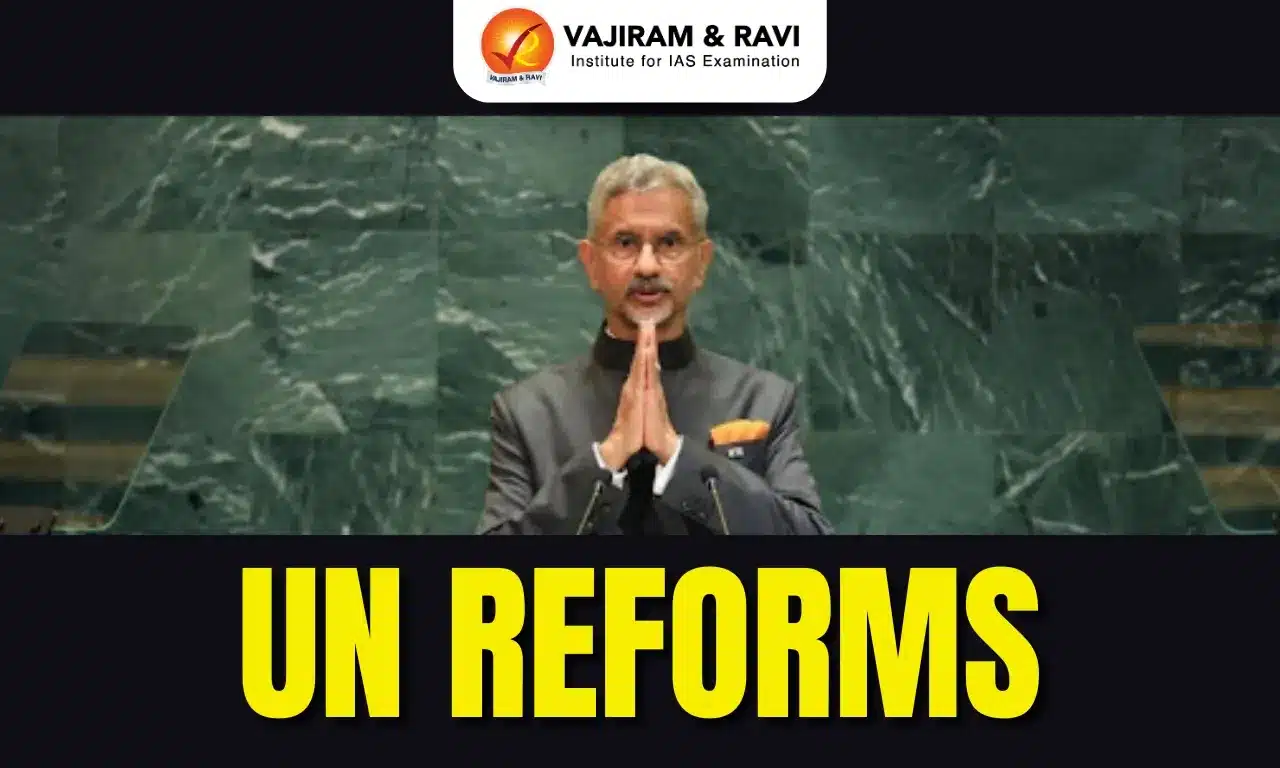
  • India’s External Affairs Minister S. Jaishankar addressed the 80th session of the UN General Assembly. 
  • During this speech, he emphasised that the UN must be reformed and member states — led by active Global South contributors like India — must strengthen cooperation, confront terrorism, and restore multilateral credibility to meet 21st-century challenges.

UN General Assembly

  • The UN General Assembly (UNGA) is the main deliberative, policymaking and representative organ of the United Nations.
  • All 193 UN member states are members (each with one vote). The Holy See and Palestine are permanent observers.
  • It provides a global forum for multilateral discussion of international issues — peace & security, development, human rights, international law, budgetary and administrative matters.

Working

  • It holds an annual Regular Session (High-Level Week in September) plus Special and Emergency Special Sessions when required.
  • Structure: Six Main Committees handle substantive work:
    • Disarmament & International Security
    • Economic & Financial
    • Social, Humanitarian & Cultural
    • Special Political & Decolonization
    • Administrative & Budgetary
    • Legal
  • President & Bureau: A President (elected for one year) chairs sessions and sets procedural priorities; elected from different regional groups on rotation.

Decision-Making & Voting

  • Important questions (admission of members, budget, peace & security recommendations) normally require a two-thirds majority.
  • Other questions require a simple majority.
  • Nature of GA decisions: Most resolutions and declarations are non-binding politically influential instruments; binding enforcement is typically the Security Council’s domain.

Key Powers & Functions

  • Approve the UN budget and apportion member contributions.
  • Elect non-permanent members of the Security Council, members of other UN bodies and the judges of the ICJ (in conjunction with the Security Council).
  • Recommend appointment of the Secretary-General to the Security Council.
  • Create subsidiary organs and specialised agencies; convene world conferences.

Key Achievements & Historical Impact

  • Universal Declaration of Human Rights (1948): Adopted by UNGA — foundational text in international human rights.
  • Decolonization: Adopted the 1960 Declaration on Granting Independence to Colonial Countries and Peoples and guided a major wave of decolonization through UN support and membership expansion.
  • Development agendas: Endorsed the Millennium Declaration (MDGs) and later the 2030 Agenda for Sustainable Development and the SDGs (2015) — global compacts for development.

The General Debate

  • The general debate is part of the General Assembly session and is held at the beginning of each regular session in September.
  • Purpose: Heads of state/government and ministers present national views and priorities and respond to global issues under a chosen theme.
  • Speaking order & practice: Traditionally Brazil speaks first, then the United States, followed by other states in order of request and protocol.
  • Theme of 80th session - Better Together: 80 years and more for peace, development and human rights.
  • Presidency of 80th session - Annalena Baerbock of Germany is the President of 80th UNGA being held in New York.

EAM Jaishankar at the UN — Key Points & Takeaways

  • EAM argued that the UN’s founding Charter calls for peace and human dignity, but the state of the world shows the organisation struggling to deliver.
  • He said that the global problems (conflict, climate, development, trade, terrorism) make a compelling case for more international cooperation — and urgent reform of multilateral institutions.

State of the world — Where the UN is Falling Short

  • Major conflicts: Cited Ukraine and the Middle East as evidence that the UN’s conflict-resolution role is under strain.
  • Development shortfalls: Slow progress on the Sustainable Development Goals; resources and delivery lag.
  • Climate credibility at risk: “If climate action itself is questioned, what hope is there for climate justice?” — concern over hollow commitments and creative accounting.
  • Economic friction: Rising tariff volatility, technology controls, supply-chain grip, and restricted labour mobility undermine open trade and require multilateral responses.

Terrorism — An Urgent, Shared Threat

  • Terrorism synthesises bigotry, violence, intolerance and fear and remains a priority.
  • India’s experience: living next to a state that is a centre for global terrorism underlines the urgency.
  • Required measures: choke terrorism financing, sanction prominent terrorists, and deepen international cooperation against sponsors and sympathisers.

UN Credibility & The Need for Reform

  • The UN is “in a state of crisis”: gridlock has reduced its ability to build common ground and weakened belief in multilateralism.
  • Security Council reform is essential — expand both permanent and non-permanent membership to reflect contemporary realities.

India and the Global South — Readiness to Lead

  • India stands ready to assume greater responsibilities, and the Global South must contribute more actively.
  • Cited India’s international role: development projects, crisis response, safe commerce, and security assistance.
  • Call for countries that can engage all sides (e.g., in Ukraine and the Middle East) to step up mediation and search for solutions.

Principles for Action — Cooperation, Empathy, Common Purpose

  • International cooperation must prevail; islands of prosperity cannot flourish in an ocean of turbulence.
  • A functioning world order requires common purpose and empathy — the UN should be the forum to enable that.
  • Reforming multilateralism is presented as the obvious, necessary path forward.

Source: TH | UN | UNGA

UN Reforms FAQs

Q1: Why is India calling for UN reforms?

Ans: India argues the UN is gridlocked, unable to address terrorism, climate action, and development effectively, and needs urgent reform to restore credibility.

Q2: What did Jaishankar highlight at the UNGA?

Ans: He emphasised terrorism, climate justice, economic frictions, and multilateral failures, urging collective action and reform of institutions like the UN Security Council.

Q3: How does India view its role in UN reforms?

Ans: India projects itself as a responsible Global South leader, ready to take greater responsibilities and strengthen cooperation for peace, development, and global security.

Q4: What reforms does India propose for the UN Security Council?

Ans: India advocates expanding both permanent and non-permanent membership to reflect contemporary realities and strengthen multilateral decision-making.

Q5: Why does terrorism remain central in India’s UN message?

Ans: India stressed its experience living next to a terrorism hub, calling for choking terror financing, sanctioning sponsors, and deeper global cooperation against extremism.
PFAS Contamination in India: The Regulatory Gap in Drinking Water

PFAS Contamination in India

PFAS Contamination in India Latest News

  • Polyfluoroalkyl substances (PFAS) — commonly called “forever chemicals” — have been found in water sources across multiple Indian states, yet India’s water treatment systems and regulatory framework remain ill-equipped to detect or remove them. 
  • With no PFAS-specific drinking-water limit currently in place, this emerging contamination issue carries significant public health and policy implications.

What Are PFAS?

  • PFAS are synthetic chemical compounds containing multiple carbon-fluorine bonds.
  • Used widely in coatings, textiles, and industrial products.
  • Notorious for resisting degradation — they can contaminate the environment for decades, earning the “forever chemicals” label.
  • PFAS have existed for 60 years, yet regulation has lagged behind their spread.

Health Concerns: What We Know

  • In 2025, the International Agency for Research on Cancer (IARC) classified: 
    • Perfluorooctanoic acid (PFOA) as “carcinogenic to humans.”
    • Perfluorooctanesulfonic acid (PFOS) as “possibly carcinogenic to humans.”
  • Important caveat: Merely detecting PFAS in water doesn’t indicate health risk by itself — risk depends on the type of PFAS, dose, duration, and route of exposure.
    • A February 2026 study found that a mix of 24 PFAS compounds delayed zebrafish egg hatching, inhibited offspring growth, accumulated in blood, and reduced heart rates — raising concerns about broader ecological and health impacts.

Evidence of Contamination Across India

  • A 2025 review in the Journal of Hazardous Materials Advances examined monitoring across Gujarat, Maharashtra, Tamil Nadu, and West Bengal. 
  • Key finding: PFAS contamination is a “legitimate concern,” but its national extent remains poorly defined — partly due to inconsistent testing and analysis methods across research groups.

IIT-Madras Study (2024)

  • Analysed 14 water samples (2022–23) from groundwater, surface water, and four stages of a water treatment plant.
  • Groundwater near garbage dumps showed the highest PFAS levels.
  • Startling finding: PFAS concentrations were 5% to 103% HIGHER in treated water than raw water — suggesting treatment processes may convert unidentified precursors into more stable PFAS.
  • Researchers noted the 8 target PFAS tested represent only a fraction of potentially diverse fluorinated compounds present — broader testing beyond fixed lists is needed.

Why Treatment Systems Are Failing

  • Conventional biological wastewater treatment cannot remove PFAS.
  • Adsorption-based treatment shows potential but low-cost materials for PFAS capture are still under development.
  • Testing against a fixed list of PFAS risks missing undetected substances, since precursors can transform into other PFAS over time.
  • High-resolution mass spectrometry can help identify PFAS beyond fixed lists, but requires care since PFAS can contaminate samples during collection/analysis itself.

India’s Regulatory Response: Work in Progress

  • The Union Environment Ministry has confirmed there is no specific regulation banning PFAS manufacturing.
  • India has no PFAS-specific drinking-water limit under the current IS 10500:2012 standard — though this standard is under revision.
  • The Bureau of Indian Standards (BIS) has formed a dedicated Working Group on Emerging Contaminants and Forever Chemicals to examine PFAS limits.
  • Scope and specific PFAS to be regulated have not yet been finalised; analytical testing methods are also under consideration.
  • CSIR-Indian Institute of Toxicology Research (IITR), Lucknow is participating in a UNEP-funded National Implementation Plan to build baseline PFAS data, and has developed capability to detect 50 multi-class PFAS molecules.

Conclusion

  • India’s PFAS problem is a textbook case of regulation lagging behind contamination. 
  • Multiple independent studies have already flagged forever chemicals in groundwater, treated water, and coastal sewage, yet no enforceable drinking-water limit exists, and conventional treatment plants may even be inadvertently creating more stable PFAS compounds. 
  • With global health agencies now classifying key PFAS as carcinogenic, experts agree that waiting for complete exposure data before acting is no longer a defensible position — India needs precautionary interim limits, harmonised testing standards, and a clear accountability framework, well before full contamination mapping is complete.

Source: TH | TH | IWP

PFAS Contamination in India FAQs

Q1: What are PFAS, commonly known as forever chemicals?

Ans: PFAS contamination in India involves synthetic chemicals containing strong carbon-fluorine bonds that resist degradation and can persist in the environment for decades.

Q2: What health concerns are associated with PFAS exposure?

Ans: PFAS contamination in India raises health concerns because IARC classified PFOA as carcinogenic to humans and PFOS as possibly carcinogenic in 2025.

Q3: Where has PFAS contamination been detected in India?

Ans: PFAS contamination in India has been investigated across Gujarat, Maharashtra, Tamil Nadu and West Bengal, with groundwater near garbage dumps showing particularly high levels in an IIT-Madras study.

Q4: Why are conventional water treatment systems ineffective against PFAS?

Ans: PFAS contamination in India remains difficult to control because conventional biological wastewater treatment cannot remove these chemicals, while affordable adsorption technologies are still under development.

Q5: What steps is India taking to regulate PFAS?

Ans: PFAS contamination in India is receiving regulatory attention through a dedicated BIS working group and research to establish baseline data, testing methods and possible drinking-water limits.

India as a Global Growth Partner: PM Modi’s Power to Empower Vision

India as a Global Growth Partner

India as a Global Growth Partner Latest News

  • Speaking at the Bloomberg New Economy Forum 2026 in New Delhi, PM Modi positioned India as a “steady pillar” in a world roiled by conflict and uncertainty. 
  • He declared that India’s reforms stem from conviction, not compulsion, and that the country’s confidence is at an “unprecedented high.” His remarks came against the backdrop of strong growth data and global recognition of India’s economic resilience.

India’s Economic Momentum

  • India’s GDP growth stood at 7.8% in April-June, which PM said “rests on a strong foundation.”
  • Recently, the IMF raised India’s GDP growth forecast for 2026-27 to 7% (up from 6.4% in July), citing “stronger-than-expected momentum” backed by resilient domestic demand and robust services activity.
  • Last week, the RBI also raised its own growth projection to 7.1%.

Key Highlights of PM Modi’s Speech

  • Key Economic Indicators Cited
    • Current account deficit: fell from over 4% of GDP (12-13 years ago) to just 0.61% last year.
    • Foreign exchange reserves: now exceed $700 billion.
    • Banking system: in its strongest position in decades.
    • These strengths have led to sovereign rating upgrades for India.
  • Reforms Are Our Conviction, Not Compulsion
    • PM Modi listed India’s major structural reforms as evidence of a deliberate, sustained policy direction:
    • He termed this continuing momentum India’s “Reform Express,” emphasising: “For us, reforms are not a compulsion. Reforms are our conviction.”
  • The Global Challenge: A Crisis of Trust
    • PM identified trust as the defining challenge of the current global moment, warning that things that once connected the world are now being turned into weapons.
    • Key concerns he raised:
      • Supply chains, energy, minerals, payment systems, and technology are increasingly becoming instruments of pressure and dominance.
      • Routes created by decades of globalisation have, in many cases, become chokepoints.
      • Artificial Intelligence (AI) is simultaneously transforming every sector.
      • Many countries face growing challenges from ageing populations.
  • India’s Response: “Power to Empower”
    • PM Modi framed India’s global engagement through the philosophy of “power to empower” — using its capabilities to benefit the world, not just itself.
    • Examples Cited:
      • Affordable and generic medicines supplied globally.
      • Digital identity and payment solutions (referencing India’s digital public infrastructure, e.g., Aadhaar, UPI).
      • Skilled youth and a talent pool supporting global industry.
      • Over 2,000 Global Capability Centres (GCCs) in India providing services to companies worldwide.
    • COVID-19 Vaccine Example: During the pandemic, India faced the question of whether vaccine manufacturing benefits would stay confined to a few countries. 
        • India “chose the path of empowering humanity,” supplying vaccines to more than 100 countries — turning its manufacturing capability into a source of assistance for other nations.
    • AI Impact Summit Reference: Modi noted that India’s AI summit discussed not just AI for humanity, but even how animals could benefit from AI — reinforcing his point: “the more capable and stronger India becomes, the more beneficial it will be for humanity and the world.”
  • Governance Philosophy: Empowerment Over Dependency
    • PM extended this philosophy to domestic governance, stating that government authority should not be used to make citizens dependent on the system, but rather to make them capable and empowered.
    • Following this approach, India has lifted 250 million people out of poverty over the past decade — a number greater than the population of many countries in the world.
    • He also noted that India does not confine its capabilities within its own borders, but shares them with the Global South and partner countries, creating wider opportunities for innovation and new talent.

Conclusion

  • PM Modi’s address framed India’s economic rise not as an isolated national achievement, but as a contribution to global stability at a time when trust between nations is under strain. 
  • By linking strong macroeconomic indicators, sustained structural reforms, and a deliberate philosophy of “power to empower,” he projected India as both a reliable economic partner and a responsible global actor — one that grows, in his words, “with the world, and for the world,” rather than at anyone’s expense.

Source: IE | PIB

India as a Global Growth Partner FAQs

Q1: What economic indicators support India’s position as a global growth partner?

Ans: India as a global growth partner is supported by strong GDP growth, foreign exchange reserves exceeding $700 billion, a lower current account deficit and a resilient banking system.

Q2: Which major structural reforms did PM Modi highlight?

Ans: India as a global growth partner reflects reforms including the Goods and Services Tax, Insolvency and Bankruptcy Code, four labour codes and decriminalisation of business-related offences.

Q3: What does the philosophy of “Power to Empower” mean?

Ans: India as a global growth partner uses national capabilities to benefit others through affordable medicines, digital identity and payments, skilled professionals and Global Capability Centres.

Q4: How did India demonstrate global cooperation during the COVID-19 pandemic?

Ans: India as a global growth partner demonstrated solidarity by supplying vaccines to more than 100 countries, extending its manufacturing capabilities beyond domestic needs during the pandemic.

Q5: How does the empowerment philosophy apply to domestic governance?

Ans: India as a global growth partner also emphasises empowering citizens rather than creating dependency, with PM Modi citing 250 million people lifted out of poverty over the preceding decade.

Preventive Detention in India – Article 22 and Constitutional Safeguards

Preventive Detention

Preventive Detention Latest News

  • The Supreme Court’s October 11, 2026, directions concerning alleged illegal detentions and restrictions on movement during protests in Delhi have renewed debate over preventive detention, prohibitory orders and constitutional freedoms.

Meaning and Legal Framework of Preventive Detention

  • Preventive detention refers to the detention of a person without a criminal trial or conviction, with the objective of preventing an anticipated offence or threat rather than punishing a past act.
  • In India, preventive detention may be invoked on grounds relating to public order, national security and other legally specified concerns.
  • The National Security Act (NSA), 1980, permits preventive detention where the statutory conditions are met, including when a person’s activities are considered prejudicial to the defence of India, relations with foreign powers or the security of the State.
  • Preventive detention is an exceptional power because it restricts personal liberty without the ordinary process of criminal prosecution and conviction.

Preventive Detention and Prohibitory Orders

  • Preventive detention and prohibitory orders are distinct legal mechanisms, although both aim to prevent potential harm.
  • Preventive detention
    • Involves the detention of an individual to prevent anticipated threats.
    • Operates under specific preventive detention laws, such as the NSA.
    • Is subject to constitutional safeguards and judicial review.
  • Prohibitory orders under Section 163 of the BNSS
    • Section 163 of the Bharatiya Nagarik Suraksha Sanhita (BNSS), 2023, substantially retains the approach of former Section 144 of the Code of Criminal Procedure, 1973.
    • It empowers designated Executive Magistrates to issue urgent orders where immediate prevention or a speedy remedy is necessary to avert obstruction, danger to human life or safety, disturbance of public tranquillity, riots or similar threats.
    • Such orders may be issued without prior notice where urgency warrants it, but must state the material facts supporting the decision. They are subject to judicial scrutiny and should be proportionate to the threat involved.
  • Key distinction: Preventive detention restricts an individual's liberty through detention, whereas a prohibitory order regulates conduct or movement to prevent an imminent threat.

Evolution of Preventive Detention in India

  • Colonial period: Laws such as the Rowlatt Act, 1919, and the Defence of India Act, 1939, enabled detention without trial and were used against political opponents and freedom fighters.
  • Post-Independence: The Preventive Detention Act, 1950, remained in force until 1969.
  • Emergency period: The Maintenance of Internal Security Act (MISA), 1971, expanded detention powers and was widely used during the Emergency of 1975-77 before being repealed in 1978.
  • Subsequent framework: The NSA, 1980, established a continuing framework for preventive detention, while the Conservation of Foreign Exchange and Prevention of Smuggling Activities Act (COFEPOSA), 1974, authorised detention for specified purposes.
  • Judicial interpretation has increasingly emphasised the protection of personal liberty. In Maneka Gandhi v. Union of India (1978), the Supreme Court held that procedures restricting personal liberty must be just, fair and reasonable.

Constitutional Safeguards Against Arbitrary Detention

  • Article 22(4): A person generally cannot be detained under a preventive detention law for more than three months without the constitutionally prescribed Advisory Board review, subject to applicable exceptions and conditions.
  • Article 22(5): The detaining authority must communicate the grounds of detention as soon as possible and provide an opportunity to make a representation against the order.
  • Judicial review: Courts can examine whether detention orders comply with statutory requirements and constitutional safeguards.
  • Fundamental rights: Articles 14, 19 and 21 protect equality before the law, specified freedoms and life and personal liberty, respectively.

Judicial Pronouncements on Preventive Powers

  • Babulal Parate v. State of Maharashtra (1961): The Court upheld the constitutional validity of the predecessor to Section 163 BNSS while emphasising that such powers must operate within legal limits.
  • Khudiram Das v. State of West Bengal (1975): The Court highlighted the importance of communicating detention grounds, enabling representations and checking arbitrary executive action.
  • Ramlila Maidan incident (2012): The Court stressed that prohibitory powers should be used in grave circumstances requiring immediate intervention.
  • Mazdoor Kisan Shakti Sangathan v. Union of India (2018): The Court rejected a blanket ban on protests at Jantar Mantar and emphasised regulation rather than complete prohibition.
  • Shaik Naznen v. State of Telangana (2022): The Court observed that preventive detention powers are exceptional and cannot be exercised routinely.
  • Ameena Begum v. State of Telangana (2023): The Court underscored the importance of enforcing constitutional safeguards under Articles 14, 19 and 21.

Reform Priorities and the Way Forward

  • A constitutional approach to preventive detention requires a balance between security imperatives and individual freedom.
  • Strict necessity: Detention and prohibitory powers should be used only when legally justified and necessary to address the relevant threat.
  • Procedural compliance: Authorities must communicate grounds, facilitate representations and comply with statutory requirements.
  • Effective judicial oversight: Courts should scrutinise detention orders and restrictions for legality, procedural fairness and proportionality.
  • Protection of peaceful protest: Authorities should regulate assemblies where necessary rather than impose blanket restrictions without adequate justification.
  • Accountability and transparency: Clear reasons for restrictions and effective review mechanisms can reduce the risk of arbitrary action.

Source: TH

Preventive Detention in India FAQs

Q1: What is preventive detention?

Ans: Preventive detention involves detaining a person to prevent an anticipated threat or offence rather than to punish a past offence.

Q2: Which constitutional provision safeguards people against preventive detention?

Ans: Article 22 provides specific constitutional safeguards concerning preventive detention, including communication of grounds and the opportunity to make a representation.

Q3: What is the difference between preventive detention and a prohibitory order?

Ans: Preventive detention involves detaining an individual, whereas a prohibitory order regulates conduct or movement to prevent an imminent threat.

Q4: What is Section 163 of the BNSS?

Ans: Section 163 empowers designated Executive Magistrates to issue urgent orders to prevent specified threats to public safety, tranquillity and order.

Q5: Why is judicial review important in preventive detention cases?

Ans: Judicial review helps ensure that detention orders comply with the law and constitutional safeguards and are not exercised arbitrarily.

Bhutan-India Bilateral Relation

Indian-Bhutan Relations

What’s in Today’s Article?

  • Why in the News?
  • India – Bhutan Bilateral Relationship
  • Trade & Economic Ties
  • Cultural & Buddhist Links
  • Hydropower Cooperation
  • New Areas of Cooperation
  • Indians Working in Bhutan
  • Educational, Cultural Cooperation and People-to-People Exchanges

Why in the News?

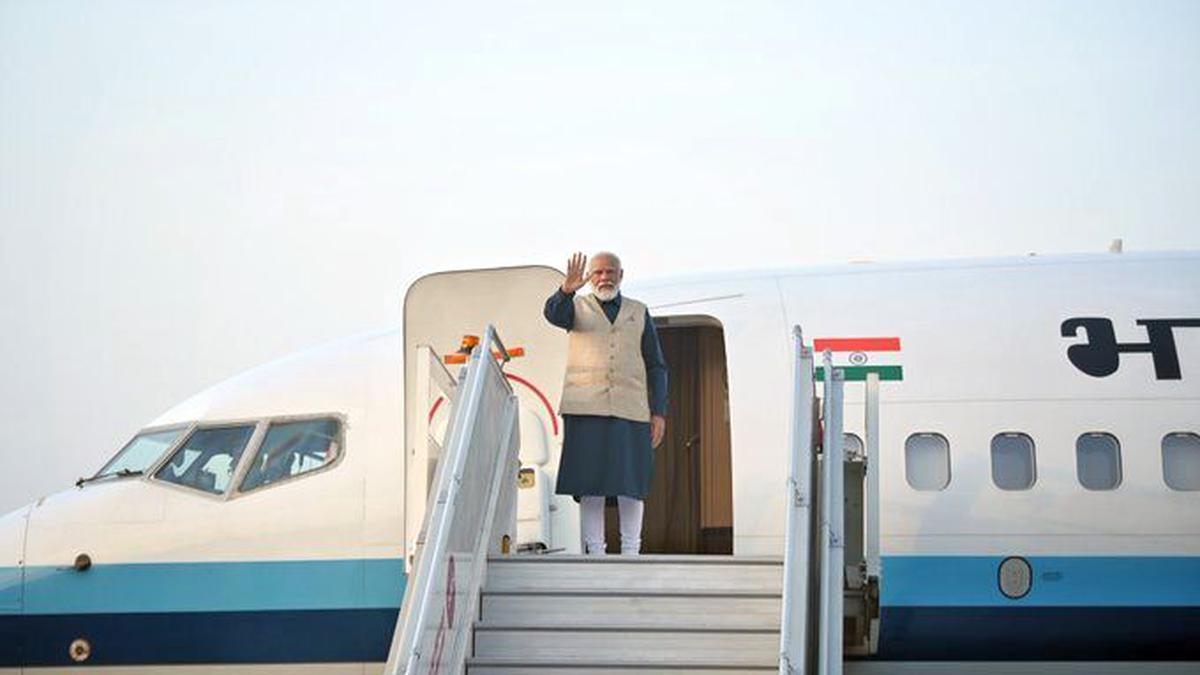
Prime Minister Narendra Modi on March 22, 2024, arrived in Paro, Bhutan for a 24-hour State visit.

India – Bhutan Bilateral Relationship

  • India and Bhutan share unique and exemplary bilateral relations, which are based on mutual trust, goodwill and understanding.
  • Formal diplomatic relations between India and Bhutan were established in 1968.
  • The basic framework of India-Bhutan relations is the Treaty of Friendship and Cooperation signed in 1949 between the two countries, which was renewed in 2007.

Trade & Economic Ties

  • The India-Bhutan Agreement on Trade, Commerce and Transit – was first signed in 1972.
  • The agreement establishes a free trade regime between the two countries.
  • India is Bhutan’s top trade partner both as an import source and as an export destination.
  • Since 2014, India’s merchandise trade with Bhutan has almost tripled from USD 484 million in 2014-15 to USD 1422 million in 2021-22.
    • It accounting for about 80% of Bhutan’s overall trade, with the balance of trade in India’s favour.

Cultural & Buddhist Links

  • A number of Bhutanese pilgrims travel to Bodh Gaya, Rajgir, Nalanda, Sikkim, Udayagiri, and other Buddhist sites in India.
  • As a part of the 50th anniversary celebration of diplomatic relations, GOI sponsored a visit by 18 Lam Netens (Buddhist monks) and representative of the Central Monastic Body of Bhutan to India.

Hydropower Cooperation

  • Mutually beneficial hydro-power cooperation with Bhutan is a key pillar of bilateral economic cooperation.
  • For Bhutan, hydro-power development continues to be a vital catalyst for socio-economic development.
  • Revenues from Hydropower constitutes a significant portion of the total revenues of the Royal Government of Bhutan.
  • The ongoing cooperation between India and Bhutan in hydro-power sector is covered under the 2006 bilateral agreement for cooperation and its Protocol signed in 2009.
  • Four hydro-electric projects (HEPs) totalling 2136 MW are already operational in Bhutan and are supplying electricity to India.
  • The 720 MW Mangdechhu was commissioned in August 2019 and handed over to Bhutan in December 2022.

New Areas of Cooperation

  • Apart from hydro-power cooperation and development partnership has moved into new and emerging areas with full interoperability of the flagship digital project RuPay, which has been successfully completed.
  • Bhutan became the second country to launch the BHIM app, further deepening the financial linkages between our two countries.
  • Space cooperation is a new and promising area of bilateral cooperation.
  • The India-Bhutan SAT was launched into space in November 2022 by ISRO's Polar Satellite Launch Vehicle (PSLV).
  • Inauguration of Ground Earth Station during visit of Chairman, ISRO also took place in March 2023.

Indians Working in Bhutan

  • About 50,000 Indian citizens are working in Bhutan, mainly in the construction sector, education and technical consultants involved in infrastructure projects.
  • Some Indian daily-workers also enter and exit Bhutan every day in the border towns, as a sign of the close economic interdependence between both countries.

Educational, Cultural Cooperation and People-to-People Exchanges

  • There is close bilateral cooperation in the educational and cultural fields between India and Bhutan.
  • Over 950 scholarships are being provided annually by GoI for Bhutanese students to study in India in a wide range of disciplines including medicine, engineering, etc.
  • It is estimated that approximately 4,000 Bhutanese are studying in undergraduate courses in Indian Universities on self-finance basis.
  • Under the Nehru Wangchuck Scholarship Scheme since its inception in 2010, 8 slots are annually allotted to students and scholars from Bhutan.
  • 20 slots are provided every year to students from Bhutan under the ICCR Scholarship.

PM Modi's State Visit to Bhutan

  • Prime Minister Narendra Modi on March 22, 2024, arrived in Paro, Bhutan for a 24-hour State visit.
  • PM Modi will receive Bhutan’s highest civilian award, the Order of the Druk Gyalpo.
  • This is PM Modi’s first visit since the award was announced in 2021, which will be presented Bhutan’s King Jigme Khesar Namgyel Wangchuck, in appreciation for his efforts towards strengthening India-Bhutan ties.

Q1) What do you mean by Chicken’s Neck in terms of India’s geographical area?

The Siliguri Corridor, also known as the Chicken's Neck, is a stretch of land around the city of Siliguri in West Bengal, India. 20–22 kilometers (12–14 mi) at the narrowest section, this geo-political and geo-economic corridor connects the seven states of northeast India to the rest of the country.

Q2) Where is Doklam located?

Doklam is an area with a plateau and a valley which lies on the Bhutan-China border, near India.


Source: PM Modi arrives in Paro, to receive Bhutan’s highest civilian award | MEA

Line of Actual Control (LAC)

Line of Actual Control (LAC)

What’s in Today’s Article?

  • Why in News?
  • What is the Line of Actual Control (LAC)?
  • LAC vs Line of Control (LoC) with Pakistan
  • Disagreement over the LAC
  • Why are these Claim Lines Controversial in Ladakh?
  • Current Arrangement to Reconcile Differences over LAC
  • The Plans for Expeditious De-escalation along the LAC in Eastern Ladakh
  • Legacy Issues that Need to be Resolved

Why in News?

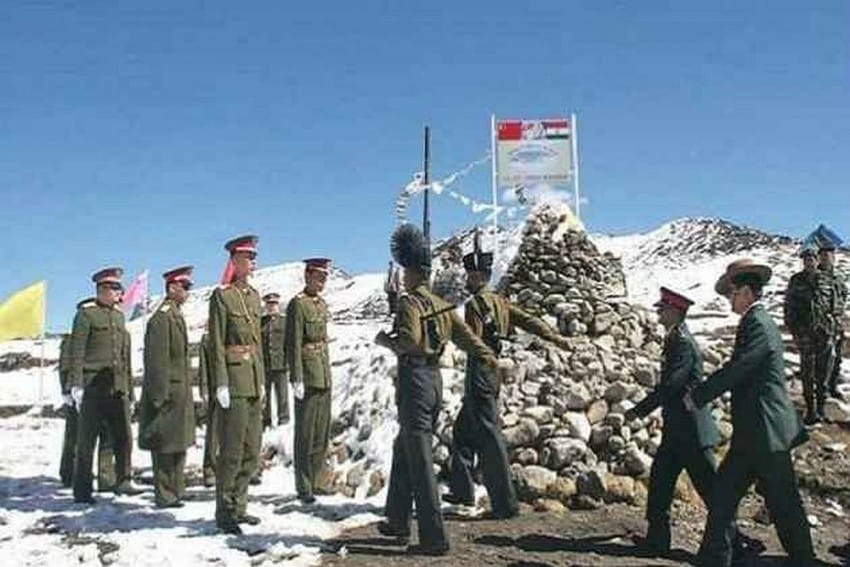
  • The Indian PM and Chinese President agreed on the sidelines of the 15th BRICS Summit to intensify efforts for expeditious disengagement and de-escalation along the LAC in eastern Ladakh.
  • With this, the spotlight is now on the exact contours of plans being drawn up by military commanders on the ground to pull back troops.

What is the Line of Actual Control (LAC)?

  • The LAC is the demarcation that separates Indian-controlled territory from Chinese-controlled territory.
  • It is divided into three sectors: the eastern sector which spans Arunachal Pradesh and Sikkim, the middle sector in Uttarakhand and Himachal Pradesh, and the western sector in Ladakh.
  • India considers the LAC to be 3,488 km long, while the Chinese consider it to be only around 2,000 km.
  • India’s claim line is the line seen in the official boundary marked on the maps as released by the Survey of India, including both Aksai Chin and Gilgit-Baltistan. This means LAC is not the claim line for India.
  • In China’s case, LAC is the claim line except in the eastern sector, where it claims the entire Arunachal Pradesh as South Tibet.

LAC vs Line of Control (LoC) with Pakistan:

  • The LoC emerged from the 1948 ceasefire line negotiated by the UN after the Kashmir War.
  • It was designated as the LoC in 1972, following the Shimla Agreement between the two countries (India and Pakistan).
  • It is delineated on a map signed by DGMOs of both armies and has the international sanctity of a legal agreement.
  • On the other hand, the LAC is only a concept. It is not agreed upon by the two countries, neither delineated on a map or demarcated on the ground.

Disagreement over the LAC:

  • The major disagreements are in the western sector where the LAC emerged from two letters written by Chinese PM Zhou Enlai to PM Jawaharlal Nehru in 1959, after he had first mentioned such a ‘line’ in 1956.
  • After the 1962 War, the Chinese claimed they had withdrawn to 20 km behind the LAC of 1959, which coincides with the so-called McMahon Line in the eastern sector.
  • India’s Response to China’s Designation of the LAC:
    • India rejected the concept of LAC in both 1959 and 1962, as it is the line China has created.
    • The Chinese line was a disconnected series of points on a map that could be joined up in many ways.
    • The line should omit gains from aggression in 1962 and therefore should be based on the actual position on September 8, 1962 before the Chinese attack.
    • This vagueness of the Chinese definition left it open for China to continue its creeping attempt to change facts on the ground by military force.
    • During the Doklam crisis in 2017, the Chinese Foreign Ministry spokesperson urged India to abide by the “1959 LAC”.

Why are these Claim Lines Controversial in Ladakh?

  • Aksai Chin in Ladakh province of the princely state of J&K was not part of British India, although it was a part of the British Empire.
  • Thus, the eastern boundary was well defined in 1914 (when the Shimla Agreement on the McMahon Line was signed by British India) but in the west in Ladakh, it was not.

Current Arrangement to Reconcile Differences over LAC:

  • India formally accepted the concept of the LAC when the Indian PM paid a return visit to Beijing in 1993 (after Chinese Premier Li Peng’s 1991 visit to India).
    • The two sides signed the Agreement to Maintain Peace and Tranquility at the LAC.
  • The reference to the LAC was unable to make it clear that it was referring to the LAC at the time the agreement was signed, not the LAC of 1959 or 1962.
  • To reconcile the differences about some areas, the two countries agreed that the Joint Working Group on the border issue would take up the task of clarifying the alignment of the LAC.

The Plans for Expeditious De-escalation along the LAC in Eastern Ladakh:

  • The extent of disengagement and where on the LAC it will take place is not immediately clear.
  • However, various modalities have been prepared for possible limited disengagement in phases.
  • For example, since 2020, Corps Commanders of India and China have been discussing resolution of the flashpoints along the LAC.
    • The talks led to some forward movement with both sides deciding to pull back troops and dismantle temporary structures from the Galwan Valley.
  • Disengagement in most of these areas led to the creation of buffer zones - this stops troops of both sides from accessing areas which they patrolled earlier.

Legacy Issues that Need to be Resolved:

  • Other than these friction points, the legacy issues of Depsang Plains and Demchok - which predate the 2020 incursions by the Chinese PLA - continue to fester.
  • The Depsang Plains are located close to the strategically important Daulat Beg Oldie. The Depsang Plains issue began in 2013 when China carried out an 18-km incursion in the area.
    • Despite the two countries agreeing then to go back from their positions, the PLA troops did not vacate the area completely.
  • In Demchok, which is in the southern part of eastern Ladakh, the problem is mainly at the ChardingNinglung Nullah (CNN) junction.
    • In multiple instances, the PLA also stopped Indian graziers at the Saddle Pass at the CNN junction, well within India’s perception of the LAC.

Q1) Who are the new entrants to the BRICS grouping?

Argentina, Egypt, Ethiopia, Iran, Saudi Arabia and the United Arab Emirates have all been invited to become members of BRICS at the 15th BRICS Summit in Johannesburg, South Africa.

Q2) Where is Doklam located?

Doklam plateau is an area in Bhutan, located on the tri-junction of Tibet-Bhutan-India border lies between Chumbi Valley in the north and Sikkim to the west. In 2017, a military standoff occurred between China and India, as China attempted to extend a road on the Doklam plateau.


Source: India-China LAC | Buffer zones to Depsang to Demchok: Spotlight on pullback plan, the extent | IE

Enquire Now