African Grey Parrot

African Grey Parrot

African Grey Parrot Latest News

There are no registered breeders or authorised pet shops to sell African grey parrots (Psittacus erithacus) – one of the most easily procurable animals in the country.

About African Grey Parrot

  • It is a medium-sized, dusty-looking gray bird.
  • Scientific Name: Psittacus erithacus
  • It is one of the most talented talking/mimicking birds on the planet.

African Grey Parrot Habitat and Distribution

  • African grey parrots are native to West and Central Africa.
  • They inhabit different types of lowland forest, including rainforest, woodlands, and wooded savannah
  • They can be seen along forest edges and in clearings as well, and sometimes feeding in gardens and cultivated fields.
  • They are kept as pets in many parts of the world, and their popularity dates back centuries.

African Grey Parrot Features

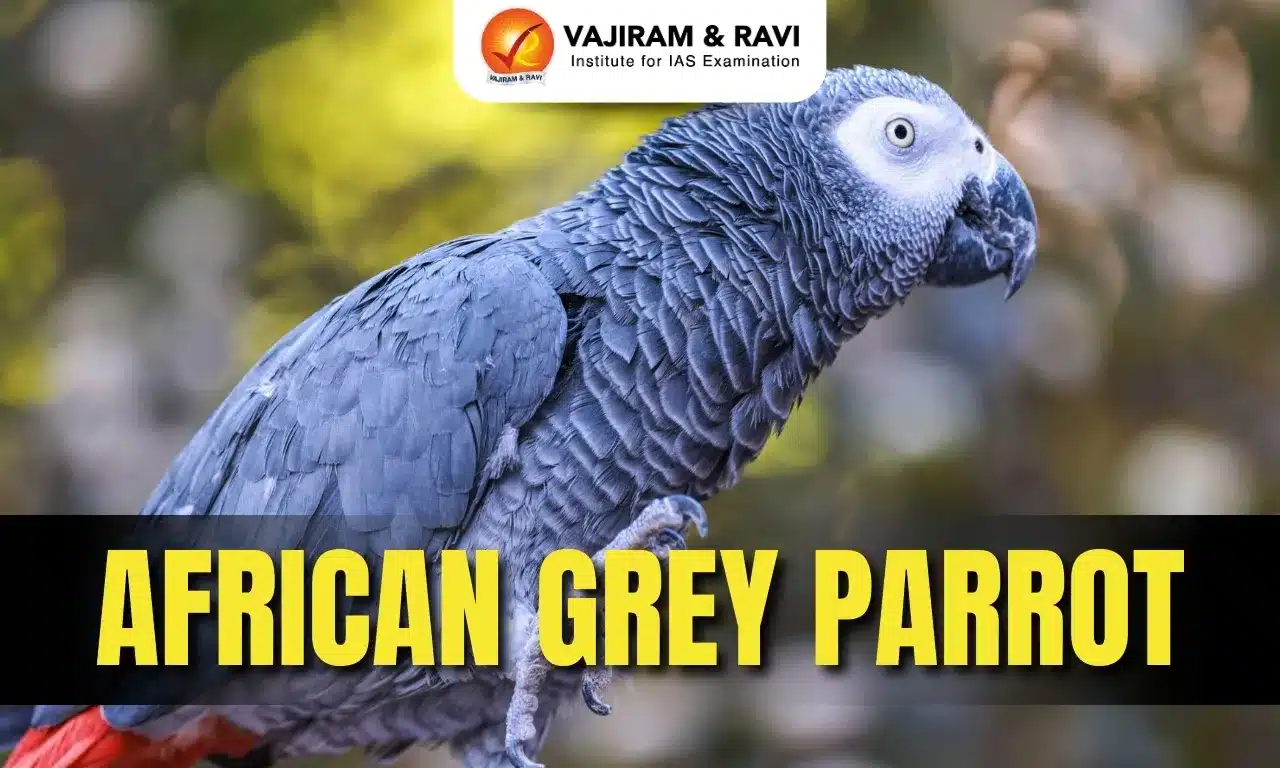
  • It is a mottled grey-colored, medium-sized parrot
  • It has a large black bill and white mask enclosing a yellow eye and has a striking red vent and tail. 
  • Females have a pale gray crown with dark gray edges, a gray body, and scarlet tail feathers. 
  • The male looks similar to the female but becomes darker with age.
  • Lifespan: 50+ years

African Grey Parrot Conservation Status

It is classified as 'Endangered' under the IUCN Red List. 

Source: TH

African Grey Parrot FAQs

Q1: What is the scientific name of the African grey parrot?

Ans: Psittacus erithacus

Q2: Where are African grey parrots naturally found in the wild

Ans: African grey parrots are native to West and Central Africa.

Q3: What is the conservation status of the African grey parrot according to the IUCN Red List?

Ans: Endangered
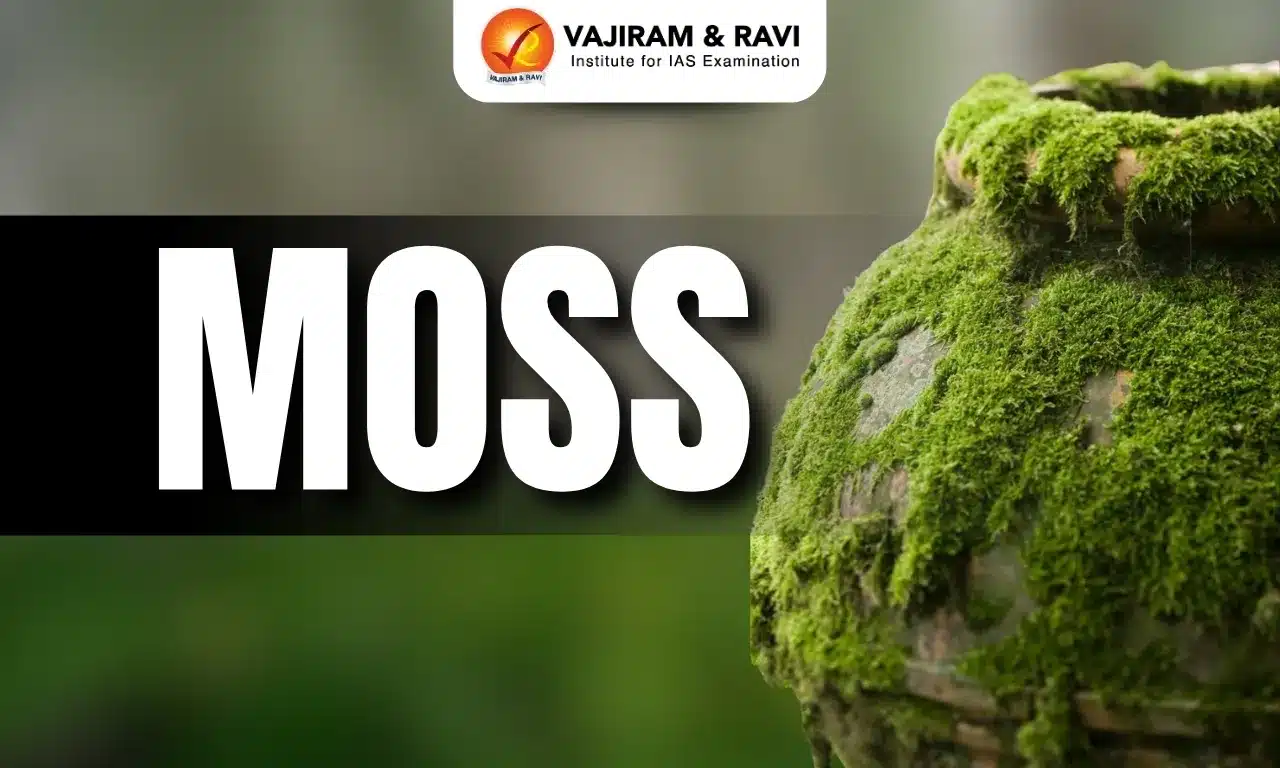
Moss

Moss

Moss Latest News

Recently, a team of scientists has found that moss can survive a prolonged trip to space.

About Moss

  • It is a small nonvascular spore-bearing land plant belongs to the taxonomic division Bryophyta.
  • It is among the earliest land plants and has colonised some of the harshest environments on the planet, including Antarctica, volcanic fields, and deserts.
  • Mosses existed as early as the Permian Period and more than 100 species have been identified from fossils of the Paleogene and Neogene periods.
  • Types of Moss: Of the 10,000 and more types of mosses on the planet, there are three main types: peat moss, granite moss and true moss.
  • Distribution:  Mosses are distributed throughout the world except in salt water.
  • Habitat: It is the small plant commonly found in damp, shady spots is already known for its resilience on Earth.
  • Moss reproduces through spores, which are the equivalent to a flowering plant’s seed

Ecological Significance of Moss

  • Ecologically, mosses break down exposed substrata, releasing nutrients for the use of more-complex plants that succeed them.
  • They also aid in soil erosion control by providing surface cover and absorbing water.
  • They are important in the nutrient and water economy of some vegetation types.
  • Mosses can be effective indicators of c02 emissions that pollute the air. They can also signal if an ecosystem has been damaged or harmed by acid rain.

Source: IE

Moss FAQs

Q1: What is the primary method of reproduction in Moss plants?

Ans: Spores

Q2: What is the role of Moss plants in the ecosystem?

Ans: They are primary producers

Exercise AUSINDEX

Exercise AUSINDEX

Exercise AUSINDEX Latest News

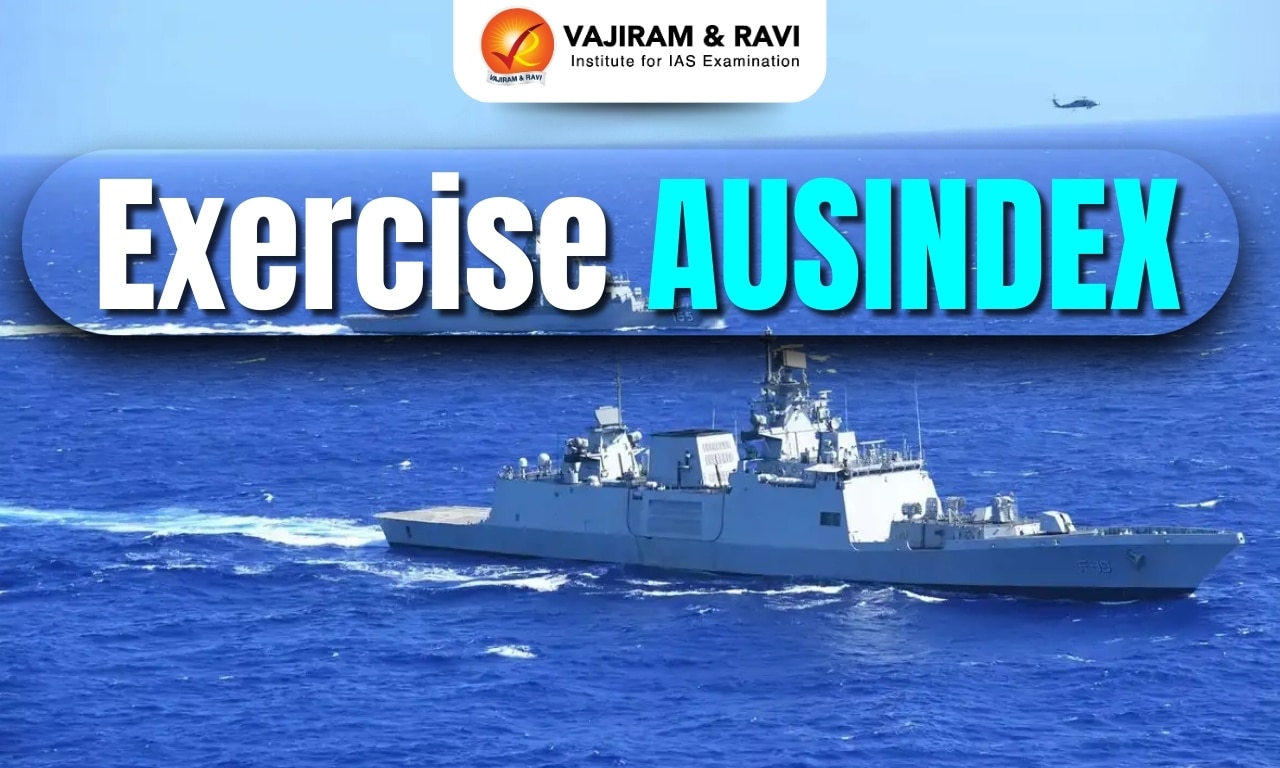
Recently, the Indian Naval Ship INS Sahyadri participated in the exercise AUSINDEX 2025 which was held in the Northern Pacific.

About Exercise AUSINDEX

  • It is a bilateral exercise held between India and Australia.
  • It is a major biennial maritime exercise which has been conducted since 2015.
  • Aim: The exercise is aimed at significantly boosting interoperability and deepening the strategic partnership between the two maritime nations.

Key Facts about Exercise AUSIDEX 2025

  • The warships and aircraft of both navies conducted intense joint operations, focusing on anti-submarine warfare, gunnery exercises, and advanced flying operations.
  • The Indian Naval Ship INS Sahyadri, alongside HMAS Ballarat participated in the Exercise.

Other Exercises Conducted between Australia and India

  • Ex AUSTRA HIND (Bilateral Exercise with Army)
  • EX PITCH BLACK (Australia’s multilateral air combat training exercise)
  • Malabar Naval Exercise
  • Quad (Multilateral Naval Exercise)

Source: ET

Exercise AUSINDEX FAQs

Q1: What is AUSINDEX?

Ans: A bilateral naval exercise between India and Australia

Q2: What is the objective of AUSINDEX?

Ans: To promote maritime cooperation and interoperability between India and Australia.

Key Facts about Georgia

Key Facts about Georgia

Georgia Latest News

Recently, India has strengthened its textile and sericulture partnership with Georgia following a high-level multi-sectoral engagement.

About Georgia

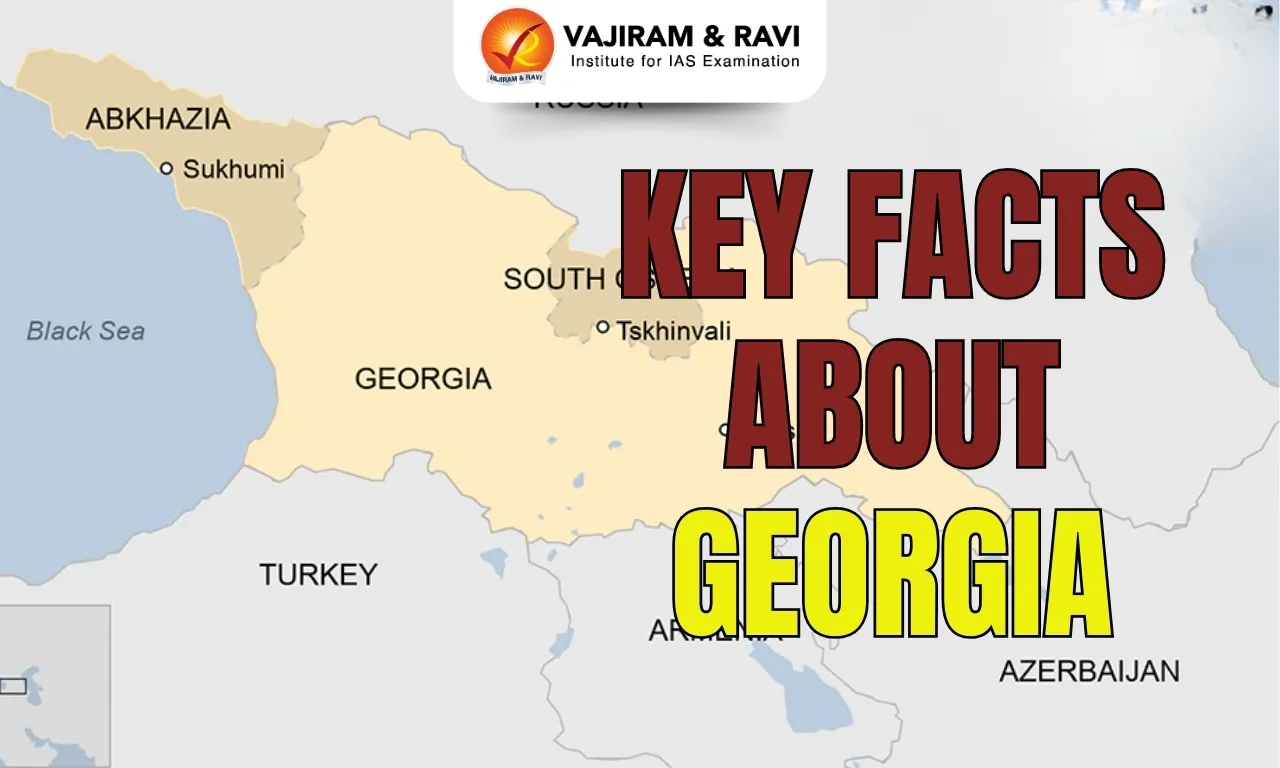
  • Location: It is located in the far south eastern region of the European continent.
  • Georgia is a Transcaucasian country, situated at the dividing line of the continents of Asia and Europe.
  • Bordering Countries: It is bordered by 4 countries: by Russia in the north and northeast; by Azerbaijan in the east and southeast; and by Armenia and Turkey in the south.
  • Maritime Border: Georgia is bounded by the Black Sea in the west.
  • Capital City: Tbilisi

Geographical Features of Georgia

  • Terrain: It is largely mountainous with Great Caucasus Mountains in the north and Lesser Caucasus Mountains in the south.
  • Climate: It is temperate and ranges from subtropical mediterranean in the west to arid and warm in the east.
  • Highest Peak: Mount Shkhara (5,068 metres) is the highest point of Georgia.
  • Major Rivers: Inguri, Kodori, Mtkvari and Rioni
  • Natural Resources: It mainly consists of manganese deposits, iron ore, copper, minor coal and oil deposits.

Source: DD News

Georgia FAQs

Q1: Which mountain range runs through Georgia?

Ans: Caucasus

Q2: What is the official language of Georgia?

Ans: Georgian

Brihadeeswarar Temple

Brihadeeswarar Temple

Brihadeeswarar Temple Latest News

Marking World Heritage Week, the Archaeological Survey of India (ASI) organised a heritage walk and clean-up drive at the Brihadeeswarar Temple (Big Temple) in Thanjavur recently.

About Brihadeeswarar Temple

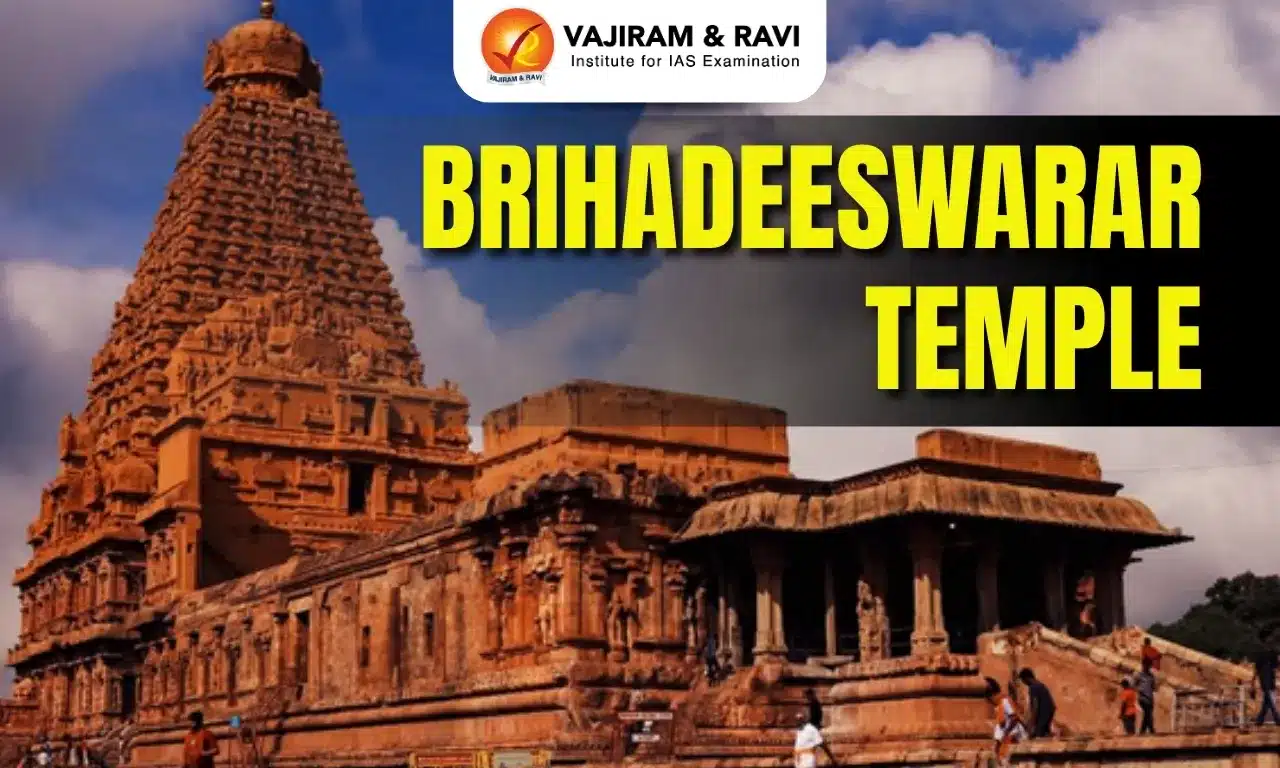
  • It is a Hindu temple dedicated to Shiva located in Thanjavur, Tamil Nadu.
  • It is also known as Periya Kovil, RajaRajeswara Temple and Rajarajesvaram. 
  • It is one of the largest temples in India and is an example of Dravidian architecture during the Chola period.
  • It was built by emperor Raja Raja Chola I and completed in 1010 AD.
  • It is part of the UNESCO World Heritage Site known as the “Great Living Chola Temples”, with the other two being the Brihadeeswarar Temple, Gangaikonda Cholapuram and Airavatesvara temple.

Brihadeeswarar Temple Architecture

  • The temple stands amidst fortified walls that were probably added in the 16th century. 
  • ‘The vimanam (temple tower) is 216 ft (66 m) high and is the tallest in the world. 
  • The Kumbam (the apex or the bulbous structure on the top) of the temple is carved out of a single rock and weighs around 80 tons.
  • The temple complex spans over 40 acres and is decorated with masses of sculptures and inscriptions that spotlight the era's devotion and craftsmanship.
  • There is a big statue of Nandi (sacred bull), carved out of a single rock measuring about 16 ft (4.9 m) long and 13 ft (4.0 m) high at the entrance. 
  • The entire temple structure is made out of granite.

Source: TH

Brihadeeswarar Temple FAQs

Q1: Where is the Brihadeeswarar Temple located?

Ans: Thanjavur, Tamil Nadu.

Q2: Who built the Brihadeeswarar Temple?

Ans: It was built by emperor Raja Raja Chola I.

Q3: Brihadeeswarar Temple is part of which UNESCO World Heritage Site group?

Ans: Great Living Chola Temples

Enquire Now