Manchurian Walnut Tree

Manchurian Walnut Tree

Manchurian Walnut Tree Latest News

Recently, researchers found that plant leaves from the Manchurian walnut tree showed extraordinary weed-killing potential.

About Manchurian Walnut Tree

  • It is a hardy deciduous tree known for its robust growth and adaptability to a range of soil types.
  • Distribution: It is found in Manchuria (China) and also grows on the Korean Peninsula and in the Far East of Russia.

Features of Manchurian Walnut Tree

  • Soil: The Manchurian nut tree likes well-drained fertile soils with a neutral PH reaction.
  • Cold Resistance: It is very cold-resistant and can withstand frost down to -45 ° C.
  • Growth: Under natural conditions it can reach upto 30 m, and the life expectancy is high – up to 300 years.
  • Fruiting: The plant begins to bear fruit at the age of 7-10 years.
  • Growth Rate: It grows at a tremendous pace for the first 20 years up to 2 m per year. In its lifetime, it grows up to 30 m and even higher. 

Applications of Manchurian Walnut Tree

  • Medicinal Use: The plant is widely used in pharmaceuticals and folk medicine. Preparations made from Manchurian walnuts have a strong analgesic, antifungal, and antiparasitic effect.
  • Other uses: Green fruits are used to make jams, and wood is used in furniture production.

Source: TOI

Manchurian Walnut Tree FAQs

Q1: What is the medicinal use of Manchurian Walnut Tree preparations?

Ans: Analgesic, antifungal, and antiparasitic

Q2: What is the wood of the Manchurian Walnut Tree used for?

Ans: Furniture production.
Cuban gar

Cuban gar

Cuban gar Latest News

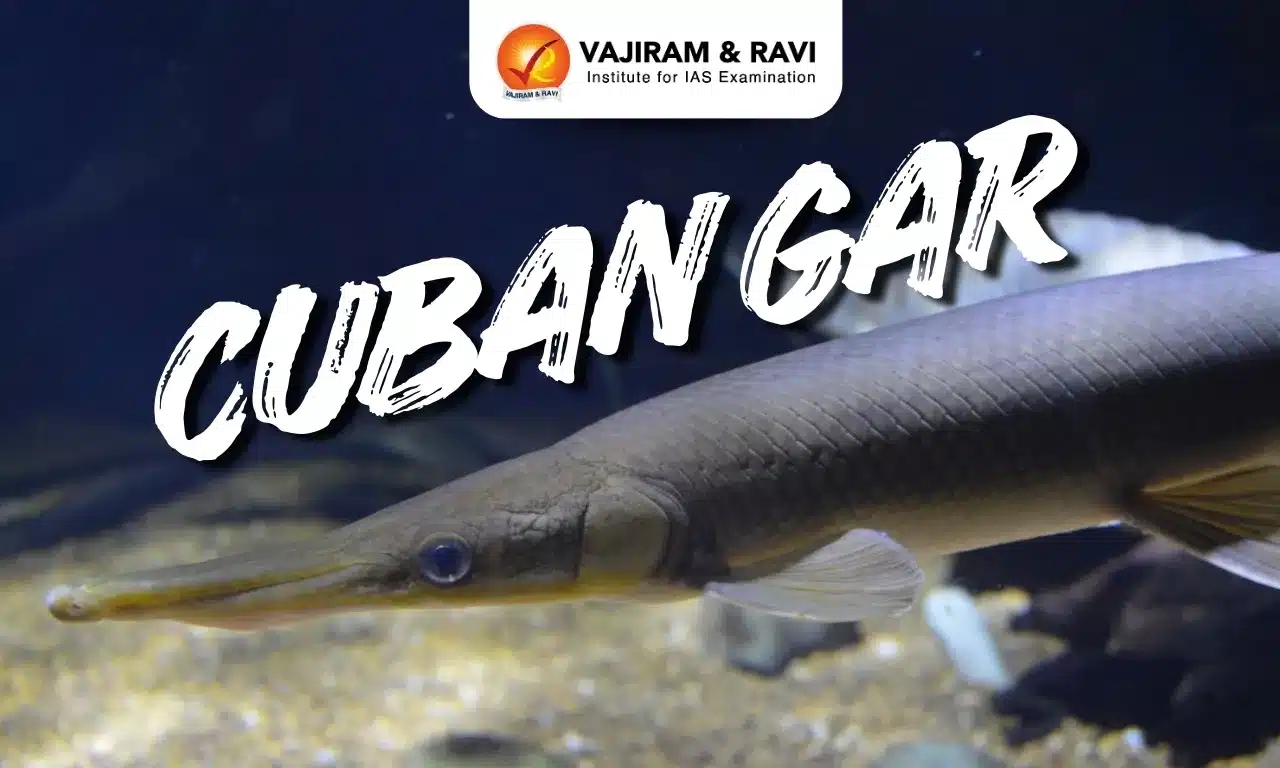
Cuban scientists have taken restoration efforts in Cuba's Zapata Swamp to save the Cuban gar from extinction. 

About Cuban gar

  • The Cuban gar (Atractosteus tristoechus), also known as the manjuarí, is a fish in the family Lepisosteidae.
  • This fish is part of a family called "gars," which have been around for about 100 million years.
  • It is a tropical, freshwater species, although it also inhabits brackish water.
  • Characteristics of Cuban gar
    • It is also notable for its high tolerance of high ammonia and nitrate levels in water.
    • It has the ability to breathe some atmospheric air in absence of sufficiently oxygenated water.
  • Habitat: It is found in various habitats from large lakes and rivers to sluggish tributaries, backwaters and pools, and can surive in both fresh and brackish waters.
  • Distribution: It is found in rivers and lakes of western Cuba and the Isla de la Juventud
  • Diet: Gars are ambush predators feeding on smaller fishes and aquatic crustaceans in nature.
  • Threats: Habitat loss, and introduction of invasive species African walking catfish.
  • Conservation Status: IUCN: Critically Endangered

Source: India Today

Cuban gar FAQs

Q1: What is the habitat of the Cuban Gar?

Ans: Waters of Cuba and surrounding areas

Q2: What is the conservation status of the Cuban Gar?

Ans: Critically Endangered

Abujhmadiya Tribe

Abujhmadiya Tribe

Abujhmadiya Tribe Latest News

Recently, the Bastar Olympics’ tournament has seen increasing participation of the Abujhmadiya tribe.

About Abujhmadiya Tribe

  • They are an ancestral and patriarchal tribe primarily residing in the Abujmarh region in Chhattisgarh, India.
  • Abujhmadiya tribal community is a sub-group of Gond tribe of Central India region. 
  • It is a Particularly Vulnerable Tribal Group (PVTG).

Culture and Traditions of Abujhmadiya Tribe

  • Language: They speak Abuj Maria, Hindi or Chhattisgarhi.
  • Belief: They follow a form of animism, worshipping nature spirits and deities associated with natural elements.
  • Abujhmaria women consider (Godana) tattoo a permanent jewel. 
  • Festivals: Celebrate various festivals which includes:
    Saja Festival: A traditional festival celebrating agricultural success and honoring nature spirits.
    Bastar Dussehra: Which features traditional dances, rituals, and community gatherings.
  • Economy: The Abuj Maria primarily engage in subsistence agriculture, cultivating crops like rice, maize, and pulses. They also practice hunting, fishing, and gathering forest products.
  • Social Structure: Their society is organized into clans, each with its own customs and traditions.

Source: IE

Abujhmadiya Tribe FAQs

Q1: Where is the Abujhmadiya Tribe primarily located?

Ans: Chhattisgarh

Q2: What is the name of the traditional youth dormitory of the Abujhmadiya Tribe?

Ans: Ghotul

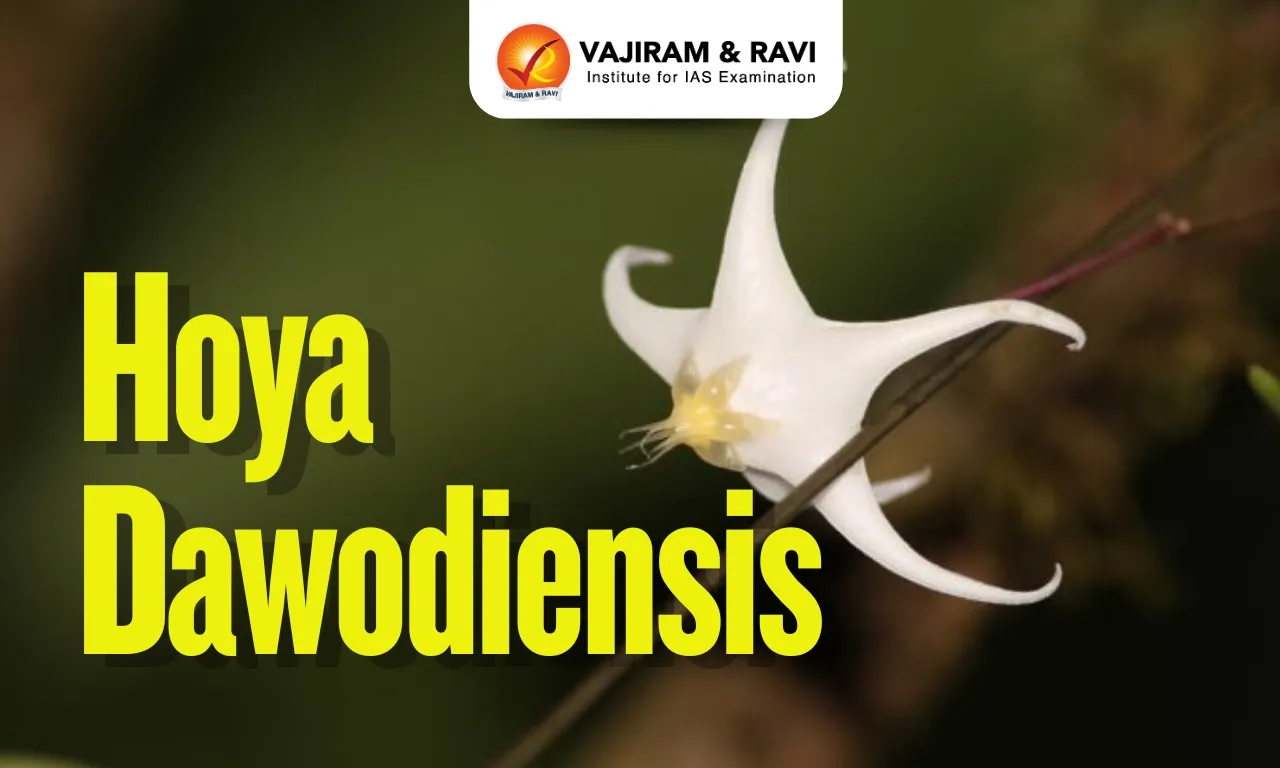
Hoya dawodiensis

Hoya dawodiensis

Hoya dawodiensis Latest News

Arunachal Pradesh recently reported a major scientific milestone with the discovery of a new plant species, Hoya dawodiensis.

About Hoya dawodiensis

  • It is a new plant species.
  • It was discovered in the Vijaynagar region in Changlang district, Arunachal Pradesh.
    • Vijoynagar landscape, accessible only by air or multi-day treks, remains one of the least explored but biologically richest regions of the state.

Key Facts About Hoya Plants

  • Hoyas constitute a diverse group of tropical flowering species, many of which are valued for their ecological roles and unique morphology. 
  • Hoyas are also known as wax plants or porcelain flowers because of their unique and beautiful flowers that look like they are made of wax. 
  • Hoyas are native to tropical and subtropical regions of Asia, Australia, and the Pacific Islands, but they can be grown indoors as houseplants in most climates. 
  • Hoya plants thrive in bright, indirect light.
  • Hoyas prefer well-draining, airy soil.
  • Hoyas are accustomed to high-humidity environments, though their waxy, thick leaves do help them tolerate periods of dry air.

Source: PTI

Hoya dawodiensis FAQs

Q1: What is Hoya dawodiensis?

Ans: Arunachal Pradesh

Q2: In which region of Arunachal Pradesh was Hoya dawodiensis discovered?

Ans: It was discovered in the Vijaynagar region in Changlang district.

Q3: Hoya dawodiensis belongs to which group of plants?

Ans: Tropical flowering species

Q4: Hoyas are primarily native to which regions?

Ans: Tropical and subtropical Asia, Australia, and Pacific Islands.

Ningaloo Reef

Ningaloo Reef

Ningaloo Reef Latest News

A new survey finds nearly 70% of corals at UNESCO-listed Ningaloo Reef have died.

About Ningaloo Reef

  • It is located on Western Australia's remote coast along the East Indian Ocean.
  • It is Australia’s largest fringing coral reef, extending across 300 kilometres of coastline. 
  • It is one of the world’s most pristine, longest, and largest coral reefs. 
  • However, it is unusually narrow and covers an area of about 50 sq.km.
  • The reef sustains both temperate and tropical marine life, including mammals and reptiles. 
  • It has about 250 corals, of which 200 are hard coral species.
  • Besides corals, the reef hosts over 500 fish species. Some of the mega marine species found here are manta rays, whale sharks, humpback whales, potato cod, dugongs, and sea turtles. 
  • The Ningaloo Reef is also a popular spot for snorkeling and scuba diving.
  • It is a UNESCO World Heritage Site.

Source: DTE

Ningaloo Reef FAQs

Q1: Ningaloo Reef is located along the coast of which region?

Ans: Western Australia.

Q2: Approximately how long is the Ningaloo Reef?

Ans: 300 km

Q3: Ningaloo Reef covers roughly how much area?

Ans: It covers an area of about 50 sq.km.

Q4: How many coral species are found in Ningaloo Reef?

Ans: About 250, including 200 hard corals.

Exercise SURYAKIRAN

Exercise SURYAKIRAN

Exercise SURYAKIRAN Latest News

Recently, the 19th edition of the “Exercise SURYAKIRAN XIX - 2025” commenced at Pithoragarh, Uttarakhand.

About Exercise SURYAKIRAN

  • It is the joint military exercise conducted between India and Nepal.
  • The Indian contingent is being represented mainly by troops from the ASSAM Regiment.
  • The aim of the exercise is to jointly rehearse conduct of Sub Conventional operations under Chapter VII of the United Nations Mandate.’

Key Facts about Exercise SURYAKIRAN–XIX

  • Scope: To strengthen battalion-level synergy in Jungle Warfare, Counter-Terrorism Operations in Mountainous Terrain, Humanitarian Assistance & Disaster Relief (HADR), Environmental Conservation, and Integrated Ground–Aviation Operations.
  • It will focus on incorporating niche and emerging technologies, including Unmanned Aerial Systems (UAS), drone-based ISR,   AI-enabled decision support tools, unmanned logistic vehicles and armoured protection platforms.
  • Significance: It will further enhance the level of defence cooperation between Indian Army and Nepal Army.

Source: PIB

Exercise SURYAKIRAN FAQs

Q1: What is the primary objective of Exercise Suryakiran?

Ans: To enhance interoperability in jungle warfare and counter-terrorism operations.

Q2: Which countries participate in Exercise Suryakiran?

Ans: India and Nepal

Fujiwhara Effect

Fujiwhara Effect

Fujiwhara Effect Latest News

Two cyclonic storms are predicted to form in the Bay of Bengal, with a potential Fujiwhara interaction.

About Fujiwhara Effect

  • The Fujiwhara Effect (also named as the Fujiwhara interaction or the binary interaction) is a natural phenomenon that takes place when two nearby cyclones or hurricanes interact with each other. 
  • It was first described by a Japanese meteorologist, Dr. Sakuhei Fujiwhara, in 1921. The phenomenon was thus named after him.
  • Many years later, the occurrence was observed in the western Pacific Ocean when typhoons Marie and Kathy merged in 1964.

What Happens During The Fujiwhara Effect?

  • The Fujiwhara Effect can occur when two cyclones form near each other or approach each other close enough to allow the Fujiwhara interaction to take place. 
  • Extratropical cyclones can exhibit binary interaction when within a distance of 2,000 km of each other. 
  • Tropical cyclones exhibit this type of effect when separated by a distance of less than 1,400 km. 
  • During the Fujiwhara interaction, the centers of the two cyclones involved in the phenomenon begin to mutually orbit in a counterclockwise direction about a point between the two cyclones.
  • The position of the point is dependent on the intensity and relative mass of the cyclonic vortices. 
  • The smaller cyclone involved in the Fujiwhara Effect moves at a faster rate than the bigger one about the central point.
  • The Fujiwhara Effect might lead the two cyclones to spiral into the central point and merge with each other, or it might trigger the development of a larger cyclone. 
  • The effect might also divert the original path of one or both the cyclones.

Source: DTE

Fujiwhara Effect FAQs

Q1: What is the Fujiwhara Effect?

Ans: It is a natural phenomenon that takes place when two nearby cyclones or hurricanes interact with each other.

Q2: Who first described the Fujiwhara Effect?

Ans: It was first described by a Japanese meteorologist, Dr. Sakuhei Fujiwhara, in 1921.

Q3: How close must two tropical cyclones be (in km) for the Fujiwhara Effect to occur?

Ans: Less than 1,400 km.

Q4: Can the Fujiwhara Effect change the original path of one or both cyclones?

Ans: Yes, the Fujiwhara Effect can alter or divert the original path of one or both cyclones.

Enquire Now