English Channel

English Channel

English Channel Latest News

French ​coastguards rescued ‌157 people from a ​boat ⁠carrying migrants that caught fire ‌in the English Channel ‌recently.

About English Channel

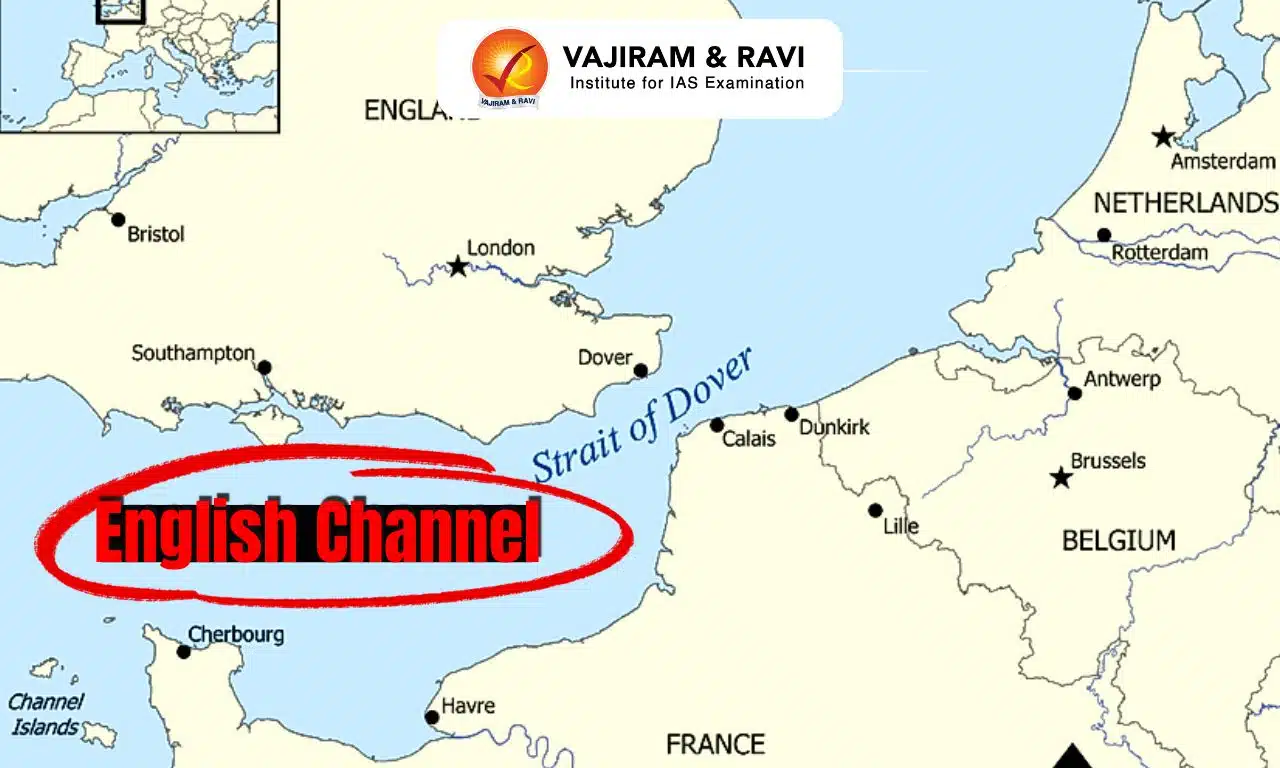
  • The English Channel, also known as the Channel, is a narrow arm of the Atlantic Ocean.
  • It separates the southern coast of England (part of Great Britain) from the northern coast of France. 
  • It is separated from the North Sea on the north by the Strait of Dover.  
  • The current name, “English Channel,” dates back to the 18th century. Before then, the English mostly referred to the waterway as a “Narrow Sea.”
  • The French refer to the Channel as “la Manche” because of its sleevelike shape.
  • It is about 563 km long and 246 km wide. Its narrowest part is the Strait of Dover, which is only 34 km wide.
  • With an area of some 75,000 sq.km., it is the smallest of the shallow seas covering the continental shelf of Europe.
  • Climate: Temperate maritime climate, with warm summers and cold winters. 
  • The main islands are the Isle of Wight and the Channel Islands (a collection of islands including Jersey, Guernsey, Alderney, and Sark).

Historical Importance English Channel

  • Served as a natural defensive barrier for Britain.
  • Played a crucial role during:
    • The Norman Conquest (1066)
    • The Napoleonic Wars
    • World War I
    • World War II, including the Dunkirk Evacuation (1940) and the Normandy Landings (1944).
  • It is one of the world’s busiest shipping areas. It accounts for up to 20% of the global maritime trade and connects the Atlantic Ocean to the North Sea.
  • Major Ports:
    • United Kingdom: Dover, Portsmouth, Southampton
    • France: Calais, Cherbourg, Le Havre
  • Channel Tunnel:
    • The Channel Tunnel (also called the Chunnel) is a rail tunnel beneath the English Channel connecting Folkestone in Kent, England, with Coquelles near Calais, France. 
    • The Channel Tunnel, 50 km long, consists of three tunnels: two for rail traffic and a central tunnel for services and security.  
    • It has the longest undersea portion of any tunnel in the world (37.8 km).
    • It is the only fixed link between the island of Great Britain and the European mainland.

News: TH

English Channel FAQs

Q1: What is the English Channel?

Ans: The English Channel is a narrow arm of the Atlantic Ocean.

Q2: Which two countries are separated by the English Channel?

Ans: The United Kingdom and France.

Q3: Which sea is connected to the English Channel through the Strait of Dover?

Ans: The North Sea.

Q4: What type of climate does the English Channel region experience?

Ans: A temperate maritime climate.

Rhine River

Rhine River

Rhine River Latest News

The water levels in the Rhine River, a major highway for European freight traffic, recently sank below the record set in October 2018.

About Rhine River

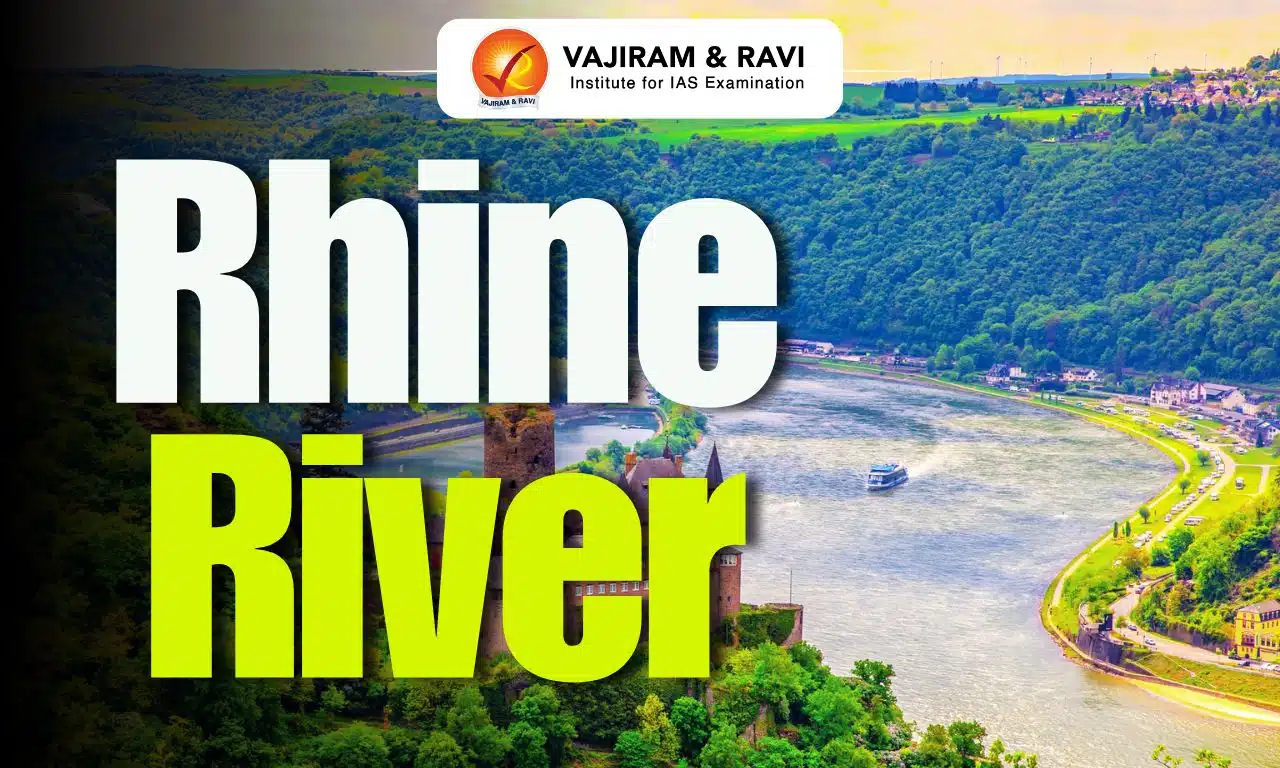
  • It is a river and waterway of Western Europe. 
  • It is the 12th longest river in Europe and the longest in Western Europe.
  • It is called different names depending on the country it flows through. It is called Rhein in Germany, Rhine in France, and Rijn in the Netherlands.
  • Course
    • Origin: In the Alps of eastern Switzerland, two mountain streams run together to form the Rhine. 
    • It flows through six countriesSwitzerland, the Principality of Liechtenstein, Austria, Germany, France, and the Netherlands before flowing into the North Sea at Rotterdam, Netherlands.
    • The Rhine forms a natural border between Germany and France.
  • Total Length: 1,232 km
  • The river drains an area of about 185,000 sq.km. 
  • The Rhine, alongside the Danube, formed the Roman Empire’s northern inland frontier.
  • The Rhine served as a formidable German border during World War II, a defensive barrier to Allied troops.
  • Tributaries: Some of the notable tributaries include Aare, Tamina, Moselle, Erft, Rein da Tuma, Plessur, Rotach, and Wiese.
  • The Rhine Falls near Schaffhausen in Switzerland is Europe's largest waterfall, 150 meters wide and 23 meters high.  
  • The Upper Middle Rhine Valley in Germany is famous for its castles, vineyards, and the legendary Lorelei Rock. 
  • The river basin is home to around 58 million people, passing densely populated regions.
  • The major cities along the Rhine include Basel (Switzerland), Cologne, Bonn, Duisburg, Mainz, Leverkusen, and Neuss (Germany), Strasbourg (France), and Rotterdam and Utrecht (Netherlands).
  • It is Europe’s most important commercial waterway, channeling the flow of trade among Switzerland, France, Germany, and the Netherlands.
  • It facilitates industrial transportation and supports industrial production, with about 20% of the world’s chemical industries manufacturing along the river.

News: IE

Rhine River FAQs

Q1: Which is the longest river in Western Europe?

Ans: The Rhine River.

Q2: Where does the Rhine River originate?

Ans: It originates in the Alps of eastern Switzerland.

Q3: Into which sea does the Rhine River drain?

Ans: The North Sea.

Q4: Which countries does the Rhine River flow through?

Ans: Switzerland, Liechtenstein, Austria, Germany, France, and the Netherlands.

Q5: What is the total length of the Rhine River?

Ans: 1,232 km.

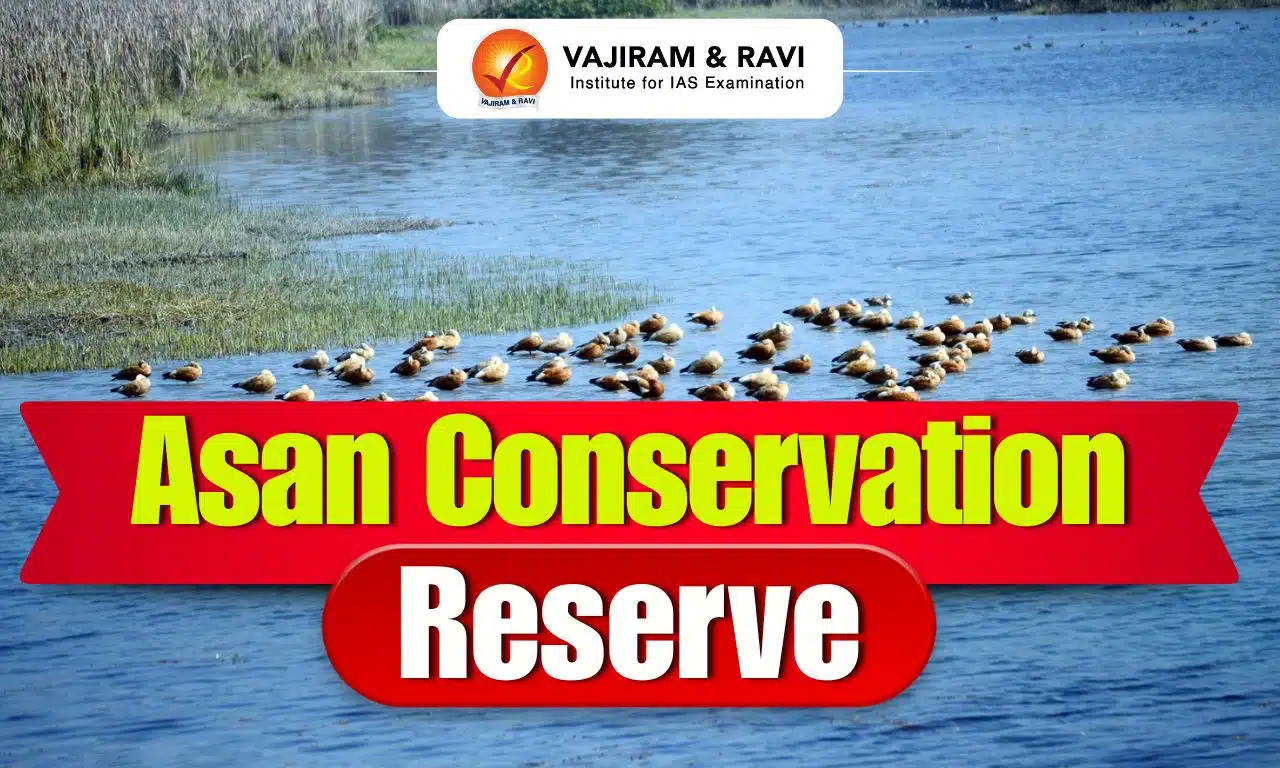
Asan Conservation Reserve

Asan Conservation Reserve

Asan Conservation Reserve Latest News

The Supreme Court recently clarified that a direction banning mining activities within a 10 km radius of the Asan wetland conservation reserve, a Ramsar site in Uttarakhand, would apply to other wetland conservation reserves across the country for the sake of parity.

About Asan Conservation Reserve

  • It is located in the Dehradun district of Uttarakhand
  • Spanning 444.4 ha, it is situated at the confluence of the Asan and Yamuna Rivers. 
  • The Asan River, unlike other rivers which flow north to south, flows in a west to east direction.
  • The reserve comprises the Asan Barrage and the wetland formed by damming the Asan River in 1967.
  • The barrage created a freshwater reservoir with habitats ideal for migratory and resident birds.
  • It was declared a Conservation Reserve in 2005 under Section 36A of the Wildlife (Protection) Act, 1972.
  • It was declared a Ramsar site in 2020. It is the first Ramsar site in Uttarakhand. 
  • It is also listed as an Important Bird Area (BNHS and BirdLife International) and is popular for sightings of native and migratory birds. 
  • This biodiverse wetland lies strategically along the Central Asian Flyway, serving as a critical habitat for numerous migratory and resident species. 
  • It is home to 330 species of birds, including critically endangered-white-rumped vulture, Baer’s pochard; endangered-Egyptian vulture, steppe eagle, black-bellied tern; and vulnerable-marbled teal, common pochard, Indian spotted eagle, etc.
  • The wetland is especially known for hosting large flocks of ruddy shelduck during winter. 
  • Beyond avifauna, the reserve supports a rich biological diversity with 78 invertebrate species, 49 fish species, 4 amphibians, 1 reptile, and 20 mammal species. 
  • Among the fish, the endangered golden mahseer (Tor putitora) is particularly significant, as the wetland functions as an important feeding, migration, and spawning site.

News: TH

Asan Conservation Reserve FAQs

Q1: Where is the Asan Conservation Reserve located?

Ans: In the Dehradun district of Uttarakhand.

Q2: At the confluence of which two rivers is the Asan Conservation Reserve situated?

Ans: The Asan River and the Yamuna River.

Q3: What are the main components of the Asan Conservation Reserve?

Ans: The Asan Barrage and the wetland formed by damming the Asan River.

Q4: Which was the first Ramsar Site in Uttarakhand?

Ans: Asan Conservation Reserve.

Enquire Now