Colletes bhutanicus

Colletes bhutanicus

Colletes bhutanicus Latest News

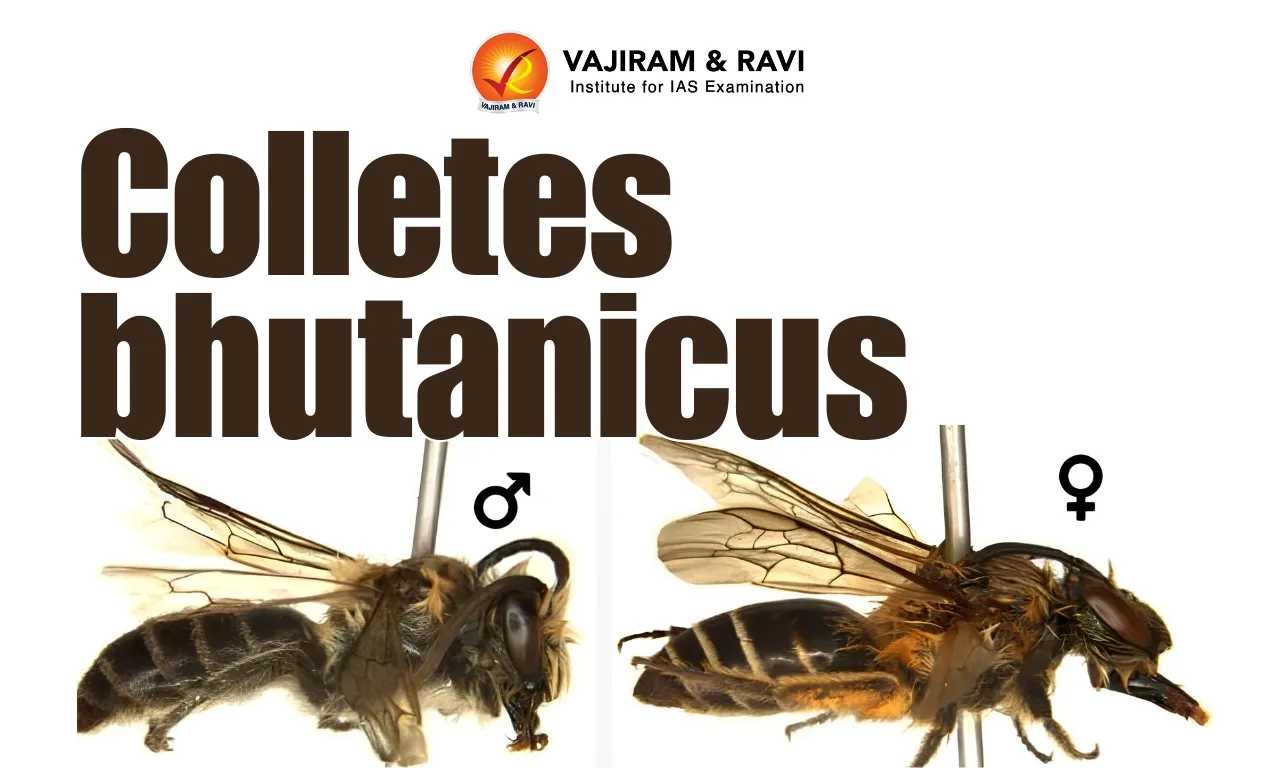
Recently, Colletes bhutanicus has been recorded for the first time in India from Tawang district of Arunachal Pradesh by scientists of the Zoological Survey of India (ZSI). 

About Colletes bhutanicus

  • It is a rare solitary Himalayan plasterer bee, recorded from Arunachal Pradesh for the first time.
  • The bee was found at elevations ranging from 1,500 metres to 3,800 metres.
  • Distribution: It has been recorded from Bhutan and China, including the Xizang region.
  • Features
    • Unlike honeybees, Colletes bees are solitary and do not live in large colonies.
    • Individual bees generally nest separately and play an important role in pollination by moving between flowers to collect pollen and nectar.
  • The study found the bee visiting 25 flowering plant species belonging to 10 botanical families, including economically important crops such as mustard, buckwheat, coriander, beans, chilli and eggplant.

Ecological Role of Bees

  • Honey bees are vital to agriculture because their pollination activities directly influence crop yields and quality.
  • They are the main pollinators of plants. 
  • They contribute significantly to maintaining biodiversity. By pollinating a diverse range of wild plants, honey bees help sustain the balance of ecosystems.
  • Bees are sensitive to environmental changes, making them excellent bioindicators.

Source: TH

Colletes bhutanicus FAQs

Q1: Colletes bhutanicus belongs to which family?

Ans: Colletidae

Q2: Bees of family Colletidae are commonly called by which name?

Ans: Plasterer bees or Cellophane bees

Hallaniyat Islands

Hallaniyat Islands

Hallaniyat Islands Latest News

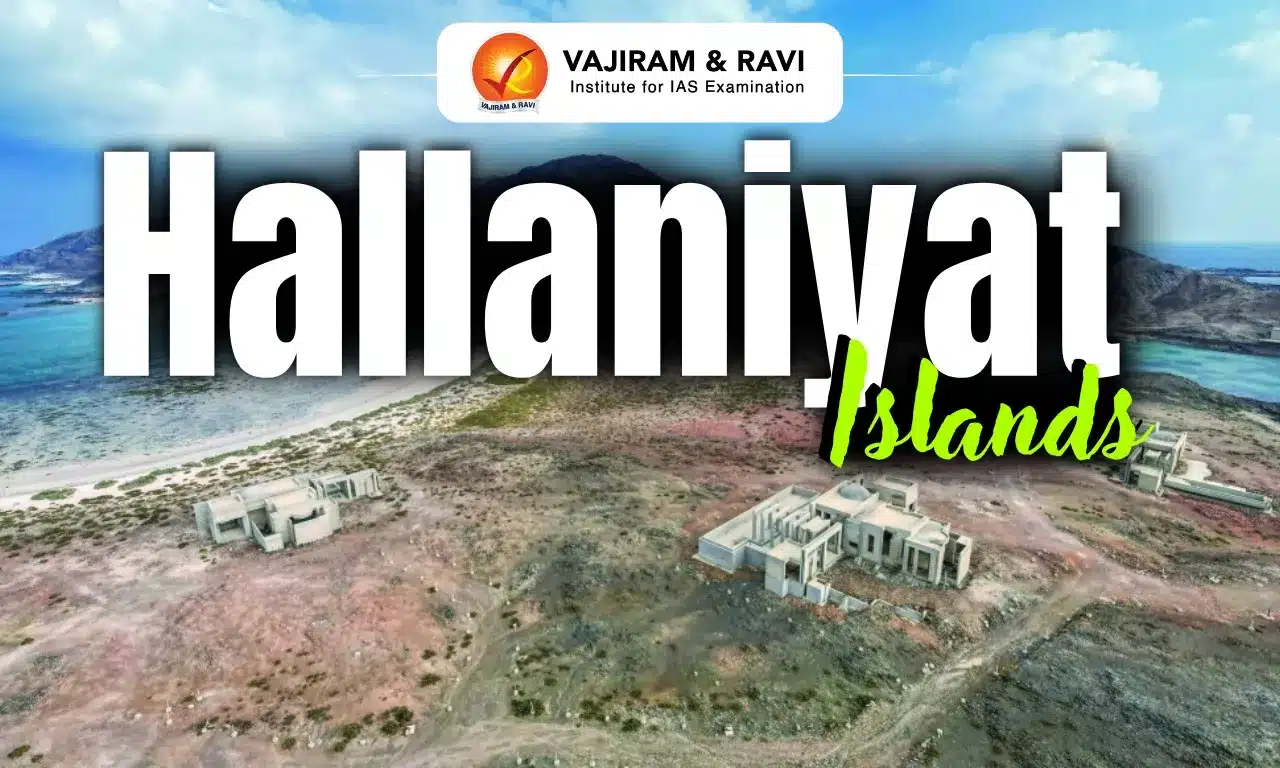
A recent crude oil spill from the tanker Caroline Bezengi is threatening the pristine nature reserve near Oman's Hallaniyat Islands.

About Hallaniyat Islands

  • The Hallaniyat Islands, also known as the Kuria Muria Islands, is an archipelago of five islands located off the southeastern coast of Oman in the Arabian Sea.
  • From west to east, the islands are Al-Hasikiyah, Al-Sawda, Al-Hallaniyah, Qarzawit, and Al-Qibliyah. 
  • Al-Hallaniyah, the largest of the islands, is the only one inhabited.   
  • The habitat is characterised by rocky patches, coral reefs, and sandy substrates. 
  • The area overlaps with the Halaaniyaat Islands Key Biodiversity Area and the Oman Arabian Sea Ecologically or Biologically Significant Marine Area.  
  • The shallow water of the islands is characterized by its virgin nature and high diversity of corals, sponges, seaweeds, algae, fish, and other species.  
  • The Arabian Sea here is defined by the Somali Current and seasonal upwelling that creates one of the most productive marine zones in the Indian Ocean. 
  • Cold, nutrient-rich water rises from the deep during and after the monsoon season, fuelling plankton blooms that attract everything from whale sharks to humpback whales. 
  • The islands have significant strategic importance, as they lie along sea routes connecting the Indian Ocean and Arabian Sea.

News: DEVD

Hallaniyat Islands FAQs

Q1: Where are the Hallaniyat Islands located?

Ans: They are located off the southeastern coast of Oman in the Arabian Sea.

Q2: What are the five islands of the Hallaniyat Islands archipelago?

Ans: Al-Hasikiyah, Al-Sawda, Al-Hallaniyah, Qarzawit and Al-Qibliyah.

Q3: Which is the largest island in the Hallaniyat Island

Ans: Al-Hallaniyah is the largest island.

Q4: What types of habitats characterize the Hallaniyat Islands?

Ans: The habitat is characterized by rocky patches, coral reefs and sandy substrates.

Q5: What makes the shallow waters around the Hallaniyat Islands ecologically significant?

Ans: They are relatively pristine and support a high diversity of corals, sponges, seaweeds, algae, fish and other marine species.

Shruti Patrol Vessel

Shruti Patrol Vessel

Shruti Patrol Vessel Latest News

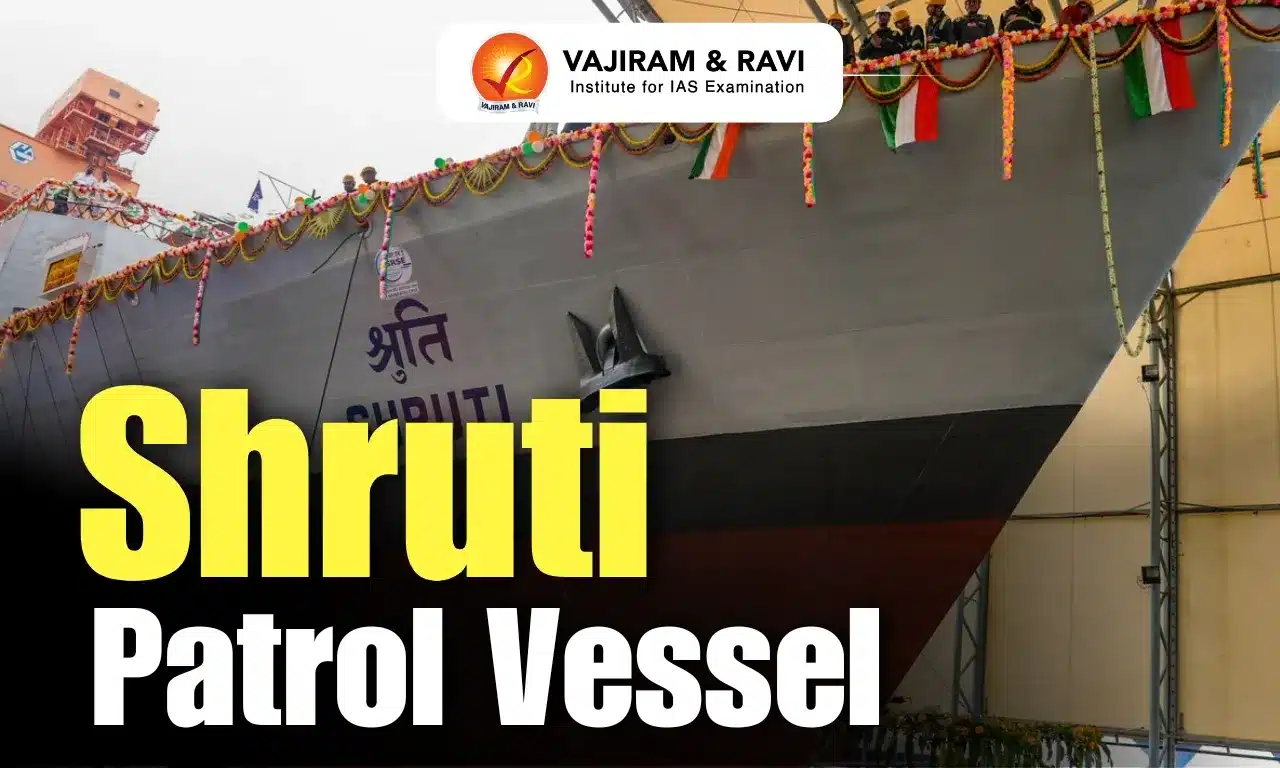
Recently the Next Generation Offshore Patrol Vessel (NGOPV) shruti was launched at M/s GRSE, Kolkata. 

About Shruti Patrol Vessel

  • It is the Next Generation Offshore Patrol Vessel (NGOPV).
  • Construction by: The construction of NGOPVs is concurrently being undertaken at two shipyards — Goa Shipyard Limited (GSL) and Garden Reach Shipbuilders & Engineers Ltd (GRSE), Kolkata.
  • These ships derive their name from India’s rich heritage, with this ship being named as ‘Shruti’, referring to four Vedas.
  • The crest design of the ship depicts the constellation of Ursa Major and a red & white coloured light house.
  • Functions: It is indigenously designed and will augment the existing OPVs/ NOPVs for multi domain operations, such as maritime surveillance, search and rescue, protection of offshore assets, HADR and anti-piracy missions. 

Key Features of NGOPVs

  • The NGOPVs are significantly larger and more capable than the Offshore Patrol Vessels
  • Capacity: They are with a displacement of 3,000 tonnes and achieve speeds of up to 23 knots and have an endurance of 8,500 nautical miles at a cruising speed of 14 knots,
  • Significance: It helps Indian Navy’s pursuit towards indigenous shipbuilding and is in consonance with Government of India’s vision of ‘Aatmanirbhar Bharat’ and ‘Make in India’ initiative.

Source: PIB

Shruti Patrol Vessel FAQs

Q1: What is the main role of Shruti Patrol Vessel ?

Ans: Coastal security and patrolling

Q2: What is the motto of the Indian Coast Guard?

Ans: Vayam Rakshamah - We Protect

Container Manufacturing Assistance Scheme

Container Manufacturing Assistance Scheme

Container Manufacturing Assistance Scheme Latest News

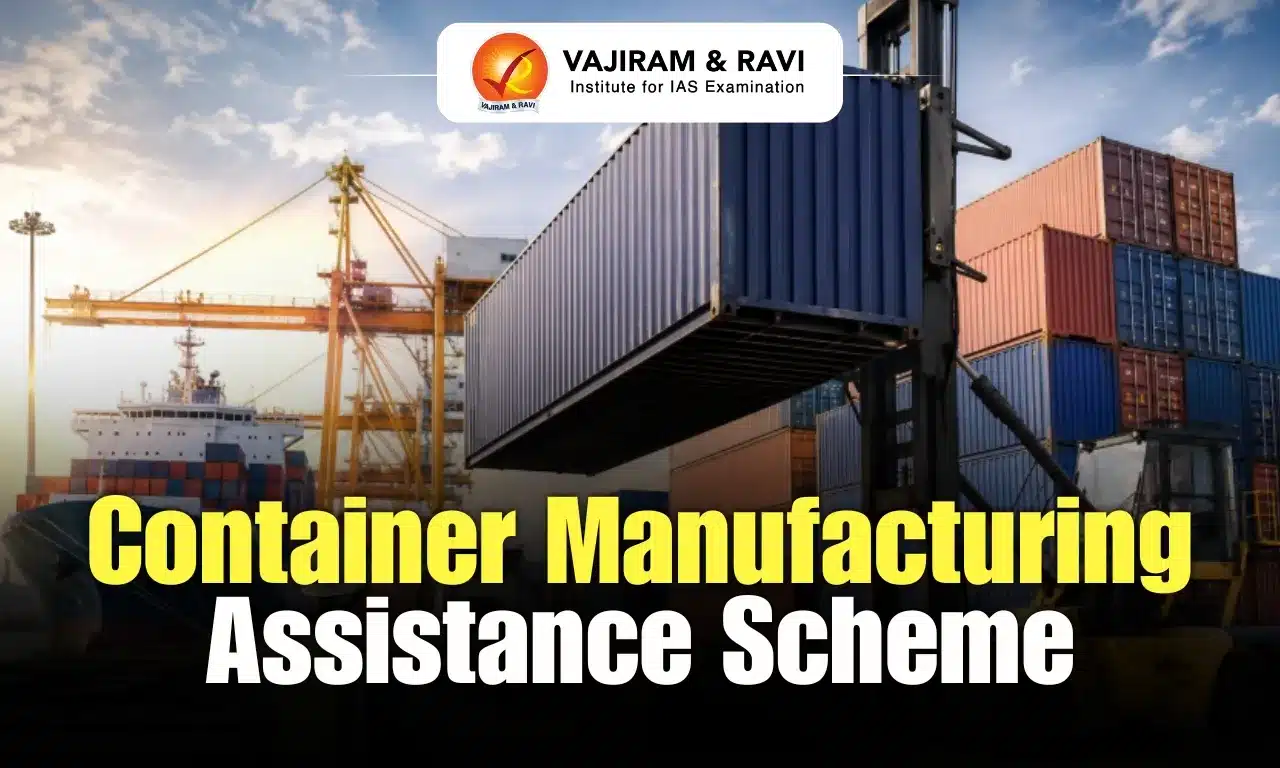
The Government has proposed a ₹10,000 crore Container Manufacturing Assistance Scheme (CMAS) to strengthen domestic production of shipping containers. 

About Container Manufacturing Assistance Scheme

  • It is a targeted initiative to establish a competitive domestic container manufacturing industry through financial and institutional support.
  • It supports establishment of new manufacturing facilities and expansion of existing units.
  • It also aims to enhance manufacturing capacity to meet India's growing demand for shipping containers.
  • Target: The initiative targets an annual domestic manufacturing capacity of around 10 times the existing container production capacity upto 7.5 lakh Twenty-foot Equivalent Units (TEUs).
  • Financial Outlay: ₹10,000 crore over five years.
  • To strengthen the container manufacturing value chain, the scheme provides:
    • Capital assistance for establishing new Greenfield manufacturing facilities.
    • Support for expansion of existing Brownfield manufacturing units.
    • Operational support to improve the competitiveness of domestic container manufacturing.
    • Support for testing infrastructure, skilling initiatives and capacity building.
  • CMAS complements the Government's initiatives under Make in India,Maritime Amrit Kaal Vision 2047, PM Gati Shakti, the National Logistics Policy and the Sagarmala Programme.

Source: DD News

Container Manufacturing Assistance Scheme FAQs

Q1: Which is the Nodal Ministry for Container Manufacturing Assistance Scheme?

Ans: Ministry of Ports, Shipping & Waterways

Q2: What is the main objective of Container Manufacturing Assistance Scheme?

Ans: Boost domestic manufacturing of shipping containers

Namibia

Namibia

Namibia Latest News

Recently, the Fourth Session of the India-Namibia Joint Trade Committee (JTC) was held in New Delhi.  

About Namibia

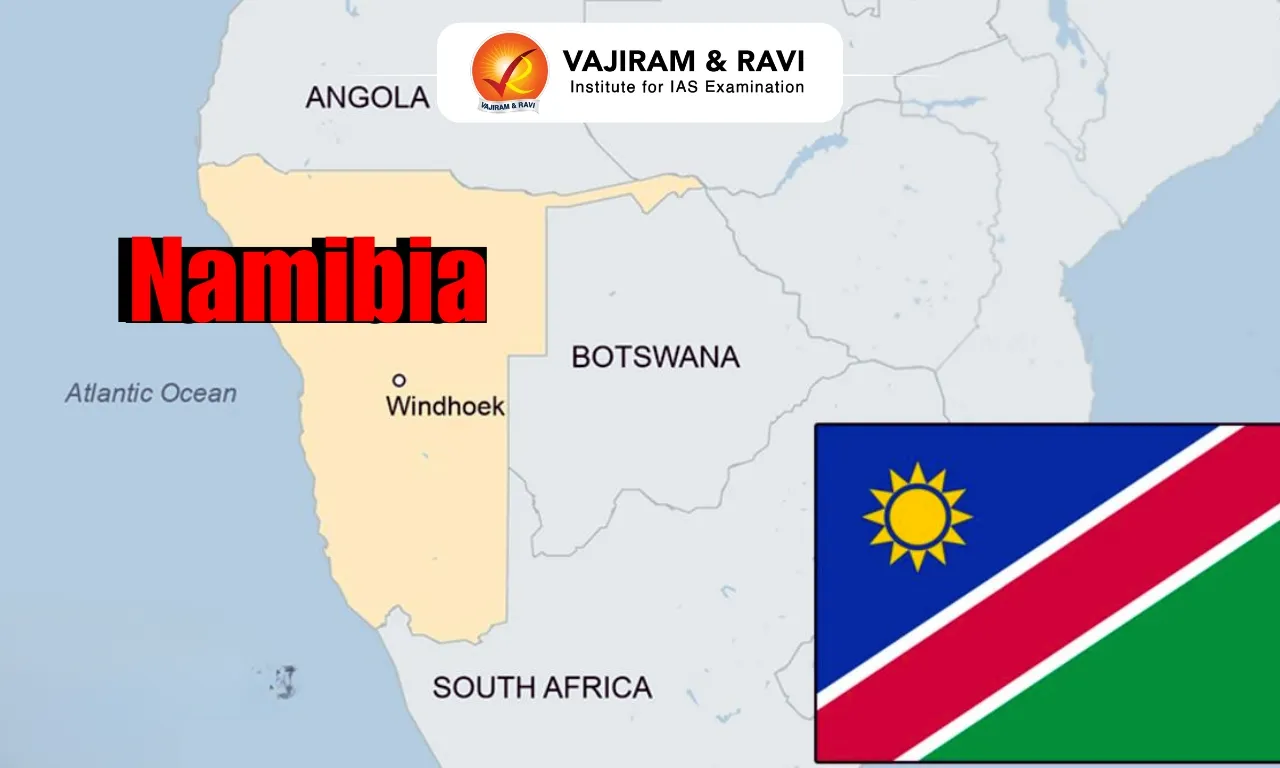
  • Location: It is located on the southwestern coast of the African continent.
  • Bordering Countries:  It is bounded by Zambia and Angola to the north, South Africa to the east and south, and Botswana to the east.
  • A small stretch of the Zambezi River separates Namibia from Zimbabwe.
  • Water Bodies: The Atlantic Ocean borders it to the west. 

Geographical Features of Namibia

  • Topography: Namibia’s extent can be divided into three topographic zones from west to east: the Namib Desert, the Central Plateau, and the Kalahari. 
  • The Central Plateau to the west with the Kalahari Desert located further inwards. The coastal Namib Desert runs along the country’s West coast on the Atlantic Ocean.
  • Rivers: It is drained by the rivers Kunene, the Okavango, the Mashi and the Zambezi on the northern border and the Orange on the southern.
  • Mountain: Brandberg, also known as Mount Brand is Namibia’s highest mountain and is located along the plateau’s western escarpment.
  • Natural Resources: It mainly consists of uranium, lithium, graphite, and manganese.

Source: PIB

Namibia FAQs

Q1: What is the Capital of Namibia?

Ans: Windhoek

Q2: Namibia shares border with how many countries?

Ans: 4 - Angola, Zambia, Botswana, South Africa

NAVYA Programme

NAVYA Programme

NAVYA Programme Latest News

Recently, the Minister of State (Independent Charge), Ministry of Skill Development and Entrepreneurship (MSDE) informed  the Lok Sabha about the NAVYA Programme. 

About NAVYA Programme

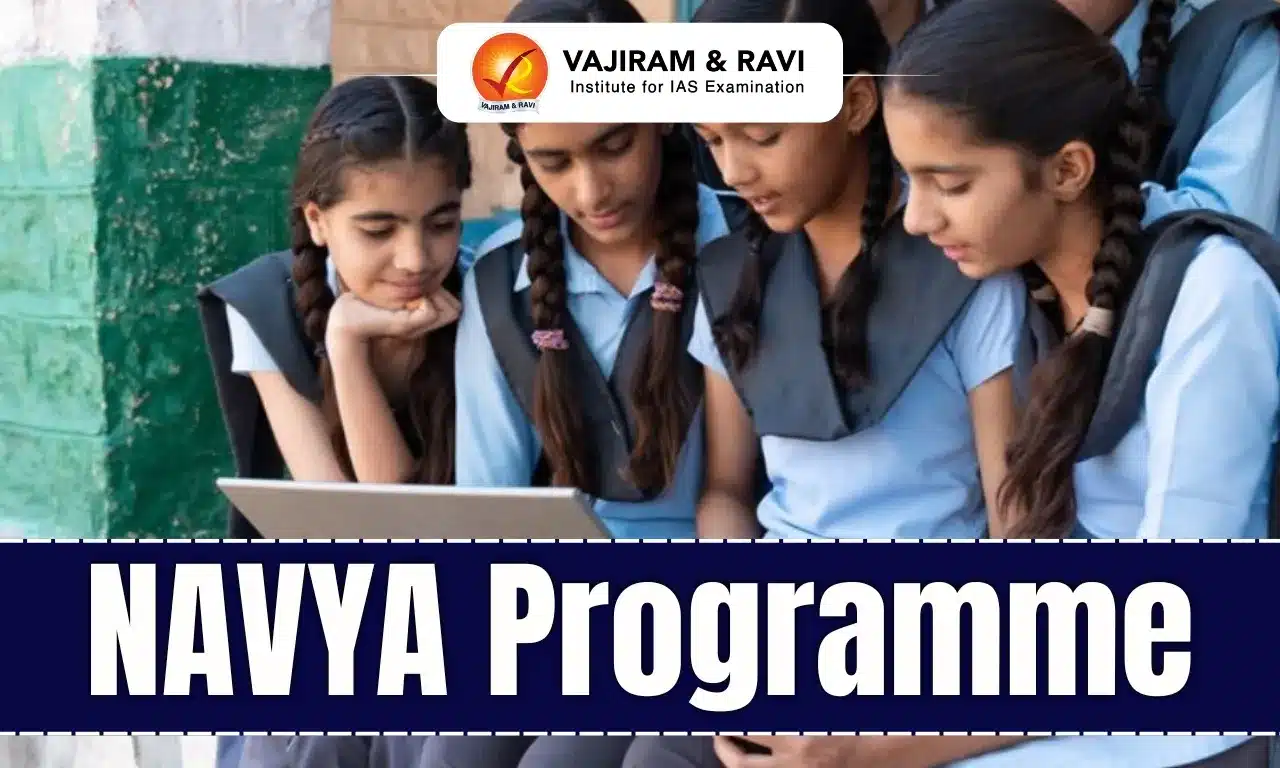
  • The NAVYA (Nurturing Aspirations through Vocational training for Young Adolescent Girls) was launched in 2025.
  • It aims to empower adolescent girls (AGs) aged 16–18 years in aspirational districts by equipping them with relevant skills for socio-economic independence.
  • It is a joint initiative of the Ministry of Skill Development & Entrepreneurship and the Ministry of Women & Child Development.
  • It is being implemented under the Pradhan Mantri Kaushal Vikas Yojana 4.0 (PMKVY 4.0).

Features of  NAVYA Programme

  • Skill Training: It focuses on empowering trained candidates to pursue diverse career pathways by providing industry-relevant skill courses with embedded On-the-Job Training (OJT).
  • Main Focus: Under NAVYA, special emphasis is placed on training in futuristic job roles, along with a mandatory Holistic Development Module covering digital literacy, financial literacy, career readiness, and entrepreneurship orientation etc.
  • Monitoring: The Government monitors and evaluates the implementation and outcomes of this programme through a robust monitoring framework under the Pradhan Mantri Kaushal Vikas Yojana (PMKVY).
  • The Skill India Digital Hub (SIDH) is leveraged for real-time tracking of beneficiary registration, attendance, training progress, certification and other key performance indicators.
    • Regular review meetings are conducted with Project Implementing Agencies (PIAs), State Skill Development Missions (SSDMs) and other stakeholders to assess progress and address implementation-related issues.

Source: PIB

NAVYA Programme FAQs

Q1: What is the Main aim of NAVYA Programme?

Ans: Socio-economic independence of adolescent girls

Q2: NAVYA is a joint initiative of which ministries?

Ans: It is a joint initiative of the Ministry of Skill Development & Entrepreneurship and the Ministry of Women & Child Development.

Enquire Now