ICGS Ajit

ICGS Ajit

ICGS Ajit Latest News

Recently, the Goa Shipyard Limited (GSL) has handed over the ICGS Ajit to the Indian Coast Guard.

About ICGS Ajit

  • It is an indigenously built Fast Patrol Vessels (FPVs).
  • Built By: It is built by the Goa Shipyard Limited (GSL).

Features of ICGS Ajit

  • Design and Capacity: It is 51.43-metre-long and 8-metre-wide vessel has a displacement of 330 tonnes.
  • Propulsion: It is powered by twin marine diesel engines driving controllable pitch propellers (CPP)
    • A first-of-its-kind feature in this class of Fast Patrol Vessels, providing improved propulsion efficiency and operational performance.
  • Speed: It reaches a top speed of more than 27 knots and an endurance of 1,500 nautical miles.
    • It is equipped with an advanced integrated machinery control system to enhance operational readiness, efficiency and sustainability.
  • Roles: They are capable of multi-mission roles including fisheries protection, coastal patrol, anti-smuggling, anti-piracy and search & rescue operations, particularly around India’s island territories and Exclusive Economic Zone.

Source: PIB

ICGS Ajit FAQs

Q1: What is ICGS Ajit?

Ans: Fast Patrol Vessels

Q2: What are the roles of Fast Patrol Vessels ?

Ans: Multi-mission roles including fisheries protection, coastal patrol, anti-smuggling, anti-piracy and search & rescue operations
PRAGATI Platform

PRAGATI Platform

PRAGATI Platform Latest News

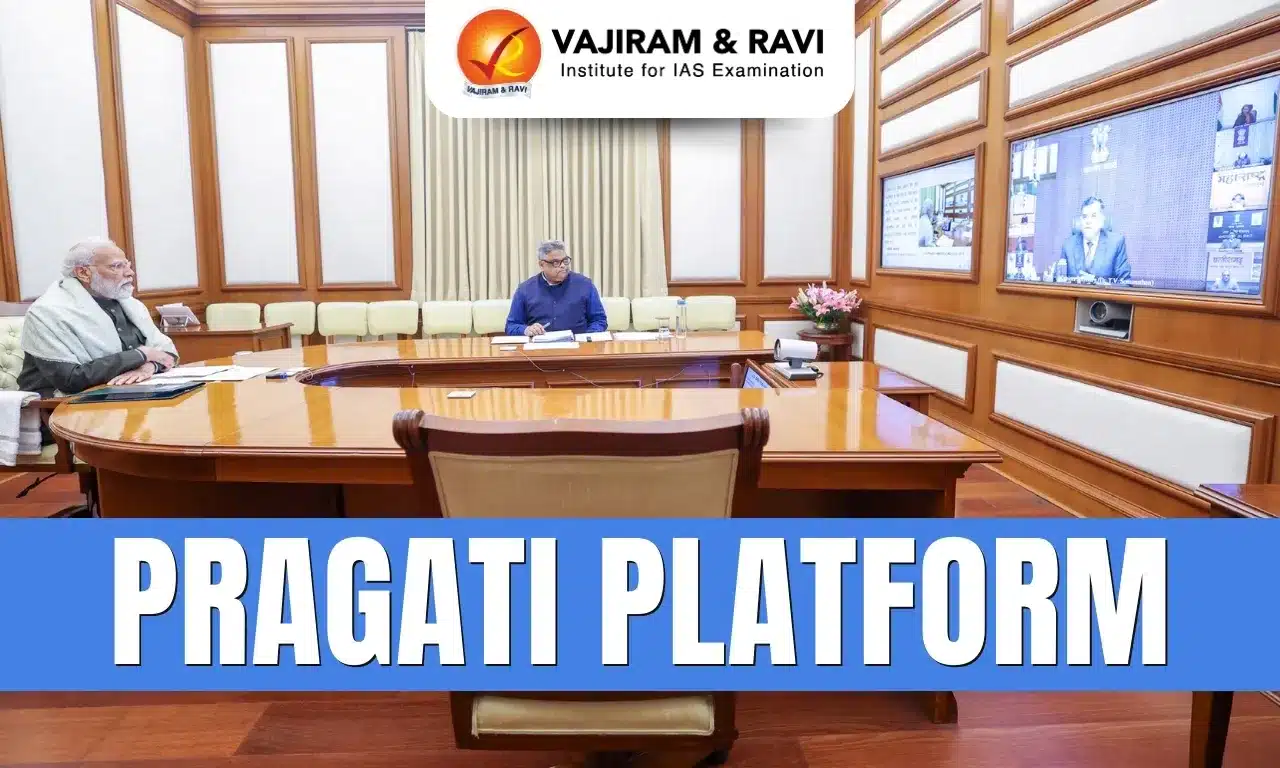
Recently, the Prime Minister of India chaired the 53rd meeting of the PRAGATI platform. 

About PRAGATI Platform

  • PRAGATI (Pro-Active Governance and Timely Implementation) is the Government of India’s flagship platform launched in 2015.
  • It focuses on fast-tracking projects, schemes, and grievance redressal through direct, real-time review by the Prime Minister, in partnership with States and Union Ministries.
  • The system has been designed in-house by the PMO team with the help of the National Informatics Center (NIC).
  • It uniquely brings together three modern technologies—digital data management, video conferencing, and geospatial technology.

Key Features of PRAGATI Platform

  • It is a three-tier system (PMO, Union Government Secretaries, and Chief Secretaries of the States).
  • At the apex level, the Prime Minister chairs PRAGATI review meetings with Chief Secretaries of States and Secretaries of Central Ministries/Departments to resolve issues related to identified projects and schemes.
  • The design is such that when PM reviews the issue, he should have on his screen the issue as well as the latest updates and visuals regarding the same.
  • Following the meetings, a multi-tier follow-up mechanism ensures timely implementation of decisions. 
  • Projects are monitored by the Cabinet Secretariat, while schemes and grievances are reviewed at the Ministry level under continuous oversight of the Prime Minister’s Office (PMO).
  • Issues to be flagged before the PM are picked up from the available database regarding public grievances, ongoing programmes, and pending projects.

Source: PIB

PRAGATI Platform FAQs

Q1: PRAGATI is based on how many tiers?

Ans: It is a three-tier system (PMO, Union Government Secretaries, and Chief Secretaries of the States).

Q2: What does PRAGATI stands for?

Ans: Pro-Active Governance And Timely Implementation

Morocco

Morocco

Morocco Latest News

The Minister of State for Commerce and Industry is going to co-chair the 7th Session of the India-Morocco Joint Commission.

About Morocco

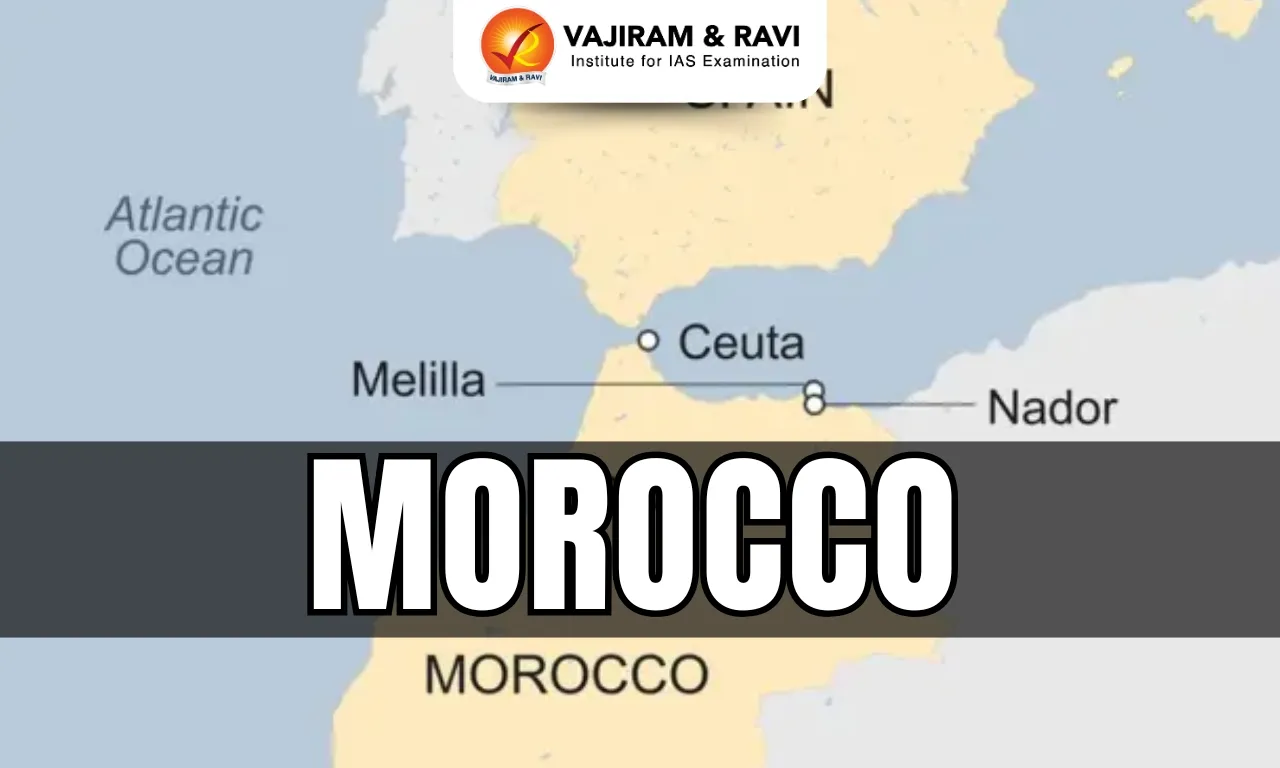
  • Location: It is located in the Maghreb region of  North America. 
  • Bordering countries: It is bordered by Western Sahara to the south and Algeria to the east.
  • Maritime Border: It has coastlines on the Atlantic Ocean to the west and the Mediterranean Sea to the north.
  • It is the only African country with coastlines on both the Atlantic Ocean and the Mediterranean Sea.
  • Capital City: Rabat

Geographical Features of Morocco

  • Climate: Most of Morocco north of Western Sahara, particularly along the coasts, experiences a typical Mediterranean climate, with mild wet winters and hot dry summers. 
  • Major River: The Mououya River is the most significant source of water in Morocco. Its source is located in the Atlas Mountains and flows into the Mediterranean Sea.
  • Highest point: Jebel Toubkal is the highest point of Morocco and is also the highest peak of the Atlas Mountains.
  • Natural Resources: It consists of iron ore and coal, barite, manganese, lead, and zinc.

Source: News On Air

Morocco FAQs

Q1: What is the capital of Morocco?

Ans: Rabat

Q2: Where is Morocco located?

Ans: It is located in the Maghreb region of  North America. 

Alzheimer’s Disease

Alzheimer's Disease

Alzheimer's Disease Latest News

A novel smartphone-enabled platform employing afluorescence-responsive tiny molecule as a probe offers a simple, cost-effective, and accessible approach for the detection of the Alzheimer's disease (AD) biomarker amyloid-β (Aβ). 

About Alzheimer's Disease

  • It is a progressive neurodegenerative disorder characterized by memory loss, cognitive decline, and behavioural impairment.
    • Central to its pathology is the misfolding and aggregation of amyloid-β (Aβ), which self-assembles into fibrils and deposits as extracellular plaques that trigger neurotoxic cascades leading to synaptic dysfunction and neurodegeneration.
  • It is the most common cause of dementia, accounting for 60-80% of all dementia cases worldwide.
  • The disease disrupts communication between brain cells, leading to a decline in cognitive and functional abilities.
  • It usually affects people aged 65 years and over.
  • Cause: The exact cause of Alzheimer’s disease is not fully understood, but it is believed to be influenced by a combination of genetic, environmental, and lifestyle factors.
  • Symptoms
    • The early signs of the disease include forgetting recent events or conversations.
    • Over time, it progresses to serious memory problems and loss of the ability to perform everyday tasks.
  • Treatment: There’s no cure for Alzheimer’s, but certain medications and therapies can help manage symptoms temporarily.

Source: PIB

Alzheimer's Disease FAQ's

Q1: What is Alzheimer's Disease?

Ans: It is a progressive neurodegenerative disorder characterized by memory loss, cognitive decline, and behavioural impairment.

Q2: What are the two pathological hallmarks of Alzheimer's Disease?

Ans: Amyloid plaques and Tau tangles

National Shipping Board

National Shipping Board

National Shipping Board Latest News

Recently, the National Shipping Board (NSB) held its first ‘Sagar Samvad’ and has proposed a five-point roadmap to add 100 vessels to India’s merchant fleet over the next five years.

About National Shipping Board

  • It is a permanent statutory body established in 1959, under Section 4 of Merchant Shipping Act, 1958.
  • Function: It advises the Govt. of India on matters related to shipping including the development.
  • It has played a very distinguished role in the Maritime development of the country, as its deliberation and recommendations have contributed to the evolution of a sound and pragmatic National Maritime Policy over the years.
  • Composition
    • It consists of Chairman and Members.
    • Six Members elected by Parliament (Four from the Lok Sabha and two from Rajya Sabha from amongst its Members).
    • Tenure: The Chairman and other members of the Board held office for a period of two years.
    • Such Members of other members not exceeding sixteen as the Central Government may think fit to appoint on the Board to represent the Central Government, Ship-owners, and Seamen.
  • Nodal Ministry: Ministry of Ports, Shipping and Waterways.

Source: PIB

National Shipping Board FAQs

Q1: National Shipping Board comes under which ministry?

Ans: Ministry of Ports Shipping Waterways advisory

Q2: What is the function of National Shipping Board?

Ans: It advises the Govt. of India on matters related to shipping including the development.

UN Mission in South Sudan

UN Mission in South Sudan

UN Mission in South Sudan Latest News

Recently, India has condemned the attack on peacekeepers deployed with the UN Mission in South Sudan (UNMISS). 

About UN Mission in South Sudan

  • It is a peacekeeping mission mandated in accordance with Chapter VII of the UN Charter.
  • Background
    • It was established on 8 July 2011, under Security Council Resolution 1996 (2011), following the country’s declaration of independence.
    • Following the outbreak of civil conflict in December 2013, the Security Council adopted Resolution 2155 (2014), reprioritizing the mission’s core focus toward civilian protection and humanitarian assistance delivery.

Key Features of UN MISS

  • It works to protect civilians, facilitate the safe delivery of humanitarian aid, promote human rights, and build durable peace.
  • Peacekeepers help create a secure environment to enable the safe, timely and unhindered delivery of humanitarian assistance to people in need across the country.
  • UNMISS uses targeted good offices and facilitates dialogue between the parties in support of the peace process and to prevent escalation of political violence.
  • It also monitors and reports on progress on the security sector and legal reforms as well as election-related processes and transitional justice mechanisms.
  • It monitors, investigates, and reports on violations and abuses of international human rights and humanitarian law. 
  • As of April 2026, India was the top troop contributor to UNMISS, with 1,775 Indian military personnel deployed with the UN mission.

Source: News On Air

UN Mission in South Sudan FAQs

Q1: What is the mandate of the United Nations Mission in South Sudan?

Ans: It works to protect civilians, facilitate the safe delivery of humanitarian aid, promote human rights, and build durable peace.

Q2: What is the headquarter of South Sudan?

Ans: Juba

Garbhini Mitra Course

Garbhini Mitra Course

Garbhini Mitra Course Latest News

Recently, the All India Institute of Ayurveda (AIIA), New Delhi, has launched the ‘Garbhini Mitra’ course for the 2026-27 academic session. 

About Garbhini Mitra Course

  • It is a structured healthcare skill-development programme.
  • It is aimed at training personnel to provide health education, lifestyle guidance and community-level support to women during pregnancy and the postnatal period.
  • Implementing Body: It is implemented by the All India Institute of Ayurveda (AIIA) an autonomous institution under the Ministry of Ayush.

Key Features of  Garbhini Mitra Course

  • Course Design: It is designed as a six-month offline training programme running from Monday to Friday between 3:00 PM and 5:00 PM,
  • It is based on traditional Ayurvedic concepts of Garbhini Paricharya (antenatal care), Sutika Paricharya (postnatal care) and Garbhadhana Vidhi (pre-conceptional care).
  • It equips participants with practical skills in trimester-specific dietetics, lifestyle modifications, pregnancy-safe yoga, emotional support during labour, newborn massage, and basic life support protocols.
  • The curriculum also emphasizes infection control, sanitization, biomedical waste management, and workplace safety.
  • It also covers infection control, sanitisation, biomedical waste management and workplace safety.
  • Eligibility: Candidates who have passed the Senior Secondary (10+2) examination from any recognised board in India and are at least 18 years old are eligible to apply. Candidates awaiting their Class 12 results can also submit provisional applications.
    • After completing the course, candidates can pursue roles such as Garbhini Mitra Assistants, prenatal and postnatal care assistants, antenatal wellness guides and maternal health support workers.

Source: DD News

Garbhini Mitra Course FAQs

Q1: What are the eligibility for Garbhini Mitra Course?

Ans: Candidates who have passed the Senior Secondary examination from any recognised board in India and are at least 18 years old are eligible.

Q2: Which organisation launched the Garbhini Mitra Course?

Ans: AIIA New Delhi under Ministry of Ayush

Peppara Wildlife Sanctuary

Peppara Wildlife Sanctuary

Peppara Wildlife Sanctuary Latest News

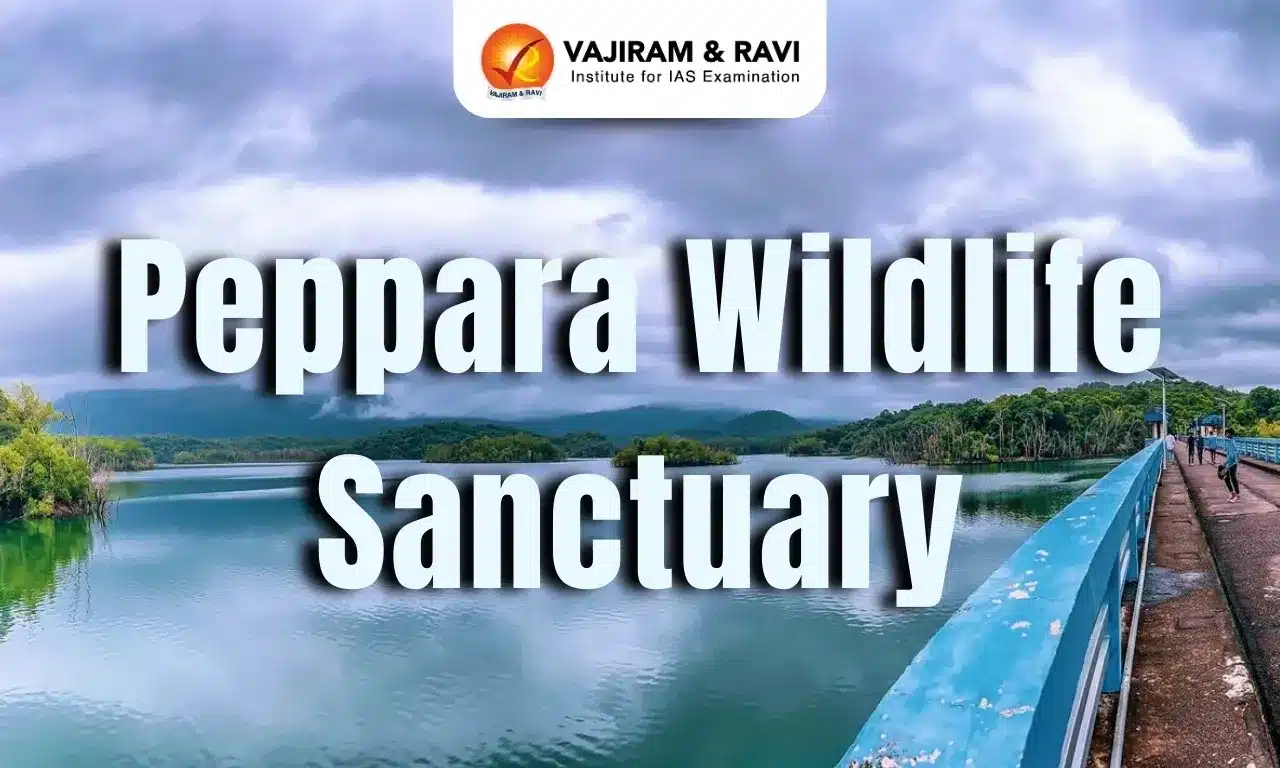
Recently, the monsoon bird survey conducted by the Thiruvananthapuram Wildlife Division recorded as many as 124 bird species at Peppara Wildlife Sanctuary.

About Peppara Wildlife Sanctuary

  • Location: It is located in the Thiruvananthapuram district of Kerala.
  • It was declared as a wildlife sanctuary in 1983.
  • It is bordered on the northeast by Kalakkad-Mundanthurai Tiger Reserve of Tamil Nadu, on the north by Palode Reserve Forest, south by Neyyar Wildlife Sanctuary. 
  • Rivers: The sanctuary constitutes the catchments of peppara dam constructed across the Karamana River.
  • The major peaks in the sanctuary are Chemmunjimottai (1717 m), Athirumalai 1594 m.
  • Vegetation: Forest types include tropical evergreen forests, moist mixed deciduous forests and semi-evergreen forest, Myristica swamp forest etc.
  • Flora: Common tree species are Terminalia paniculta, T. bellerica, PTEROCARPUS MARSUPIUM, Palaquium ellipticum, Mesua ferrea, Hopea parviflora, Bombax ceiba, etc.
  • Fauna: The common mammals found are Tiger, Leopard, Sloth bear, The Asian Elephan, Sambars, Barking deer, Lion-tailed macaque, Nilgiri langur, Nilgiri tahr etc.

Source: NIE

Peppara Wildlife Sanctuary FAQs

Q1: Where is the Peppara Wildlife Sanctuary located?

Ans: Kerala

Q2: Which river drains the Peppara Wildlife Sanctuary?

Ans: Karamana River

Lithium

Lithium

Lithium Latest News

Recently, a report says that battery-grade lithium carbonate prices are projected to average around RMB 140,000 per tonne in August, down 10.3 per cent month on month. 

About Lithium

  • It is a soft, silvery-white metal that heads group 1, the alkali metals group, of the periodic table of the elements.
  • Properties of Lithium
    • It has the lowest density of all metals.
    • It is the lightest of the solid elements. 
    • It reacts vigorously with water.
    • It corrodes rapidly in air, is highly flammable and must be stored in inert conditions such as mineral oil or vacuum.
  • Occurrence:  Lithium does not occur as a metal in nature but is found combined in small amounts in igneous rocks.
  • Lithium occurs primarily in pegmatitic minerals like spodumene and petalite and in saline brines due to its high solubility.
  • Major Reserves: Lithium reserves are concentrated in the lithium triangle in South America – Argentina, Bolivia & Chile, with 50% of the deposits concentrated in these regions. 

Applications of Lithium

  • It is important in rechargeable batteries for mobile phones, laptops, digital cameras, and electric vehicles. 
  • Lithium metal is made into alloys with aluminium and magnesium, improving their strength and making them lighter. 
  • Lithium oxide is used in special glasses and glass ceramics.
  • Lithium stearate is used as an all-purpose and high-temperature lubricant.
  • Lithium carbonate is used in drugs to treat manic depression

Source: DTE

Lithium FAQs

Q1: What are the ores of Lithium ?

Ans: Spodumene and Brine

Q2: Which countries are Lithium Triangle?

Ans: Bolivia Argentina Chile

Enquire Now