Domestic Violence, Causes, Legal Framework, Impact, Challenges

Domestic Violence

Domestic violence in India remains a major social, legal, and human rights concern. It includes physical, emotional, sexual, and economic abuse within the household. According to the National Family Health Survey (NFHS-5, 2019-21), nearly 30% of ever-married women aged 18-49 reported facing spousal violence. Despite legislative measures and awareness campaigns, cultural norms, economic dependence, and societal silence continue to perpetuate this issue. Domestic violence affects not only individual victims but also the nation’s broader goals of gender equality and social justice.

Domestic Violence

Domestic violence refers to abusive behavior in any relationship used by one partner to gain or maintain control over another. It encompasses violence by a husband, partner, or family member, including verbal humiliation, physical assault, marital rape, economic deprivation, and coercion. The Protection of Women from Domestic Violence Act (PWDVA), 2005 provides a comprehensive legal framework, defining domestic violence under Section 3 to include physical, sexual, verbal, emotional, and economic abuse.

Domestic Violence Causes

Domestic violence arises from a mix of social, economic, psychological, and structural causes. Poverty, patriarchy, and social conditioning play a crucial role, but climate change has emerged as a new factor affecting household stress and violence levels.

  1. Patriarchal Mindset: Traditional beliefs in male superiority normalize control and violence within families. Women are often expected to tolerate abuse to “protect family honor.”
  2. Economic Dependence: Financial dependence makes it difficult for women to leave abusive relationships. According to PLFS 2023-24, 41.7% of Indian women (above 15 years) are part of the workforce.
  3. Alcohol and Substance Abuse: Addiction is a major trigger for domestic violence. Studies show that 60% of domestic violence incidents involve alcohol consumption by the abuser.
  4. Dowry and Property Disputes: Dowry harassment and disputes over inheritance often lead to violence against married women, especially in rural and semi-urban areas.
  5. Social Stigma and Silence: Victims often avoid reporting abuse due to fear of social shame, lack of family support, and distrust in the justice system.
  6. Lack of Awareness: Limited awareness of legal rights and available services discourages women from seeking help or legal recourse.

Domestic Violence in India

Domestic violence in India is a deeply rooted socio-cultural issue. It is influenced by gender inequality, patriarchal beliefs, dowry demands, alcoholism, and economic stress. The National Crime Records Bureau (NCRB) 2022 reported over 4.5 lakh cases of crimes against women, with one-third related to domestic violence or cruelty by husbands and relatives.

The Protection of Women from Domestic Violence Act (PWDVA), 2005 is the primary law addressing this issue. However, implementation challenges, victim shaming, and delayed justice often discourage women from filing complaints.

Forms of Domestic Violence

Domestic violence includes multiple types of abuse, often overlapping and continuous. These forms often coexist, creating long-term trauma and dependence that prevent victims from escaping the cycle of abuse.

  • Physical Abuse: Use of force causing injury or pain. Eg: Beating, slapping, or physical assault
  • Emotional Abuse: Psychological harm through insults or isolation. Eg: Humiliation, threats, control over social life
  • Sexual Abuse: Forcing sexual acts without consent. Eg: Marital rape, sexual coercion
  • Economic Abuse: Controlling financial resources. Eg: Denying money, preventing employment
  • Verbal Abuse: Using derogatory language. Eg: Name-calling or constant criticism

Domestic Violence Legal Framework

India has developed several laws and policies to protect women and ensure justice against domestic violence. These are reinforced by constitutional provisions that guarantee equality and protection. To combat domestic violence, multiple schemes and institutional mechanisms have also been developed.

  • Protection of Women from Domestic Violence Act, 2005 (PWDVA): Defines domestic violence, provides protection orders, residence rights, and monetary relief.
  • Bharatiya Nyaya Sanhita (BNS) Section 85: Penalizes cruelty by husband or relatives with imprisonment up to 3 years and fine.
  • Dowry Prohibition Act, 1961: Prohibits giving or taking dowry, a common cause of domestic abuse.
  • Criminal Law (Amendment) Act, 2013: Expanded definition of sexual assault, recognized stalking and voyeurism.
  • Nirbhaya Fund (2013): Supports women’s safety initiatives and shelter homes.
  • One Stop Centre Scheme (2015): Provides integrated support including legal aid, counseling, and medical care for victims.
  • Beti Bachao Beti Padhao (2015): Addresses gender discrimination and promotes empowerment.
  • Women Helpline (181): 24-hour toll-free service offering immediate support to victims.
  • Mahila Police Volunteers Scheme (2016): Acts as a link between police and community for women’s safety. The scheme was discontinued in April 2022, but its objectives are now part of the "Sambal" sub-scheme under the broader "Mission Shakti" initiative.
  • UJJAWALA Scheme: Rehabilitation of women affected by trafficking and abuse. (Not to be confused with Ujjwala Yojana)
  • 1091 Women Powerline: It is a nationwide helpline providing legal, emotional, and crisis support to women facing domestic violence.

International Commitments to Address Domestic Violence

India is a signatory to several global conventions that address domestic violence and gender discrimination. These global commitments support India’s national efforts to create a safe, equal, and inclusive environment for women.

  • CEDAW (Convention on Elimination of All Forms of Discrimination Against Women), 1979: Promote equality and protection from violence
  • Beijing Declaration and Platform for Action, 1995: Strengthen women’s participation and end gender-based violence
  • UN Sustainable Development Goals (SDG 5), 2015: Achieve gender equality and empower women

Domestic Violence Constitutional Provisions

India’s Constitution guarantees gender justice and equality through various provisions that address domestic violence indirectly.

Domestic Violence Constitutional Provisions
Article Provision Domestic Violence Relevance

Article 14

Equality before law

Protects women against gender discrimination in domestic settings.

Article 15(3)

Allows special provisions for women and children

Supports gender-specific legislation like PWDVA.

Article 21

Right to life and personal liberty

Includes the right to live with dignity, free from violence.

Directive Principles: Article 39(a)

Equal right to livelihood

Ensures women’s economic independence.

Directive Principles: Article 42

Just and humane working conditions, maternity relief

Protects women’s rights in domestic and work environments.

Domestic Violence Case Laws

The Indian judiciary has played a vital role in strengthening women’s rights and expanding the interpretation of domestic violence laws.

    1. Indra Sarma v. V.K.V. Sarma (2013)- The Supreme Court held that women in live-in relationships are also protected under the PWDVA.
    2. Hiral P. Harsora v. Kusum Narottamdas Harsora (2016)- Struck down the term "adult male" from the PWDVA, making it gender-neutral regarding perpetrators.
    3. V. D. Bhanot v. Savita Bhanot (2012)- Clarified that the Act applies retrospectively to protect women who faced violence before 2005.
    4. Joseph Shine v. Union of India (2018)- The Supreme Court decriminalized adultery, emphasizing autonomy and equality in marriage.
  • Marital Rape and Judicial Approach:
    • Marital rape is not criminalized under Section 63 of BNS, which exempts sexual acts by a husband with his wife (if over 18 years).
    • The Delhi High Court (2022) delivered a split verdict on the criminalization of marital rape, highlighting deep constitutional and moral debate.
    • Committees like the Justice Verma Committee (2013) recommended inclusion of marital rape as an offence, but no legislative action has been taken yet.
    • The issue is currently under Supreme Court consideration, linked to women’s bodily autonomy and the right to dignity under Article 21.

Domestic Violence Challenges

Domestic violence persists despite legal safeguards due to societal, administrative, and systemic barriers.

Major Challenges:

  • Underreporting: Fear of stigma, social backlash, and economic dependence reduce reporting.
  • Weak Enforcement: Poor coordination among police, protection officers, and judiciary.
  • Cultural Acceptance: Social norms normalize male dominance and abuse.
  • Inadequate Shelters and Resources: Limited reach of support systems in rural areas.
  • Delayed Judicial Process: Slow trials discourage victims.

Way Forward:

  • Legal Reforms: Criminalize marital rape and strengthen PWDVA implementation.
  • Capacity Building: Train law enforcement, judiciary, and protection officers.
  • Awareness Campaigns: Increase public awareness on gender equality and legal rights.
  • Economic Empowerment: Promote women’s access to credit, skills, and employment.
  • Technology-Based Solutions: Use helplines, online complaint portals, and mobile tracking for safety.
  • Psychological Support: Expand counseling and rehabilitation programs.
  • Community Engagement: Involve NGOs, local self-governments, and social institutions in prevention.

Domestic Violence Impact

Domestic violence has far-reaching consequences that extend beyond the immediate victim, affecting families, communities, and the nation’s socio-economic fabric. The impacts can be categorized into several dimensions:

    1. Physical Impact: Victims of domestic violence often suffer physical injuries such as fractures, burns, and chronic pain. Long-term exposure can lead to reproductive health issues, disabilities, and even fatalities. The World Health Organization (WHO) reports that one in three women globally experiences physical or sexual violence in her lifetime.
    2. Psychological and Emotional Impact: Continuous abuse leads to severe emotional distress, anxiety, depression, and post-traumatic stress disorder (PTSD). Victims may experience low self-esteem, isolation, and suicidal tendencies. Mental health damage often persists long after the violence ends, affecting overall well-being and productivity.
    3. Social Impact: Domestic violence erodes family harmony and community stability. Victims often face social stigma and ostracism, discouraging them from seeking help. It perpetuates gender inequality and normalizes violence within society, affecting future generations’ perceptions of gender roles.
    4. Economic Impact: Violence limits women’s participation in the workforce, leading to income loss and financial dependence on abusers. According to UN Women, 2016, domestic violence can cost countries up to 2% of their GDP.
    5. Impact on Children: Children witnessing domestic violence often develop behavioral issues, emotional insecurity, and poor academic performance. They are at higher risk of becoming victims or perpetrators of violence in adulthood, creating a cycle of abuse across generations.
  • Legal and Institutional Impact: Domestic violence increases the burden on legal, healthcare, and social welfare institutions. Insufficient implementation of protection laws and lack of coordination among agencies hinder justice delivery and victim rehabilitation.
  • National Development Impact: Widespread domestic violence hampers national growth by weakening human capital. It obstructs gender equality goals under the Sustainable Development Goals (SDG 5) and undermines India’s constitutional vision of dignity and equality for all.

Domestic Violence UPSC

Recent Developments related to Domestic Violence in India:

  • In May 2025, the Supreme Court ordered all States and Union Territories to designate Protection Officers at District and Taluka levels under the Protection of Women from Domestic Violence (DV) Act, within six weeks. 
  • The Supreme Court has pulled up several States and UTs (e.g., Andhra Pradesh, West Bengal, Assam, Odisha, Maharashtra) for failing to file status reports regarding implementation of the DV Act. 
  • In 2025, the Supreme Court in a judgment clarified that, under the DV Act, personal presence of any party is not required unless there is a breach of a protection order. 
  • In September 2024, the Supreme Court reaffirmed that the DV Act (2005) applies to all women, irrespective of religion or social background.
  • Delhi government announced 53 Fast-Track Special Courts to speed up trials involving crimes against women and children, including cases related to domestic violence and POCSO.
Also Check Other Posts
Salient Features of Indian Society Urbanization in India
Diversity in India Communalism
Role of Women in India Regionalism in India
Women Organizations in India Secularism in India
Population and Associated Issues Caste System in India
India’s Demographic Dividend Tribal Societies in India
Poverty and Developmental Issues Problems Faced by Tribal Communities in India

Domestic Violence FAQs

Q1: What is Domestic Violence?

Ans: Domestic violence involves physical, emotional, sexual, or economic abuse within families, aiming to control or dominate the victim, often women.

Q2: What are the main causes of Domestic Violence?

Ans: Patriarchal beliefs, economic dependence, substance abuse, dowry disputes, and social stigma are major causes of domestic violence in India.

Q3: Which law protects women from Domestic Violence in India?

Ans: The Protection of Women from Domestic Violence Act, 2005 (PWDVA) ensures protection, residence rights, and financial support for victims.

Q4: What are the major impacts of Domestic Violence?

Ans: It causes physical harm, mental trauma, social isolation, economic loss, and intergenerational cycles of fear and inequality.

Q5: What challenges hinder the prevention of Domestic Violence?

Ans: Underreporting, weak law enforcement, cultural acceptance, lack of shelters, and slow judicial processes obstruct effective prevention and justice.

Tropical Rainforest, Types, Distribution, Map, Structure

Tropical Rainforest

Tropical rainforests are among the most extraordinary and biologically rich ecosystems on Earth. Located between the Tropic of Cancer (23.5°N) and the Tropic of Capricorn (23.5°S), these forests stretch across Central and South America, central and western Africa, Southeast Asia, New Guinea, Australia, and even parts of India. The regions within this equatorial belt receive consistent and direct sunlight throughout the year, which generates high levels of solar energy. This energy maintains a warm, stable climate, with average temperatures ranging from 21°C to 30°C (70°F to 85°F) and humidity levels often hovering between 77% and 88%. In this article, we are going to cover Tropical Rainforests, their distributions, structure, components, biodiversity and types. 

Tropical Rainforests

Tropical rainforests are dense forests dominated by tall, broad-leaved trees, which can grow up to 75 meters in height. They thrive in regions with consistently high temperatures and heavy rainfall. The World Wildlife Fund classifies tropical rainforests as part of the "tropical moist broadleaf forest" category due to their broad-leaved trees and high humidity environment.

These forests are ecological treasure troves, housing an enormous variety of species and serving as vital sources of food, medicinal plants, and forest products. Nearly half of the world’s plant and animal species are estimated to inhabit tropical rainforests. Among the most prominent are the Amazon rainforest in South America, the Congo rainforest in Africa, and Southeast Asian rainforests, each hosting unique species adapted to their environments. 

The tropical environment, with its high heat and abundant moisture, promotes heavy rainfall that can range between 200 and 1,000 centimeters (80–400 inches) annually. Remarkably, these forests contribute to their own precipitation; processes like evaporation and transpiration can generate up to 75% of the rainfall, sustaining a self-reinforcing cycle of moisture and growth. The tropical rainforest, therefore, is not just a passive habitat, it is a dynamic, self-regulating system, critical for maintaining the Earth’s climate and biodiversity.

In this article, we will explore the tropical rainforests in depth, covering their characteristics, global and Indian distribution, ecological structure, biodiversity, abiotic and biotic components, and conservation strategies.

Tropical Forests Characteristics

Tropical Forests have the following characteristics:

Particulars Details

Area Covered

6–7% of Earth’s surface

Temperature

20°C to 34°C

Humidity

77–88%

Medicinal Production

1/4th of global medicines derived from rainforest plants

Oxygen Contribution

40% of Earth’s oxygen

Tropical Rainforests Distribution

Tropical rainforests are concentrated around the equatorial belt, roughly within 28 degrees north and south of the equator. They are found in the following regions:

  • South America: The Amazon rainforest is the largest tropical rainforest on Earth, covering nearly two-thirds the size of the continental United States. It spans countries like Brazil, Peru, Colombia, and Venezuela.
  • Africa: The Congo Basin hosts dense tropical forests across the Democratic Republic of Congo, Gabon, Cameroon, and surrounding countries.
  • Southeast Asia: Rainforests cover Indonesia, Malaysia, Thailand, and Papua New Guinea, featuring some of the richest biodiversity on the planet.
  • Oceania: Northern Queensland in Australia and the Pacific Islands host significant tropical rainforests.
  • India: The Western Ghats, Northeast India, and the Andaman and Nicobar Islands have prominent tropical rainforests.

In addition, islands like Hawaii and Caribbean nations sustain tropical rainforests due to favorable equatorial-like climates. Each region's rainforests differ in species composition, climate intensity, and ecological interactions, making them unique ecosystems despite sharing similar environmental parameters. 

Tropical Rainforests Map

Here is a geographical representation of Tropical Rainforests on map:

Tropical Rainforests Structure

Tropical rainforests are multilayered ecosystems, often referred to as evergreen forests because trees retain foliage year-round. These forests have evolved to capture sunlight efficiently while supporting an intricate network of life. Their structure can be divided into four primary layers:

  1. Forest Floor: The forest floor receives less than 2% of sunlight, creating a dark and humid environment. It is rich in decomposers like fungi, termites, worms, scorpions, and small mammals such as anteaters and rodents. Large predators like jaguars in South America and leopards in Asia hunt in this layer. Rivers and seasonal streams form freshwater habitats for aquatic species such as fish, amphibians, and aquatic insects. Despite being nutrient-poor due to leaching from heavy rainfall, the forest floor supports dense detritus-based food webs.
  2. Understory Layer: Located just above the forest floor, the understory is a shaded and humid layer with limited light penetration. Young trees, shrubs, and soft-stemmed plants dominate this layer. Many plants have broad leaves to capture the little sunlight that filters through. The understory is home to animals like snakes, lizards, jaguars, frogs, birds, and small mammals. Flowers in this layer often produce bright colors and large sizes to attract pollinators in low-light conditions.
  3. Canopy Layer: The canopy is the most diverse and densely populated layer, consisting of mature trees with thick branches and dense foliage. It forms a natural roof, absorbing most sunlight, blocking wind, and trapping rainfall. The canopy supports a wide range of organisms, including insects (bees, beetles, butterflies), reptiles (tree lizards), birds, and arboreal mammals like monkeys and sloths. It acts as a protective barrier, moderating the microclimate below and conserving soil moisture.
  4. Emergent Layer: The emergent layer contains the tallest trees, often exceeding 60 meters. These trees rise above the canopy to access direct sunlight and are adapted with waxy or small leaves to conserve water. Birds of prey, such as harpy eagles in the Amazon or crested serpent eagles in Asia, inhabit this layer. Bats, gliding mammals, and butterflies also utilize this space for movement and foraging. The emergent layer plays a critical role in photosynthesis and carbon absorption.

Biotic and Abiotic Components

Tropical Forests have the following components: 

Biotic Factors

Biotic factors are living elements within the rainforest ecosystem. They include:

  • Producers: Plants like rubber, banana, coconut, kapok trees, ferns, vines, bamboo, and orchids produce food through photosynthesis. Many develop broad leaves and tall stems to maximize sunlight capture.
  • Consumers: Animals feed on producers or other consumers. Herbivores such as deer, tapirs, and insects form the primary consumers. Secondary consumers like snakes, frogs, and carnivorous birds feed on herbivores. Tertiary consumers, including jaguars, tigers, owls, and eagles, sit at the top of the food chain.
  • Decomposers: Fungi, bacteria, and earthworms recycle nutrients from dead organisms, maintaining soil fertility and ecosystem health.

Abiotic Factors

Abiotic factors are non-living components influencing the rainforest ecosystem:

  • Precipitation: Annual rainfall ranges from 1,800–2,500 mm, supporting dense vegetation but also leaching nutrients from the soil.
  • Temperature: Consistently warm, ranging between 20–29°C, with minor drops at higher altitudes.
  • Climate: Rainforests maintain a hot and humid climate ideal for continuous vegetation growth.
  • Soil: Rainforest soil contains both living and non-living components. Nutrients like nitrogen, phosphorus, potassium, calcium, and magnesium support plant growth. Despite nutrient-rich litter on the surface, heavy rainfall often causes nutrient leaching, making soil fertility relatively low.

Tropical Rainforests Biodiversity

Tropical rainforests are the most biodiverse terrestrial ecosystems on Earth. The Amazon rainforest alone hosts:

  • Plants: 40,000 species, including mahogany, ebony, rubber, cinchona, and rosewood.
  • Fish: Over 3,000 species.
  • Insects: Approximately 2.5 million species.
  • Mammals: Around 427 species.
  • Birds: More than 1,300 species.

This extraordinary diversity plays a crucial role in global ecological balance, climate regulation, and provision of resources for humans and wildlife.

Tropical Rainforests Conservations

Tropical rainforests are under constant threat due to deforestation, mining, agriculture, and urban expansion. Conservation requires a multi-faceted approach, often summarized as “TREES”:

  • Teach: Educate communities about the importance of rainforests and sustainable practices.
  • Restore: Replant trees to replenish areas cleared by logging or development.
  • Encourage: Promote environmentally friendly lifestyles that minimize ecological damage.
  • Establish: Create protected areas and national parks to conserve biodiversity.
  • Support: Back companies and initiatives that practice sustainable management of forest resources.

Tropical Rainforests in India

India hosts tropical rainforests primarily in regions receiving more than 200 cm of rainfall and temperatures between 15-30°C. These forests vary significantly in structure and species composition:

  1. Andaman and Nicobar Islands: Moist broadleaf forests with endemic species developed due to isolation from the mainland.
  2. Western Ghats: A UNESCO World Heritage Site, known for high biodiversity and home to Asian elephants, Bengal tigers, and lion-tailed macaques.
  3. Northeast India: Includes Assam, Nagaland, Manipur, Mizoram, Tripura, Meghalaya, and Arunachal Pradesh, with diverse ecosystems such as wetlands, monsoon forests, and evergreen forests.

Tropical Rainforest Types

Tropical rainforests can be classified into many types based on climate, altitude, and flooding:

  • Moist Seasonal Tropical Forests: Warm, rainy summers with drier winters, such as the Daintree rainforest in Queensland.
  • Montane Rainforests (Cloud Forests): Cooler, mountainous regions at 1,500–3,300 meters above sea level.
  • Flooded Rainforests: Tropical freshwater swamp forests found in the Amazon basin and other flood-prone areas.

Tropical Rainforests UPSC

Tropical rainforests are extraordinary ecosystems that balance the Earth’s climate, support immense biodiversity, and provide humans with food, medicine, and resources. While global rainforests share similar climatic characteristics, each regional rainforest is unique in its species composition and ecological roles. For instance, the flora and fauna of the Central American rainforest differ markedly from those in African or Southeast Asian rainforests. Each species within these ecosystems contributes to the delicate web of life, underscoring the irreplaceable value of tropical rainforests in sustaining planetary health.

Preserving tropical rainforests is not only a matter of protecting biodiversity—it is essential for climate stability, water regulation, and human survival. Through education, restoration, sustainable practices, and supportive policies, humanity can ensure these green giants continue to thrive for generations to come.

Also Check Other Posts
Coastal Regulation Zone Global Plastic Treaty
Nitrogen Cycle Carbon Cycle

Tropical Rainforest FAQs

Q1: What defines a tropical rainforest?

Ans: A tropical rainforest is a dense, evergreen forest found in regions with high rainfall and consistently warm temperatures.

Q2: What are the five characteristics of tropical rainforest?

Ans: High rainfall, high humidity, dense canopy, evergreen trees, and rich biodiversity.

Q3: Where is the tropical rainforest located?

Ans: Tropical rainforests are located near the equator, mainly in South America, Africa, Southeast Asia, and Oceania.

Q4: Which part of India is a tropical rainforest located?

Ans: Tropical rainforests in India are mainly in the Andaman & Nicobar Islands, Western Ghats, and parts of Northeast India.

Q5: What type of biodiversity is present in tropical rainforests?

Ans: Tropical rainforests have extremely rich biodiversity, including numerous species of plants, animals, and microorganisms.

Paika Rebellion, History, Causes, Leadership, Outcomes, Courses

Paika Rebellion

The Paika Rebellion, also known as the Paika Bidroha, was an armed uprising against British colonial rule in Odisha in 1817, led by Bakshi Jagabandhu Bidyadhar. Often overshadowed by the more widely known 1857 Sepoy Mutiny, this revolt is important as an early expression of resistance to colonial oppression. In this article we cover the Paika Rebellion, its history, causes, leadership, course, and outcomes of the Paika Rebellion, offering an understanding for both historical and contemporary perspectives.

Paika Rebellion

The Paika Rebellion was an armed revolt against the East India Company in Odisha, triggered by the overthrow of local power structures and the exploitation of the people by British administrators. It was primarily concentrated in Khurda, spreading to nearby regions including Puri, Banapur, and other parts of Odisha.

Who Were the Paikas?

The Paikas were a traditional militia community in Odisha. Before 1568, they primarily engaged in farming during peace and served as mercenaries in wartime, defending their territories and the king. For their military services, they were granted rent-free land by the rulers of Khurda.

The Paikas were organized into three hierarchical groups based on their military roles and the weapons they wielded:

  1. Paharis- Carried shields and swords (Khanda).
  2. Banuas - Experts in matchlocks and led expeditions.
  3. Dhenkiyas - Performed various auxiliary duties in the military.

The conquest of Odisha by the East India Company in 1803 dethroned the King of Khurda, Mukunda Deva II, and drastically reduced the prestige and privileges of the Paikas. This set the stage for widespread discontent and eventual rebellion.

Paika Rebellion Causes

The Paika Rebellion was fueled by a combination of economic, administrative, and social grievances, including:

  1. Currency System Changes: In 1808, the British replaced the traditional cowrie currency with metallic coins, requiring taxes to be paid in silver, increasing economic hardships for peasants and soldiers alike.
  2. Dethronement of the King of Khurda: The removal of Mukunda Deva II diminished the Paikas’ social standing and disrupted traditional governance structures.
  3. Revenue Policies: The East India Company introduced oppressive revenue policies, alienating zamindars, peasants, and local administrators.
  4. Salt Monopoly: British policies in 1804 restricted local salt production, harming coastal communities and raising prices for common people.
  5. Judicial Complexity: The new legal system was exploitative, with untrained officials and lawyers (vakeels) taking advantage of the populace.
  6. Administrative Corruption: Outsiders replaced experienced Odia officers, and local officials (amlas) engaged in private trade and profiteering, further marginalizing the Paikas.
  7. Military and Social Discontent: Loss of rent-free lands, diminished military privileges, and political interference by the British caused widespread resentment among the Paikas.

Paika Rebellion Important Leaders

The Paika Rebellion was led by Bakshi Jagabandhu, the former commander of the Khurda army. His leadership united Paikas across social and economic strata, forging a collective resistance against British authority.

Important leaders included:

  • Raja Mukunda Deva II, the dethroned king of Khurda, who symbolized the traditional authority the Paikas sought to restore.
  • Various zamindars and local leaders from Karipur, Mrichpur, Golra, Balarampur, Budnakera, and Rupasa, who provided organizational and logistical support.

The uprising had broad societal support, including feudal chiefs, paikrays, and common people, reflecting the deep-rooted discontent against colonial administration.

Paika Rebellion Courses

  • The Paika Rebellion began in March 1817, with preparatory letters sent by Bakshi Jagabandhu to regional rulers like Ghumsar, Keonjhar, and Mayurbhanj, inviting them to join the revolt. Around 400 Kandha Chohars, equipped with traditional arms, reached Khurda, and were joined by local Paikas and Dalabeheras.
  • On 1st April 1817, the Paikas attacked the Banapur Police Station, burned government offices, killed nearly 100 officials, and looted the treasury. The rebellion spread to Khurda, where the rebels set fire to government offices and engaged in widespread resistance.
  • Although initially successful, the British forces regrouped and deployed stronger military contingents. Martial law was imposed, and the rebellion was gradually suppressed by May 1817. Rebels attempted guerrilla warfare, engaging in arson, dacoity, and attacks on revenue collection systems.
  • Bakshi Jagabandhu and his followers were eventually forced to surrender. By 1825, the government had confiscated their properties, and guerrilla resistance ceased by 1826. Jagabandhu, who had become a symbol of Odisha’s resistance, passed away on 24th January 1829.

Paika Rebellion Outcomes and Significance

Despite its suppression, the Paika Rebellion had lasting impacts:

  1. Early Political Agitation: The revolt was one of India’s earliest organized resistances against British colonialism, preceding the 1857 Sepoy Mutiny by four decades.
  2. Administrative Adjustments: The British made some concessions, such as reductions in arrears and assessments, and fixed tenures were introduced for certain positions, reflecting recognition of the grievances.
  3. Social Mobilization: The rebellion inspired future resistance movements and demonstrated that colonial policies could unite diverse social groups against a common oppressor.
  4. Recognition Challenges: Despite its historical importance, official recognition as the “first war of independence” remains contested, reflecting broader debates about India’s early anti-colonial struggles.
  5. Martial Legacy: The Paikas’ military strategies, including the use of traditional weapons and guerrilla tactics, became an example of organized resistance in colonial India.

Paika Rebellion Recent Developments 

In recent years, members of the Paika community have held rallies in Bhubaneswar, demanding official recognition of the Paika Rebellion as India’s first war of independence. While the government acknowledges its historical significance and the inspiration it provided to later revolts, it has stated that the Paika Rebellion cannot formally be classified as the first war of independence. Nevertheless, historians and local activists argue that the uprising set a precedent for collective resistance against British rule decades before the 1857 revolt.

Paika Rebellion UPSC

The Paika Rebellion of 1817 stands as a testament to the courage, resilience, and organizational skills of the Paika militia and the people of Odisha. While it was ultimately suppressed, the uprising challenged British authority, inspired subsequent revolts, and highlighted the deep socio-political discontent in early 19th-century India.

For UPSC aspirants, the Paika Rebellion offers not just a historical case study but also lessons on leadership, collective action, and the socio-economic underpinnings of resistance movements. Recognizing its importance helps understand the broader narrative of India’s struggle against colonial domination, emphasizing that the fight for independence was neither sudden nor isolated but evolved over decades through multiple regional uprisings.

Also Check Other Posts
Civil Uprisings Before 1857 Velu Thampi Dalawa
Moplah Rebellion Ramosi Rebellion
Poligar Revolt Rampa Rebellion of 1922
Alluri Sitarama Raju

Paika Rebellion FAQs

Q1: Who started the Paika Rebellion?

Ans: Bakshi Jagabandhu Bidyadhar, the military chief of Khurda, led the Paika Rebellion.

Q2: Which was the first revolt against the British in Odisha?

Ans: The Paika Rebellion of 1817 was the first armed revolt against the British in Odisha.

Q3: Why did the Paikas make an armed rebellion against the British?

Ans: They revolted due to loss of land, revenue oppression, dethronement of the Khurda king, and administrative exploitation by the British.

Q4: Who were the important leaders of the Paika Rebellion?

Ans: Bakshi Jagabandhu and Raja Mukunda Deva II were the key leaders, with support from local zamindars and feudal chiefs.

Q5: When did the Paika Rebellion end?

Ans: The Paika Rebellion was effectively suppressed by 1826, with Bakshi Jagabandhu surrendering and dying in 1829.

UPSC Daily Quiz 14 October 2025

UPSC Daily Quiz

The Daily UPSC Quiz by Vajiram & Ravi is a thoughtfully curated initiative designed to support UPSC aspirants in strengthening their current affairs knowledge and core conceptual understanding. Aligned with the UPSC Syllabus 2025, this daily quiz serves as a revision resource, helping candidates assess their preparation, revise key topics, and stay updated with relevant issues. Whether you are preparing for Prelims or sharpening your revision for Mains, consistent practice with these Daily UPSC Quiz can significantly enhance accuracy, speed, and confidence in solving exam-level questions.

[WpProQuiz 95]  

UPSC Daily Quiz FAQs

Q1: What is the Daily UPSC Quiz?

Ans: The Daily UPSC Quiz is a set of practice questions based on current affairs, static subjects, and PYQs that help aspirants enhance retention and test conceptual clarity regularly.

Q2: How is the Daily Quiz useful for UPSC preparation?

Ans: Daily quizzes support learning, help in revision, improve time management, and boost accuracy for both UPSC Prelims and Mains through consistent practice.

Q3: Are the quiz questions based on the UPSC syllabus?

Ans: Yes, all questions are aligned with the UPSC Syllabus 2025, covering key areas like Polity, Economy, Environment, History, Geography, and Current Affairs.

Q4: Are solutions and explanations provided with the quiz?

Ans: Yes, each quiz includes detailed explanations and source references to enhance conceptual understanding and enable self-assessment.

Q5: Is the Daily UPSC Quiz suitable for both Prelims and Mains?

Ans: Primarily focused on Prelims (MCQ format), but it also indirectly helps in Mains by strengthening subject knowledge and factual clarity.

Feminization of Poverty, Causes, Measures, Impact, Legal Aspects

Feminization of Poverty

The feminization of poverty refers to the growing proportion of women among the world’s poor and the widening gap between men and women trapped in poverty. According to the United Nations, of the 1.5 billion people living on less than one dollar a day, the majority are women. Women earn slightly more than 50% of what men earn globally, and their access to education, credit, land, and inheritance remains limited. This deepens inequality and perpetuates poverty cycles.

Feminization of Poverty

The term “feminization of poverty” first emerged in the 1970s and gained prominence in the 1990s through UN documents highlighting gendered patterns of poverty. It is a relative concept that examines how poverty reduction affects women and men differently. For instance, if men’s poverty decreases but women’s poverty remains stagnant, it reflects feminization of poverty.

Feminization of Poverty in India

In India, women’s poverty is largely human poverty, encompassing inadequate food, housing, education, and healthcare rather than mere income deprivation. Despite economic growth, gender-based inequalities in access to opportunities persist, making this issue both a developmental and social concern.

Feminization of Poverty Causes

The feminization of poverty arises from interlinked social, economic, and environmental factors. Major factors responsible for the Feminization of Poverty are listed below:

  • Gender Pay Gap: Women consistently earn less than men for similar work. According to the International Labour Organization (ILO), Indian women earn about 20–30% less than men on average, reducing their financial independence.
  • Unpaid and Care Work: Women perform over 75% of unpaid domestic work, such as childcare, cooking, and household management. This work, though essential, remains unrecognized in GDP calculations, restricting women’s economic visibility.
  • Education Disparities: As per UNESCO’s Global Education Monitoring Report (2023), India’s female literacy rate is 70.3%, compared to 84.7% for males. Limited education access reduces women’s ability to secure skilled and well-paid jobs, mainly due to early marriage, household responsibilities, or financial constraints. 
  • Land and Property Ownership: Only 13% of Indian women own agricultural land, as per the Agricultural Census 2020-21. Unequal inheritance laws and patriarchal customs restrict women’s control over assets.
  • Patriarchy and Social Norms: Cultural expectations often confine women to domestic spaces. Early marriage and social restrictions limit their workforce participation and access to economic mobility.
  • Employment in Informal Sector: Over 94% of women workers in India are engaged in informal, low-paying, and insecure jobs (Economic Survey 2023), leaving them more vulnerable to economic shocks.
  • Impact of Climate Change: Climate change has deepened gendered poverty. A UNDP India Report (2022) highlights that women are more vulnerable to climate-induced disasters, droughts, and crop loss. In rural India, women often walk long distances to fetch water or fuel, increasing their unpaid workload. Crop failures due to erratic rainfall directly affect women’s livelihoods in agriculture and fisheries, reinforcing economic marginalization.
  • Healthcare Inequality: Public health systems often neglect women’s needs. The National Family Health Survey (NFHS-5) found that over 57% of Indian women are anemic, and maternal mortality remains high in rural areas due to malnutrition and lack of access to facilities.
  • Nutritional Disparity: Women, particularly in northern India, often eat last and least in households. NFHS-5 data reveals only 46% of women consume dairy or fruits daily, reflecting deep-rooted nutritional inequality.

Measures of Feminization of Poverty

To understand the multidimensional nature of gendered poverty, several indices are used as tabulated below. These indices help policymakers understand and track gender-based disparities in development outcomes.

Measures of Feminization of Poverty
Index Developed By Focus Area Relevance

Gender-related Development Index (GDI)

UNDP

Adjusts Human Development Index for gender inequality

Measures life expectancy, education, and income gaps

Gender Empowerment Measure (GEM)

UNDP

Political and economic participation

Highlights women’s role in decision-making

Human Poverty Index (HPI) [Replaced with Multidimensional Poverty Index, 2011]

UNDP and OPHI

Multidimensional poverty (health, literacy, living standards)

Captures human deprivation beyond income [replaced in 2010 by the Multidimensional Poverty Index (MPI)]

Gender Inequality Index (GII)

UNDP

Gender disparity in reproductive health, empowerment, and economic status

Replaced the HPI in 2010 and can be used to analyze gender biases within households

Feminization of Poverty Impact

The major impacts of Feminization of Poverty based on the categories such as Economic, Social, Political, etc has been discussed below:

  • Economic Impact: Women’s limited participation in the workforce lowers national productivity and economic growth potential.
  • Social Impact: Higher female poverty rates perpetuate child malnutrition, low education levels, and health challenges across generations.
  • Political Impact: Women’s underrepresentation in decision-making restricts policy formulation that addresses their needs effectively.
  • Intergenerational Cycle: Poverty among women passes down to children through poor education, malnutrition, and health vulnerabilities.
  • Environmental Impact: Women in agriculture and resource-based livelihoods suffer most during climate shocks, leading to economic displacement.

Government Policies Addressing Feminization of Poverty

To address gendered poverty, India has launched several welfare and empowerment programs that target economic, social, and educational upliftment of women.

Government Policies Addressing Feminization of Poverty
Policy/ Programme Objective Impact

National Rural Livelihoods Mission (NRLM)

Promote women-led Self-Help Groups (SHGs)

As of June 30, 2024, the government reported that 10.05 crore women had been organized into more than 90.86 lakh SHGs under the mission

Beti Bachao Beti Padhao

Improve girl child survival and education

the Gross Enrollment Ratio (GER) for girls in secondary education saw a significant increase from 75.51% in 2014-2015 to 78% in 2023-2024

Pradhan Mantri Mudra Yojana (PMMY)

Provide collateral-free loans for women entrepreneurs

Over 68% of loans sanctioned to women

Pradhan Mantri Matru Vandana Yojana (PMMVY)

Maternity benefits to pregnant and lactating women

Enhanced maternal health and nutrition

One Stop Centre Scheme

Support victims of gender-based violence

Offered legal, medical, and counseling services nationwide

Stand-Up India Scheme

Financial inclusion of women and SC/ST entrepreneurs

As of April 5, 2025, over 2.7 lakh loans have been sanctioned under the scheme, with more than 83% being granted to women. This has provided substantial financial backing for women to start new ventures.

Feminization of Poverty Challenges

Despite several reforms, gendered poverty remains a persistent challenge due to social, economic, and institutional barriers.

Major Challenges:

  1. Gender Pay Disparity- Wage inequality continues across formal and informal sectors.
  2. Unrecognized Unpaid Labor- Household work remains outside economic accounting.
  3. Access to Resources- Women still face restrictions in land, credit, and inheritance.
  4. Education and Skill Gaps- Lower access to vocational and digital training limits employability.
  5. Weak Implementation- Welfare schemes often fail due to poor monitoring and targeting.

Way Forward:

  1. Gender-Responsive Budgeting- Integrate gender priorities into public expenditure frameworks.
  2. Skill Development Programs- Encourage women’s participation in STEM and digital industries.
  3. Inclusive Financial Systems- Expand credit access through microfinance and SHG networks.
  4. Awareness and Legal Literacy- Strengthen women’s understanding of property, labor, and social rights.
  5. Data-Based Policy Design- Collect gender-disaggregated data to shape effective interventions.

Feminization of Poverty Constitutional Provisions

India’s constitutional and legal framework provides strong protection for women’s social and economic rights, which are essential in addressing gendered poverty.

Feminization of Poverty Constitutional Provisions
Article Provision Relevance to Poverty Feminization

Article 14

Equality before law

Ensures equal legal protection for women

Article 15(3)

Special provisions for women and children

Allows gender-based affirmative action

Article 16

Equal opportunity in employment

Prevents workplace discrimination

Article 39(a), (d)

Equal pay for equal work

Directs state to promote gender equality in wages

Article 42

Just and humane working conditions

Protects maternity and labor rights of women

Article 46

Promotion of weaker sections

Supports educational and economic interests of women. 

Feminization of Poverty Case Laws

These constitutional safeguards and judgments form the legal foundation to address poverty feminization through equality, protection, and empowerment. These case laws indirectly promote a pathway for eradication of Feminization of Poverty

  1. Air India vs Nergesh Meerza (1981)- The Supreme Court held that unequal retirement rules for women violated Article 14. 
  2. C.B. Muthamma vs Union of India (1979)- The Court recognized gender discrimination in civil services and called for equal opportunity.
  3. Vishaka vs State of Rajasthan (1997)- Established guidelines for protection against workplace sexual harassment, ensuring women’s safe participation in the workforce.
  4. Charu Khurana vs Union of India (2015)- The Court upheld women’s right to equality in professional guilds and associations.
  5. Joseph Shine vs Union of India (2018)- Struck down Section 497 IPC, reinforcing gender equality as a fundamental right.

Feminization of Poverty Global Context

The Women press release states that 1 in every 10 women lives in extreme poverty. according to the UN (2024). Women in developing countries face double disadvantages- gender discrimination, economic deprivation, unequal distribution of unpaid care work, restrictive social norms, limited access to education, healthcare, finance, and land ownership, as highlighted by UN Women and the World Bank. A UN Women press release from March 2024 offers slightly more recent figures, stating that among people of prime working age, only 61% of women are in the labor force versus 90% of men.

Feminization of Poverty UPSC

In India, the situation mirrors these disparities. The Periodic Labour Force Survey (PLFS) 2022-23 reported female labor force participation at 37%, much lower than men’s 78.5%. The Global Gender Gap Report 2024 (World Economic Forum) ranked India 129th out of 146 countries, emphasizing the persistence of wage inequality and poor access to resources.

Feminization of Poverty FAQs

Q1: What is Feminization of Poverty?

Ans: Feminization of Poverty refers to the increasing proportion of women among the poor, highlighting gender-based inequalities in income, education, employment, and access to economic resources.

Q2: What are the main causes of Feminization of Poverty?

Ans: Major causes include wage disparity, unpaid domestic labor, lack of education, limited land rights, patriarchal norms, and women’s concentration in informal, insecure employment sectors.

Q3: How does Feminization of Poverty affect society?

Ans: It deepens social inequality, lowers women’s participation in the economy, perpetuates intergenerational poverty, and weakens overall national productivity and inclusive development outcomes.

Q4: What government schemes address Feminization of Poverty in India?

Ans: Key schemes include NRLM, Beti Bachao Beti Padhao, PM Mudra Yojana, PM Matru Vandana Yojana, and Stand-Up India promoting women’s empowerment and economic inclusion.

Q5: Which constitutional provisions support women against poverty?

Ans: Articles 14, 15(3), 16, 39, 42, and 46 guarantee equality, equal pay, humane conditions, and special measures ensuring women’s economic and social upliftment.

Mobile Governance, Objectives, Features, Initiatives, Impact

Mobile Governance

Mobile Governance, or m-Governance, refers to the use of mobile technology and wireless devices to deliver government services, information, and engagement directly to citizens. It is an extension of E-Governance, focusing on accessibility through mobile phones. In India, where mobile connectivity has expanded to rural and remote areas, m-Governance plays a major role in ensuring inclusivity and real-time interaction between citizens and government departments. It brings governance to citizens’ fingertips, making administration more responsive and citizen-centric.

Mobile Governance

Mobile Governance in India emerged as part of the Digital India initiative, which promotes technology-driven service delivery. With more than 1.18 billion mobile connections (TRAI 2024) and rising internet penetration, mobile platforms offer an efficient medium for governance.

Mobile Governance in India

The National e-Governance Plan (NeGP) laid the foundation for integrating mobile platforms into public administration. Later, the government introduced dedicated m-Governance frameworks to make services accessible even to people without personal computers. The Mobile Seva Project, launched in 2011, was a landmark step in this direction. It enables government departments to provide citizen services through SMS, mobile apps, and USSD-based systems.

Today, India’s m-Governance ecosystem includes services for taxation, healthcare, rural welfare, education, and grievance redressal, all accessible through mobile applications and interactive portals.

Mobile Governance Objectives

The main aim of m-Governance is to make governance more accessible, faster, and transparent. It helps overcome barriers such as lack of computers, internet unavailability, and complex bureaucratic procedures. Key Objectives:

  1. Accessibility: Deliver government services to citizens through mobile phones regardless of location or device type.
  2. Efficiency: Reduce time, cost, and effort for both citizens and government departments in service delivery.
  3. Transparency and Accountability: Use mobile platforms to track applications, monitor schemes, and ensure real-time data reporting.
  4. Citizen Empowerment: Promote participation by providing two-way communication channels between government and citizens.
  5. Inclusivity: Reach underserved and remote populations using SMS, IVRS, and local-language mobile applications.
  6. Integration with E-Governance: Link mobile services with existing e-Governance infrastructure for seamless service delivery.

Mobile Governance Features

Mobile Governance provides a flexible, scalable, and cost-effective solution for citizen engagement and service delivery. The key features include:

  • Anywhere, Anytime Access: Mobile services are accessible 24x7 from any location.
  • Multi-Channel Delivery: Services provided through SMS, apps, USSD, IVRS, and mobile web.
  • Real-Time Communication: Instant alerts, updates, and responses to citizen queries.
  • Personalized Services: Tailored information delivery based on user profiles and preferences.
  • Multi-Lingual Support: Services available in multiple Indian languages for better reach.
  • Integration with Cloud and Aadhaar: Ensures authentication and secure access to digital services.

Mobile Governance Initiatives in India

India has launched several initiatives to strengthen mobile-based governance under the Digital India Mission. These programs connect multiple ministries and sectors through mobile platforms, bridging the gap between citizens and public services.

Mobile Governance Initiatives in India
Initiative / App Ministry / Department Purpose / Function

Mobile Seva Project (2011)

MeitY

Framework for delivering government services via SMS, apps, and USSD.

UMANG (Unified Mobile Application for New-Age Governance)

MeitY

One-stop mobile app providing access to 1,700+ government services.

mAadhaar App

UIDAI

Allows citizens to carry digital Aadhaar on mobile for identity verification.

DigiLocker App

MeitY

Enables users to store and access official documents on mobile.

MyGov Mobile App

MeitY

Platform for citizen participation and feedback in policymaking.

Bharat Interface for Money (BHIM)

NPCI

Enables instant mobile-based UPI payments for financial inclusion.

ePathshala App

Ministry of Education and NCERT

A joint initiative of the Ministry of Education and the National Council of Educational Research and Training (NCERT), offering e-resources like textbooks, audio, and video for students, teachers, parents, and educators.

Kisan Suvidha App

Ministry of Agriculture

Offers weather updates, crop prices, and market information to farmers.

Aarogya Setu App

Ministry of Electronics and IT (MeitY)

The app was developed by MeitY. While originally for COVID-19 contact tracing, it has evolved into a national health application, enabling features like creating an ABHA (Health ID), finding nearby hospitals and blood banks, and linking health records.

mParivahan

Ministry of Road Transport

Provides digital driving licenses and vehicle registration details.

Government Policies Supporting Mobile Governance

Several policies and frameworks guide the implementation of Mobile Governance in India. These aim to integrate ICT, enhance accessibility, and ensure data protection. According to the Ministry of Electronics and Information Technology (2024), over 1,700 mobile-based public services have been integrated under these frameworks, increasing accessibility to millions of rural citizens.

Government Policies Supporting Mobile Governance
Policy / Framework Objective Impact

National e-Governance Plan (NeGP), 2006

Integrate ICT across ministries for digital service delivery

Laid the foundation for m-Governance initiatives

Mobile Governance Framework, 2012

Promote mobile platforms for citizen services

Enabled development of m-Seva and SMS gateway services

Digital India Mission, 2015

Transform India into a digitally empowered society

Strengthened mobile-based service accessibility

National Digital Communication Policy, 2018

Improve mobile connectivity and broadband reach

Enhanced 4G and 5G expansion across India

National Data Governance Policy, 2023

Ensure data transparency and privacy in mobile services

Improved secure data handling in m-apps

Mobile Governance Impact

The impact of mobile governance is visible across multiple dimensions- administrative efficiency, inclusiveness, and empowerment. Key Impacts:

  • Citizen-Centric Services: People can access welfare schemes, documents, and grievance redressal through a single app.
    Financial Inclusion: Mobile banking and UPI platforms have promoted digital transactions even in rural India.
  • Transparency: Real-time status tracking and alerts have minimized corruption.
  • Rural Development: Apps like Kisan Suvidha and mKisan empower farmers with real-time agricultural data.
  • Education and Health: ePathshala and Aarogya Setu have improved service outreach in social sectors.
  • Administrative Efficiency: Reduced paperwork, faster grievance handling, and better data management.

Mobile Governance Challenges

Despite its success, mobile governance faces operational and infrastructural challenges that hinder its full potential. By addressing these challenges, India can fully harness mobile governance as a driver of participatory, inclusive, and transparent administration.

Major Challenges:

  1. Digital Divide: Rural areas still lack stable internet and smartphone access.
  2. Low Digital Literacy: Many citizens are unaware of how to use digital services.
  3. Data Privacy and Security: Risks of data theft, phishing, and identity misuse persist.
  4. Language Barriers: Most apps still focus on English and Hindi, limiting accessibility.
  5. Limited Awareness: Citizens often remain unaware of mobile apps for government schemes.
  6. Infrastructure Gaps: Weak network connectivity in hilly and remote regions.

Way Forward:

  1. Expanding Connectivity: Strengthen BharatNet and 5G infrastructure for rural coverage.
  2. Digital Literacy Drives: Train citizens under PMGDISHA and Skill India programs.
  3. Cybersecurity Measures: Implement strong encryption and authentication protocols.
  4. Regional Language Integration: Develop multilingual apps to improve inclusivity.
  5. User-Friendly Designs: Simplify mobile interfaces for all literacy levels.
  6. Public-Private Collaboration: Encourage startups and IT firms to co-develop governance apps.
  7. Monitoring and Evaluation: Regular assessment of app usability and service delivery.

Mobile Governance UPSC

The figures given below show how mobile governance has become a key pillar in India’s administrative modernization and citizen empowerment efforts.

  • The total number of telephone subscribers (wireless and wireline combined) in India surpassed 1.2 billion in 2024. Specifically, the wireless subscriber base was over 1.15 billion by the end of 2024.
  • By June 2025, the UMANG app offered 2,300 services from various central and state government departments.
  • By the end of 2024, there were over 43.49 crore individuals registered on DigiLocker.
  • Over 5 lakh CSCs provide mobile-based public services (Digital India, 2024).
  • By August 2025, there were 56.16 crore PMJDY accounts. The linking with Aadhaar and mobile numbers (the JAM trinity) is a core component of the scheme and is regularly reported by the Ministry of Finance and affiliated bodies.
Also Check Other Posts
Civil Society FCRA
India's Ranking in Different Indexes 1st ARC Report

Mobile Governance FAQs

Q1: What is Mobile Governance in India?

Ans: Mobile Governance uses mobile technology to deliver government services and information to citizens efficiently.

Q2: What is the main mobile app for Indian government services?

Ans: The UMANG App provides access to over 2,300 government services on one platform.

Q3: When was the Mobile Seva Project launched?

Ans: The Mobile Seva Project was launched in 2011 by MeitY to promote m-Governance.

Q4: How does Mobile Governance help rural citizens?

Ans: It provides access to schemes, agricultural updates, and payments through mobile devices even in remote areas.

Q5: What are the main challenges in Mobile Governance?

Ans: Digital divide, low literacy, cybersecurity risks, and limited awareness remain key challenges.

Speciation, Definition, Causes, Modes, Impacts, Mechanism, Rate

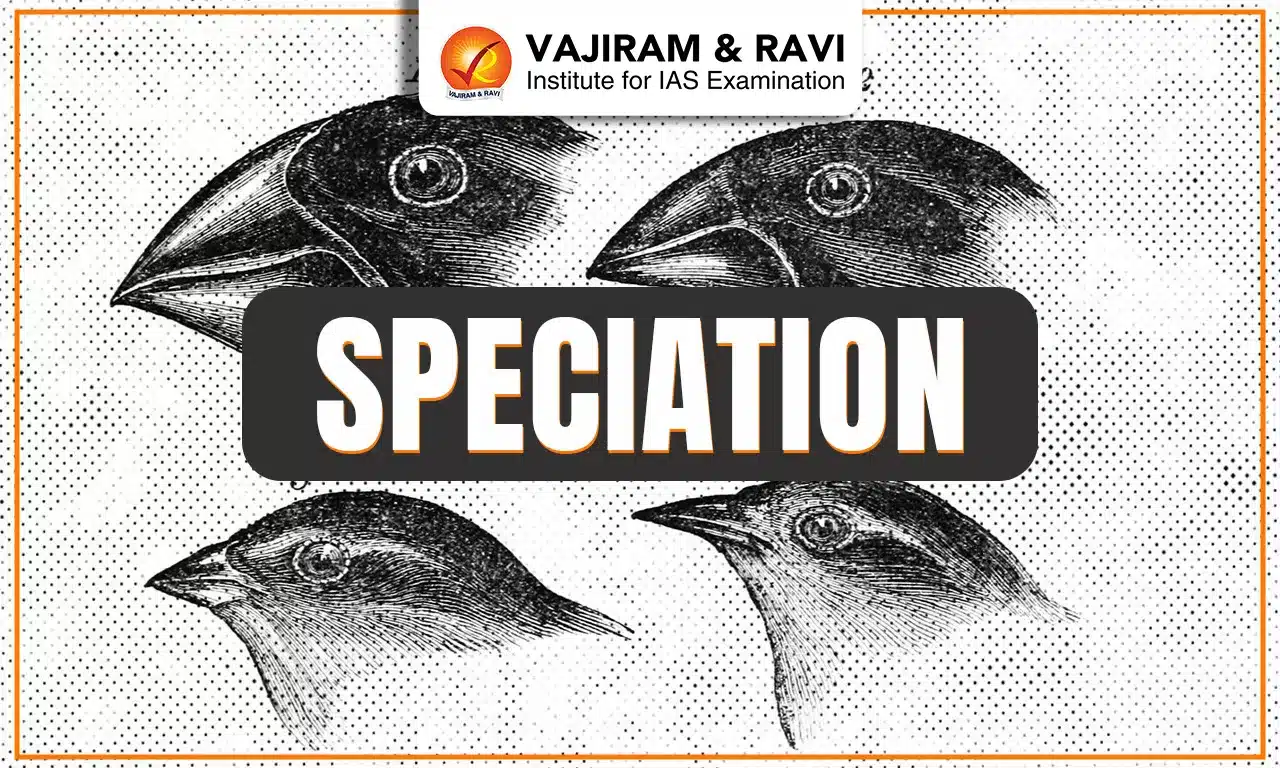
Speciation

Speciation is the evolutionary process by which new species arise from existing ones. It explains how biodiversity on Earth has developed over millions of years. The concept connects genetics, ecology, and evolutionary biology. Speciation occurs when populations of a single species diverge genetically to the point where they can no longer interbreed. This process is essential for understanding the origin of species and the patterns of life evolution on our planet.

Speciation

Speciation is the foundation of evolutionary biology, defining how one species splits into two or more distinct species. It results from genetic divergence, reproductive isolation, and environmental variation. Over time, natural selection and mutation cause populations to accumulate genetic differences, leading to the formation of new species. The study of speciation provides insight into adaptation, survival strategies, and the evolutionary history of organisms.

Species

A species is a group of organisms capable of interbreeding and producing fertile offspring under natural conditions. It is the basic unit of biological classification. According to the Biological Species Concept (Ernst Mayr, 1942), reproductive isolation is the key criterion for defining a species. Other concepts include the Morphological Species Concept, which identifies species by physical traits, and the Phylogenetic Species Concept, based on evolutionary relationships and shared ancestry.

Speciation History

The study of speciation began with Charles Darwin’s “On the Origin of Species” (1859), which proposed natural selection as the driver of new species formation. Later, Ernst Mayr, Theodosius Dobzhansky, and G. L. Stebbins developed the Modern Evolutionary Synthesis, integrating genetics with Darwin’s ideas. In the 20th century, molecular biology deepened understanding through genetic and genomic analyses, confirming that speciation is a continuous evolutionary process observable even today.

Speciation Causes

Speciation occurs due to several interacting causes, both biological and environmental. These causes lead to isolation, divergence, and eventual reproductive separation between populations.

  1. Genetic Causes
  • Mutation: Creates new alleles and genetic variation, forming the basis of evolution.
  • Genetic Drift: Random changes in allele frequencies in small populations accelerate divergence.
  • Chromosomal Changes: Polyploidy and chromosomal rearrangements can cause instant speciation, especially in plants.
  1. Environmental Causes
  • Geographical Isolation: Mountains, rivers, or oceans separate populations physically.
  • Climatic Variation: Temperature and rainfall differences lead to adaptation to distinct conditions.
  • Resource Competition: Different ecological niches favor varied survival traits.
  1. Behavioral and Reproductive Causes
  • Mating Preferences: Differences in mating calls, rituals, or seasons prevent interbreeding.
  • Hybrid Sterility: Even if mating occurs, hybrid offspring may be infertile (e.g., mule).
  • Temporal Isolation: Populations breed at different times of the year, reducing gene flow.

Factors Affecting Speciation

Several factors influence the speed and direction of speciation. These factors determine how populations diverge genetically and reproductively.

  1. Isolation Mechanisms: Isolation prevents interbreeding and maintains genetic divergence.
  • Prezygotic Barriers: Prevent fertilization (habitat, behavioral, mechanical, and temporal isolation).
  • Postzygotic Barriers: Reduce hybrid viability or fertility after fertilization.
  1. Genetic Variation: Greater genetic variability enhances adaptability and accelerates speciation. Mutation and recombination introduce new traits, while genetic drift amplifies them.
  2. Natural Selection: Selection pressures such as climate, food, and predators favor advantageous traits, gradually differentiating populations.
  3. Population Size and Distribution: Small, isolated populations evolve faster due to limited gene flow and stronger effects of drift and selection.
  4. Environmental Factors: Rapid environmental changes, like global warming or habitat fragmentation, can trigger quick evolutionary responses and speciation events.

Modes of Speciation

The mode of speciation depends on the geographical relationship between diverging populations. There are four primary modes, each with unique mechanisms and examples.

  1. Allopatric Speciation
  • Occurs when populations are geographically separated by natural barriers such as mountains or rivers.
  • Over time, genetic differences accumulate, leading to reproductive isolation.
  • Example: Darwin’s finches in the Galápagos Islands.
  1. Sympatric Speciation
  • Takes place within the same geographic area without physical separation.
  • Driven by genetic mutations, behavioral shifts, or ecological specialization.
  • Example: Apple maggot flies diverging based on host plant preference.
  1. Parapatric Speciation
  • Occurs between adjacent populations that experience limited interbreeding.
  • A gradient in environmental conditions causes local adaptation and divergence.
  • Example: Grass species evolving along mine-contaminated soils.
  1. Peripatric Speciation
  • A small population becomes isolated at the periphery of the parent species’ range.
  • Genetic drift and founder effects dominate, leading to rapid evolution.
  • Example: Speciation of island birds from mainland ancestors.

Mechanism of Speciation

The mechanisms of speciation explain the biological and genetic steps through which new species evolve.

  1. Genetic Divergence: Accumulation of mutations, chromosomal changes, and recombination leads to differentiation between populations.
  2. Reproductive Isolation: Reproductive barriers evolve that prevent gene exchange between populations.
    1. Prezygotic Barriers: Habitat, temporal, behavioral, and mechanical isolation.
    2. Postzygotic Barriers: Hybrid inviability, sterility, or breakdown (e.g., mule infertility).
  3. Natural Selection and Adaptation: Environmental pressures favor certain traits that enhance survival and reproduction, gradually separating populations genetically and ecologically.
  4. Hybridization and Polyploidy: In plants, polyploidy (having multiple sets of chromosomes) can lead to instant speciation. Hybridization between species sometimes creates fertile hybrids, resulting in new species.
  5. Genetic Drift and Founder Effect: In small populations, random fluctuations in allele frequencies can lead to rapid genetic divergence and formation of new species.

Rates of Speciation

The rate of speciation differs among taxa and environments. Some species form gradually, while others appear suddenly in geological time.

  1. Gradual Speciation
  • Described by Darwin, suggesting slow accumulation of changes over long periods.
  • Seen in stable environments with continuous evolutionary pressure.
  1. Punctuated Equilibrium
  • Proposed by Eldredge and Gould (1972).
  • Long periods of little change are interrupted by short, rapid bursts of evolution, often after environmental disruptions.
  1. Rapid Speciation
  • Occurs within a few generations due to sudden genetic, environmental, or ecological changes.
  • Common in islands, polyploid plants, and adaptive radiations (e.g., cichlid fishes in African lakes).
  1. Adaptive Radiation
  • A single ancestral species diversifies into multiple species adapted to different niches.
  • Example: Finches on Galápagos Islands evolving diverse beak shapes for different diets.

Methods of Selection of Speciation

Selection is the key evolutionary force driving speciation. It acts on variation within populations to favor traits suited to the environment. These selection processes determine how populations adapt and split into new evolutionary lines.

  1. Directional Selection
  • Favors one extreme phenotype, shifting the population mean.
  • Example: Longer beaks in birds aiding food access.
  1. Stabilizing Selection
  • Favors intermediate traits, reducing variation and maintaining equilibrium.
  • Example: Human birth weight stability due to survival advantage.
  1. Disruptive Selection
  • Favors both extremes, leading to formation of distinct subpopulations that may evolve into separate species.
  • Example: Finch populations diverging based on beak size and diet.

Genetics in Speciation

Genetic mechanisms underpin all speciation processes by creating and maintaining variation among populations. Modern genomics allows scientists to trace speciation events through molecular markers and DNA sequencing, linking genes to evolutionary divergence.

  • Mutations: Introduce new alleles and genetic diversity.
  • Gene Flow: Movement of genes between populations; its restriction promotes divergence.
  • Genetic Drift: Random allele fluctuations accelerate differentiation in small populations.
  • Recombination: Produces new gene combinations during meiosis, enhancing adaptability.
  • Chromosomal Alterations: Polyploidy and inversions can cause instant reproductive isolation.

Theories of Speciation

Several theories explain how new species arise, combining genetics, ecology, and selection principles.

  1. Darwin’s Natural Selection Theory (1859): Species evolve gradually through environmental selection of advantageous traits.
  2. Biological Species Concept (Mayr, 1942): Defines species by reproductive isolation.
  3. Punctuated Equilibrium Theory (1972): Speciation occurs rapidly following long periods of stability.
  4. Polyploidy Theory: Instant speciation through chromosomal doubling, especially in plants.
  5. Neutral Theory (Motoo Kimura, 1968): Genetic drift and neutral mutations play significant roles in divergence.

Artificial Speciation

Artificial speciation is the creation of new species through human intervention, such as selective breeding or controlled experiments. For example, in India, gaur (Indian bison) can mate with domestic cattle, but the resulting hybrids are usually sterile or have reduced fertility. Laboratory studies have shown rapid speciation under controlled conditions: Rice and Salt (1980s) created reproductive isolation in Drosophila melanogaster using habitat-based mazes, and Diane Dodd demonstrated isolation in Drosophila pseudoobscura by using different food media. These experiments illustrate how reproductive barriers can evolve quickly under human-guided conditions.

Cospeciation

Cospeciation is the process in which two or more species reciprocally affect each other’s speciation, evolving in tandem over time. It is commonly observed in host-parasite, plant-pollinator, or mutualistic relationships, where the diversification of one species directly triggers the diversification of the other. Cospeciation provides insights into co-evolution, ecological interdependence, and the evolutionary history of interacting species, highlighting how species do not evolve in isolation but often alongside other closely associated organisms.

Evidences of Speciation

Speciation can be observed and confirmed through multiple lines of evidence from morphology, genetics, and ecology across species worldwide.

  1. Morphological Evidence: Differences in physical traits like beak shape in Darwin’s finches or wing patterns in butterflies indicate speciation.
  2. Genetic Evidence: DNA analysis shows genetic divergence; for example, cichlid fishes in African Rift Lakes have distinct genomes despite similar habitats.
  3. Ecological Evidence: Adaptation to different niches, such as mangrove species in Sundarbans, supports ecological speciation.
  4. Fossil Records: Fossils of horse evolution in North America demonstrate gradual speciation over millions of years

Speciation vs Evolution

Speciation and Evolution are interconnected but distinct biological processes explaining biodiversity and change in living organisms. Evolution is the broader process of change, while speciation is its outcome leading to new species formation.

Speciation vs Evolution
Aspect Speciation Evolution

Definition

The process through which new species arise from existing populations.

The gradual change in heritable traits of a population over generations.

Focus

Formation of distinct species.

Genetic and adaptive changes within a population.

Scale

Macroevolutionary (large-scale) process.

Includes both microevolution (small changes) and macroevolution.

Result

Emergence of new, reproductively isolated species.

Variation, adaptation, or extinction within species.

Example

Darwin’s finches evolving into multiple species on the Galápagos Islands.

Giraffes evolving longer necks to reach higher vegetation.

Indian Aspects of Speciation

India’s rich biodiversity and diverse habitats make it a hotspot for natural speciation. Institutions like the Zoological Survey of India (ZSI) and Botanical Survey of India (BSI) conduct ongoing research on endemic speciation and adaptive evolution in Indian ecosystems.

  • Himalayan Region: Shows altitudinal speciation in plants and animals. Example: Snow leopard adapted to high-altitude environments.
  • Western Ghats: High endemism due to isolation and monsoon-driven habitats. Example: Malabar civet, Lion-tailed macaque; species restricted to specific forest patches.
  • Sundarbans Mangroves: Species evolved under salinity and tidal stresses. Example: Fishing cat, salt-tolerant mangrove plants like Avicennia.
  • Andaman & Nicobar Islands: Island isolation promotes allopatric speciation. Example: Andaman teal, Nicobar megapode, unique to the islands.
  • Other Notable Regions: Other Regions include-
  • North-East India: Speciation in orchids and amphibians due to varied rainfall and terrain.
  • Deccan Plateau: Adaptive radiation in reptiles and endemic plants

Global Aspects of Speciation

Globally, speciation studies reveal how isolation and adaptation shape biodiversity patterns. Organizations like UNESCO, IUCN, and WWF study global speciation trends to aid conservation and evolutionary research.

  • Galápagos Islands: Darwin’s finches showcase adaptive radiation.
  • African Rift Lakes: Cichlid fishes demonstrate rapid speciation through ecological diversification.
  • Australia: Marsupials evolved uniquely due to long continental isolation.
  • Antarctica: Harsh environments promote physiological adaptations leading to unique species.

Impacts of Speciation

Speciation has far-reaching impacts on biodiversity, ecology, and human welfare.

  • Biodiversity Creation: Increases species diversity and ecological balance.
  • Ecosystem Stability: Diverse species ensure food web strength and ecosystem resilience.
  • Evolutionary Innovation: Drives adaptation and survival in changing climates.
  • Economic Benefits: Artificial speciation improves crop yield and livestock productivity.

Conservation Insight: Understanding speciation aids in protecting endangered and endemic species.

Also Check Other Posts
Coastal Regulation Zone Global Plastic Treaty
Nitrogen Cycle Carbon Cycle

Speciation FAQs

Q1: What is Speciation?

Ans: Speciation is the process by which new species form from existing populations through genetic divergence and reproductive isolation.

Q2: What are the main causes of Speciation?

Ans: Speciation occurs due to genetic mutations, natural selection, geographic isolation, behavioral differences, and environmental factors influencing populations.

Q3: How many modes of Speciation exist?

Ans: There are four main modes of speciation: allopatric, sympatric, parapatric, and peripatric, each based on population separation patterns.

Q4: What is Artificial Speciation?

Ans: Artificial speciation happens when humans induce new species through selective breeding or controlled laboratory experiments on organisms.

Q5: What is Cospeciation?

Ans: Cospeciation occurs when two interacting species evolve together, so speciation in one species triggers speciation in the other.

Nervous System, Definition, Classification, Function, Reflex Action

Nervous System

The nervous system is one of the most complex and vital systems in the human body, controlling every function we perform- from thinking, remembering, and feeling to moving, breathing, and reacting. It acts as the body’s electrical and communication network, connecting billions of specialized cells called neurons that transmit signals between the brain, spinal cord, and various body parts.

Nervous System

The nervous system works through electrical impulses and chemical signals, carrying information rapidly from one part of the body to another. It allows coordination, communication, and control, ensuring that the body acts as one unit. According to the National Institute of Neurological Disorders and Stroke (NINDS), the human brain alone contains about 86 billion neurons. These neurons form intricate networks that allow humans to respond instantly to internal and external stimuli, maintain balance, and exhibit intelligence.

Read About: DNA

Nervous System Historical Background

The study of the nervous system has evolved over thousands of years. Ancient physicians and philosophers observed the brain’s role in sensation and behavior, leading to the birth of neuroscience.

  • Vedic India (1500-500 BCE): Ancient texts like the Ayurveda mention manas (mind) and nadi (channels), hinting at early understanding of nerves and brain functions.
  • Ancient Egypt (1700 BCE): Medical papyri describe brain injuries and nerve-related paralysis.
  • Greece (460-200 BCE): Hippocrates identified the brain as the center of intelligence and sensation.
  • Galen of Pergamon (2nd century CE): Studied nerves through animal dissections; distinguished sensory and motor nerves.
  • Renaissance Europe (1500s): Andreas Vesalius created detailed anatomical drawings of the brain and spinal cord.
  • 17th-18th century: Thomas Willis introduced the term “neurology” and mapped brain functions.
  • 19th century: Camillo Golgi developed a staining technique that made individual neurons visible; Santiago Ramón y Cajal formulated the Neuron Doctrine.
  • 20th century onwards: EEG, MRI, and fMRI revolutionized the study of brain activity and neurological functions.

Nervous System Classification

The nervous system is divided into two main parts: Central Nervous System and Peripheral Nervous System. The CNS interprets information and makes decisions, while the PNS carries messages to and from the body. Together, they ensure smooth functioning of all body processes.

Classification of Nervous System
Division Main Components Function

Central Nervous System (CNS)

Brain and Spinal Cord

Acts as the control center; interprets and processes information

Peripheral Nervous System (PNS)

Nerves outside the CNS

Connects CNS to limbs and organs; transmits sensory and motor information

Central Nervous System (CNS)

The Central Nervous System (CNS) is the command center of the body, consisting of the brain and spinal cord. It receives, processes, and sends information throughout the body.

  1. Brain

The human brain, weighing about 1.4 kilograms, is the most complex organ, with billions of neurons connected by trillions of synapses. It is protected by the skull and covered by three layers of membranes called meninges. The brain consumes nearly 20% of the body’s oxygen supply, highlighting its high energy demands. The brain is divided into three main parts:

  • Forebrain: Includes the cerebrum, thalamus, and hypothalamus. The cerebrum controls higher functions like reasoning, emotions, and decision-making.
  • Midbrain: Acts as a bridge for visual and auditory signals.
  • Hindbrain: Comprises the cerebellum, pons, and medulla oblongata, which control balance, posture, and vital functions like heartbeat and breathing.
  1. Spinal Cord

The spinal cord is a cylindrical structure that extends from the brainstem to the lower back. It functions as a communication highway, transmitting sensory information to the brain and motor commands back to the body. It also regulates reflex actions, providing immediate responses to protect the body from harm.

Peripheral Nervous System (PNS)

The Peripheral Nervous System (PNS) links the CNS to every body part. It includes cranial nerves (arising from the brain) and spinal nerves (arising from the spinal cord).

It is divided into two main systems:

  1. Somatic Nervous System (SNS): Controls voluntary movements of skeletal muscles.
  2. Autonomic Nervous System (ANS): Controls involuntary functions such as digestion, heart rate, and respiration. The ANS further has two divisions:
    1. Sympathetic Nervous System: Activates during emergencies (“fight or flight” response).
    2. Parasympathetic Nervous System: Calms the body and restores normal functions (“rest and digest”).

Read About: Cell and its Organelles

Neuron

A neuron is a specialized nerve cell that transmits electrical impulses. It is the smallest unit of the nervous system yet vital to its functioning. The junction between two neurons is called a synapse, where communication occurs through neurotransmitters such as dopamine, acetylcholine, and serotonin. Humans have nearly 100 trillion synaptic connections, forming a vast communication web.

Structure of a Neuron:

  • Cell Body (Soma): Contains the nucleus and cytoplasm.
  • Dendrites: Receive messages from other neurons.
  • Axon: Transmits signals away from the cell body.

Types of Neurons in the Human Nervous System

Neurons vary based on function:

  1. Sensory Neurons: Carry signals from sensory organs (eyes, skin, ears) to the CNS.
  2. Motor Neurons: Transmit instructions from the CNS to muscles or glands.
  3. Interneurons: Connect sensory and motor neurons within the CNS for reflexes and complex processes.

Transmission of Nerve Impulse

The nerve impulse is an electrical signal that travels along a neuron. This process enables instant communication across the body in milliseconds..

  • Resting Potential: The neuron is inactive but ready to transmit a signal. At rest, neurons maintain a resting potential of -70 millivolts.
  • Action Potential: When stimulated, sodium ions flow in, reversing the charge and creating an impulse.
  • Transmission: The impulse travels along the axon to the synapse rapidly (up to 120 meters per second).
  • Synaptic Transmission: Neurotransmitters are released into the synaptic cleft, transferring the impulse to the next neuron.

Reflex Action in the Nervous System

A Reflex Action is an automatic response to a stimulus, such as blinking or pulling your hand away from a hot object. This mechanism protects the body from potential harm and functions without direct brain involvement, making it extremely rapid. The reflex arc pathway includes:

Receptor

Sensory Neuron

Spinal Cord

Motor Neuron

Effector Organ

Functions of the Human Nervous System

The nervous system plays a key role in:

  • Sensory Input: Receiving information from surroundings.
  • Integration: Processing and interpreting data.
  • Motor Output: Initiating suitable responses.
  • Homeostasis: Maintaining internal balance.
  • Cognition and Emotion: Supporting memory, learning, and decision-making.

Disorders Related to the Nervous System

Neurological disorders affect millions worldwide. According to the GBD study published in The Lancet Neurology in 2024, 3.40 billion individuals lived with a neurological condition in 2021. The Global Burden of Disease Report (2020) estimated that neurological disorders are among the top 10 causes of death and disability worldwide. Common disorders include:

  1. Alzheimer’s Disease: Leads to memory loss and confusion.
  2. Parkinson’s Disease: Causes tremors due to dopamine deficiency.
  3. Epilepsy: Uncontrolled electrical activity in the brain leading to seizures.
  4. Multiple Sclerosis (MS): Immune system attacks nerve coverings.
  5. Meningitis: Inflammation of meninges due to infection.

Coordination Between Nervous and Endocrine Systems

The nervous system works closely with the endocrine system to regulate bodily functions. The hypothalamus acts as the link between the two, controlling hormone release from the pituitary gland. During stress, for instance, the hypothalamus activates the adrenal glands to release adrenaline and cortisol, preparing the body for emergency actions. This coordination maintains homeostasis, ensuring physiological balance.

Evolution of the Nervous System

The evolution of the nervous system shows gradual complexity among organisms:

  • Cnidarians (e.g., jellyfish): Have nerve nets.
  • Annelids and Arthropods: Possess ganglia and ventral nerve cords.
  • Vertebrates: Developed centralized brain and spinal cord.

Humans have the most advanced nervous system, capable of consciousness, creativity, and abstract reasoning.

Nervous System UPSC

Neuroscience has developed at a significant rate these days. The various aspects of Neuroscience and Nervous System Research and Developments are as below:

  • Recent Advances in Neuroscience and Nervous System Research: Recent decades have witnessed revolutionary progress in neuroscience:
  1. Brain Mapping: Imaging technologies like fMRI show active brain regions during various tasks.
  2. Neural Prosthetics: Artificial limbs controlled by brain signals are being developed.
  3. Stem Cell Therapy: Creates potential to regenerate damaged neural tissues offering hope for treating spinal cord injuries and neurodegenerative diseases..
  4. Artificial Intelligence: Neural networks mimic human brain processing. According to Nature Neuroscience (2024), research in neural implants and AI-based diagnostics is expected to revolutionize treatment for disorders like paralysis and dementia.
  • Indian Aspect of Nervous System Studies: India has made significant strides in neuroscience research and medical innovation:
  1. National Brain Research Centre (NBRC), Haryana: Focuses on Alzheimer’s, epilepsy, and brain imaging.
  2. AIIMS Neurology Department: Conducts advanced research on stroke and neurodegenerative diseases.

Department of Science and Technology (DST): Funds national-level brain research through the “Neuroinformatics Initiative.”

Nervous System FAQs

Q1: What is the Nervous System?

Ans: The nervous system is the body’s communication network, controlling movements, sensations, reflexes, cognition, and vital functions through specialized neurons.

Q2: What are the main parts of the Nervous System?

Ans: The nervous system consists of the Central Nervous System, including the brain and spinal cord, and the Peripheral Nervous System connecting organs.

Q3: What is a neuron in the Nervous System?

Ans: A neuron is a specialized nerve cell that transmits electrical signals using dendrites, axons, and synapses, enabling body-wide communication.

Q4: How does the Nervous System coordinate reflex actions?

Ans: Reflex actions involve sensory neurons, spinal cord, and motor neurons, allowing instant automatic responses without conscious brain involvement.

Q5: What are common disorders of the Nervous System?

Ans: Neurological disorders such as Alzheimer’s, Parkinson’s, epilepsy, multiple sclerosis, and meningitis disrupt the normal functioning of the nervous system.

Central Vista Redevelopment Project, Plan, Components, Impact

Central Vista Redevelopment Project

The Central Vista Redevelopment Project is one of India’s most ambitious infrastructure initiatives, aiming to modernize New Delhi’s central administrative area near Raisina Hill. Envisioned to reflect India’s evolving democratic and developmental aspirations, the project involves redesigning the 3 km stretch from Rashtrapati Bhavan to India Gate into a modern, efficient, and citizen-friendly governance hub. It signifies not just architectural change, but also a transformation in how India envisions its administrative efficiency and public accessibility.

Central Vista Redevelopment Project

Launched in 2019, the Central Vista Redevelopment Project seeks to redesign the 3-kilometre stretch of the Central Vista Avenue (formerly Rajpath, now Kartavya Path) into a modern, green, and people-friendly administrative zone. The project is being implemented by the Central Public Works Department (CPWD) under the Ministry of Housing and Urban Affairs. It is scheduled for completion by 2026, with an estimated cost of ₹13,450 crore (MoHUA).

Central Vista Redevelopment Project Historical Background

The Central Vista was originally designed by Sir Edwin Lutyens and Herbert Baker after the 1911 Delhi Durbar, when the British announced the transfer of India’s capital from Calcutta to Delhi. The iconic Parliament House, Rashtrapati Bhavan, and the North and South Blocks were built between 1912 and 1931.

After Independence in 1947, this area became the centre of Indian democracy and governance. Over time, however, the century-old buildings faced issues like structural fatigue, space shortage, and outdated facilities. This led to the conceptualization of a new, unified and energy-efficient administrative complex through the Central Vista Redevelopment Project.

Need for Central Vista Redevelopment Project

The century-old government buildings were struggling with inadequate safety systems, limited workspace, and rising maintenance costs. According to a CPWD technical audit (2019), most ministry buildings in the area were in “poor to dilapidated condition.”
Key reasons for redevelopment include:

  • Administrative Efficiency: 51 central ministries scattered across multiple rented buildings will be consolidated into one Common Central Secretariat, cutting costs and improving coordination.
  • Infrastructure Modernization: Aging facilities lacked modern IT networks, fire safety, and energy efficiency.
  • Environmental Sustainability: The redevelopment follows green-building standards with solar energy and waste recycling.
  • Public Accessibility: Redeveloped Kartavya Path and open lawns promote citizen engagement and tourism.

Central Vista Redevelopment Project Plan

The project involves constructing new government complexes while repurposing existing heritage structures for public engagement.

Central Vista Redevelopment Project Plan
New Structures Structures to be Repurposed Structures to be Retained Structures to be Demolished

New Parliament House

North and South Blocks (to become National Museums)

Rashtrapati Bhavan, India Gate, National War Memorial

Vigyan Bhawan Annexe, Shastri Bhawan, Krishi Bhawan, Nirman Bhawan, Udyog Bhawan, Transport Bhawan, Raksha Bhawan

Kartavya Bhawan (Common Central Secretariat)

Old Parliament (to become Democracy Museum)

Presidential Gardens

-

Vice President’s Enclave

Indira Gandhi National Centre for Arts (relocated with new complex)

-

-

Prime Minister’s Enclave

National Museum (to merge with new cultural spaces)

-

-

Central Vista Redevelopment Project Components

The major components and key changes that are planned for the Central Vista Redevelopment Project has been listed below:

  1. New Parliament Building
  • Inaugurated: May 28, 2023
    Cost: approx. ₹1,250 crore (Tata Projects Ltd.)
  • Features:
    • Triangular-shaped modern design.
    • Lok Sabha capacity: 888 seats; Rajya Sabha: 384 seats; expandable to 1,272 for joint sessions.
    • Equipped with digital systems, solar panels, earthquake-resistant structure, and a 150-year lifespan.
  1. Kartavya Path (formerly Rajpath)
  • Redeveloped into a 3-km long pedestrian-friendly boulevard connecting Rashtrapati Bhavan to India Gate.
  • Includes new lawns, canals, bridges, street furniture, underpasses, and 16.5 km of walkways.
  • Increased green cover from 3,890 to 4,087 trees, improved lighting, and public conveniences.
  • Inaugurated on 8 September 2022 by the Prime Minister.
  1. Common Central Secretariat (Kartavya Bhawan)
  • Consists of 10 new interconnected buildings to house all central ministries.
  • Designed in Lutyens’ architectural style with a height less than 42 metres (India Gate’s height).
  • Expected to accommodate 75,000+ employees with energy-efficient and digital facilities.
  • First complex (Kartavya Bhawan) to be inaugurated on 6 August 2025.
  1. Vice President and Prime Minister’s Enclaves
  • Both the Vice President's Enclave and the Prime Minister's Office and Residence will be located within the new Common Central Secretariat, which will be in a new location.
  • Aims to reduce traffic congestion and improve security and coordination in governance.
  • Spread over 15 acres each, featuring offices, residences, and security complexes.
  1. Indira Gandhi National Centre for Arts (IGNCA)
  • Relocated to a 15-acre plot near Jamnagar House.
  • New facilities will include auditoriums, cultural archives, exhibition halls, and research centres.
  1. Central Vista Metro Loop Line
  • A new underground metro loop connecting all government offices in the Vista area.
  • Will integrate with the existing Central Secretariat Metro Station (Yellow and Violet Lines).
  • Aims to reduce vehicular movement and promote public transport.

Central Vista Redevelopment Project Criticism

The project has faced several criticisms. Despite these concerns, the government emphasizes the project’s long-term national importance and eco-friendly execution.

  • Timing: Critics questioned the project’s priority during the COVID-19 pandemic.
  • Heritage impact: Concerns about the loss of historical aesthetics and limited public consultation.
  • Transparency: Approvals were given under the Government Buildings Act, 1899, bypassing municipal oversight.
  • Environmental worries: Debate over land-use changes and adequacy of environmental assessments.

Central Vista Redevelopment Project Impact

The Central Vista Redevelopment Project follows strong guidelines to ensure minimal disruption and several beneficial impacts as given below:

  1. Environmental and Sustainability Features
  • Use of energy-efficient materials and solar power generation.
  • No tree cutting; instead, 40,000+ trees planted for green cover expansion.
  • Recycling of construction waste at dedicated treatment facilities.
  • Pedestrian-first design, wider cycle paths, and underground parking to reduce pollution.
  1. Governance and Administrative Benefits
  • Unified functioning: Brings all ministries together under one administrative complex, improving coordination.
  • Improved efficiency: Digital infrastructure and modern facilities will enable faster communication and decision-making.
  • Cost optimization: Reduces rent and maintenance expenses for offices currently spread across Delhi.
  • Enhanced security: Consolidated administrative area ensures better surveillance and crisis management.
  1. Public and Social Impact
  • Improved accessibility: Redeveloped Kartavya Path offers inclusive access with ramps, signage, and seating areas.
  • Cultural engagement: Conversion of heritage structures like the old Parliament and North-South Blocks into museums enhances public awareness.
  • Tourism boost: The Vista area continues to be a major attraction for visitors, hosting Republic Day, Independence Day, and other national events.

Central Vista Redevelopment Project UPSC

As of 2025, the new Parliament, Kartavya Path, and Vice President’s Enclave are completed. After the inauguration of Kartavya Bhawan, completion of Common Secretariat Complexes 1, 2, 6, 7, and 10 will be followed by late 2026. The Executive Enclave, comprising the Cabinet Secretariat and National Security Council, is also under construction. The Central Vista Metro Loop Line, a four-station underground system, will link all administrative buildings for high-efficiency movement.

Central Vista Redevelopment Project FAQs

Q1: What is the Central Vista Redevelopment Project?

Ans: It is India’s initiative to modernize Delhi’s administrative area, including new Parliament, ministries, Kartavya Path, and public-friendly infrastructure.

Q2: When was the Central Vista Redevelopment Project launched and expected completion?

Ans: The project began in 2019 and is scheduled for completion by 2026 under the Ministry of Housing and Urban Affairs.

Q3: What is Kartavya Path?

Ans: Kartavya Path, formerly Rajpath, is a 3-km pedestrian-friendly boulevard connecting Rashtrapati Bhavan to India Gate, with lawns, walkways, and bridges.

Q4: What is the new Parliament Building’s capacity?

Ans: The triangular-shaped Parliament seats 888 in Lok Sabha, 384 in Rajya Sabha, expandable to 1,272 for joint sessions.

Q5: How does the Central Vista Redevelopment Project promote sustainability?

Ans: It uses solar energy, recycles construction waste, expands green cover with 40,000+ trees, and provides pedestrian-friendly and eco-efficient infrastructure.

Virtual Museum of Stolen Cultural Objects

Virtual Museum of Stolen Cultural Objects

Virtual Museum of Stolen Cultural Objects Latest News

Recently, UNESCO launched the Virtual Museum of Stolen Cultural Objects at UNESCO’s MONDIACULT conference.

About Virtual Museum of Stolen Cultural Objects

  • It is an innovative digital platform which reconnects communities with their stolen cultural treasures.
  • Aim: The project aims at designing the first virtual immersive reality museum of stolen cultural objects at a global scale.
  • It will contribute to raising awareness among the general public to the consequences of illicit trafficking of cultural property and contribute to the recovery of stolen objects. 
  • It was launched at the World Conference on Cultural Policies and Sustainable Development (MONDIACULT 2025).
  • The museum is financially supported by the Kingdom of Saudi Arabia, and the project was developed in collaboration with the INTERPOL.
  • The digital museum currently displays almost 240 missing objects from 46 countries.
  • Sculptures from Indian temple
    • The museum depicts two objects submitted from India: Two 9th-century sandstone sculptures from Mahadev Temple, Pali, Chhattisgarh
    • The first, a Nataraja figure, is described as showing Shiva in his cosmic dance.
    • The second figure, of Brahma, the creator, is shown seated in lalitasana with three visible faces and four arms holding sacred emblems like a rosary and the Vedas.

Source: IE

Virtual Museum of Stolen Cultural Objects FAQs

Q1: Who launched the Virtual Museum of Stolen Cultural Objects?

Ans: UNESCO

Q2: Who designed the Virtual Museum's structure?

Ans: Pritzker Prize-winning architect Francis Kéré.

LEAPS 2025

LEAPS 2025

LEAPS 2025 Latest News

Recently, the Union Minister for Commerce and Industry launched the Logistics Excellence, Advancement, and Performance Shield (LEAPS) 2025 in New Delhi.

About LEAPS 2025

  • LEAPS is a flagship initiative of the Department for Promotion of Industry and Internal Trade (DPIIT) under the Ministry of Commerce and Industry,
  • Aim: It aims to benchmark logistics excellence, strengthen India’s competitiveness, and align with the vision of the National Logistics Policy (NLP) and PM GatiShakti.
  • LEAPS 2025 has been conceptualized to acknowledge and celebrate best practices, innovation, and leadership within India’s logistics industry.
  • It covers a wide spectrum of logistics players — including air, road, sea, and rail freight operators; warehousing; multimodal transporters; MSMEs; Startups; and Academia.
  • The initiative also emphasizes sustainability, ESG (Environmental, Social, and Governance) practices, and Green Logistics, encouraging collaboration between Government, Industry, and Academia to enhance efficiency, transparency, and resilience in the logistics ecosystem.

What is PM Gati Shakti?

  • It aims to understand current gaps in logistics connectivity and facilitate the development of logistics infrastructure (creating connectivity between roadways, rail transport, waterways, and air transport) so as to reduce logistics costs.
  • The programme has an estimated cost of ₹100 trillion.

Source: PIB

LEAPS 2025 FAQs

Q1: Which Ministry has launched the Logistics Excellence, Advancement, and Performance Shield (LEAPS) initiative?

Ans: Ministry of Commerce and Industry

Q2: What is the aim of LEAPS Initiative?

Ans: It aims to benchmark logistics excellence, strengthen India's competitiveness, and align with the vision of the National Logistics Policy (NLP) and PM GatiShakti.

Number of Births and Deaths in India

Number of Births and Deaths in India

Number of Births and Deaths in India Latest News

India registered 2.52 crore births in 2023, around 2.32 lakh fewer than in 2022, the Vital Statistics of India based on Civil Registration System (CRS) report for the year 2023 shows.

About Number of Births and Deaths in India

  • India registered 2.52 crore births in 2023, around 2.32 lakh fewer than in 2022, according to the Vital Statistics of India based on the Civil Registration System (CRS) report for the year 2023.
  • The report, compiled by the Registrar General of India (RGI), stated that 86.6 lakh deaths were registered in 2023, a marginal increase from 86.5 lakh deaths in 2022.
    • There was no major spike in deaths in 2022 and 2023, despite the COVID-19 dashboard maintained by the Health Ministry showing that the total number of pandemic-induced deaths stood at 533,665 as on May 5, 2025.
    • However, there was a significant rise in deaths in 2021, the second year of COVID-19 lockdown, which recorded an excess of 21 lakh deaths from the 2020 count. 
  • There were 81.2 lakh deaths in 2020 and 102.2 lakh in 2021.
  • Jharkhand recorded the lowest sex ratio at birth at 899, followed by Bihar at 900, Telangana at 906, Maharashtra at 909, Gujarat at 910, Haryana at 911, and Mizoram at 911. 
  • The highest sex ratio was reported by Arunachal Pradesh at 1,085, followed by Nagaland at 1,007, Goa at 973, Ladakh and Tripura at 972, and Kerala at 967.
  • The share of institutional births in total registered births is 74. % in 2023. However, the report did not include information from Sikkim. 
    • Overall registration of births for the year 2023 stood at 98.4%.
    • 11 States/Union Territories (UTs) achieved more than 90% registration of births within the prescribed time limit of 21 days. 
      • These States are Gujarat, Puducherry, Chandigarh, Dadra and Nagar Haveli and Daman & Diu, Tamil Nadu, Lakshadweep, Andaman and Nicobar Islands, Haryana, Himachal Pradesh, Goa, and Punjab.
    • Five States — Odisha, Mizoram, Maharashtra, Chhattisgarh, and Andhra Pradesh — reported 80-90% registration.
    • In 14 States — Assam, Delhi, Madhya Pradesh, Tripura, Telangana, Kerala, Karnataka, Bihar, Rajasthan, Jammu & Kashmir, Jharkhand, West Bengal, Meghalaya, and Uttar Pradesh, the registration stood at 50-80%.

Source: TH

Number of Births and Deaths in India FAQs

Q1: How many births were registered in India in 2023 according to Civil Registration System (CRS) report?

Ans: India registered 2.52 crore births in 2023, around 2.32 lakh fewer than in 2022.

Q2: How many deaths were registered in India in 2023 according to Civil Registration System (CRS) report?

Ans: 86.6 lakh deaths were registered in 2023, a marginal increase from 86.5 lakh deaths in 2022.

Q3: In which year did India record the highest number of deaths due to the COVID-19 impact?

Ans: 2021

Q4: Which State recorded the lowest sex ratio at birth in 2023?

Ans: Jharkhand

Q5: Which State recorded the highest sex ratio at birth in 2023?

Ans: Arunachal Pradesh

Integrated Alert System (SACHET)

Integrated Alert System (SACHET)

Integrated Alert System (SACHET) Latest News

In a session on disaster risk reduction (DRR) at the ongoing G20 ministerial meeting in Durban, India’s Principal Secretary to the Prime Minister outlined India’s multi-agency architecture integrating meteorological, hydrological, seismic, and oceanographic institutions through a Common Alert Protocol–compliant Integrated Alert System.

About Integrated Alert System (SACHET)

  • It is a disaster early warning platform envisioned by the National Disaster Management Authority (NDMA) to provide real-time geo-targeted alerts to citizens. 
  • It was developed by the Centre for Development of Telematics (C-DOT), the premier R&D center of the Department of Telecom.
  • It is based on the Common Alerting Protocol (CAP) recommended by the International Telecommunication Union (ITU).
  • It integrates multiple stakeholders to bridge communication gaps and employs multiple technologies, including SMS, Cell Broadcast, Mobile App, TV, Radio, Social Media, RSS Feed, Browser Notification, and Satellite, for enabling effective communication and ensuring last-mile reachability.
  • This system is already operational in all States and Union Territories (UTs) of India and sends various disaster- or emergency- related alerts through SMS to mobiles of citizens affected in a particular geo-targeted area. 
  • Users can receive alerts for their current location or subscribe to any state/district in India to receive alert notifications.
  • The SACHET mobile app provides warnings from authorized Government sources and authorities to warn the public of a possible disaster situation.
  • Furthermore, the app provides weather reports and forecasts from the Indian Meteorological Department (IMD) for day-to-day weather updates.

Source: TH

Integrated Alert System (SACHET) FAQs

Q1: What is the primary purpose of the Integrated Alert System (SACHET)?

Ans: To provide real-time geo-targeted disaster alerts to citizens

Q2: Who developed the Integrated Alert System (SACHET)?

Ans: It was developed by the Centre for Development of Telematics (C-DOT).

Q3: The SACHET platform is based on which international communication standard?

Ans: It is based on the Common Alerting Protocol (CAP) recommended by the International Telecommunication Union (ITU).

Q4: What is the role of SACHET in disaster management communication?

Ans: It bridges communication gaps by integrating multiple alerting technologies.

Steadfast Noon

Steadfast Noon

Steadfast Noon Latest News

NATO's annual nuclear deterrence exercise, Steadfast Noon, will be hosted by the Netherlands this year.

About Steadfast Noon

  • It is an annual nuclear exercise by NATO (North Atlantic Treaty Organization).
  • It is an important test for the alliance's nuclear deterrent.
  • It is hosted by a different NATO country each year.
  • The 2025 edition of the exercise is being hosted by the Netherlands, with Volkel Air Base serving as the main operating site. 
    • Bases at Kleine Brogel in Belgium, Lakenheath in Britain, and Skrydstrup in Denmark will also be involved.
    • Those nations, as well as Finland, Poland, the United States, and Germany, are among the participants.
    • It will involve around 70 aircraft from 14 allied nations, including both conventional and dual-capable aircraft. 
      • Dual-capable aircraft refers to aircraft that can deliver both conventional and nuclear weapons, which includes Germany’s Tornado, as well as the American and Dutch F-35 jets.
    • The exercise won’t use any actual nuclear weapons.
    • Pilots and aircraft involved in the exercise are certified for the nuclear mission, but no weapons are loaded or flown.
    • France isn’t participating in the exercise, as the country keeps its nuclear forces separate from NATO’s command-and-control structure and decision-making process.

SourceTHBL

Steadfast Noon FAQ's

Q1: What is the Steadfast Noon exercise?

Ans: It is an annual nuclear exercise by NATO (North Atlantic Treaty Organization).

Q2: Which country is hosting the 2025 edition of the Steadfast Noon exercise?

Ans: Netherlands

Q3: How many aircraft and allied nations are participating in Steadfast Noon 2025?

Ans: 70 aircraft from 14 nations

Q4: Why does France not participate in Steadfast Noon?

Ans: France keeps its nuclear forces separate from NATO’s command-and-control structure and decision-making process.

Blue Flag Certification

Blue Flag Certification

Blue Flag Certification Latest News

Recently, five beaches in Maharashtra have received the international Blue Flag certification.

About Blue Flag Certification

  • It is a globally recognized eco-label accorded by the Foundation for Environment Education in Denmark (FEE).
  • It is awarded to beaches that meet 33 criteria related to cleanliness, beauty, and environmental sustainability.
  • The Blue Flag programme was started in France in 1985 and in areas outside of Europe in 2001.
  • It is one of the world’s most recognised voluntary awards for beaches, marinas, and sustainable tourism boats.
  • It promotes sustainable development in freshwater and marine areas through four main criteria: water quality, environmental management, environmental education and safety.
  • Mission: The mission of Blue Flag is to promote sustainability in the tourism sector, through environmental education, environmental protection and other sustainable development practices.
  • The other Indian beaches in the blue list are Shivrajpur-Gujarat, Ghoghla-Diu, Kasarkod and Padubidri-Karnataka, Kappad-Kerala, Rushikonda- Andhra Pradesh, Golden-Odisha, Radhanagar- Andaman and Nicobar, Kovalam in Tamil Nadu and Eden in Puducherry beaches, Minicoy Thundi Beach, Lakshadweep, Kadmat Beach, Lakshadweep.

Source: New On Air

Blue Flag Certification FAQs

Q1: Which is the first beach in Asia to receive Blue Flag certification?

Ans: Chandrabhaga Beach, Odisha

Q2: Which organization awards the Blue Flag certification?

Ans: Foundation for Environmental Education (FEE)

Campi Flegrei Volcano

Campi Flegrei Volcano

Campi Flegrei Volcano Latest News

An artificial intelligence (AI) model has revealed never-before-seen geological structures at Italy's Campi Flegrei volcano, including a clear "ring fault" that could unleash magnitude 5 earthquakes.

About Campi Flegrei Volcano

  • Campi Flegrei, also known as the Phlegraean Fields, is an active volcanic region situated in the densely populated Bay of Naples in Italy, which is also home to the more famous Vesuvius Volcano. 
  • It differs from traditional volcanoes like Mount Vesuvius, as it is not a single volcano but a volcanic system spread across a large caldera.
  • It is the largest active volcanic caldera in Europe, far larger and more active than Mount Vesuvius.
    • The caldera, or volcanic depression, spans approximately 12–15 km in diameter and was created due to a massive eruption around 39,000 years ago.
    • This eruption is hypothesized to have had such a climatic impact that it contributed to the decline of Neanderthals.
  • One-third of Campi Flegrei lies beneath the Tyrrhenian Sea, between the Italian mainland and the island of Sardinia.
  • The last recorded eruption was in 1538, forming Monte Nuovo and ending an interval of roughly 3000 years without eruptions.
  • Campi Flegrei is categorised as a supervolcano, implying that a large-scale eruption could have global consequences, including climate disruption.
  • The volcano has been showing signs of unrest since 2005.
    • It is characterised by intense hydrothermal activity, episodes of localised ground deformation, and earthquake swarms.

Source: LS

Campi Flegrei Volcano FAQs

Q1: Where is the Campi Flegrei volcanic region located?

Ans: Bay of Naples, Italy

Q2: What is another name for the Campi Flegrei Volcano?

Ans: Phlegraean Fields

Q3: How does Campi Flegrei differ from traditional volcanoes like Mount Vesuvius?

Ans: It is a volcanic system spread across a large caldera rather than a single volcano.

Q4: Why is Campi Flegrei categorised as a supervolcano?

Ans: Because, large-scale eruption could have global consequences, including climate disruption.

India-Canada Relations Revived – Explained

India-Canada Relations

India-Canada Relations Latest News

  • India and Canada have agreed on a series of measures to restore bilateral ties and enhance cooperation across trade, energy, technology, and agriculture.

India-Canada Relations: A Historical Overview

  • India and Canada share a long-standing relationship built on shared democratic values, Commonwealth ties, and people-to-people connections
  • Diplomatic relations were established in 1947, soon after India’s independence, with cooperation historically spanning education, agriculture, nuclear energy, and trade.
  • Trade and Economic Relations
    • Bilateral trade between the two nations has grown steadily. In 2024, two-way trade stood at $33.9 billion, with Canada’s merchandise exports to India valued at $5.3 billion
    • India imports Canadian commodities such as fertilisers, pulses, and energy products, while exporting pharmaceuticals, textiles, and IT services
    • Canada’s pension funds are among the largest foreign investors in India, particularly in infrastructure and renewable energy.
  • Indian Diaspora and Cultural Linkages
    • The Indian diaspora in Canada, numbering over 1.6 million, represents one of the largest and most influential immigrant communities. 
    • Indian-origin Canadians play a major role in politics, business, and academia. 
    • Educational partnerships are also strong, with over 3 lakh Indian students studying in Canada, making India the top source of foreign students there.
  • Recent Strains in Relations
    • Despite historic goodwill, ties suffered a major setback in 2023, when then Prime Minister Justin Trudeau accused the Indian government of involvement in the killing of Khalistani separatist Hardeep Singh Nijjar. India rejected the allegations as “absurd and politically motivated,” leading to the downgrading of diplomatic relations, suspension of trade talks, and expulsion of diplomats.
    • However, with the change in Canada’s leadership under Prime Minister Mark Carney, both sides have sought to move forward, emphasising mutual respect, sovereignty, and constructive engagement.

News Summary

  • Restoring Bilateral Ties through Strategic Dialogue
    • India and Canada have agreed on a series of concrete measures to restore and strengthen bilateral ties following talks between External Affairs Minister S. Jaishankar and Canadian Foreign Minister Anita Anand in New Delhi on October 13, 2025.
    • The discussions, the first high-level visit by a Canadian Foreign Minister in over two years, focused on reviving cooperation across multiple sectors, including trade, investment, energy, technology, civil nuclear collaboration, artificial intelligence (AI), and agriculture.

Key Agreements and Announcements

  • Relaunch of Trade Talks
    • Both countries agreed to restart ministerial-level discussions on bilateral trade and investment, with a view to framing a new Comprehensive Economic Partnership Agreement (CEPA). The plan aims to replace earlier, stalled negotiations and align with India’s newer FTAs signed with partners like the UAE and EFTA nations.
  • Re-establishment of Energy Dialogue
    • The Canada-India Ministerial Energy Dialogue (CIMED) has been revived to deepen cooperation in clean energy, including green hydrogen, carbon capture technologies (CCUS), biofuels, and electric mobility. The two sides also agreed to promote LNG and LPG trade and strengthen critical mineral supply chains, vital for clean technology development.
  • Civil Nuclear Cooperation
    • Talks will continue on civil nuclear collaboration, with a focus on the supply of Canadian uranium to support India’s clean energy transition. A Critical Minerals Annual Dialogue will also be held in Toronto in March 2026 to further cooperation in this sector.
  • Agricultural and Food Systems Collaboration
    • Both nations are committed to enhancing cooperation in climate-resilient agriculture, agri-value chains, and nutritional security. The agreement emphasises recycling of agricultural waste, technology exchange, and improving food system sustainability.
  • Science, Technology, and AI Cooperation
    • A major highlight was the relaunch of the Joint Science and Technology Cooperation Committee, focusing on AI, digital infrastructure, and cybersecurity
    • Canada was invited to participate in India’s AI Impact Summit (February 2026). Additionally, Canada’s AI companies and researchers will collaborate on digital public infrastructure and inclusive AI initiatives.

Diplomatic and Strategic Significance

  • The meeting underscored a mutual desire to rebuild trust and de-risk the bilateral relationship from the fallout of earlier controversies. 
  • The joint statement highlighted “respect for each other’s concerns and sensitivities”, a veiled acknowledgement of India’s stance on Khalistan-related extremism on Canadian soil.
  • The leaders also discussed Canada’s possible participation in India’s upcoming AI Summit, and an invitation for Prime Minister Mark Carney to visit India in early 2026.

Broader Context and Global Implications

  • Both sides emphasised that the revival of India-Canada relations comes at a crucial time amid global geopolitical uncertainty and shifting economic alliances
  • As members of the G20 and the Commonwealth, India and Canada share common interests in multilateral reform, climate action, and Indo-Pacific stability.
  • By strengthening trade, technology, and clean energy partnerships, the two democracies aim to restore strategic stability, create resilient supply chains, and expand opportunities for mutual growth and innovation.

Source: TH | IE

India-Canada Relations FAQs

Q1: What led to the recent revival of India-Canada relations?

Ans: The thaw began after leadership change in Canada and renewed efforts by both governments to reset ties post-2023 tensions.

Q2: What were the key outcomes of Foreign Minister Anita Anand’s visit to India?

Ans: Both nations agreed to revive trade talks, re-establish the energy dialogue, and expand cooperation in AI, agriculture, and clean energy.

Q3: Which sectors are expected to benefit the most from the renewed partnership?

Ans: Trade, energy, technology, agriculture, and higher education are key focus areas.

Q4: How are India and Canada addressing past diplomatic tensions?

Ans: Both sides emphasized “respect for each other’s concerns and sensitivities” and focused on rebuilding trust.

Q5: What is the significance of the revived India-Canada Ministerial Energy Dialogue?

Ans: It will boost cooperation in renewables, critical minerals, and clean technologies essential for low-carbon transitions.

UNESCO’s Virtual Museum: Reclaiming the World’s Lost Heritage Through Technology

Virtual Museum

Virtual Museum Latest News

  • UNESCO has launched the Virtual Museum of Stolen Cultural Objects — a digital platform unveiled recently at the MONDIACULT conference — to reconnect communities with cultural treasures lost to theft and colonialism. 
  • Emphasising that each stolen artifact represents a loss of identity, the initiative aims to raise awareness and aid recovery efforts against the illicit trade of heritage items.

MONDIACULT

  • MONDIACULT is the acronym for the UNESCO World Conference on Cultural Policies and Sustainable Development
  • It's the world's largest ministerial forum on cultural policy, bringing together UNESCO's 194 Member States to define the global agenda for culture.
  • MONDIACULT's history is marked by two key UNESCO conferences in Mexico City:
    • 1982: The first conference expanded the definition of culture to include a society's total "distinctive features" and established culture as a fundamental part of development.
    • 2022: Revived 40 years later, this conference declared culture a global public good and human right. 
      • Its outcome, the Mexico Declaration, mandated the conference be held every four years and called for a stand-alone goal for culture in the UN's post-2030 development agenda.

MONDIACULT 2025

  • MONDIACULT 2025 conference was held in Barcelona, Spain.
  • Six Themes: Cultural rights, Digital technologies in the culture sector, Culture and education, Economy of culture, Culture and climate action, and Culture, heritage, and crisis.
  • Two Focus Areas: Culture for peace and Artificial intelligence and culture.

UNESCO’s Virtual Museum: A Digital Home for the World’s Stolen Treasures

  • The Virtual Museum of Stolen Cultural Objects currently showcases nearly 240 missing artifacts from 46 countries
  • Designed to “gradually empty itself” as items are recovered and repatriated, the platform reflects UNESCO’s vision of restoring heritage to its rightful communities.
  • Due to the rarity of original images, AI-generated 3D reconstructions allow users to explore spinnable digital versions of lost objects. 
  • The museum’s interactive design enables global audiences to access exhibits via personal devices or conference installations.
  • The project is financially backed by Saudi Arabia and developed in partnership with INTERPOL, reinforcing international cooperation in the fight against illicit cultural trafficking.

Design Rooted in Symbolism

  • Conceived by Pritzker Prize-winning architect Francis Kéré, the website’s structure resembles a baobab tree—a powerful African symbol of endurance and wisdom. 
  • Clicking on the tree branches leads to different sections:
    • Stolen Cultural Objects Gallery
    • Auditorium
    • Return and Restitution Room
  • Visitors can explore artifacts by name, function, material, or colour, alongside testimonies and maps showing where each item was stolen.

Platform for Restitution and Dialogue

  • UNESCO envisions the museum as both a symbolic and functional space—hosting exhibitions on successful restitutions, sharing best practices, and highlighting the human cost of cultural loss. 
  • It also seeks to foster collaboration among governments, museums, law enforcement, and civil society.

India’s Lost Deities in UNESCO’s Virtual Museum

  • Among the artifacts displayed in UNESCO’s Virtual Museum are two ninth-century sandstone sculptures from the Mahadev Temple in Pali, Chhattisgarh
  • The first depicts Shiva as Nataraja, performing his cosmic dance symbolising knowledge’s triumph over ignorance, with his bull Nandi looking on. 
  • The second portrays Brahma, the creator, seated in lalitasana with sacred emblems — the rosary and Vedas — and a goose symbolising wisdom at his feet. 
  • Together, they represent the Hindu balance of creation and dissolution, reflecting how temple art once embodied India’s deep philosophical traditions.

Virtual Repatriation: A New Dimension in UNESCO’s Heritage Preservation Effort

  • Since its founding in 1945, UNESCO’s mission has expanded from rebuilding Europe’s war-torn schools and museums to promoting education, science, culture, and communication worldwide. 
  • Today, with 194 member states, it also prioritises AI governance and heritage protection, reflecting the evolving nature of cultural preservation in a digital era.

Repatriation as Moral Redress

  • Historians describe repatriation — returning cultural objects to their homelands — as a form of atonement for colonial exploitation
  • They note, however, that Western Museum elites often resist it, citing fears of poor infrastructure or corruption in source countries — a view critics condemn as a lingering colonial attitude.

Digital Repatriation: Promise and Practicality

  • Virtual repatriation can address the logistical and political challenges of physically returning artifacts. 
  • By digitising cultural objects, countries can reconnect with their lost heritage without facing transport or ownership disputes.
  • However, critics like Robin Boast and Jim Enote argue in their paper “Virtual Repatriation: It’s Neither Virtual nor Repatriation” (2012) that using the term for digital projects risks diluting the concept of ownership and return
  • They caution that online exhibitions — while valuable for access and dialogue — should not replace genuine restitution to source communities.

A Balancing Act for the Future

  • The debate highlights the tension between technological innovation and ethical restitution. 
  • While virtual repatriation expands access and awareness, it also forces the world to reconsider what true cultural ownership and justice mean in the digital age.

Source: IE | UNESCO | RFI

Virtual Museum FAQs

Q1: What is UNESCO’s Virtual Museum of Stolen Cultural Objects?

Ans: It’s a digital platform showcasing stolen artifacts from 46 countries, aimed at awareness, restitution, and reconnecting communities with their lost heritage.

Q2: Who designed the museum’s symbolic structure?

Ans: Architect Francis Kéré designed it as a baobab tree, symbolising endurance and wisdom, housing digital galleries and interactive restitution rooms.

Q3: What Indian artifacts are featured in the museum?

Ans: Two ninth-century sandstone sculptures from Chhattisgarh’s Mahadev Temple — Shiva as Nataraja and Brahma — representing creation and dissolution in Hindu philosophy.

Q4: What is meant by virtual repatriation?

Ans: It’s the digital return of cultural objects through virtual reconstruction, offering access and recognition without physical transfer of ownership.

Q5: Why is virtual repatriation debated among scholars?

Ans: Critics argue it blurs the meaning of true ownership and restitution, warning that digital returns may replace genuine repatriation efforts.

Beyond Sharm El-Sheikh: Trump’s Fragile Gaza Peace Plan Faces Its Real Test

Board of Peace for Gaza

Gaza Peace Plan Latest News

  • US President Donald Trump has declared the Gaza war “over” as he arrives in Sharm El-Sheikh, Egypt, for a peace summit marking the release of Israeli hostages and Palestinian detainees
  • Under the deal, Hamas will release 20 hostages and 28 bodies, while Israel will free about 2,000 Palestinian detainees.
  • However, key issues — including Gaza’s post-war governance and reconstruction — remain unresolved. 
  • Analysts note that while the hostage exchange was the easiest phase, Hamas has now lost its main leverage, and sustaining peace will be the real challenge ahead.

Trump’s Gaza Peace Plan Faces Its Real Test After Hostage Swap

  • The hostage exchange, the opening move in Trump’s 20-point Gaza peace plan, has been completed. 
  • But the real challenges now lie ahead — disarming Hamas, ensuring security guarantees for Gaza, and rebuilding a war-ravaged enclave reduced to rubble.
  • The next phase involves rehabilitating displaced residents, restoring aid flows, and reconstructing infrastructure
  • Yet, the key question remains unresolved — who will govern Gaza
  • Neither Hamas nor the Palestinian Authority has been clearly assigned that role, and the text offers only a vague nod to Palestinian statehood.

A Peace Summit Without Consensus

  • At Sharm El-Sheikh, world leaders appear united mainly in following Trump’s lead, not in crafting a shared vision. 
  • The Palestinians were excluded from the negotiations entirely, leaving the core issue of occupation and representation untouched. 
  • Critics warn the summit risks becoming a political spectacle rather than a step toward real peace.
  • Analysts argue that without Hamas disarmament, the current truce is only a temporary ceasefire. 
  • They warn that once the summit ends, the region may revert to conflict because Trump’s plan sidesteps the core grievances — occupation and self-determination.

Fragile Prospects for Peace

  • The proposed international stabilisation force of Arab and Muslim states hinges entirely on Hamas’s cooperation — something it has not agreed to. 
  • Without its disarmament or consent, Trump’s ambitious peace framework risks stalling, leaving Gaza’s future uncertain and peace elusive.

Trump’s Leverage Over Netanyahu: Power, Politics and the Fragile Gaza Peace

  • US President Donald Trump wields extraordinary leverage over Israeli Prime Minister Benjamin Netanyahu. 
  • Unlike previous US administrations, Trump has compelled Netanyahu to comply with his directives — from halting an airstrike on Iran mid-air to apologising to Qatar after an Israeli attack in Doha. 
  • Such direct presidential influence over Israel is unparalleled in US-Israel relations.
  • Netanyahu, once adept at exploiting American political divisions under Democratic administrations, cannot apply the same tactics with Trump. 
  • This power dynamic has enabled Trump to push through key components of his Gaza peace plan, including earlier hostage releases, giving the US unprecedented control over Israeli decision-making during the conflict.

Trump’s Waning Interest

  • Despite this leverage, doubts remain about Trump’s long-term commitment to his 20-point Gaza peace plan. 
  • Reports indicate that he has expressed disappointment over not receiving the Nobel Peace Prize.
  • This may reduce his inclination to remain actively engaged in overseeing the full implementation of the plan once its initial diplomatic momentum subsides.

Netanyahu’s Political Calculus

  • For Netanyahu, a lasting peace is politically inconvenient. 
  • The ongoing conflict distracts from his domestic crises — including corruption charges and a bitter judicial standoff. 
  • A permanent ceasefire could reignite public anger over Israel’s security failures from October 7 and embolden calls for his resignation or prosecution.

The Road Ahead: A Deal at Risk

  • Analysts foresee a scenario in which Netanyahu may accuse Hamas of breaching the pact, providing a pretext to withdraw from the peace deal
  • By then, both leaders’ attention may have shifted elsewhere, leaving Trump’s peace initiative stalled amid political expediency and fading global focus.

India’s Response to Gaza Ceasefire

  • Prime Minister Narendra Modi welcomed the release of all hostages after over two years of captivity and praised the “unwavering peace efforts” of US President Donald Trump. 
  • He also commended Israeli Prime Minister Benjamin Netanyahu’s resolve, expressing India’s full support for Trump’s peace initiative in Gaza.
  • The Ministry of External Affairs (MEA) reaffirmed India’s commitment to a negotiated two-State solution and to promoting dialogue and diplomacy for lasting peace in the Middle East. 
  • India also acknowledged the roles of Egypt and Qatar in facilitating the agreement.

Source: IE | IE

Gaza Peace Plan FAQs

Q1: What marked the beginning of Trump’s 20-point Gaza peace plan?

Ans: The release of Israeli hostages and Palestinian detainees marked the plan’s first phase, symbolising progress but leaving deeper issues unresolved.

Q2: Why is Gaza’s governance a major challenge after the truce?

Ans: Neither Hamas nor the Palestinian Authority was assigned control, creating uncertainty over who will administer Gaza’s reconstruction and future governance.

Q3: How does Trump maintain leverage over Netanyahu?

Ans: Trump’s unique influence has compelled Netanyahu to follow directives — from halting airstrikes to issuing rare diplomatic apologies, an unprecedented U.S.-Israel dynamic.

Q4: What is India’s stance on the Gaza ceasefire?

Ans: India welcomed the hostage release, reaffirmed support for a negotiated two-State solution, and praised Trump’s efforts alongside Egypt and Qatar’s mediation roles.

Q5: Why do analysts doubt lasting peace under Trump’s plan?

Ans: Experts argue that without Hamas disarmament and Palestinian representation, Trump’s framework risks collapsing once global attention fades.

Daily Editorial Analysis 14 October 2025

Daily Editorial Analysis

Estimating India’s Potential Growth Rate 

Context

  • The debate around India’s potential growth rate, its sustainable level of economic expansion without triggering inflationary pressures, remains central to macroeconomic discourse.
  • Although India’s recent GDP growth has shown fluctuations, many economists, including the authors of the cited text, maintain that the country’s potential growth rate currently stands at 6.5%.
  • It is, therefore, important to critically analyse the arguments, examining empirical evidence on recent growth patterns, the role of capital formation and the Incremental Capital-Output Ratio (ICOR), and the impact of public and private investment trends.

A Contextual Overview of Recent Growth Performance

  • The first quarter of 2025–26 recorded a 8% real GDP growth rate, a figure that appears robust at first glance.
  • However, this number is below the average first-quarter growth rate (9.9%) of the previous three years (2022–23 to 2024–25).
  • Similarly, real GVA growth for the same quarter was 6%, lower than the 9.5% average of earlier years.
  • Thus, while India’s short-term growth remains strong, it does not represent a structural acceleration sufficient to alter the long-term potential growth trajectory.
  • Sector wise, manufacturing was the key outperformer with a 7.7% growth rate, higher than its three-year average of 5.8%. By contrast, major service sectors, trade, transport, financial services, and public administration, registered lower growth compared to their historical averages.

Potential Growth and the Role of Capital Efficiency

  • A central analytical framework employed in the text is the relationship between Gross Fixed Capital Formation Rate (GFCFR) and the Incremental Capital-Output Ratio (ICOR).
  • Potential growth is determined by how much new investment (capital formation) translates into productive output.
  • In recent years, India’s GFCFR has remained stable, hovering around 33–34% of GDP, with the ICOR averaging 2.
  • Using these parameters, the authors reaffirm their estimate of a 5% potential growth rate (calculated as GFCFR ÷ ICOR).
  • Since neither variable shows a structural shift, GFCFR has plateaued and ICOR remains volatile, there is no empirical basis for revising the potential growth estimate upward.
  • To exceed 6.5%, India must either raise the investment rate by 2 percentage points or reduce the ICOR through enhanced capital efficiency.

Public Sector Investment: Catalyst or Constraint?

  • Public investment has recently become a more prominent driver of fixed capital formation.
  • The public sector’s share in total GFCF rose from 6% in 2021–22 to 25.1% in 2023–24, largely due to infrastructure spending by the central government.
  • While such investments enhance long-term productive capacity, they also exhibit high sectoral ICORs, meaning they yield returns over a longer horizon.
  • Moreover, the growth rate of central government capital expenditure, which surged above 30% during 2021–23, fell sharply to 10.8% in 2024–25, signalling a moderation in public investment momentum.
  • To achieve a higher potential growth rate, the burden must shift toward private corporate investment, which has declined from 37% to 34.4% of total GFCF during 2021–24.
  • A revival of private sector participation is therefore crucial for sustaining capital deepening and efficiency improvements.

Technological, Structural, and Global Influences

  • Emerging technologies, particularly Artificial Intelligence (AI) and Generative AI (GenAI), hold potential to boost productivity and lower ICORs through automation, process optimisation, and innovation.
  • However, these gains may be partially offset by rising capital replacement needs, as older technologies and equipment become obsolete faster.
  • These opposing forces may balance out, keeping long-term potential growth near the 6.5% mark.
  • Externally, India faces a challenging global trade environment, marked by tariff uncertainty and supply chain realignments.
  • The negative contribution of net exports (–1.4 percentage points) to growth in Q1 2025–26 underscores these headwinds.
  • Hence, sustaining high growth will depend on diversifying export markets and broadening global investment linkages, both of which require agile trade and industrial policies.

Policy Imperatives and the Path Ahead

  • A 5% potential growth rate remains realistic and relatively strong by global standards.
  • However, for higher employment generation and inclusive growth, India must push beyond this ceiling.
  • Policy priorities should therefore focus on:
    • Reviving private investment through regulatory reforms, tax incentives, and financial deepening.
    • Improving capital efficiency by investing in technology, logistics, and skill development to reduce ICOR.
    • Sustaining public infrastructure investment, especially in transport, energy, and digital connectivity.
    • Enhancing export competitiveness amid shifting global supply chains.
  • These measures, if pursued cohesively, could help raise India’s potential growth closer to 7% or more over the medium term.

Conclusion

  • India’s growth performance in recent years reflects resilience but not a structural transformation.
  • Despite cyclical upticks in quarterly GDP data, the economy’s underlying productive capacity remains aligned with a 5% potential growth rate.
  • Stable investment levels, declining private sector participation, and moderate capital efficiency constrain a higher trajectory.
  • Moving forward, India’s challenge lies not merely in achieving short-term growth spurts, but in sustaining and broadening the investment base, both public and private, to unlock a new phase of potential-led expansion.

Estimating India’s Potential Growth Rate FAQs

Q1. What is India’s current estimated potential growth rate?
Ans. India’s current estimated potential growth rate is 6.5%.

Q2. Why does the recent 7.8% GDP growth not change the potential growth estimate?
Ans. The 7.8% GDP growth in the first quarter of 2025–26 is below the average of recent years and does not indicate a structural shift in the economy.

Q3. What two factors determine India’s potential growth rate?
Ans. India’s potential growth rate is determined by the Gross Fixed Capital Formation Rate (GFCFR) and the Incremental Capital-Output Ratio (ICOR).

Q4. How can India raise its potential growth above 6.5%?
Ans. India can raise its potential growth by increasing private investment and improving capital efficiency to lower the ICOR.

Q5. What global factor poses a challenge to India’s growth prospects?
Ans. A challenging global trade environment with tariff and supply chain uncertainties poses a major challenge to India’s growth prospects.

Source: The Hindu


A Green Transition Accelerating at Express Speed

Context

  • The successful July 2025 trial of India’s first hydrogen-powered coach at the Integral Coach Factory marks a major milestone in Indian Railways’ green transformation.
  • Aiming for net-zero carbon emissions by 2030—decades ahead of national targets—the initiative reflects a broader overhaul of operations, infrastructure, and financing.
  • As one of the world’s largest rail networks carrying 24 million passengers and 3 million tonnes of freight daily, this shift will play a crucial role in advancing India’s sustainable development and achieving national climate goals.
  • This article highlights Indian Railways’ rapid and comprehensive green transformation aimed at achieving net-zero carbon emissions by 2030.

Indian Railways’ Green Transformation: Toward a Climate-Positive Future

  • Over the past decade, Indian Railways has electrified nearly 45,000 km of its broad-gauge network, achieving over 98% electrification and drastically cutting diesel dependence and emissions.
  • This transition is reinforced by renewable energy adoption — with 553 MW of solar, 103 MW of wind, and 100 MW of hybrid capacity already operational.
  • More than 2,000 stations and service buildings now run on solar power, and several railway facilities, including in the Northeast Frontier zone, have earned the Bureau of Energy Efficiency’s “Shunya” net-zero certification.
  • Innovation in clean traction includes India’s first hydrogen-powered train under the “Hydrogen for Heritage” initiative, which plans to deploy 35 such units.
  • Complementary measures are also planned. These measures include:
    • shifting freight from road to rail to reach a 45% modal share by 2030,
    • blending biofuels,
    • constructing green buildings, and
    • operating Dedicated Freight Corridors.
  • These measures are expected to prevent 457 million tonnes of CO₂ emissions over 30 years.

Climate Finance Fuels Indian Railways’ Green Transition

  • India’s decarbonisation of rail transport is being driven by a strong climate finance framework.
  • Since FY2023, the government has issued ₹58,000 crore in sovereign green bonds, allocating around ₹42,000 crore for electric locomotives and metro and suburban rail expansion—embedding climate goals within capital budgeting.
  • The Indian Railway Finance Corporation (IRFC) has been central to this transition, beginning with its $500 million green bond in 2017 for locomotive procurement and later extending a ₹7,500 crore loan to NTPC Green Energy to develop renewable capacity.
  • Multilateral support, such as the World Bank’s $245 million Rail Logistics Project loan in 2022, has further bolstered India’s low-carbon transport infrastructure.

Making Electrification Truly Green

  • To sustain real emission reductions, railway electrification must be matched by renewable energy sourcing.
  • Drawing traction power from India’s coal-heavy grid weakens climate gains.
  • Procuring renewable electricity directly from solar and wind producers through long-term contracts can ensure that “green trains” are powered by genuinely clean energy.

Building Low-Carbon Connectivity and Infrastructure

  • Sustainable last-mile connectivity is essential. Railway stations should evolve into multi-modal green hubs integrating electric buses, cycling infrastructure, and pedestrian-friendly designs.
  • Freight operations should maintain their low-carbon edge by adopting electric or LNG-powered trucks and exploring hydrogen-based mobility solutions for first-and-last-mile transport.

Innovation and Behavioural Change for a Greener Future

  • India must align rolling stock innovation with global standards by introducing hydrogen fuel cell trains on non-electrified routes and heritage lines, using lightweight coaches, aerodynamic designs, and AI-driven energy optimisation systems.
  • Beyond technology, behavioural transformation is key—green certification for trains, carbon labelling of freight services, and public awareness campaigns can make passengers and industries active partners in climate action.
  • With its massive reach, Indian Railways can redefine sustainable mobility and set a national example in climate-conscious transport.

Indian Railways: Turning Net Zero into a Global Benchmark

  • By achieving its net-zero target by 2030, Indian Railways could cut over 60 million tonnes of CO₂ emissions annually — equivalent to removing 13 million cars from the road.
  • Electrification and energy efficiency initiatives are expected to yield fuel cost savings exceeding ₹1 lakh crore by decade’s end.
  • However, the true challenge lies in mobilising and effectively managing the capital needed to realise these goals.
  • If executed efficiently, India’s railway decarbonisation strategy could serve as a global model, demonstrating how large public transport systems can achieve low-carbon transformation without compromising fiscal stability.

A Green Transition Accelerating at Express Speed FAQs

Q1. What milestone marked a major step in Indian Railways’ green transformation?

Ans. The successful July 2025 trial of India’s first hydrogen-powered coach at the Integral Coach Factory marked a key step toward zero-carbon rail operations.

Q2. How much of Indian Railways’ network is electrified, and what renewable capacity is operational?

Ans. Over 98% of the network is electrified, supported by 553 MW of solar, 103 MW of wind, and 100 MW of hybrid renewable capacity.

Q3. What role does climate finance play in the railway’s decarbonisation?

Ans. Climate finance, including ₹58,000 crore in sovereign green bonds and IRFC’s green loans, funds electric locomotives, metro projects, and renewable infrastructure.

Q4. Why must electrification be paired with renewable energy sourcing?

Ans. Drawing power from a coal-heavy grid undermines climate gains; direct renewable procurement ensures genuinely green traction energy and true emissions reduction.

Q5. What broader impact could Indian Railways’ net-zero plan have by 2030?

Ans. It could cut 60 million tonnes of annual CO₂ emissions and save ₹1 lakh crore in fuel costs, becoming a global sustainability model.

Source: TH

Daily Editorial Analysis 14 October 2025 FAQs

Q1: What is editorial analysis?

Ans: Editorial analysis is the critical examination and interpretation of newspaper editorials to extract key insights, arguments, and perspectives relevant to UPSC preparation.

Q2: What is an editorial analyst?

Ans: An editorial analyst is someone who studies and breaks down editorials to highlight their relevance, structure, and usefulness for competitive exams like the UPSC.

Q3: What is an editorial for UPSC?

Ans: For UPSC, an editorial refers to opinion-based articles in reputed newspapers that provide analysis on current affairs, governance, policy, and socio-economic issues.

Q4: What are the sources of UPSC Editorial Analysis?

Ans: Key sources include editorials from The Hindu and Indian Express.

Q5: Can Editorial Analysis help in Mains Answer Writing?

Ans: Yes, editorial analysis enhances content quality, analytical depth, and structure in Mains answer writing.

Gomti River

Gomti River

Gomti River Latest News

Uttar Pradesh Chief Minister recently launched the ‘Gomti Rejuvenation Mission’ to ensure the uninterrupted flow of the river, setting an ambitious target to intercept 95 percent of urban sewage entering the waterway.

About Gomti River

  • It is a tributary of the Ganges (Ganga) River, flowing entirely through the state of Uttar Pradesh.
  • The river is also known by the names Gumti or Gomati.
  • Course:
    • It originates from the Gomat Taal, otherwise called Fulhaar Jheel, a lake located in the Pilibhit District in Uttar Pradesh.
    • The river drains the area between the Ramganga and Sharda Rivers.
    • After flowing southwards through the districts of Lucknow, Barabhanki, Sultanpur, Faizabad, and Jaunpur, it joins with the River Ganga.
  • The river extends to about 900 km. 
  • It drains a basin of about 18,750 sq.km.
    • The entire Gomti basin is underlain by thick alluvial sediments of the Quaternary age. 
    • The alluvial sediments consist of boulders, pebbles, gravel, sand, silt, clay, and kankars.
    • The unconsolidated unit may be further subdivided into younger alluvium and older alluvium. 
    • The younger alluvium occupies the present-day flood plains, while the older group occupies elevated portions, mainly the doab portions.
    • The older alluvium is characterized by kankar nodules at depth otherwise it is similar to the younger alluvium. 
  • It is a perennial river. The river is characterised by sluggish flow throughout the year, except during the monsoon season, when heavy rainfall causes a manifold increase in the runoff.
  • Significant tributaries of the Gomti include the Sai River, Chowka River, Kathina River, and Saryu River.
  • There are various cities that are situated on the banks of River Gomti, such as Sultanpur, Lucknow, Jaunpur, and Lakhimpur Kheri.
  • Over the years, Gomti has become one of the most polluted rivers in Uttar Pradesh.

Source: SRMG

Gomti River FAQs

Q1: The Gomti River is a tributary of which major river?

Ans: Ganges (Ganga)

Q2: The Gomti River flows entirely through which Indian state?

Ans: Uttar Pradesh

Q3: From which lake does the Gomti River originate?

Ans: Gomat Taal (Fulhaar Jheel)

Q4: Approximately how long is the Gomti River?

Ans: 900 km

Enquire Now