Vajiram and Ravi provide Current Affairs of 22 November 2026 for UPSC aspirants. We cover all relevant news and important events crucial for the exam, helping you stay updated and well prepared.
The 6.5 mm moth has distinctive brown forewings with a yellowish metallic sheen and characteristic white markings.
Its scientific name, brevimucronata, refers to a distinctive short, pointed structure in its reproductive anatomy.
Scientifically classified under the family Glyphipterigidae, sedge moths comprise more than 530 described species worldwide. However, researchers have documented only 25 species in India.
The genus Glyphipterix has an especially limited history of documentation in the country.
Except for one species, British entomologist Edward Meyrick described all Indian species belonging to this genus between 1907 and 1923.
This discovery is India’s first addition to the sedge moth family in almost 100 years.
Key Facts about Hollongapar Gibbon Sanctuary
It is located in the Jorhat district of Assam.
It is named after the Hoolock Gibbon, the only ape species found in India. It has the thickest gibbon populations in Assam.
River: The Bhogdoi River creates a waterlogged region dominated by semi-hydrophytic plants along the border of the sanctuary.
Vegetation: Most of the vegetation is evergreen in character and is composed of several canopy layers.
Flora: The tall hollong trees form the upper canopy, the Nahar trees form the middle canopy and the shrubs form the lower canopy.
Fauna:
It is home to the only nocturnal primate found in the northeast Indian states, the Bengal slow loris.
Other primates include the stump-tailed macaque, northern pig-tailed macaque, eastern Assamese macaque, rhesus macaque, and capped langur.
Also found at the sanctuary are Indian elephants, tigers, leopards, jungle cats, wild boar, three types of civet, four types of squirrel, etc.
The sanctuary is home to over 200 species of birds, including several rare and endangered species, such as the white-winged wood duck, the Bengal florican, and the great hornbill.
Biotechnology Research and Innovation Council Latest News
Recently, the Union Minister said that the Biotechnology Research and Innovation Council (BRIC) aims at a USD 300 billion Indian bioeconomy by 2030 and a USD 1 trillion bioeconomy by 2047.
About Biotechnology Research and Innovation Council
It is an apex autonomous body established as a registered Society.
It was formed by subsuming 14 autonomous institutes of the Department of Biotechnology (DBT).
Aim: BRIC aims to provide a centralized and unified governance mechanism for the administration of its research institutions through intra-mural core grants.
It emphasizes multi-disciplinary research support from basic discovery to application in areas of strength within the DBT institutions.
BRIC seeks to nurture the next generation of scientific leaders by enabling the pursuit of knowledge and innovation in globally competitive and nationally relevant ecosystems.
Objectives of BRIC
Promoting cutting-edge research in biotechnology aligned with national priorities
Fostering innovation and translation across institutional boundaries
Developing indigenous technologies and capabilities in line with the principles of Atmanirbhar Bharat
Nodal Ministry: Ministry of Science and Technology.
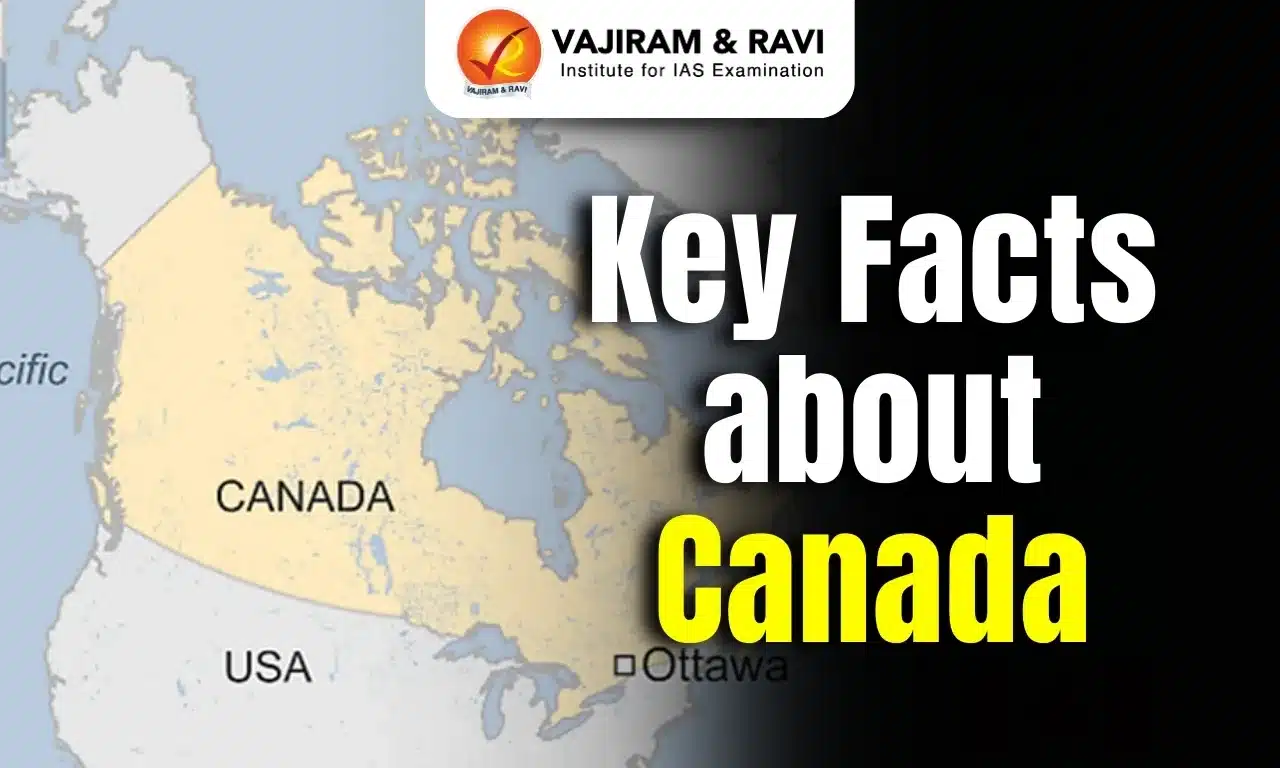
Recently, the sixth round of negotiations for the India-Canada Comprehensive Economic Partnership Agreement (CEPA) was held in New Delhi.
About Canada
Location: It is located in North America.
It is the second largest country in the world in area (after Russia).
Bordered by: It shares borders with Alaska, a non-contiguous US state, to the northwest, and 12 other US states to the south.
The border of Canada with the US is the longest bi-national land border in the world.
Maritime Borders: It is bounded by the Arctic Ocean to the north, by the Atlantic Ocean to the east and the Pacific Ocean to the west.
Capital City: Ottawa
Geographical Features of Canada
Climate: It has seven climatic regions or zones: the Arctic, Subarctic, Prairie, Great Lakes, Cordilleran, plus the East and West Coasts.
Major Mountains: Rocky Mountain, the St. Elias Mountains and the Laurentian Mountains.
Major Rivers: Mackenzie River, Yukon River, Saint Lawrence River
Lakes: The five Great Lakes namely Superior, Michigan, Huron, Ontario, and Erie form a natural boundary between Canada and the United States. (Amongst these five, only Lake Michigan lies entirely within the US).
Natural Resources: It mainly consists of Bauxite, Iron ore, Nickel, Zinc, copper, gold, lead, uranium, rare earth elements, potash, diamonds etc.
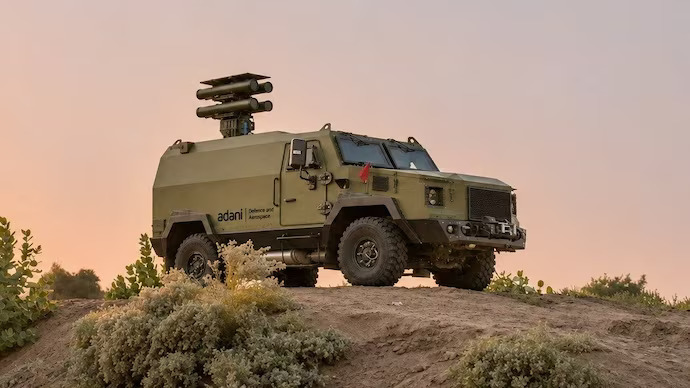
Adani Defence & Aerospace successfully demonstrated its vehicle-mounted anti-tank guided missile (ATGM) system ‘Bagheera AT1’ at the Pokhran Field Firing Ranges in Rajasthan recently.
About Bagheera AT1
It is a vehicle-mounted anti-tank guided missile (ATGM) system.
It is indigenously developed and integrated by Adani Defence & Aerospace, a subsidiary of the Adani Group.
It can target both enemy tanks as well as armoured vehicles.
Bagheera AT1 Features
It combines a guided missile, an automated launcher, day-and-night targeting sights and a high-mobility armoured vehicle.
It can engage targets up to 8 km. This is approximately twice the 4-km range of conventional ground-launched anti-tank missiles.
The missile uses laser beam-riding guidance instead of depending on a radio communication link. This makes the system highly resistant to electronic jamming.
One of the missile’s key features is its ability to counter active protection systems (APS).
An APS detects an incoming missile and fires a countermeasure to destroy or deflect it.
It can fire two missiles in quick succession along the same beam at a single target.
The first engages the tank’s APS, while the second is designed to penetrate its defences, such as armour.
Each Bagheera AT1 vehicle carries a total of 12 missiles: four kept ready-to-fire on the automated launcher, and eight stored onboard as additional reloads.
The system is equipped with a television camera to identify targets during daylight and a thermal imaging system for operations at night.
The platform features a critical "shoot-and-move" capability, allowing crews to fire from protected cover and rapidly relocate before the enemy can trace their position and retaliate.
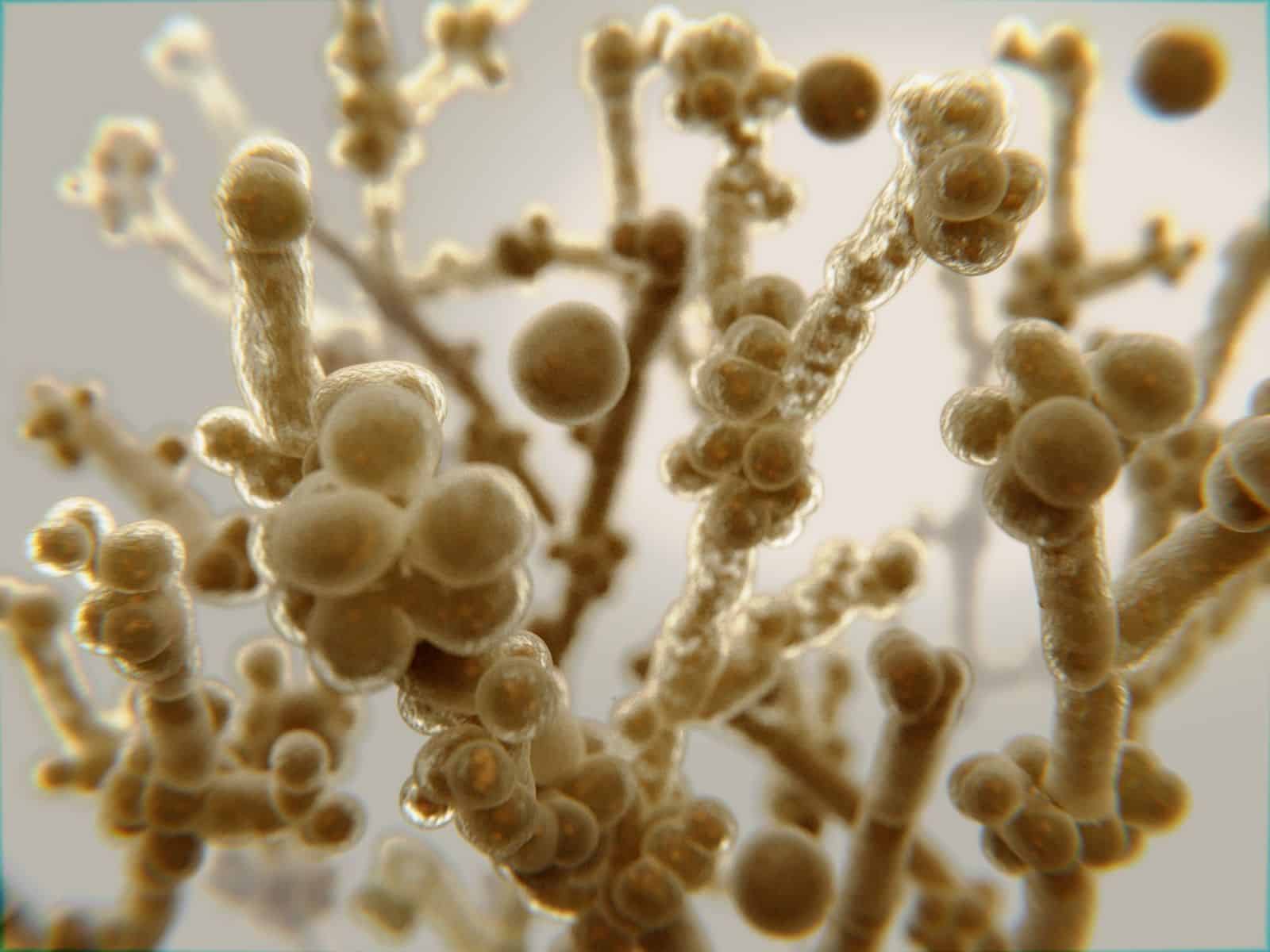
Scientists at CSIR-Centre for Cellular and Molecular Biology (CCMB) recently identified two compounds that prevent Candida albicans from changing into its infection-associated filamentous form without stopping its growth.
About Candida albicans
Candida albicans, a type of yeast, is a fungus that naturally lives in and on your body.
It’s typically found in small amounts on your skin and in your mouth and intestines.
It is the most common species of Candida yeast.
Normally, healthy bacteriain your body (your microbiome) control the balance of Candida albicans.
But, if something disrupts the balance of healthy bacteria, the yeast can overgrow and cause a fungal infection.
A fungal infection caused by an overgrowth of yeast is called candidiasis.
Candida albicans can cause different types of infection, depending on where it affects your body. Types include:
Cutaneous (skin) candidiasis: Yeast grows in the folds of your skin, like under your breasts or near your buttocks (diaper rash). It causes raised, red patches.
Candidal paronychia: Yeast collects in your nail folds or cuticles. It causes skin discoloration, pain and swelling around your nails.
Thrush: An overgrowth of yeast forms inside your mouth and throat. It causes raised, white bumps that are painful and irritating.
Vaginal yeast infection: Yeast multiplies inside your vagina. It causes redness, itching and burning, as well as abnormal vaginal discharge.
Symptoms:
In normal situations, Candida albicans won’t cause any symptoms.
Symptoms will only develop if you have an overgrowth of yeast.
Depending on the location of the infection, symptoms may include:
Skin rash
Itching
Blisters
Small, raised bumps or patches
Pain, soreness or discomfort
Burning sensation
Abnormal vaginal discharge
Loss of taste (ageusia)
Difficulty swallowing (dysphagia)
Is Candida albicans contagious?
Normally, yeast infections aren’t contagious.
But Candida albicans can spread if you have a weakened immune system or you’re taking certain medications.
If you’re healthy, it’s unlikely Candida albicans will spread to you.
Treatment: If you have an infection, Candida albicans treatment involves antifungal medication.
A Russian cargo vessel bound for the country’s Baltic exclave Kaliningrad has been recently hit by a drone attack in the eastern Gulf of Finland.
About Gulf of Finland
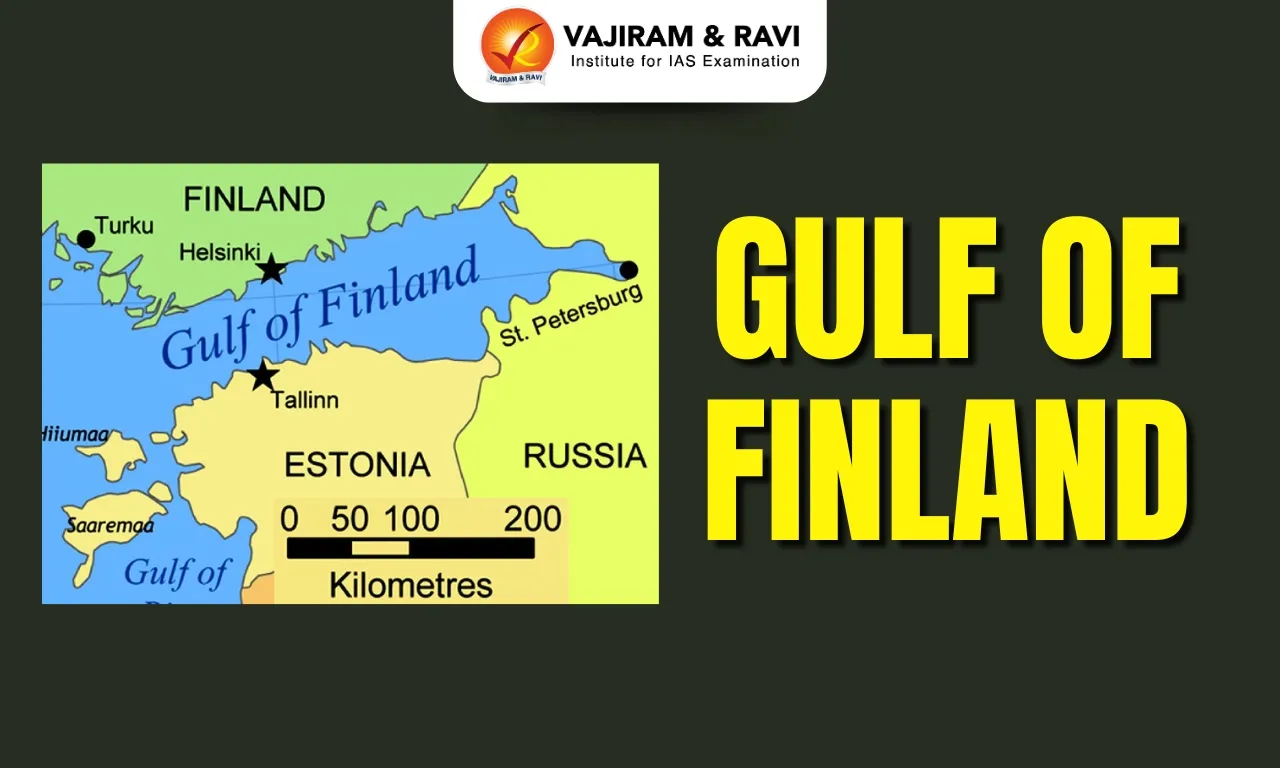
It is the easternmost extension of the Baltic Sea, located in Northern Europe.
It covers an area of 30,000 sq.km. It is one of the largest bodies of brackish water in the world.
The gulf extends for 400 km from east to west but only 19 to 130 km from north to south.
It is bordered by Finland in the north, Russia in the east, and Estonia in the south.
Both the Finnish capital city, Helsinki, and the Estonian capital, Tallinn, are located right on the shores of the Gulf of Finland.
At the very eastern end of the gulf is the Russian city of St. Petersburg.
The Gulf is relatively shallow, with an estimated average depth of 38 m.
It has relatively low salinity because of substantial freshwater inflow from rivers and limited exchange with the more saline waters of the North Sea.
Major river: The Neva River flows into the Gulf of Finland near Saint Petersburg.
During cold winters, the Gulf of Finland can freeze over completely.
This happens because the water is not as salty as the ocean, and less salty water freezes more easily.
The gulf is also connected to the Saimaa Lake (Finland's largest lake) via the Saimaa Canal.
The gulf faces a humid continental climate with hot summers and relatively harsh winters.
The gulf contains numerous banks, skerries, and islands. The largest include Kotlin Island with the city of Kronstadt (population 42,800), Beryozovye Islands, Lisiy Island, Maly Vysotsky Island, and many others.
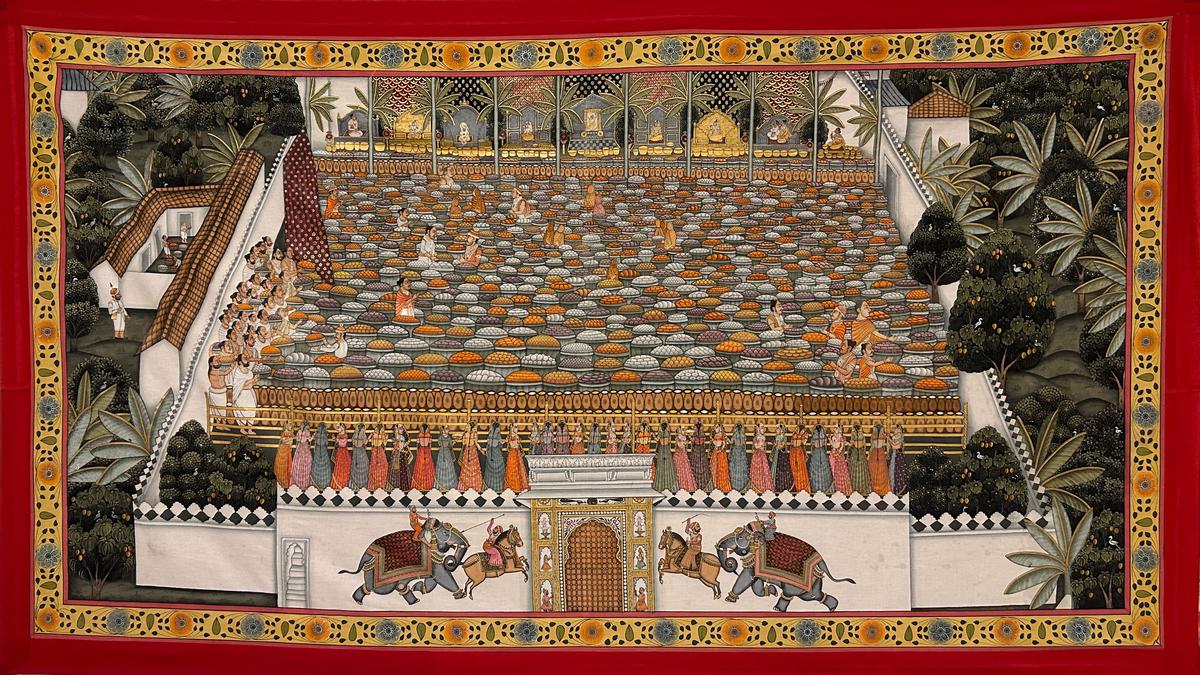
Recently, the Prime Minister of India presented a Golden Pichwai painting from Nathdwara, Rajasthan, to the US President.
About Pichwai Painting
It is a traditional style of painting that originated in the state of Rajasthan in India.
Time Period: The history of this art form can be traced back to the 17th century.
Origin: It is believed to have originated in the town of Nathdwara in Rajasthan.
Theme: It mainly features the various stages of Lord Krishna’s life.
Material used: The artists use stone pigments, especially for gold and silver tones. The brighter orange, red, chrome yellow and kesari colours come from vegetable dyes
Other schools of Pichwai — Nathdwara, Kishangarh and Bundi in Rajasthan and Deccan school
They are often used to decorate the backdrops of Hindu temples, where they serve as a visual representation of the stories associated with Lord Krishna.
Features
These paintings have distinct features of a heavier body and large elongated eyes, with a broad nose of Shrinathji, similar to the features of the idol at the temple.
Patterns: The paintings are often filled with details, such as flowers, animals, and geometric patterns, which are arranged in a symmetrical and balanced composition.
Famous Pishwai Paintings are
Shrinathji in Black & Gold
Ras Leela – Krishna with Radha
Giriraja Pichwai – depicting Lord Krishna carrying Govardhana mountain on his little finger.
DSC A21 of the Diving Support Craft (DSC) project, was delivered to the Indian Navy today at Naval Dockyard in Mumbai.
About DSC A21
It is an indigenously designed and built Diving Support Craft delivered to the Indian Navy.
It has been indigenously designed and constructed by M/s Titagarh Rail Systems Limited (TRSL), Kolkata.
Key Features
It has a catamaran-hull form and is equipped with state-of-the-art diving equipment.
Its superior design offers enhanced stability, enlarged deck area and improved sea-keeping characteristics, which makes it suitable for its specialist role.
The ship is indigenously designed and built under relevant Naval Rules and Regulations of Indian Register of Shipping (IRS).
Potential Applications: With induction of these ships, the Indian Navy’s capabilities in diving support, underwater inspection, salvage assistance and coastal operational deployment will be augmented.
Significance: DSC A21 is a proud flag bearer of Make in India initiative of Government of India (GoI)/ Ministry of Defence (MoD).
Recently, the union Health Secretary launched the National Cancer Grid VISHWAS.
About NCG VISHWAS
NCG VISHWAS (Videos to Support Health, Wellness, Awareness and Self-care) is an AI-enabled patient education initiative covering breast, cervical and oral cancers.
It provides information in Hindi, Marathi, Tamil and English.
The videos cover prevention, diagnosis, treatment and long-term care, helping patients and caregivers access reliable information and make informed decisions.
The initiative will be disseminated through the National Cancer Grid’s network of hospitals and healthcare partners.
It can support cancer awareness through Ayushman Arogya Shivirs, ASHA and Anganwadi workers.
These videos could also be made available through platforms such as the Ayushman Bharat Digital Mission (ABDM)and Swasth Bharat portals, enabling greater access to reliable cancer-related information.
What is the National Cancer Grid?
It was formed in August 2012.
It is funded by the Government of India through the Department of Atomic Energy,
It is a network of more than 400 cancer centres, research institutions and patient groups working towards improving cancer care through standardised protocols, quality assurance, capacity building and collaborative research.
Ans: NCG VISHWAS (Videos to Support Health, Wellness, Awareness and Self-care) is an AI-enabled patient education initiative covering breast, cervical and oral cancers
Q2: NCG VISHWAS provides information in how many languages?
Ans: It provides information in Hindi, Marathi, Tamil and English.
An 18-year-old girl from Keralam recently developed a serious kidney ailment named Membranous Nephropathy, allegedly after using a fairness cream — promoted through social media — that contained dangerously high levels of mercury for nearly a year.
About Membranous Nephropathy (MN)
It is a kidney disorder that causes your immune system to attack glomeruli, the tiny filters in your kidneys.
Your kidneys have thousands of glomeruli. These filters clean waste products from your blood.
If you have MN, your glomeruli become inflamed.
MN cancause your kidneys to stop filtering waste as well as they should.
This may lead to problems with kidney function.
There are two types of MN:
Primary MN (idiopathic): This is a condition that directly affects your kidneys. It’s usually due to an autoimmune condition. Up to 75% of people have this type.
Secondary MN: This type happens when another health condition or treatment affects your kidneys. About 25% of people have this type.
The following increase your risk for MN:
Cancers, especially lung and colon cancer
Exposure to toxins, including gold and mercury
Infections, including hepatitis B, malaria, syphilis, and endocarditis
Medicines, including penicillamine, trimethadione, and skin-lightening creams
Systemic lupus erythematosus, rheumatoid arthritis, Graves disease, and other autoimmune disorders
Symptoms:
The main symptoms of MN are from excess protein in your pee due to kidney damage.
This leads to water retention and other symptoms.Together, these symptoms are called nephrotic syndrome.
Other than edema (swelling), other signs can include:
Proteinuria (foamy-looking pee due to high levels of protein in your pee).
High cholesterol.
Peeing more or less than usual.
Weight gain (people usually gain water weight because of the swelling).
Fatigue (tiredness).
High blood pressure.
Trouble breathing or shortness of breath.
Health issues and complications from membranous nephropathy can include:
High cholesterol (higher than average levels of fat in your blood).
High blood pressure.
Severe swelling.
Kidney disease.
Kidney failure.
Deep vein thrombosis (DVT).
Pulmonary embolism (PE).
Treatment:
No, there isn’t a cure for membranous nephropathy.
There’s only treatment to manage your symptoms and stop the disease from progressing.
Controlling blood pressure is the most important way to delay kidney damage.
High blood cholesterol and triglyceride levels should be treated to reduce the risk for atherosclerosis.
Recently, the Union Government prohibited the export of lithium-ion battery black mass to retain valuable secondary critical minerals within India.
The Directorate General of Foreign Trade (DGFT) revised the export policy for the specified category of battery waste and scrap under ITC (HS) Code 85491400, changing its status from 'Free' to 'Prohibited'.
The move aims to strengthen domestic battery recycling, reduce import dependence and develop an integrated battery manufacturing ecosystem.
Understanding Black Mass
What is Black Mass?
It is a powder obtained by shredding discarded lithium-ion batteries and battery manufacturing scrap.
It contains recoverable metals such as lithium, cobalt, nickel and manganese, along with graphite and other residues.
It is an intermediate raw material, not a finished battery component. Further processing is required to extract and purify individual metals.
Why does its composition matter?
The commercial value of black mass depends on battery chemistry, metal concentration, recovery efficiency and market prices.
For example, NMC (Nickel-Manganese-Cobalt) batteries contain lithium, nickel and cobalt, generally offering greater recovery value.
Domestic resource potential: India generates approximately 50,000 tonnes of end-of-life lithium-ion batteries annually, potentially yielding around 25,000 tonnes of black mass.
Classification: MoEFCC's Technical Review Committee recognised black mass as hazardous waste unless processed on the same premises for critical mineral recovery.
Regulatory framework: Import and export are governed by the Hazardous and Other Wastes (Management and Transboundary Movement) Rules, 2016, requiring MoEFCC permission and compliance with prescribed conditions.
Strategic Significance
Global trend: India's black-mass export ban aligns with a global shift towards retaining critical minerals within domestic supply chains. For example, the US and EU recently announced export restrictions.
China's dominance: China controls approximately 90% of global critical mineral processing capacity, giving it significant leverage over international supply chains.
Critical mineral security: India is almost entirely import-dependent for certain critical minerals, including lithium, cobalt, nickel, rare earth elements (REEs) and silicon.
Circular economy: Converts discarded batteries into secondary resources, reducing waste and dependence on fresh mining.
Industry-level impact: The export ban may adversely affect standalone battery shredders and dismantlers dependent on overseas buyers while benefiting domestic refiners and integrated recycling companies.
Supply chain resilience: Reduces exposure to international mineral supply disruptions and geopolitical uncertainties.
Value addition: Retains downstream processing opportunities, employment and technological capabilities within India.
Other Policy Measures
Incentive Scheme for Critical Mineral Recycling:
Approved (in September 2025) under the National Critical Mineral Mission, with an outlay of ₹1,500 crore, and for an implementation period of 2025-26 to 2030-31.
It seeks to develop domestic capacity for recovering critical minerals from secondary sources, including battery and electronic waste.
Battery Waste Management Rules, 2022:
Establish an Extended Producer Responsibility (EPR) framework, making battery producers responsible for collection, recycling and refurbishment obligations.
Prescribe minimum material recovery targets for recyclers.
For EV batteries, the minimum material recovery target reaches 90% from 2026-27 onwards.
Require producers to incorporate domestically recycled materials into new batteries (5% from 2027-28, gradually increasing to 20% by 2030-31).
Centre for Science and Environment (CSE) Recommendations:
Its report highlighted black-mass exports as a loss of valuable domestic feedstock.
It also flagged undervalued EPR certificates, which weaken incentives for investment in environmentally sound recycling and advanced recovery technologies.
The Technology Gap
[caption id="attachment_134243" align="alignnone" width="1312"] Battery recycling value chain[/caption]
Retaining black mass does not automatically make India self-reliant in battery manufacturing. The recovery process involves several stages.
Recovering metals is not equivalent to producing battery-grade materials. Cell manufacturers require high purity, consistent chemical composition and stringent quality standards.
Other Challenges
Fragmented collection networks: Inadequate and unpredictable battery feedstock.
Informal recycling: Material losses, unsafe handling and environmental pollution.
High capital costs: Investment required in dismantling, chemical recovery and effluent treatment.
Recycling economics: Lower recovery value can discourage commercial investment.
Weak EPR enforcement: Risk of certificates reflecting reported waste rather than actual recovery.
Limited downstream manufacturing: Recovered minerals may still lack domestic buyers.
Quality and traceability gaps: Difficulty ensuring material purity and regulatory compliance.
Strengthen institutional coordination: Improve coordination among customs, environmental regulators and industry to ensure effective implementation of export restrictions.
Conclusion
India's battery black-mass export prohibition represents a shift from treating discarded batteries as waste towards recognising them as a strategic source of secondary critical minerals.
However, its success will depend on building an integrated ecosystem that converts collected battery waste into high-purity, battery-grade materials.
The ultimate objective should be to move from a 'Linear Battery Economy' (Extract–Manufacture–Discard) to a 'Circular Battery Economy' (Manufacture–Use–Recover–Reuse).
India is seen as a swing state at the International Maritime Organisation (IMO) meetings in London, scheduled from November 23, with a vote on the global shipping decarbonisation framework expected on December 4.
About the IMO Net Zero Framework
The IMO is the global body regulating international shipping.
In July 2023, the IMO committed international shipping to net-zero greenhouse gas (GHG) emissions by or around 2050, with reduction targets for 2030 and 2040 against a 2008 baseline.
Net zero means zero GHG emissions from “well to wake”, i.e. covering the entire chain from fuel production (well) to the ship’s movement (wake).
In April 2025, the relevant IMO committee proposed a framework that would:
Cut the GHG intensity of each ship in a time-bound manner, with a 43% reduction per ship targeted by 2035.
Collect a carbon tax from non-compliant ships and reward performers.
Administer an IMO fund to support alternatives, with compliance deficits partly paid into it.
Background: Why the Vote Was Delayed
A simple majority at the IMO committee had formulated the framework in April 2025.
In October 2025, the U.S. disrupted the meeting convened to vote on it, threatening retaliation and sanctions such as blocking vessels from U.S. ports.
Leveraging reservations among fossil fuel producers such as Saudi Arabia, the U.S. forced the vote to be postponed by a year.
India voted in favour of the adjournment last year.
The 2023 net-zero commitment had been enthusiastically supported by the then Biden administration.
Positions of Key Players
United States:
Says it is ready to work within IMO structures but stays firm on key issues.
Opposes an IMO-administered fund, any carbon price and unilateral regional mechanisms such as the EU ETS and FuelEU Maritime.
Describes alternative fuels such as green ammonia and green methanol (without naming them) as unproven and expensive.
Seeks to protect traditional bunker fuels and backs LNG and biofuels, in which it has a market interest as a supplier.
European Union: Has softened its stance on fuel intensity and indicated easier targets, but remains firm on the ultimate goal of net zero.
Canada, Australia, the U.K. and South Africa: Made a joint submission updating the April 2025 framework.
Japan and Brazil: Have advocated a softer start.
India’s Likely Stance
Climate justice:
India’s position is expected to follow the principle of Common But Differentiated Responsibilities and Respective Capabilities (CBDR-RC) and a just transition.
Key questions for India are who pays for the transition and who gets supported.
Carbon tax:
India would likely oppose a blanket, equal carbon tax on every ship.
Any financial levy should reflect who is principally responsible for climate change.
Feasibility concerns:
India is concerned about the availability, affordability and scalability of green fuels globally.
It is likely to prefer a preparatory phase to ensure the arrangements are commercially feasible.
National interest:
As an importer of fossil fuels, India would benefit from a shift away from them if alternatives were available and affordable.
Complication:
Ship ownership is often opaque, with flags of convenience such as Guinea-Bissau, Liberia and the Marshall Islands accounting for much tonnage. Developed/developing classifications do not always apply in such cases.
Significance for India
Green fuel supplier: India has an active green fuel programme, with several green ammonia projects planned with assured offtake agreements, though much work remains before investments flow in.
Strategic location: India’s closeness to Singapore, a major bunkering point, could help it become a supplier of green fuels to global shipping.
Biofuels opportunity: India’s ethanol push in road transport, driven by foreign exchange savings and domestic investment, shows the potential of biofuels.
Diplomatic balance: India must balance climate justice, developing-country interests and its green fuel ambitions while handling pressure from the U.S. and the expectations of other stakeholders.
Q1: What is the International Maritime Organization (IMO)?
Ans: The IMO is the global body that regulates international shipping. In July 2023, it committed international shipping to net-zero GHG emissions by or around 2050.
Q2: What does “net zero” mean in shipping?
Ans: It means zero GHG emissions from well to wake, covering the whole chain from fuel production to the ship’s final movement.
Q3: What did the April 2025 IMO framework propose?
Ans: It proposed cutting the GHG intensity of each ship in a time-bound manner, with a 43% reduction by 2035. It also proposed collecting a carbon tax from non-compliant ships, rewarding performers and administering a fund to support alternatives.
Q4: Why is India called a swing vote?
Ans: Countries are divided on the framework, and India, which voted for the adjournment last year, has not yet decided its position. Stakeholders are seeking its active intervention to move ahead on net zero.
Q5: What opportunity does India see in shipping decarbonisation?
Ans: India could become a supplier of green fuels such as green ammonia and biofuels to global shipping, using its proximity to the major bunkering point of Singapore.
Within just 23 days, three cyclones formed over the Bay of Bengal in 2026: Cyclone Arnab made landfall near Yanam, Andhra Pradesh on October 28; Cyclone Murasu struck near Ongole on November 3; and Cyclone Akvan made landfall near Gopalpur, Odisha on November 20-21 as a cyclonic storm with winds of 70-90 kmph.
While unusual, this clustering is not unprecedented — and understanding why cyclones peak around this time reveals important insights into monsoon dynamics, ocean behaviour, and global climate patterns like El Niño.
How Cyclones Form: The Six Necessary Conditions
Sea surface temperature of at least 26.5°C, extending ~50 metres deep — cyclones draw energy from ocean heat.
Unstable, moist air at ~5 km height, enabling thundercloud formation.
Formation at least 500 km from the equator, where Earth's rotation is strong enough to make systems spin.
A weak low-pressure system to grow from.
Low vertical wind shear — wind speed difference between ~1.5 km and ~12 km altitude must not exceed ~10 m/s; strong shear tilts and disrupts developing storms.
These conditions are necessary but not sufficient — many qualifying systems still don't develop into cyclones.
Why the Bay of Bengal Has Two Peaks (Unlike Most Regions)
Most global cyclone basins (North Atlantic, Western Pacific) have a single late-summer peak. The north Indian Ocean has two: a larger peak in November, and a smaller one in May.
The Bay of Bengal produces ~4 cyclones for every 1 in the Arabian Sea.
Why the monsoon splits the season: From June-September, strong opposing winds at different altitudes create high wind shear, breaking up storms before they organise. The cyclone-formation zone also shifts north, where storms cross the coast too quickly to intensify.
A 2013 study found shear alone doesn't suppress summer cyclones — it's the combination of shear, weaker lower-atmosphere spin, and slightly less favourable ocean conditions.
Different causes for each peak: The April-May peak is driven mainly by rising mid-atmosphere moisture (87% of the improvement) as monsoon approaches; the October-November peak is driven mainly by the drop in monsoon wind shear (91% of the improvement).
Though October-November produces more cyclones, the 1981-2009 data shows spring produced more Category 4+ super-intense storms, linked to greater stored upper-ocean heat and stronger pre-monsoon rainfall swings.
Storms Shift Southward as the Season Progresses
IMD records show a clear geographic pattern: Odisha-West Bengal coast is hit most in October, Andhra Pradesh in November, and Tamil Nadu in December.
Arnab, Murasu, and Akvan all struck Andhra Pradesh/south Odisha — consistent with the typical late-October/November pattern.
Why the Bay of Bengal Sees More Cyclones Than the Arabian Sea
Some Bay cyclones originate as typhoons in the northwest Pacific (world's most active cyclone region) and cross into Indian waters via the South China Sea.
The Arabian Sea's equivalent supply comes from Bay storms crossing the peninsula — but most weaken over land first.
The Arabian Sea is cooler overall.
Post-monsoon freshwater layering: River and monsoon runoff creates a lighter freshwater layer over the Bay's saltier water.
Cyclone winds normally stir up colder water from below, cutting off storm fuel — but a 2008 IISc study found this stirring doesn't reach deep enough in the Bay due to a warm layer trapped beneath the freshwater.
A 2012 study found surface cooling under cyclones is ~3x greater before the monsoon than after — meaning post-monsoon cyclones retain more fuel.
Why Cyclones Cluster: The Madden-Julian Oscillation (MJO)
A University of Hawaii (2010) study found ~60% of north Indian Ocean cyclones form during large-scale tropical rainfall swings over several weeks.
The Madden-Julian Oscillation (MJO) — a band of cloud/rain travelling eastward around the tropics — mainly influences November-December cyclone formation.
IMD's November 5 and 12 outlooks confirmed the MJO was in a favourable phase for Bay/Arabian Sea cyclone formation, persisting through late November 2026 — directly relevant to this year's cluster.
Additionally, equatorial Rossby waves and Kelvin waves interacted with the MJO, encouraging air to rise and gather moisture over the southern/central Bay.
The El Niño Factor: A Complicated Relationship
2026's cyclone cluster occurred during a strong El Niño, which NOAA said could become the strongest since 1950 (60% likelihood), persisting through January-March 2027.
General pattern: El Niño tends to reduce Bay of Bengal cyclone formation (less lower-atmosphere spin, fewer thunderstorms, less stored ocean heat) — the opposite (La Niña) favours more/intense cyclones, as per a 2012 study.
However, El Niño's effects vary over time, depending on the slower Pacific Decadal Oscillation cycle (2015 follow-up study).
Crucially: El Niño and the Indian Ocean Dipole (currently neutral, not typically cyclone-favourable) don't fully explain this year's three cyclones — though El Niño still influences the steering winds that guide cyclone paths.
A 1991 MAUSAM study found 87% of Bay cyclones in El Niño years (1901-1987) crossed India south of 17°N (southern AP/Tamil Nadu) — yet Cyclone Akvan moved mostly northward, attributed by IMD to an anticyclonic circulation over Myanmar and an approaching westerly wind disturbance.
Historical Context: Not Entirely Unprecedented
A May 2026 study found an average of 1.8 post-monsoon cyclones/year (1982-2022), with frequency increasing after 2001.
Similar clustering occurred before: three cyclones within 32 days affecting Andhra Pradesh in 1976 and 1987; Cyclones Helen and Lehar made landfall within a week in November 2013.
Comparison: Why the Atlantic Has Just One Season
NOAA's Atlantic hurricane season (June 1-November 30) lacks an equivalent of the southwest monsoon to disrupt summer activity — wind shear and humidity rise and fall together there, unlike the Bay of Bengal.
The 2026 Atlantic season produced only 10 named storms and 1 hurricane (against an average of 14 and 7) — potentially the first single-hurricane season since 1925 — partly due to El Niño strengthening Atlantic wind shear.
Conclusion
The clustering of Arnab, Murasu, and Akvan reflects the Bay of Bengal's unique post-monsoon window — when weakening wind shear, warm retained ocean heat, and a favourable MJO phase align to favour cyclone formation.
While El Niño typically suppresses Bay cyclones, its interaction with steering winds and other atmospheric oscillations shows that no single factor alone explains this season's activity, underscoring the complex, multi-layered nature of tropical cyclone climatology.
Q1: Why do Bay of Bengal cyclones in November occur so frequently?
Ans: Bay of Bengal cyclones in November benefit from weakening monsoon wind shear, warm ocean waters, atmospheric moisture and favourable conditions for storm development.
Q2: Why does the Bay of Bengal have two cyclone seasons?
Ans: Bay of Bengal cyclones in November form during the post-monsoon peak, while April–May cyclones emerge mainly from increasing atmospheric moisture.
Q3: How does the Madden-Julian Oscillation influence cyclones?
Ans: Bay of Bengal cyclones in November can be encouraged by favourable Madden-Julian Oscillation phases, which enhance rainfall, moisture and atmospheric circulation.
Q4: Why does the Bay of Bengal experience more cyclones than the Arabian Sea?
Ans: Bay of Bengal cyclones in November benefit from warmer waters, freshwater layering, reduced ocean cooling and additional storm systems originating in the Pacific.
Q5: Does El Niño increase Bay of Bengal cyclones in November?
Ans: Bay of Bengal cyclones in November are generally less favoured during El Niño, but interactions with atmospheric oscillations and steering winds complicate predictions.
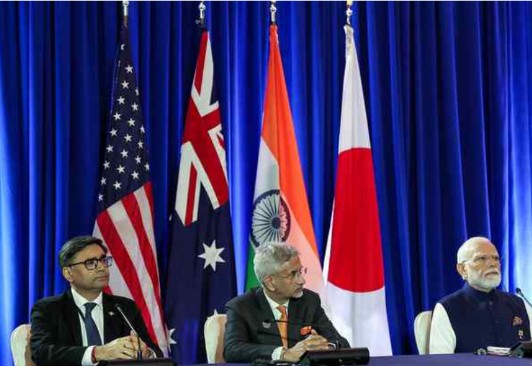
PM Narendra Modi took part in three back-to-back multilateral meetings on the sidelines of the ASEAN Summit in Manila: the ASEAN-India Summit, the East Asia Summit, and the Quad Summit — the latter attended by US President Donald Trump, Japanese PM Sanae Takaichi, and Australian PM Anthony Albanese.
These engagements produced several concrete announcements and sent a deeper signal: India is actively broad-basing its "Act East" and Indo-Pacific policies, even as global attention shifted to the Trump-Xi-Putin trilateral later that week.
Why These Summits Mattered Especially This Year
In 2025, Modi had skipped the ASEAN summits in Kuala Lumpur, reportedly due to domestic commitments around Deepavali and trade friction with the US.
India-Philippines ties have improved sharply since President Bongbong Marcos's Delhi visit in August 2025, making it important for Modi to attend conferences hosted by Marcos this year.
Summit Composition
ASEAN-India Summit: includes Brunei, Cambodia, Indonesia, Laos, Malaysia, Myanmar, Philippines, Singapore, Thailand, Timor-Leste, and Vietnam.
East Asia Summit: brings in US, Russia, China, Japan, and South Korea.
Quad Summit: hosted by the US for the first time during Trump's "turbulent presidency" — significant given lingering doubts about his commitment to the Indo-Pacific grouping.
Key Outcomes from the ASEAN-India Summit
PM Modi's address emphasised that the world needs "peace, stability, and predictability" — a pointed message amid tensions from US, Russian, and Chinese actions affecting India and Asia economically.
Concrete announcements:
Free tourist visas for all ASEAN citizens visiting India.
New agreements on disaster management and maritime cooperation.
Unresolved concern: No progress on revising the ASEAN-India Trade in Goods Agreement (FTA) — significant because ASEAN nations are increasingly drawn toward the 15-nation Regional Comprehensive Economic Partnership (RCEP), which India exited in 2019.
Despite this gap, ASEAN remains a key trading partner, accounting for ~11% of India's global trade, which rose to $128 billion in 2025-26.
East Asia Summit: First Since the US-Iran Conflict
Held for the first time since the US-Iran conflict began in February 2026.
Key outcomes:
Seafarers' Safety Initiative — cooperation on joint training and emergency response.
Cooperation on cybercrime prevention.
Quad Summit: Defying "Life Support" Predictions
The grouping announced concrete 2027 plans:
A Quad Business Summit.
The first-ever Quad naval exercises involving P3 and P8 patrol aircraft.
Unresolved issue: India has still not managed to host a Quad Summit in three years — largely due to US presidential unavailability. The Manila summit gave no clarity on whether India will chair next year's summit either.
The next full Quad leaders' gathering is expected in December, when Modi, Takaichi, and Albanese travel to the US for the G-20 meeting hosted by Trump — with possible pull-aside talks among them being closely watched.
The Bigger Strategic Picture: India's Broad-Basing Strategy
If the Trump-Xi-Putin "Declaration Towards Peace" reflects a "global power" muscle-flex, India's ASEAN outreach fits a broader pattern of diversifying its strategic partnerships this year.
Context driving this shift:
Intensifying US-China engagement, with four Xi-Trump meetings planned for 2026.
The region must fend for itself against Chinese economic coercion and fallout from US strikes in West Asia, which threaten food, fuel, and fertilizer security.
India is actively diversifying supply chains — particularly for critical minerals, technology, and artificial intelligence — while also seeking new markets in the Global South.
This pushes India to find common cause with similarly-positioned partners: ASEAN, and East Asian nations like Japan and South Korea.
Other Parallel Diplomatic Moves
India-EU Free Trade Agreement: Expected to be signed when Modi travels to Brussels in December.
Strengthening ties with Canada, Australia, and other "middle power" groupings, such as the Partnership for Multilateralism (P4M), which India co-sponsored at the UN General Assembly.
During the India-Japan 2+2 Dialogue in Tokyo (with Defence Minister Rajnath Singh), EAM S. Jaishankar articulated India's evolving approach: "trusted partnerships as solutions" to global uncertainty.
Jaishankar's key observation: "In such uncertain times, nations, as indeed enterprises, put a much greater value on trusted partners and shorter supply chains... We are getting increasingly clear-eyed about the gaming of rules and ensuring that these are not utilised to the disadvantage of those who abide by it."
Conclusion
The Manila summits reveal a clear strategic recalibration: India is deliberately broad-basing its Indo-Pacific engagements — strengthening ASEAN ties, sustaining the Quad despite uncertainty, and building parallel partnerships with the EU and middle powers.
As global power dynamics grow more unilateral and unpredictable, India's embrace of "trusted partnerships" signals a pragmatic hedge against over-reliance on any single power bloc, safeguarding its economic and strategic interests in an increasingly fragmented world order.
Q1: How are the Manila summits shaping India's Indo-Pacific strategy?
Ans: India's Indo-Pacific strategy is broadening through engagement with ASEAN, the Quad and East Asia Summit, strengthening diplomatic, economic and strategic partnerships.
Q2: What were the major outcomes of the ASEAN-India Summit?
Ans: India's Indo-Pacific strategy gained momentum through free tourist visas for ASEAN citizens, disaster-management cooperation and maritime agreements, although trade negotiations remained unresolved.
Q3: Why is the Quad important to India's Indo-Pacific strategy?
Ans: India's Indo-Pacific strategy relies on the Quad for strategic cooperation, maritime security, economic partnerships and coordination amid uncertainty about American regional engagement.
Q4: What does India's broad-basing approach mean for its foreign policy?
Ans: India's Indo-Pacific strategy increasingly diversifies partnerships, supply chains, technology cooperation and markets rather than relying excessively on any single geopolitical bloc.
Q5: How does ASEAN contribute to India's Indo-Pacific strategy?
Ans: India's Indo-Pacific strategy views ASEAN as a crucial economic and diplomatic partner, accounting for approximately 11% of India's global trade.
Want to Enroll for UPSC CSE Courses ?
Get all your questions answered with our expert counselling!




 Battery recycling value chain[/caption]