INSAT-3DR

What is INSAT-3DR

INSAT-3DR Latest News

An analysis of the visible satellite image and the INSAT-3DR infrared image, captured recently, suggests that roughly 60 to 70 percent of India's landmass is under cloud cover.

About INSAT-3DR

  • INSAT-3DR (Indian National Satellite-3DR) is an advanced meteorological satellite developed by ISRO
  • Objectives: Improve weather forecasting, cyclone tracking, disaster warning, and environmental monitoring over India and the surrounding region. 
  • It was launched on 8 September 2016 aboard the GSLV-F05 launch vehicle. 
  • It is configured with an Imaging System, and an Atmospheric Sounder. 
  • Like its predecessor INSAT-3D, INSAT-3DR carries a Data Relay Transponder as well as a Search and Rescue Transponder. 
  • Thus, INSAT-3DR will provide service continuity to earlier meteorological missions of ISRO and further augment the capability to provide various meteorological as well as search and rescue services. 
  • It provides half-hourly multispectral images over the Indian region from a geostationary position. 
  • The significant improvements incorporated in INSAT-3DR are:
    • Imaging in the middle infrared band to provide nighttime pictures of low clouds and fog.
    • Imaging in two thermal infrared bands for estimation of Sea Surface Temperature (SST) with better accuracy.
    • Higher spatial resolution in the Visible and Thermal Infrared bands.

News: IT


INSAT-3DR FAQs

Q1: What is INSAT-3DR?

Ans: An advanced meteorological satellite developed by ISRO.

Q2: When was INSAT-3DR launched?

Ans: 8 September 2016.

Q3: What is the primary purpose of INSAT-3DR?

Ans: To improve weather forecasting, cyclone tracking, disaster warning, and environmental monitoring.

United Nations Commission on International Trade Law

United Nations Commission on International Trade Law

United Nations Commission on International Trade Law Latest News

Recently, India’s External Affairs Minister addressed the inaugural session of the international conference of 60th anniversary commemoration of the United Nations Commission on International Trade Law (UNCITRAL). 

About United Nations Commission on International Trade Law

  • It is a subsidiary body of the UN General Assembly established in 1966.
  • It is the core legal body of the U.N,'s system in the field of international trade law.
  • Mandate: To further the progressive harmonization and unification of the law of international trade. 
  • Function: The organization is responsible for helping to facilitate international trade and investment.
  • It is formulating modern, fair, and harmonized rules on commercial transactions.
  • Member Countries: The Commission is composed of 70 member States elected by the General Assembly.
    • There are five regional groups represented within the Commission: African States; Asian States; Eastern European States; Latin American and Caribbean States; Western European and Other States.
  • Term of Members: The General Assembly elects members for terms of six years; every three years the terms of half of the members expire. 
  • India is a founding member of this organization.
  • Headquarter: It is in New York with annual sessions held alternatively in Vienna.

Source: DD News

United Nations Commission on International Trade Law FAQs

Q1: How many member states are there in UNCITRAL as of 2026?

Ans: 70

Q2: UNCITRAL was established in which year by UNGA?

Ans: 1966

Sarnath

Sarnath

Sarnath Latest News

Recently, the “Ancient Buddhist Site of Sarnath” got inscribed on the UNESCO World Heritage List.

About Sarnath

  • Location: It is located in Varanasi, Uttar Pradesh.
  • It is counted among the holy pilgrimage sites of Buddhism.
  • It is described in ancient Buddhist scriptures such as Rishipattan, Ishipatana, Mrigadava.
  • It is now India’s 45th and Uttar Pradesh’s fourth World Heritage Site.
  • Significance to Buddhist 
    • It is the ancient sacred land where Lord Buddha, after attaining enlightenment, delivered his first sermon to humanity and set in motion the ‘Dharmachakra Pravartan’.
    • The inscribed serial property comprises two component parts – Chaukhandi Stupa and the Archaeological Remains of Sarnath (Dhamekh Stupa, Dharmrajika Stupa, Mulagandgakuti Vihara, Ashokan Pillar, etc.).
    • In the historical period Sarnath was developed over centuries through royal, monastic and lay patronage.
    • The site comprises an ensemble of ancient monuments constructed from the pre-Mauryan period (5th-4th centuries BCE to 3rd century BCE) up until the destruction of Sarnath in the 12th century CE.
    • Sarnath has been one of the most extensively excavated sites by the Archaeological Survey of India which resulted in a stratified settlement spread across 16 centuries (5th-4th centuries BCE to 12th century CE).

Source: PIB

Sarnath FAQs

Q1: Sarnath is located in which state?

Ans: Uttar Pradesh

Q2: Which mudra of Buddha is most commonly associated with Sarnath sculptures?

Ans: Dharmachakra Pravartan Mudra

Tanzania

Tanzania

Tanzania Latest News

Recently, India and Tanzania have reviewed bilateral ties across diverse sectors, including trade and investment, development partnership, defence and security cooperation.

About Tanzania

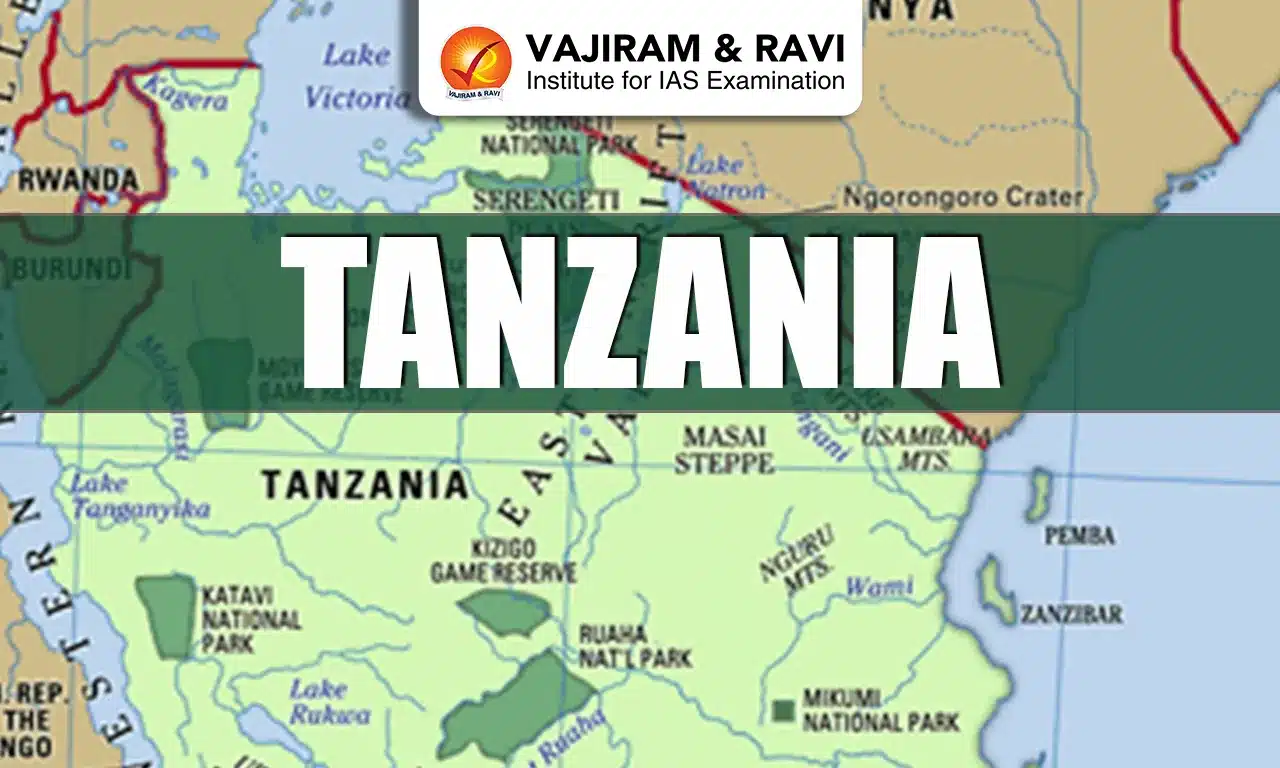
  • Location: It is an East African country situated just south of the Equator.
  • Bordering Countries: It shares borders with eight countries: Kenya and Uganda to the north, Rwanda, Burundi, and the Democratic Republic of the Congo to the west, and Zambia, Malawi, and Mozambique to the south. 
  • Maritime Border: The eastern border of Tanzania meets the Indian Ocean.
  • Capital: Dar es Salaam (administrative captial), Dodoma (legislative capital).

Geographical Features of Tanzania

  • Climate type: Tropical, with a long dry season and two rainy seasons.
  • Major lakes: Lake Victoria (the world’s second-largest freshwater lake, shared with Uganda and Kenya) in the north, Lake Tanganyika in the west, and Lake Nyasa in the southwest.
  • Highest Peak: Mount Kilimanjaro
  • Major rivers:  Great Ruaha, Rufiji, and Kagera rivers. 
  • Islands: It includes Zanzibar, Pemba, and Mafia, all located off the eastern coast in the Indian Ocean.
  • Natural Resources: It is very rich in minerals such as gold, diamond, iron, coal, nickel, tanzanite, uranium and natural gas. 

Source: News On Air

Tanzania FAQs

Q1: What is the capital of Tanzania?

Ans: Dodoma

Q2: Mount Kilimanjaro, the highest peak in Africa is located in?

Ans: Tanzania

Sone River

Sone River

Sone River Latest News

Bihar and Jharkhand are set to sign an agreement formalising the sharing of Sone river waters.

About Sone River

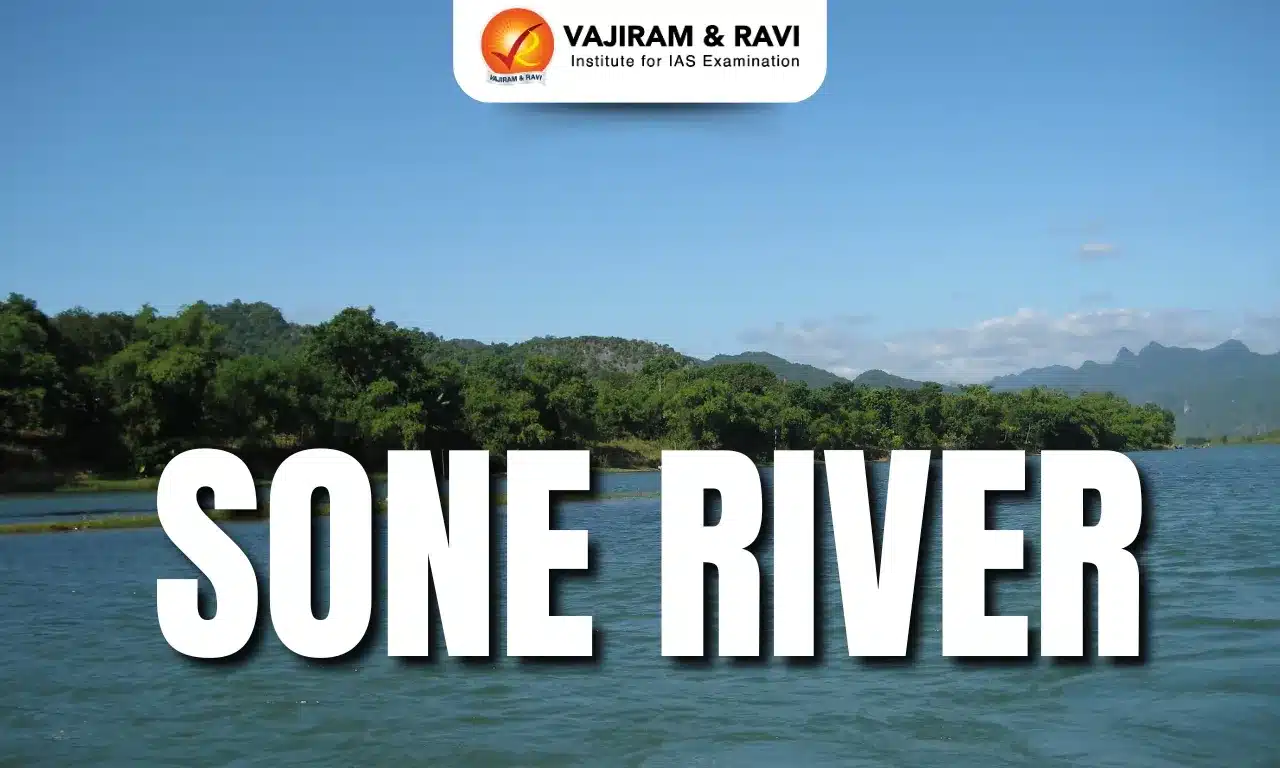
  • The Sone River, also called Son, is a principal southern tributary of the Ganges (Ganga) River after the Yamuna River. 
  • It flows through the states of Madhya Pradesh (around 500 km), Uttar Pradesh, Jharkhand, and Bihar.
  • Origin: It is a perennial river that originates in the Amarkantak hills of the Maikal Range in Madhya Pradesh.
  • Course: The River flows in a north-northwest direction till Bansagar reservoir, after which it changes its course sharply eastwards, flowing parallel to Kaimur Range, and joins Ganga River 30 km upstream of Patna in Bihar.
  • Tributaries:  Major tributaries of the Son River are Banas, Gopad, Rihand, Kanhar and North Koel.
  • The Sone valley is geologically almost a continuation of that of the Narmada River to the southwest.
  • The valley is bordered by the Kaimur Range to the north and the Chota Nagpur plateau to the south. 
  • Dams and Hydroelectric Projects
    • Bansagar Dam in Madhya Pradesh.
    • Rihand Dam in Uttar Pradesh 
    • Indrapuri Barrage in Bihar

Source: HT

Sone River FAQs

Q1: Sone River originates from which place?

Ans: Amarkantak Plateau,

Q2: Sone River is a tributary of which river?

Ans: Ganga River

ASEAN Regional Forum

ASEAN Regional Forum

ASEAN Regional Forum Latest News

Recently, the External Affairs Minister said the ASEAN Regional Forum remains an important platform for discussions on political and security issues in the Indo-Pacific. 

About ASEAN Regional Forum

  • It was established in 1994 as an important platform for security dialogue in the Indo-Pacific.
  • It provides a setting in which members can discuss current security issues and develop cooperative measures to enhance peace and security in the region.
  • Objectives of the ASEAN Regional Forum
    • To foster constructive dialogue and consultation on political and security issues of common interest and concern; and
    • To make significant contributions to efforts towards confidence-building and preventive diplomacy in the Asia-Pacific region.
  • The ARF is characterised by consensus-based decision-making and frank dialogue.
  • Members: It comprises 27 members: the 11 ASEAN member states, 10 ASEAN Dialogue Partners (Australia, Canada, China, the European Union (EU), India, Japan, New Zealand, the Republic of Korea (ROK), Russia and the United States) and other members.
  • Chairmanship: The ARF is chaired by the ASEAN Chair of that year.

Source: DD News

ASEAN Regional Forum FAQs

Q1: The ASEAN Regional Forum was established in which year?

Ans: 1994

Q2: How many members are there in ARF as of 2026?

Ans: 27

FCNR(B) Deposits – India’s Strategic Tool for Forex Stability Amid Global Uncertainty

FCNR(B) Deposits - India's Strategic Tool for Forex Stability Amid Global Uncertainty

FCNR(B) Deposits Latest News

  • The Reserve Bank of India (RBI) has revived the Foreign Currency Non-Resident (Bank) [FCNR(B)] concessional swap window until September 30, 2026 to attract foreign currency deposits from the Indian diaspora. 
  • The move aims to strengthen India's foreign exchange reserves, stabilise the rupee amid volatile global financial conditions, and cushion the economy against external shocks.

FCNR(B) Deposits

  • FCNR(B) deposits, introduced in 1993, are foreign currency term deposits maintained by Non-Resident Indians (NRIs), Persons of Indian Origin (PIOs), and Overseas Citizens of India (OCIs) with Indian banks.
  • Deposits are maintained in designated foreign currencies such as - US Dollar (USD), Pound Sterling (GBP), Euro (EUR), Japanese Yen (JPY), Australian Dollar (AUD), and Canadian Dollar (CAD).
  • Both principal and interest remain denominated in foreign currency, insulating depositors from rupee depreciation risk.

Reasons Behind the RBI Reviving the FCNR(B) Swap Window

  • The revival comes amid -
    • Rising geopolitical tensions.
    • Volatile global capital flows.
    • Persistent inflation and uncertain global interest-rate cycles.
    • Depreciation of the rupee (around 12% year-on-year against the US Dollar as of July 22, 2026).
    • Declining Foreign Direct Investment (FDI).
    • Large Foreign Portfolio Investor (FPI) outflows, with withdrawals of ₹2.87 lakh crore (January–early June 2026), exceeding the entire FY2025 outflows.
  • The objective is to build forex reserves, reduce external vulnerabilities, stabilise the exchange rate, and enhance confidence in India's macroeconomic fundamentals.

Key Features of the 2026 FCNR(B) Scheme

  • Concessional swap facility:
    • RBI offers banks a concessional foreign exchange swap facility for FCNR(B) deposits with 3–5 year maturities.
    • Banks benefit from significantly lower hedging costs, approximately 3% below prevailing FX swap rates.
  • Higher interest rates:
    • Banks can offer attractive returns, for example, large banks around 6%, and smaller/private banks up to 7.1%.
    • These rates exceed returns on relatively risk-free US Treasury securities (4–4.4%), making FCNR(B) deposits more attractive.
  • Targeted mobilisation: RBI aims to mobilise USD 50–70 billion.
  • Strong initial response:
    • Total foreign currency mobilisation has reached USD 20.72 billion.
    • USD 17.4 billion (84%) has come through FCNR(B) deposits alone, making it the dominant source of inflows.

Importance of the FCNR(B) Deposits

  • Compared to volatile portfolio investments, FCNR(B) deposits -
    • Provide relatively stable medium-term foreign currency resources.
    • Strengthen India's external financing position.
    • Help defend the rupee during periods of market stress.
    • Improve forex reserve adequacy.
    • Reduce dependence on volatile short-term capital flows.
  • Reuters also reported that the RBI has used part of these inflows to unwind a portion of its large forex forward book, improving reserve management.

Historical Evolution of India’s Forex Mobilisation

  • India has previously relied on diaspora resources during external stress.
  • For example,
    • 1998: RIBs (Resurgent India Bonds) instrument raises forex after Pokhran-II sanctions.
    • 2000: India Millennium Deposits (IMDs) strengthens reserves following sanctions and the dot-com slowdown.
    • 2013: FCNR(B) Special Scheme counters the "Taper Tantrum"; and mobilised nearly USD 34 billion.
    • 2026: FCNR(B) revival to build precautionary buffers against geopolitical and financial uncertainty.
  • Unlike earlier episodes, the current initiative is preventive rather than crisis-driven. For example, India's external position is considerably stronger than during previous crises -
    • Forex reserves exceed USD 650 billion.
    • No Balance of Payments (BoP) crisis.
    • Investment-grade macroeconomic fundamentals.
    • Strong external sector resilience.
  • Therefore, the current mobilisation seeks to create additional buffers rather than address an immediate liquidity crisis.

Challenges and Risks

  • Rising external liabilities: Higher FCNR(B) mobilisation increases India's external debt obligations, requiring prudent management.
  • Dependence on remittances:
    • Nearly 50% of India's inward remittances originate from West Asia. 
    • Persistent regional instability, labour nationalisation policies, slowing recruitment of expatriates, and oil-price volatility could moderate remittance growth.
  • Global competition: Banks in the UAE and other Gulf countries are offering attractive US Dollar deposit rates, making it harder for Indian banks to compete for NRI deposits.
  • Elevated global interest rates: 
    • If US interest rates remain high, investors may prefer - US Treasury securities, global money market funds, and dollar-denominated bonds.
    • This could reduce the relative attractiveness of FCNR(B) deposits.
  • Banking constraints: Many small and mid-sized Indian banks lack overseas branches or a presence in GIFT City, compelling them to collaborate with larger banks to extend FCNR(B) benefits to NRI customers.

Conclusion

  • The FCNR(B) scheme demonstrates India's ability to leverage its large global diaspora as a strategic source of foreign currency. 
  • While it strengthens forex reserves and enhances exchange-rate stability, sustained success will depend on maintaining competitive returns, managing external liabilities prudently, and navigating global geopolitical and financial uncertainties. 
  • The initiative reflects a shift from crisis management to precautionary macroeconomic resilience-building.

Source: TH

FCNR(B) Deposits FAQs

Q1: How do FCNR(B) deposits contribute to India's external sector stability?

Ans: It provides stable medium-term foreign currency resources, strengthens forex reserves, supports rupee stability, etc.

Q2: What is the significance of the RBI's concessional swap window for FCNR(B) deposits in 2026?

Ans: It lowers banks' hedging costs, enables higher returns for NRIs, attracts foreign currency inflows, etc.

Q3: Why are FCNR(B) deposits considered more stable than FPI?

Ans: Because FCNR(B) deposits have medium-term maturities and are less susceptible to sudden reversals, unlike FPIs.

Q4: What are the major challenges in sustaining FCNR(B) deposit inflows in the current global environment?

Ans: Sustained inflows may be constrained by geopolitical instability in West Asia, slowing remittances, high global interest rates, etc.

Q5: How has India's approach to mobilising foreign currency through diaspora-based instruments evolved?

Ans: The 1998 and 2000 schemes responded to sanctions, while the 2013 FCNR(B) addressed the taper tantrum.

Sikkim Tunnel Disaster: Methane Blast Highlights Himalayan Infrastructure Risk

Sikkim Tunnel Disaster

Sikkim Tunnel Disaster Latest News

  • Recently, a methane gas explosion inside the under-construction Head Race Tunnel (HRT) of NHPC's 500 MW Teesta Stage VI Hydropower Project in Samardung, Namchi district, Sikkim, killed 25 workers. 
  • The disaster has renewed scrutiny of hydropower infrastructure safety, project management, and the ecological fragility of the Himalayan region.

What Happened

  • A sudden release of methane trapped in rocks near Tunnel 4B triggered an explosion, giving workers little time to escape. 
  • Nineteen employees of Patel Engineering Ltd and six personnel of PRW Manpower were inside the tunnel at the time; all 25 were killed. 
  • Five workers remained trapped roughly 1.5 km inside the tunnel for over 24 hours before rescue operations concluded.

Why the Explosion Occurred

  • Preliminary cause: Sudden explosive release of methane trapped or embedded in rock, likely ignited by drilling sparks.
  • How methane accumulates in hills: It occurs as natural gas in porous rock or localised pockets in young, fragile geological formations — common in the Himalayan belt with historical coal-bearing strata. Oxygen-deprived, waterlogged hilly depressions and decomposing organic matter also generate methane.
  • Sikkim-specific geology: Though Sikkim has no coalfields, it lies in the Rangit Tectonic Window zone. Geological Survey of India studies found around 1.40 lakh tonnes of coal reserves in southern Sikkim, mainly in Namchi — the disaster site. A regional coal exploration project began there in December 2025.
  • Detection challenge: Methane is colourless and odourless. NHPC officials noted that standard tunnel surveys (topographical, geotechnical, geophysical, hydrological, resistivity, utility tests) cannot detect it.

Warning Signs Ignored

  • A 2025 paper by five NHPC engineers, presented at an international geology conference in Croatia, documented repeated encounters with flammable gas, unstable rock, cavities, and heavy groundwater inflows during excavation.
  • Flammable gas was first encountered in November 2009 under original developer Lanco Teesta Hydro Power Ltd, causing a tunnel fire.
  • After NHPC revived the project, methane was again detected seeping through an excavation face, with concentrations reaching nearly one-third of the lower explosive limit.
  • Workers alleged prior gas-related fires (six-seven months earlier) injured labourers, but no corrective action was taken; those who raised safety concerns faced job threats.
  • Workers also alleged safety equipment (helmets, safety shoes) was provided only during official inspections, and basic medical facilities like bandages were unavailable inside the tunnel.

Ecological and Regional Concerns

  • Environmental groups have long warned that extensive tunnelling and blasting across the Teesta basin could destabilise slopes and increase vulnerability to earthquakes and Glacial Lake Outburst Floods (GLOFs).
  • The October 2023 South Lhonak GLOF devastated the Teesta valley, destroying the Teesta III dam — reviving concerns about hydropower expansion in the basin.
  • These groups have demanded fresh Environmental Impact Assessments for existing and proposed Teesta basin projects, arguing conditions have changed significantly since the GLOF.
  • Activists argue the tunnel blast is proof of long-ignored concerns that hydropower tunnels and reservoirs can generate methane, a climate concern beyond just safety.

Pattern of Himalayan Tunnel Disasters

  • Tunnelling risk is not isolated to Teesta VI. Notable prior incidents include:
    • Parbati-II Project, Himachal Pradesh (May 2021) — tunnel collapse killed 4 labourers
    • Subansiri Lower Hydroelectric Project, Arunachal-Assam border (June 2022, July 2024) — tunnel roof collapses killed workers
    • Khooni Nallah tunnel, Jammu-Srinagar highway (May 2022) — 10 killed
    • Silkyara Bend-Barkot tunnel, Uttarakhand (November 2023) — 41 workers rescued after cave-in
    • Srisailam Left Bank Canal tunnel (February 2025) — collapse trapped 8 engineers/labourers
    • Tupul Railway Station, Manipur (June 2022) — landslip killed 61, India's worst such disaster
    • Dhauliganga Hydroelectric Project, Uttarakhand (August 2025) — landslip; all 19 trapped NHPC employees rescued

Conclusion

  • The Teesta Stage VI tragedy is a grim convergence of fragile Himalayan geology, chronic project mismanagement, and disregarded worker safety warnings. 
  • It underscores the urgent need for updated environmental assessments, robust methane-detection protocols, and enforceable safety accountability before India expands infrastructure further into its most seismically and ecologically sensitive terrain.

Source: TH | TP

Sikkim Tunnel Disaster FAQs

Q1: What caused the Sikkim Tunnel Disaster?

Ans: The Sikkim Tunnel Disaster was triggered by a sudden methane gas explosion inside the Teesta Stage VI hydropower tunnel, likely ignited during excavation activities.

Q2: Why is the Sikkim Tunnel Disaster significant for Himalayan infrastructure projects?

Ans: The Sikkim Tunnel Disaster underscores the geological fragility of the Himalayas and the importance of rigorous risk assessment before undertaking major infrastructure development.

Q3: What safety concerns were highlighted by the Sikkim Tunnel Disaster?

Ans: The Sikkim Tunnel Disaster exposed allegations of ignored methane warnings, inadequate safety equipment, insufficient emergency preparedness and weak enforcement of workplace safety standards.

Q4: How does the Sikkim Tunnel Disaster relate to environmental governance?

Ans: The Sikkim Tunnel Disaster has renewed calls for updated Environmental Impact Assessments, methane detection protocols and stronger safeguards for projects in ecologically sensitive Himalayan regions.

Q5: What lessons does the Sikkim Tunnel Disaster offer for future infrastructure planning?

Ans: The Sikkim Tunnel Disaster demonstrates the need for scientific geological surveys, continuous hazard monitoring, worker protection and stricter accountability in Himalayan infrastructure development.

Rising Youth Unemployment: The Structural Crisis Behind India’s Protests

Rising Youth Unemployment

Rising Youth Unemployment Latest News

  • The NEET paper leak triggered the Cockroach Janata Party (CJP)-led protests, and Union Education Minister Dharmendra Pradhan has resigned as a result.
  • However, economists argue that the unrest exposes a far deeper structural problem — rising youth unemployment that threatens India's demographic dividend.

The Numbers

  • According to the Periodic Labour Force Survey (PLFS), unemployment among Indian youth (15–29 age bracket) rose to 16.2% in June 2026, up from 13.8% in April 2025 — the highest on record since monthly data collection began.
  • Caveat: The Ministry of Statistics and Programme Implementation (MoSPI) has cautioned that monthly fluctuations don't necessarily indicate secular trends, given seasonal, academic, and labour market variations.

Two Troubling Trends

  • Broad-based rise: Unemployment increased across all six youth categories tracked over 15 months — males and females, at the all-India, urban, and rural levels.
  • Falling participation, rising unemployment: Youth unemployment rose even as the Labour Force Participation Rate (LFPR) — the share of people looking for work — declined in nearly every category.
    • Overall youth LFPR fell from 42.7% to 40.3%.
    • Only urban male LFPR rose, reaching 60.1% (up 1 percentage point).
    • Normally, a falling LFPR should reduce unemployment even without new job creation — but this hasn't happened, signalling deeper labour market stress.
  • For context: The overall unemployment rate (15+ age group) was a comparatively stable 5.5% in June (versus 5.6% in April 2025), with LFPR at 54.4%.

A Long-Term, Not Just Cyclical, Problem

  • Annual data confirms the trend isn't new:
    • Of 36 states/UTs, youth unemployment in 2025 was higher than in 2022 in 13 of them — including Andhra Pradesh (16.2% from 15.1%), Delhi (14.4% from 5.9%), Telangana (18.1% from 12.6%), and West Bengal (10.6% from 8.4%).
    • For young women, the situation is worse: 16 states/UTs saw rising unemployment over the same period.

Weakening Informal Sector

  • The informal sector — traditionally a job-absorption cushion — is also faltering:
    • Informal sector job creation fell to 74.5 lakh in 2025, down sharply from 1.1 crore in the year ending September 2024 (MoSPI's Annual Survey of Unincorporated Sector Enterprises).
    • Wage growth slowed to 3.9%, down from 13%.

The Education-Employment Mismatch

  • Despite years of additional schooling, less than 7% of male Indian graduates find a permanent salaried job within a year of graduating (Azim Premji University's State of Working India 2026 report).
  • For white-collar jobs specifically, this figure drops to just 3.7%.
  • An estimated 1.1 crore of 6.3 crore graduates aged 20–29 were unemployed in 2023.
  • Graduate youth unemployment (under 25) rose to 39.33% in 2023, up from 35.02% in 1983 — showing this is a persistent structural issue, not a recent shock.

Why This Threatens India's Demographic Dividend

  • India's median age (~29 years) is rising and expected to reach 38 by 2050.
  • The current period is the critical window for India's working-age population to earn and drive economic growth — not just build future safety nets.
  • As per an Observer Research Foundation paper (March 2026): by the 2040s, the dependency ratio will rise and fiscal space will tighten, meaning demography will no longer automatically drive growth. 
  • Without productivity, innovation, and institutional gains, progress could stall once India's population peaks.

Conclusion

  • The CJP protests may have been sparked by a single exam paper leak, but the underlying grievance is structural: a growing mismatch between education and employment, a shrinking informal sector safety net, and a shrinking window to convert India's youth bulge into economic growth. 
  • Without urgent, sustained job creation, India risks squandering its demographic dividend before it fully arrives.

Source: IE

Rising Youth Unemployment FAQs

Q1: Why has Rising Youth Unemployment become a major policy concern in India?

Ans: Rising Youth Unemployment reflects deep structural issues in India's labour market, including limited quality jobs, declining labour force participation and an education-employment mismatch.

Q2: How does Rising Youth Unemployment threaten India's demographic dividend?

Ans: Rising Youth Unemployment reduces productive workforce participation, limiting economic growth during India's critical demographic window and weakening long-term development prospects.

Q3: What role does the informal sector play in Rising Youth Unemployment?

Ans: Rising Youth Unemployment has intensified as the informal sector, traditionally a major employment absorber, has experienced slower job creation and weaker wage growth.

Q4: Why is the education-employment mismatch central to Rising Youth Unemployment?

Ans: Rising Youth Unemployment persists because many graduates lack access to permanent, high-quality jobs despite higher educational attainment and expanding enrolment in higher education.

Q5: What policy measures can address Rising Youth Unemployment?

Ans: Rising Youth Unemployment requires labour-intensive manufacturing, skill development, stronger private investment, entrepreneurship support and reforms that better align education with industry needs.


India’s Rice Fields Among World’s Top Methane Sources – Study Findings

India's Rice Fields Among World's Top Methane Sources - Study Findings

Rice Fields Latest News

  • A new study published in Nature Food has found that greenhouse gas emissions from paddy fields worldwide have doubled since the 1960s, with eastern India's rice fields emerging among the global methane hotspots.

Methane Emissions from Rice Cultivation

  • Methane (CH₄) is a potent greenhouse gas, approximately 25 times more effective at trapping heat than carbon dioxide over a 100-year period. 
  • Agriculture is one of the largest anthropogenic sources of methane, and rice cultivation is the primary agricultural contributor.
  • How Rice Fields Produce Methane
    • Rice is typically grown in flooded (submerged) fields, which create low-oxygen (anaerobic) conditions in the soil. Under these conditions:
      • Methane-producing microbes (methanogens) thrive.
      • They decompose organic matter in the soil and release methane as a by-product.
      • The gas escapes into the atmosphere through the water column and the rice plants themselves.
      • The longer a field remains flooded, the more methane it produces. Continuous irrigation, a common practice in intensive rice farming, significantly amplifies emissions.
  • Other Contributing Factors
    • Incorporation of crop residues such as leftover stalks, leaves, and stubble into the soil provides additional organic matter for microbes to decompose.
    • Increased use of nitrogen fertilisers stimulates microbial activity and plant growth, indirectly enhancing methane production.
    • Loss of soil organic carbon reduces the soil's ability to store carbon, turning fields from carbon sinks into carbon sources.

India's Position

  • India is the world's top rice producer. The area under paddy cultivation has increased by approximately 25% since the 1970s and currently covers 55% of India's rainfed harvested area.
  •  This expansion, combined with intensive farming practices, has made India's rice fields a major contributor to global agricultural emissions.

News Summary: Key Findings of the Study

  • Global Emissions Have Doubled
    • 2011-2020: Paddy fields worldwide produced around 1.1 billion tonnes of carbon dioxide-equivalent (CO₂-e) emissions annually.
    • This represents an increase of 90.4% compared to annual emissions in 1961-1980.
  • Loss of Soil Organic Carbon - Around half the increase in emissions was driven by the loss of soil organic carbon:
    • In 1961-1980, paddy fields removed 289 million tonnes of CO₂-e emissions annually.
    • By the 2010s, over a third of paddy fields worldwide had begun losing carbon rather than storing it.
  • Methane from Eastern India
    • Paddy fields in eastern India were identified among the global methane hotspots.
    • Irrigated paddy fields in India release approximately 3.9 million tonnes of methane per year, slightly more than the annual methane emissions of Germany.
  • Future Projections - The study projected that between 2031 and 2050:
    • Annual emissions will increase by a quarter (25%).
    • This rise will be fuelled by global warming, erratic rainfall, and intense use of agricultural inputs.
  • Comprehensiveness of the Study - The study stood out for its comprehensive approach, integrating:
    • A global meta-analysis of more than 1,200 field experiments.
    • Process-based ecosystem modelling.
    • Artificial intelligence approaches to quantify greenhouse gas emissions from rice cultivation worldwide.

India's Mitigation Efforts

  • While India has not set specific goals to reduce emissions from agriculture, several techniques and incentives are available to farmers.
  • System for Rice Intensification (SRI) - The National Innovations in Climate Resilient Agriculture (NICRA) project recommends the System for Rice Intensification (SRI) technique:
    • Young seedlings are transplanted precisely.
    • Fields are not continuously flooded during irrigation.
    • This reduces both water use and methane emissions.
  • Other Recommended Practices - Experts suggest that a combination of the following measures could reduce global rice-related greenhouse gas emissions by approximately 10% by mid-century, even under a warming climate:
    • Improved irrigation practices, including alternate wetting and drying (AWD).
    • Optimised fertiliser use to reduce excess nitrogen application.
    • Residue management to control the decomposition of organic matter.
    • Reduced tillage to preserve soil carbon.

Challenges in Adoption

  • Despite the availability of mitigation techniques, farmers remain reluctant due to several barriers:
    • Labour shortages for precision techniques like SRI.
    • Lack of technical knowledge and awareness.
    • Changes in rainfall patterns make alternative methods risky.
    • Regional variation in emission reduction potential, which current methods do not adequately address.

Regional Approaches and Innovations

  • The KERA-AWD Project
    • The KERA-AWD project, led by the International Rice Research Institute (IRRI), is working to establish processes for cultivating low-emission rice systems in Kerala's Thrissur kole lands & Palakkad Malampuzha canal regions.
    • The project uses a multi-pronged approach, including:
      • Increasing soil organic carbon.
      • Understanding hydrology and aligned irrigation systems.
      • Managing agricultural inputs and residue.
      • Studying soil microbes and farmer preferences.
    • One innovation involves replacing a portion of lime with phosphogypsum to neutralise acidic soils, which has shown a positive impact on reducing emissions in the subsoil surface.
  • The Case for Crop Diversification
    • Experts have emphasised that crop diversification is essential for long-term emission reduction:
      • Farmers continue to dedicate large areas to paddy despite India's agro-climatic diversity.
      • Paddy has the largest area under cultivation, often at the cost of regional indigenous crops.
    • An integrated intervention for alternative grains must include: 
      • Extension and training services.
      • Involvement of self-help groups.
      • Procurement support for alternative crops.
      • Policies must also prevent further expansion of paddy fields to curb emissions.

Significance for India's Climate Goals

  • Agricultural Emissions and Climate Commitments
    • India's agricultural sector contributes significantly to total greenhouse gas emissions.
    • While India has committed to reducing emission intensity under the Paris Agreement, agriculture remains a challenging sector to address.
    • Rice cultivation alone accounts for a substantial share of agricultural methane emissions.
  • Food Security vs Emission Reduction
    • India must balance food security concerns with climate commitments.
    • Rice is a staple food for over half of India's population.
    • Any reduction in paddy cultivation must be accompanied by alternative crop support and procurement guarantees.
  • State-Level Variation
    • Emission reduction potential varies widely between states due to differences in Topography / Soil type / Irrigation infrastructure / Cropping intensity.
    • A regional approach that considers these factors is crucial for effective mitigation.

Source: TH

Rice Fields FAQs

Q1: Why do rice fields produce methane?

Ans: Flooded rice fields create low-oxygen conditions where methane-producing microbes decompose organic matter and release methane into the atmosphere.

Q2: How much have greenhouse gas emissions from paddy fields increased?

Ans: Emissions from paddy fields doubled, increasing by 90.4% from 1961-1980 to 2011-2020, reaching 1.1 billion tonnes of CO₂-equivalent annually.

Q3: How much methane do India's irrigated paddy fields release annually?

Ans: India's irrigated paddy fields release approximately 3.9 million tonnes of methane per year, slightly more than Germany's annual methane emissions.

Q4: What is the System for Rice Intensification (SRI)?

Ans: SRI is a technique recommended by NICRA where young seedlings are transplanted precisely and fields are not continuously flooded, reducing both water use and methane emissions.

Q5: What long-term strategy do experts recommend to reduce emissions from rice fields?

Ans: Experts recommend crop diversification, improved irrigation practices, optimised fertilizer use, residue management, and policies to prevent further expansion of paddy fields.

Enquire Now