Thalassemia Latest News
Scientists recently tested a gene-editing method called adenine base editing to fix two severe mutations that cause -thalassemia, a genetic blood disease.
About Thalassemia
- It is an inherited blood disorder.
- It affects your body’s ability to produce normal hemoglobin.
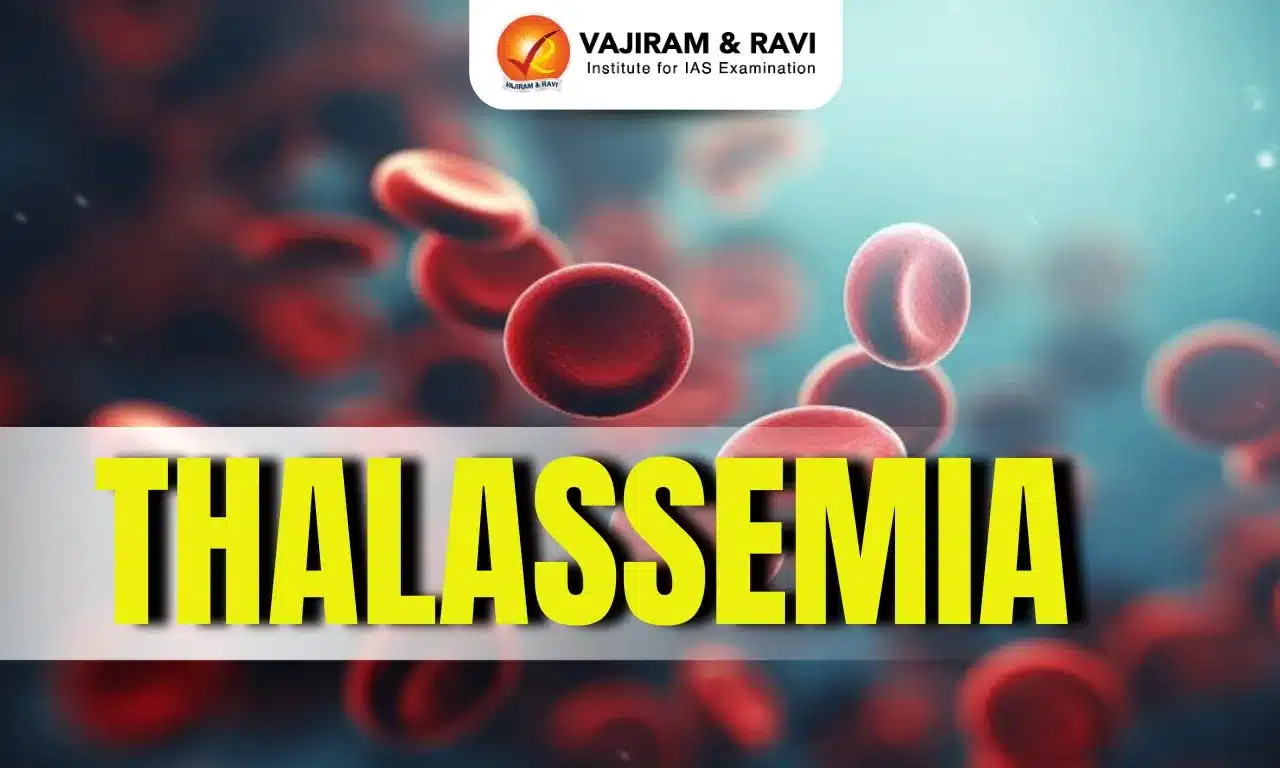
- Hemoglobin is a protein in red blood cells (RBCs). It allows your RBCs to transport oxygen throughout your body.
- If you have thalassemia, your body produces fewer healthy hemoglobin proteins, and your bone marrow produces fewer healthy RBCs.
- The condition of having fewer RBCs is called anemia. That can make you feel tired and weak.
- As RBCs serve the vital role of delivering oxygen to tissues in your body, not having enough healthy RBCs can deprive your body’s cells of the oxygen they need to make energy and thrive.
- Thalassaemia is caused by inheriting a gene mutation (change in the normal DNA) from one or both parents.
- Traits for thalassemia are more common in people from Mediterranean countries, like Greece and Turkey, and in people from Asia, Africa, and the Middle East.
- There are different types of thalassemia. The type someone has depends on which gene mutation they inherit.
- Symptoms: Thalassemia can cause mild or severe anemia and other complications over time (such as iron overload).
- Symptoms of Anemia Include:
- Fatigue.
- Trouble breathing.
- Feeling cold.
- Dizziness.
- Pale skin.
- Severe thalassemia may cause death.
- Symptoms of Anemia Include:
- Treatments:
- Blood transfusions – regular blood transfusions treat and prevent anaemia; in severe cases these are needed around once a month.
- Chelation therapy – treatment with medicine to remove the excess iron from the body that builds up as a result of having regular blood transfusions.
- The only possible cure for thalassemia is a stem cell or bone marrow transplant, but this is not done very often because of the risks involved.
Source: TH


 Last updated on Sep, 2026
→ UPSC 2027 Notification will be released on 13 January 2027 at upsconline.nic.in.
→ Asian Games 2026 are being held in Aichi-Nagoya, Japan, from 19 September to 4 October.
→ Check out the latest UPSC Syllabus here.
→ Download UPSC Model Answers for Mains 2026
→ UPSC Mains Question Paper 2026 is out now for Essay & GS Paper 1, 2, 3 & 4.
→ UPSC Calendar 2027 has been released.
→ Enroll in Vajiram & Ravi’s UPSC Mains Test Series 2027 for structured answer writing practice, expert evaluation, and exam-oriented feedback.
→ Join Vajiram & Ravi’s UPSC Mentorship Program 2027 for personalized guidance, strategy planning, and one-to-one support from experienced mentors.
→ Go through the UPSC Mains Previous Year Papers to enhance your preparation.
→ UPSC has released UPSC Toppers List 2025 with the Civil Services final result on its official website.
→ Also check Best UPSC Coaching in India
Thalassemia FAQs
Q1. What is Thalassemia?+
Q2. Thalassemia is primarily affects which component of the blood?+
Q3. What is the main function of hemoglobin?+
Q4. What is the cause of Thalassemia?+
Tags: prelims pointers thalassemia upsc current affairs upsc prelims current affairs