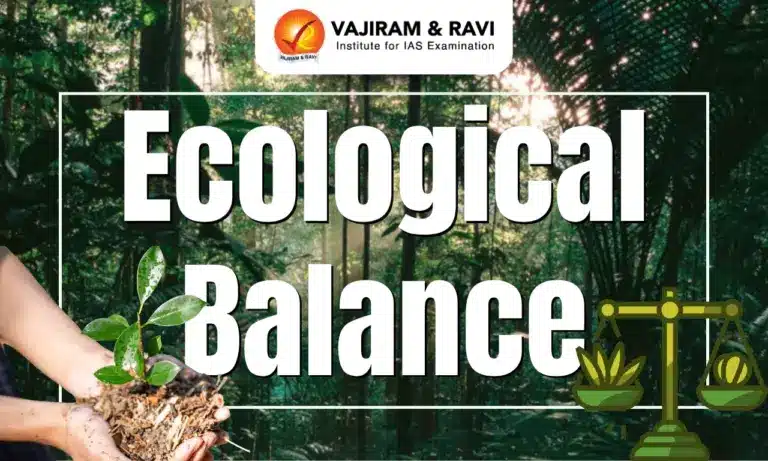
Ecological Balance refers to the natural balance between living beings and their environment. It means that plants, animals, humans, and nature exist together in a stable and harmonious way. This balance helps maintain life on Earth and ensures that natural resources are used properly. When Ecological Balance is maintained, it supports a healthy and sustainable environment for all living beings.
Ecology and Ecological Balance
- Ecology is the scientific study of how living organisms interact with each other and with their environment. It helps us understand relationships between plants, animals, humans, and natural elements like air, water, and soil.
- Ecological Balance refers to a stable and harmonious condition in an ecosystem where different species coexist without conflict. It ensures that natural processes and life systems function smoothly and efficiently.
- Ecological Balance is a dynamic equilibrium, meaning it continuously changes and adjusts to minor disturbances. Ecosystems have a self-regulating mechanism that helps maintain stability over time.
- A balanced ecosystem maintains stable populations, proper resource availability, and continuous natural processes. This ensures long-term sustainability of life, biodiversity, and environmental health.
Key Pillars of Ecological Balance
- Interdependence
- All organisms are interconnected and depend on each other for survival.
- The roles of producers, consumers, and decomposers are essential for ecosystem functioning.
- Disturbance in one species can lead to a cascading effect across the food chain.
- Biodiversity
- Biodiversity refers to the variety of species present in an ecosystem.
- High biodiversity increases ecosystem stability and resilience against disturbances.
- Loss of biodiversity reduces the ability of ecosystems to recover and adapt.
- Energy Flow and Nutrient Cycling
- Energy flow in the ecosystem occurs from the sun to plants and then to animals.
- Nutrient cycling involves the recycling of elements like carbon, nitrogen, and water.
- These processes ensure continuity of life and proper ecosystem functioning.


Causes of Ecological Imbalance
- Natural Causes
- Natural Disasters and Environmental Changes: Events such as floods, earthquakes, wildfires, and storms can temporarily disturb ecosystems. These natural disturbances may alter habitats and species distribution.
- Changes in Species Population: Natural processes like migration, extinction, or sudden population changes can create imbalance. However, ecosystems usually recover due to their self-regulating capacity over time.
- Human-Induced Causes
- Habitat Destruction: Activities such as deforestation, urbanization, and industrial expansion destroy natural habitats. This results in loss of biodiversity and forces species to relocate or perish.
- Pollution: Air, water, and soil pollution disturb the natural composition of ecosystems. Toxic substances disrupt biological processes and harm both wildlife and humans.
- Overexploitation of Resources: Excessive use of resources like overfishing, hunting, and logging reduces their availability. It creates an imbalance between resource consumption and natural regeneration.
- Urbanization and Land Use Change: Rapid expansion of cities reduces vegetation cover and affects soil and water systems. Increased paved surfaces limit groundwater recharge and raise pollution levels.
- Invasive Species: Introduction of non-native species disrupts existing ecosystems by competing with native species. This often leads to decline or extinction of local species.
- Industrialization and Population Growth: Rapid industrial development releases pollutants into the environment. At the same time, population growth increases pressure on land, water, and energy resources.
- War and Environmental Damage: Warfare causes destruction of forests, land, and wildlife habitats, leading to long-term ecological damage. It negatively affects the structure and functioning of ecosystems.
Significance of Ecological Balance
- Maintains Clean Air and Freshwater Resources: Ecological Balance helps purify air and water through natural processes like oxygen production and filtration by forests and wetlands. This ensures the availability of clean air and safe drinking water for all living organisms.
- Supports Agriculture through Fertile Soil: Natural processes like decomposition and nutrient cycling maintain soil fertility and productivity. This supports agriculture by ensuring consistent crop growth and food supply.
- Regulates Climate and Temperature: Ecosystems regulate climate by controlling atmospheric gases and acting as carbon sinks. This helps maintain stable temperature and rainfall patterns and reduces climate change impacts.
- Sustains Biodiversity and Food Chains: Ecological Balance preserves biodiversity and maintains stable food chains among species. This prevents extinction and ensures proper functioning of ecosystems.
- Provides Essential Resources for Human Survival and Well-being: A balanced ecosystem provides essential resources like food, water, and raw materials. It also supports livelihoods and human well-being by maintaining a healthy environment.
Consequences of Ecological Imbalance
- Increase in Natural Disasters and Climate Change Effects: Ecological imbalance intensifies climate change, leading to extreme events like floods, droughts, cyclones, and heatwaves. Disruption of natural systems makes environments more vulnerable to disasters.
- Food Shortages and Reduced Agricultural Productivity: Loss of soil fertility, irregular rainfall, and changing climate conditions negatively affect agriculture. This leads to decline in crop yields and increases the risk of food insecurity.
- Loss of Species and Ecosystems: Disturbance in Ecological Balance causes biodiversity loss and extinction of species. Entire ecosystems may collapse when key species are removed or habitats are destroyed.
- Rise in Diseases, Pests, and Environmental Risks: Imbalance in ecosystems allows harmful pests and disease-causing organisms to spread rapidly. It also increases risks of pollution-related health problems in humans.
- Water Scarcity and Degradation of Water Resources: Overuse and pollution of water bodies lead to water scarcity and reduced water quality. This affects both human consumption and ecosystem survival.
- Soil Degradation and Desertification: Continuous exploitation and loss of vegetation result in soil erosion and declining fertility. In severe cases, productive land turns into desert-like conditions.
- Disruption of Food Chains and Ecological Stability: Changes in species population disturb food chains and ecological relationships. This creates instability and reduces the ability of ecosystems to sustain life.
- Negative Impact on Human Health and Livelihoods: Ecological imbalance affects human health, livelihoods, and economic activities. It leads to resource scarcity, increased diseases, and reduced quality of life.
Measures to Maintain Ecological Balance
- Afforestation and Conservation of Natural Habitats: Planting more trees and protecting existing forests and natural habitats help restore ecological stability. It supports biodiversity, improves air quality, and maintains climate balance.
- Reduction of Pollution and Proper Waste Management: Controlling air, water, and soil pollution is essential for a healthy ecosystem. Effective waste management, recycling, and reduced use of harmful chemicals help protect natural resources.
- Sustainable Use of Natural Resources: Resources like water, forests, and minerals should be used in a sustainable and controlled manner. This ensures their availability for future generations while maintaining Ecological Balance.
- Protection of Wildlife and Biodiversity: Conserving wildlife and endangered species helps maintain stable ecosystems and food chains. Protected areas and conservation programs support species survival and ecological diversity.
- Promotion of Environmental Awareness and Responsible Development: Spreading environmental awareness encourages individuals to adopt eco-friendly practices. Responsible development ensures economic growth without harming the environment.
- Water Conservation and Management: Efficient use of water and protection of water bodies prevent water scarcity and pollution. Practices like rainwater harvesting support long-term sustainability.
- Control of Population Growth and Urban Expansion: Managing population growth and planned urbanization reduce pressure on natural resources. It helps maintain a balance between development and environmental protection.

 Last updated on Oct, 2026
→ UPSC 2027 Notification will be released on 13 January 2027 at upsconline.nic.in.
→ Asian Games 2026 are being held in Aichi-Nagoya, Japan, from 19 September to 4 October.
→ Check Nobel Prize 2026 Winners List here.
→ Download PIB PRiSM Monthly Magazine 2026 here.
→ Check UPSC Monthly Current Affairs Magazine The Recitals here.
→ Check out the latest UPSC Syllabus here.
→ Download UPSC Model Answers for Mains 2026
→ UPSC Mains Question Paper 2026 is out now for Essay & GS Paper 1, 2, 3 & 4.
→ UPSC Calendar 2027 has been released.
→ Enroll in Vajiram & Ravi’s UPSC Mains Test Series 2027 for structured answer writing practice, expert evaluation, and exam-oriented feedback.
→ Join Vajiram & Ravi’s UPSC Mentorship Program 2027 for personalized guidance, strategy planning, and one-to-one support from experienced mentors.
→ Go through the UPSC Mains Previous Year Papers to enhance your preparation.
→ UPSC has released UPSC Toppers List 2025 with the Civil Services final result on its official website.
→ Also check Best UPSC Coaching in India
Ecological Balance FAQs
Q1. What is Ecological Balance?+
Q2. Why is Ecological Balance important?+
Q3. What are the main causes of Ecological Imbalance?+
Q4. How does biodiversity help maintain Ecological Balance?+
Q5. What are the consequences of Ecological Imbalance?+
Tags: ecological balance environment environment notes