India’s nutrition challenge is undergoing a major transition, with rising obesity and unhealthy diets emerging alongside persistent undernutrition. Recently, the Parliamentary Standing Committee on Consumer Affairs, Food and Public Distribution recommended mandatory Front-of-Pack Nutrition Labelling (FoPNL), while the ICMR–National Institute of Nutrition (ICMR-NIN) led “Let’s Fix Our Food” consortium proposed a health tax on High Fat, Salt and Sugar (HFSS) foods, stricter regulation of junk food advertising and healthier school food environments.
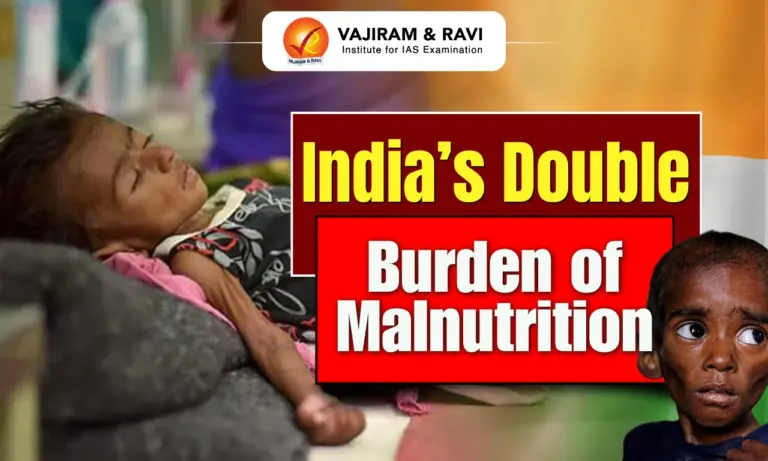
India’s Double Burden of Malnutrition
India is facing a double burden of malnutrition, where persistent undernutrition coexists with rising overweight, obesity and diet-related non-communicable diseases (NCDs). Addressing this nutrition transition requires public health policies that ensure both food security and healthy diets.
- Persistent Undernutrition: Stunting, wasting, anaemia and micronutrient deficiencies continue to affect children, women and economically vulnerable populations.
- Rising Overnutrition: NFHS data shows a steady increase in overweight and obesity among adults due to changing diets and sedentary lifestyles.
- According to ICMR-NIN, over 17 million children and adolescents are affected by obesity, a figure projected to exceed 27 million by 2030.
- Growing NCD Burden: Unhealthy diets are driving the rapid increase in diabetes, cardiovascular diseases, hypertension and certain cancers.
- Changing Food Environment: Easy availability of ultra-processed foods, urbanisation and aggressive food marketing have altered traditional dietary habits.
Policy Measures to Promote Healthier Diets
India requires regulatory, fiscal and behavioural interventions to reduce obesity and encourage healthier food choices.
Front-of-Pack Nutrition Labelling (FoPNL)
Front-of-Pack Nutrition Labelling (FoPNL) is a system of displaying key nutrition information on the front of packaged food products to help consumers quickly identify foods high in sugar, salt and saturated fat.
Mandatory front-of-pack labels can empower consumers to make informed dietary decisions.
- Informed Consumer Choice: Clearly identifies foods high in sugar, salt and saturated fat before purchase.
- Promotes Healthier Products: Encourages food manufacturers to reformulate products with lower levels of unhealthy ingredients.
- Protects Children: Mandatory disclosure of sugar content in baby foods can discourage unhealthy dietary habits from early childhood.
- Improves Transparency: Simplifies nutritional information that is often difficult for consumers to interpret.
Health Tax on HFSS Foods
The ICMR-NIN consortium has recommended a health tax on High Fat, Salt and Sugar (HFSS) foods
to reduce their excessive consumption as they are associated with obesity, diabetes, hypertension and other non-communicable diseases.
- Discourages Unhealthy Consumption: Higher prices can reduce demand for foods linked to obesity and NCDs.
- Corrects Negative Externalities: Applies the principle of Pigouvian taxation, where products imposing long-term public health costs are taxed.
- Encourages Industry Reform: Incentivises manufacturers to develop healthier food alternatives.
- Supports Public Health Financing: Additional revenue can strengthen nutrition and preventive healthcare programmes.
Healthier School Food Environment
Healthy dietary habits should begin during childhood.
- Restricts HFSS Foods: Limits the availability of unhealthy foods in and around educational institutions.
- Promotes Nutrition Education: Encourages lifelong healthy eating habits among children and adolescents.
- Supports Early Prevention: Reduces the long-term risk of obesity and metabolic disorders.
Regulation of Junk Food Advertising
Marketing practices significantly influence food choices, especially among children.
- Protects Vulnerable Consumers: Restricts advertisements targeting children and adolescents.
- Prevents Misleading Claims: Ensures responsible marketing of packaged food products.
- Promotes Responsible Consumption: Reduces exposure to unhealthy food marketing across digital and conventional media.


Global Best Practices
Several countries have adopted fiscal and regulatory measures to reduce unhealthy food consumption and promote healthier diets.
- The World Health Organization (WHO) reports that since 2017, more than 133 countries have introduced or increased health taxes on unhealthy products.
- Colombia introduced a phased junk food tax in 2023, raising the tax rate from 10% to 15% and then 20%, along with stronger front-of-pack nutrition labelling.
- Chile introduced mandatory front-of-pack warning labels and imposed strict restrictions on the marketing of unhealthy foods to children.
- Mexico levied a tax on sugar-sweetened beverages, leading to a decline in their consumption and encouraging healthier dietary choices.
- Norway, Hungary and Denmark have imposed taxes on sugar and other unhealthy foods to discourage excessive consumption and improve public health.
Key lesson for India: International experience shows that a combination of front-of-pack nutrition labelling, health taxes, marketing regulations and public awareness campaigns is more effective than any single policy measure in promoting healthy diets and preventing obesity.
Challenges in Promoting Healthy Diets and Preventing Obesity
Several institutional and behavioural barriers continue to limit the effectiveness of obesity prevention policies.
- Weak Regulatory Enforcement: Delays in implementing mandatory nutrition labelling reduce consumer awareness.
- Food Industry Resistance: Commercial interests may oppose stricter regulations and fiscal measures.
- Low Nutrition Literacy: Consumers often lack awareness of healthy dietary practices and nutritional information.
- Affordability of Healthy Diets: Nutritious foods remain relatively expensive for low-income households.
- Behavioural Change: Sustainable dietary improvements require long-term awareness and lifestyle changes.
- Inter-sectoral Coordination: Effective implementation requires collaboration among the Ministries of Health, Education, Consumer Affairs and Food Processing.
Way Forward
India’s nutrition strategy should move beyond calorie security towards ensuring healthy and sustainable diets.
- Implement Mandatory FoPNL based on simple and scientifically validated nutrition indicators.
- Adopt Evidence-Based Health Taxes on HFSS foods while protecting vulnerable consumers.
- Strengthen FSSAI Enforcement to ensure compliance with food safety and labelling standards.
- Create Healthy School Food Environments through nutrition standards and awareness programmes.
- Regulate Junk Food Advertising, particularly advertisements targeting children.
- Promote Healthier Food Reformulation through incentives and regulatory standards.
- Strengthen Public Awareness Campaigns on balanced diets, physical activity and healthy lifestyles.

 Last updated on Sep, 2026
→ UPSC 2027 Notification will be released on 13 January 2027 at upsconline.nic.in.
→ Asian Games 2026 are being held in Aichi-Nagoya, Japan, from 19 September to 4 October.
→ Check out the latest UPSC Syllabus here.
→ Download UPSC Model Answers for Mains 2026
→ UPSC Mains Question Paper 2026 is out now for Essay & GS Paper 1, 2, 3 & 4.
→ UPSC Calendar 2027 has been released.
→ Enroll in Vajiram & Ravi’s UPSC Mains Test Series 2027 for structured answer writing practice, expert evaluation, and exam-oriented feedback.
→ Join Vajiram & Ravi’s UPSC Mentorship Program 2027 for personalized guidance, strategy planning, and one-to-one support from experienced mentors.
→ Go through the UPSC Mains Previous Year Papers to enhance your preparation.
→ UPSC has released UPSC Toppers List 2025 with the Civil Services final result on its official website.
→ Also check Best UPSC Coaching in India
India’s Double Burden of Malnutrition FAQs
Q1. What is the double burden of malnutrition?+
Q2. What is Front-of-Pack Nutrition Labelling (FoPNL)?+
Q3. What are High Fat, Salt and Sugar (HFSS) foods?+
Q4. Why is a health tax on HFSS foods recommended?+
Q5. Which countries have successfully used health tax to reduce unhealthy food consumption?+
Q6. What is the key strategy for preventing obesity?+