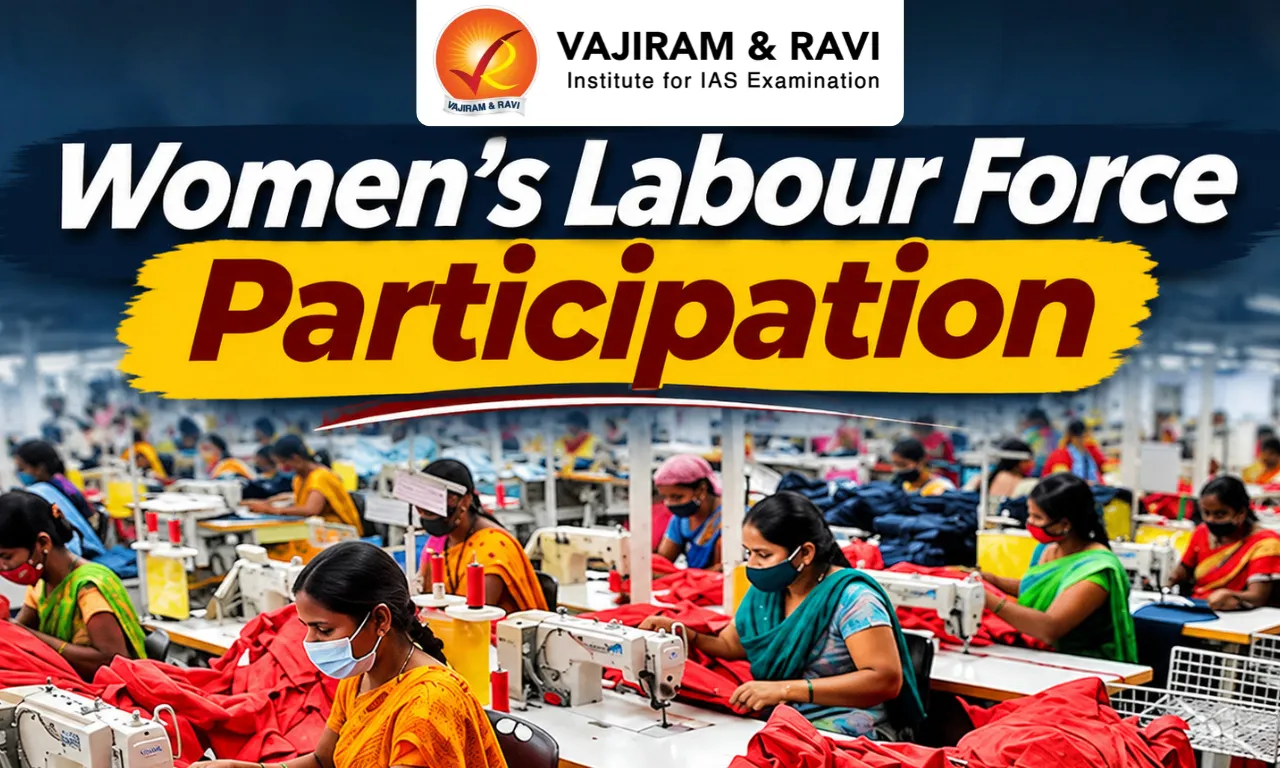
PLI Scheme Latest News
- A joint NITI Aayog-IIM Ahmedabad impact assessment report, released recently, evaluated the Production Linked Incentive (PLI) scheme — one of the Modi government’s flagship manufacturing initiatives, launched in March 2020.
- Six years on, the report reveals a mixed picture: strong progress on investment and production, but significant lag in employment generation — raising important questions about the scheme’s design and effectiveness.
What Is the PLI Scheme?
- Introduced in 2020, following the 2019 corporate tax rate cuts, to encourage entrepreneurs to build new manufacturing capacity in India.
- Core design principle: Unlike broad-based or untargeted subsidies, PLI links government incentives directly to incremental production and performance by firms.
- Dual objective: Catalyse investment and enhance firm-level competitiveness.
- Covers 14 schemes across key sectors, with a total outlay of ₹1.91 lakh crore.
- Manufacturing growth remains a policy priority, given its potential to provide meaningful employment to India’s large, young, expanding workforce.


Headline Numbers: Investment and Production vs Employment
- Investment: Achieved 76% of target, cumulatively attracting ₹2.40 lakh crore.
- Production: Achieved 64% of target, generating ₹22.66 lakh crore worth of output.
- Employment: Only 28% of target achieved — just 8.49 lakh jobs created against a target of 30.18 lakh jobs.
- This stark gap between investment/production progress and employment outcomes is the report’s central concern.
Sector-wise Employment Performance: Wide Variations
- Top Job Creators:
- Food products PLI: 3.29 lakh jobs (highest)
- Large-scale electronics manufacturing: 1.69 lakh jobs
- Pharma drugs manufacturing: 1.14 lakh jobs
- Below-Target Performers:
- Automobiles and auto components: 67,820 jobs (against a target of 1.48 lakh — less than half)
- White goods: 52,703 jobs
- Telecom and networking: 33,610 jobs
- Textiles: 33,427 jobs
- Solar PV modules, speciality steel, bulk drugs, medical devices, IT hardware, drones/drone components, battery manufacturing: each below 15,000 jobs
- Sectors “broadly on track” (as per the report): Large-scale electronics, pharmaceuticals, food processing, drones, medical devices, and white goods showed strong progress across multiple parameters (investment, production, employment, exports).
- Sectors needing strengthening: Automobiles and auto components, telecom, and speciality steel require further work on employment, exports, and domestic value addition.
Why the Employment Lag? Understanding Gestation Periods
- Manufacturing investments follow a sequential pattern: investment happens first → production ramps up as capacity is commissioned → employment grows only as operations reach commercial scale.
- This means investment, production, and employment need not progress at the same pace — a natural lag exists.
- Implementation status: The 14 schemes have completed 58% of their aggregate implementation period (578 of 996 months) — meaning 42% of the implementation period remains, so final judgment on full-tenure targets would be premature.
Why Are Targets Not Being Met? Structural Issues
- Stringent targets, especially in sectors with long gestation periods and high demand uncertainty (due to international trade dynamics and geopolitical shifts), discourage scheme adoption.
- Industrial mechanisation can also make it harder for sectors to meet employment targets even as production rises.
- The report stresses: industry participation in designing sector-specific targets is essential for better outcomes.
- PLI, in its current form, is a purely supply-side scheme — the report recommends adding demand-side support, i.e., incentivising downstream firms and consumers to purchase from PLI-supported firms.
Disbursement Lag: Money Not Fully Flowing
- Cumulative incentive disbursements stood at just 18.51% of the total ₹1.91 lakh crore outlay (as of March 2026).
- 9 of 14 schemes — including bulk drugs, automobiles, and textiles — had disbursements below 10% of their allocated outlay.
- In contrast, drones, large-scale electronics, and food products schemes saw disbursements of 25-77% of outlay — reflecting their more mature implementation stage.
- Capital-intensive sectors may show strong investment without proportionate employment growth; technology-intensive sectors often need longer gestation periods before production and export outcomes materialise.
The Bigger Picture: A Scheme of Varying Objectives
- The report highlights that PLI schemes are not uniform in objectives or implementation trajectory:
- Some sectors prioritise building domestic capacity and reducing import dependence.
- Others focus on achieving scale, boosting exports, and securing positions in global value chains.
- Despite employment shortfalls, nearly 70% of targeted segments remain broadly on track, underscoring PLI’s overall positive role in India’s manufacturing push.
Way Forward: Key Recommendations
- Adopt a more sector-specific approach, given wide variation in performance across sectors.
- Standardise data collection and reporting mechanisms across different ministries implementing PLI schemes.
- Move beyond supply-side intervention — incorporate demand-side incentives for downstream firms and consumers to buy from PLI-supported companies.
Conclusion
- Six years in, the PLI scheme has proven its worth in driving investment and production, but its employment promise remains only partially fulfilled.
- Bridging this gap will require sector-specific calibration, demand-side support, and patience — recognising that manufacturing employment, unlike capital inflows, takes longer to mature into tangible jobs for India’s workforce.

 Last updated on Nov, 2026
→ UPSC 2027 Notification will be released on 13 January 2027 at upsconline.nic.in.
→ Check Nobel Prize 2026 Winners List here.
→ Download PIB PRiSM Monthly Magazine 2026 here.
→ Check UPSC Monthly Current Affairs Magazine The Recitals here.
→ Check out the latest UPSC Syllabus here.
→ Download UPSC Model Answers for Mains 2026
→ UPSC Mains Question Paper 2026 is out now for Essay & GS Paper 1, 2, 3 & 4.
→ UPSC Calendar 2027 has been released.
→ Enroll in Vajiram & Ravi’s UPSC Mains Test Series 2027 for structured answer writing practice, expert evaluation, and exam-oriented feedback.
→ Join Vajiram & Ravi’s UPSC Mentorship Program 2027 for personalized guidance, strategy planning, and one-to-one support from experienced mentors.
→ Go through the UPSC Mains Previous Year Papers to enhance your preparation.
→ UPSC has released UPSC Toppers List 2025 with the Civil Services final result on its official website.
→ Also check Best UPSC Coaching in India
PLI Scheme FAQs
Q1. What is the objective of the PLI scheme? +
Q2. How has the PLI scheme performed in investment, production and employment generation? +
Q3. Which sectors have generated the most employment under the PLI scheme? +
Q4. Why has employment generation under the PLI scheme lagged behind investment and production? +
Q5. What reforms does the impact assessment recommend for the PLI scheme? +
Tags: mains articles pli scheme upsc current affairs upsc mains current affairs