About Fischer – Tropsch (FT) Process
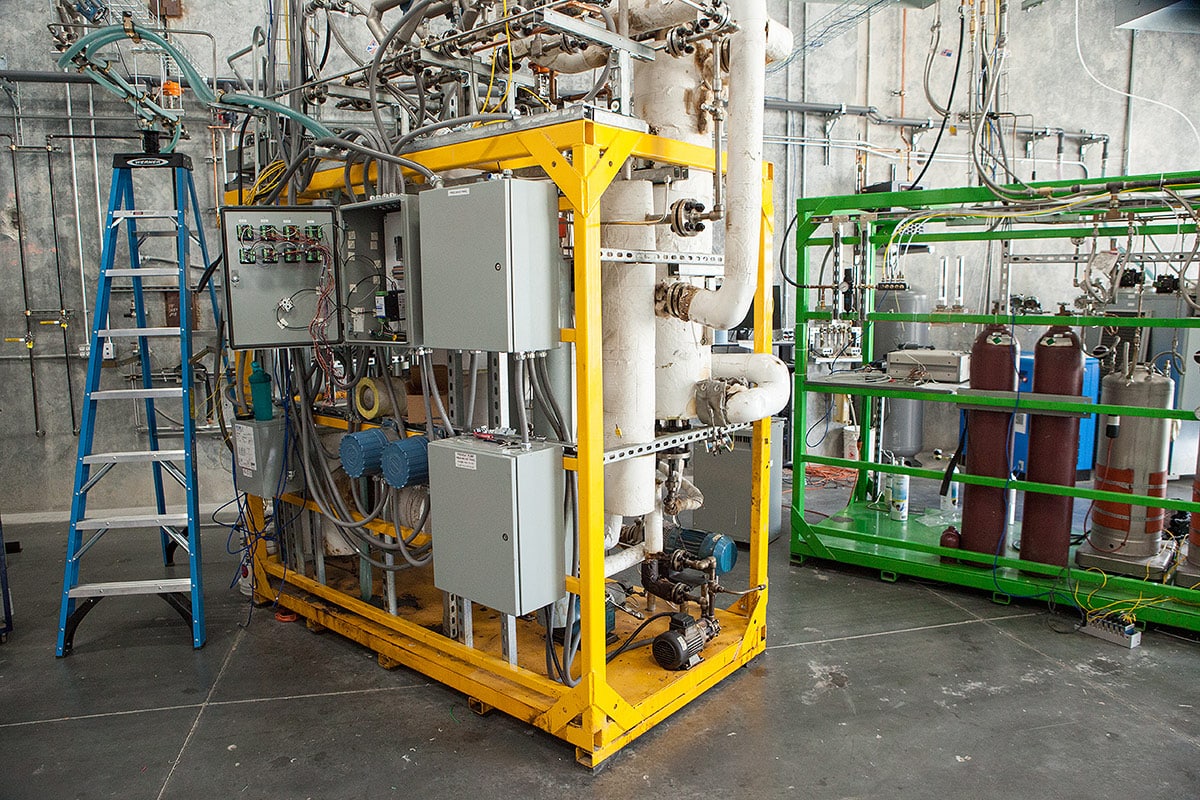
- FT process is the process where synthesis gas (H2 and CO) is converted into a mixture of hydrocarbons, oxygenates, water, and carbon dioxide.
- It was first developed in the 1920s and was named after its discoverers, Franz Fischer and Hans Tropsch.
- It involves the reaction of carbon monoxide (CO) and hydrogen (H2) gases.
- These gases are typically derived from various sources, including coal, natural gas, or biomass, through the process of gasification.
FT process:
- Synthesis gas (syngas) is the feed material for a FT process.
- The FT reaction is usually a catalytic reaction at high temperatures and high pressure and the typical catalysts used are based on iron or cobalt.
- FT process is the catalytic polymerization and hydrogenation of CO, which produces a synthetic crude oil (syncrude).
- Syncrude is a multiphase mixture of hydrocarbons, oxygenates, and water.
- The next step is the refining of the syncrude into products that are traditionally produced from conventional crude oil, such as transportation fuels and petrochemicals.


Applications:
- It has several important applications, including the production of synthetic fuels and chemicals.
- The hydrocarbons produced by the FT process can be refined and used in place of more conventional liquid fuels derived from crude oil.
- Generally, these products are of higher quality than those derived through conventional means, having no sulphur or aromatics
Q1: What are Hydrocarbons?
Hydrocarbons are organic chemical compounds composed only of the elements carbon (C) and hydrogen (H). The carbon atoms join together to form the framework of the compound, and the hydrogen atoms attach to them in many different configurations. Hydrocarbons are the principal constituents of petroleum and natural gas. They serve as fuels and lubricants as well as raw materials for the production of plastics, fibres, rubbers, solvents, explosives, and industrial chemicals.
Source: Discovery made about Fischer–Tropsch process could help improve fuel production

 Last updated on Sep, 2026
→ UPSC 2027 Notification will be released on 13 January 2027 at upsconline.nic.in.
→ Asian Games 2026 are being held in Aichi-Nagoya, Japan, from 19 September to 4 October.
→ Check out the latest UPSC Syllabus here.
→ Download UPSC Model Answers for Mains 2026
→ UPSC Mains Question Paper 2026 is out now for Essay & GS Paper 1, 2, 3 & 4.
→ UPSC Calendar 2027 has been released.
→ Enroll in Vajiram & Ravi’s UPSC Mains Test Series 2027 for structured answer writing practice, expert evaluation, and exam-oriented feedback.
→ Join Vajiram & Ravi’s UPSC Mentorship Program 2027 for personalized guidance, strategy planning, and one-to-one support from experienced mentors.
→ Go through the UPSC Mains Previous Year Papers to enhance your preparation.
→ UPSC has released UPSC Toppers List 2025 with the Civil Services final result on its official website.
→ Also check Best UPSC Coaching in India