


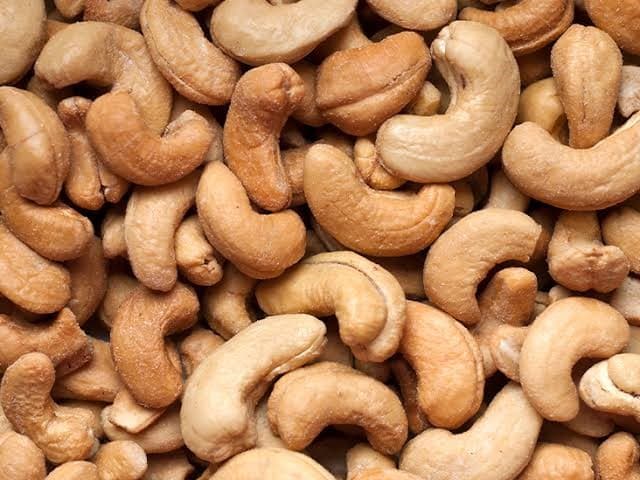
About Goan cashew:
- Cashew is one of the most important plantation crops in India
- Cashew was native to northeast Brazil in Latin America and was introduced to Goa by the Portuguese in the 16th century (1570).
- At the time of its introduction on Indian coasts, cashew was known mainly as a crop for afforestation and soil conservation.
- In the state of Goa, it occupies the largest area among horticultural crops.
- Climatic condition
- Soil and climate: Well-drained deep sandy loam soils are the best for growing cashew. In general, all soils from sandy to laterite are well suited for this crop.
- It is very well adapted to Indian coastal area under hot humid conditions
- Temperature: In the range of 20 to38 o C, relative humidity in the range of 60 to95 % .
- Rainfall: Annual precipitation in the range of 2000 to 3500mm.
- Extreme low temperature and frost are not conducive to raise cashew plantations.
- The cultivation of this crop is being extended to non-traditional areas in the plains of Karnataka, Madhya Pradesh, Chattisgarh and some parts of North East hill region.
Q1:What is a geographical indication tag?
A geographical indication (GI) is a sign used on products that have a specific geographical origin and possess qualities or a reputation that are due to that origin. In order to function as a GI, a sign must identify a product as originating in a given place.
Source: What the GI tag can mean for the cashew industry in Goa


 Last updated on Sep, 2026
→ UPSC 2027 Notification will be released on 13 January 2027 at upsconline.nic.in.
→ Check out the latest UPSC Syllabus here.
→ Download UPSC Model Answers for Mains 2026
→ UPSC Mains Question Paper 2026 is out now for Essay & GS Paper 1, 2, 3 & 4.
→ UPSC Calendar 2027 has been released.
→ Enroll in Vajiram & Ravi’s UPSC Mains Test Series 2027 for structured answer writing practice, expert evaluation, and exam-oriented feedback.
→ Join Vajiram & Ravi’s UPSC Mentorship Program 2027 for personalized guidance, strategy planning, and one-to-one support from experienced mentors.
→ Go through the UPSC Mains Previous Year Papers to enhance your preparation.
→ UPSC has released UPSC Toppers List 2025 with the Civil Services final result on its official website.
→ Also check Best UPSC Coaching in India








