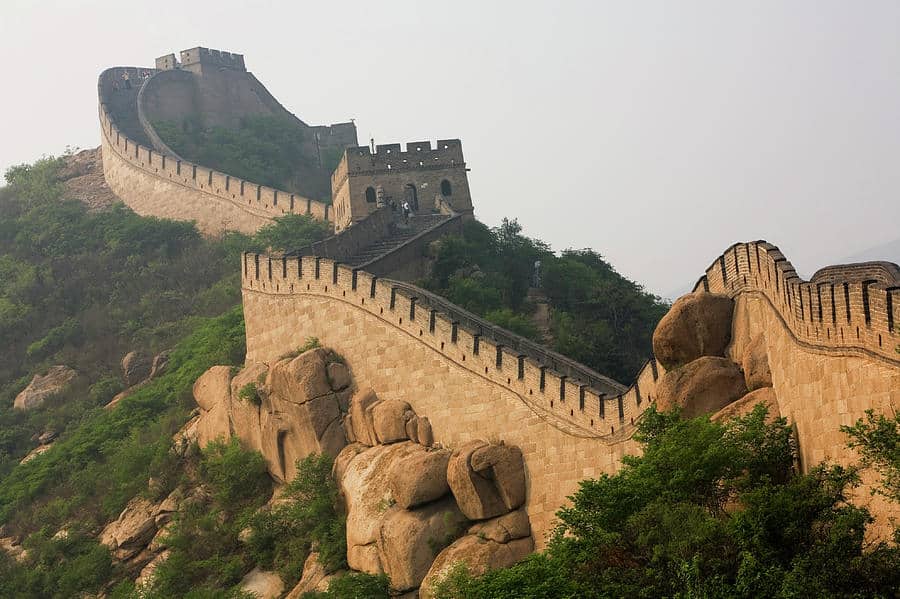
About Ming Dynasty
- The Ming Dynasty ruled China from A.D. 1368 to 1644.
- Known for its trade expansion to the outside world that established cultural ties with the West, the Ming Dynasty is also remembered for its drama, literature, and world-renowned porcelain.
- The Ming dynasty, which succeeded the Yuan (Mongol) dynasty (1206–1368), was founded by a commoner, Zhu Yuanzhang (1328–1398), who established Nanjing as his capital.
- However, nearly fifty years later, the third Ming emperor relocated the capital to Beijing, which has remained China’s main seat of government ever since.
- Governmental Structure:
- The basic governmental structure established by the Ming was continued by the subsequent Qing (Manchu) dynasty and lasted until the imperial institution was abolished in 1911/12.
- The civil service system was perfected during the Ming and then became stratified; almost all the top Ming officials entered the bureaucracy by passing a government examination.
- Affairs in each province were handled by three agencies, each reporting to separate bureaus in the central government.
- The position of prime minister was abolished. Instead, the emperor took over personal control of the government, ruling with the assistance of the especially appointed Neige, or Grand Secretariat.
- Achievements:
- The period witnessed unprecedented economic and cultural expansion and the near doubling of China’s population.
- Notable Ming achievements include the refurbishment of the Great Wall to its greatest glory, large naval expeditions, vibrant maritime trade, and the rise of a heavily monetized economy.
- Vital cultural achievements included the production of exceptional—and often colorful—porcelains, paintings, lacquers, and textiles.
- The Ming Dynasty saw a publishing boom in China, with an avalanche of affordable books being produced for commoners.
- Collapse:
- The last century of the Ming, however, was besieged by border troubles, crop failure, fiscal instability, and court corruption, leading to an overthrow by Manchu invaders from the north, who took Beijing in 1644.
- The Ming were succeeded by the Qing (Manchu) dynasty (1644-1911).
Q1) What is porcelain?
Porcelain is a material made from well-chosen porcelain clay or pottery stone through technological processes like proportioning, molding, drying and firing. Although porcelain developed from pottery, the two are different in raw material, glaze and firing temperature; compared with pottery, porcelain has tougher texture, more transparent body and finer luster.
Source: Book critical of Ming emperor recalled. Xi Jinping didn’t like it because…


 Last updated on Sep, 2026
→ UPSC Mains Question Paper 2026 is out now for Essay & GS Paper 1, 2, 3 & 4.
→ UPSC Mains GS Paper 1 2026 is out now.
→ UPSC Mains GS Paper 2 2026 is out now.
→ UPSC Mains GS Paper 3 2026 is out now.
→ UPSC Mains GS Paper 4 2026 is out now.
→ UPSC Mains Indian Language Paper & English Compulsory Paper are out now.
→ Check out the latest UPSC Syllabus 2026 here.
→ UPSC Mains Admit Card 2026 is now out.
→ Enroll in Vajiram & Ravi’s UPSC Mains Test Series 2027 for structured answer writing practice, expert evaluation, and exam-oriented feedback.
→ Join Vajiram & Ravi’s UPSC Mentorship Program 2027 for personalized guidance, strategy planning, and one-to-one support from experienced mentors.
→ Go through the UPSC Mains Previous Year Papers to enhance your preparation.
→ Download UPSC Mains Essay Paper 2025, UPSC Mains GS Paper-I 2025, UPSC Mains GS Paper-II 2025, UPSC Mains GS Paper-III 2025, UPSC Mains GS Paper-IV 2025, UPSC Mains English (Compulsory) Paper 2025, UPSC Mains Hindi (Qualifying) Paper 2025 here.
→ UPSC has released UPSC Toppers List 2025 with the Civil Services final result on its official website.
→ UPSC Calendar 2027 has been released.
→ Also check Best UPSC Coaching in India