About Radon
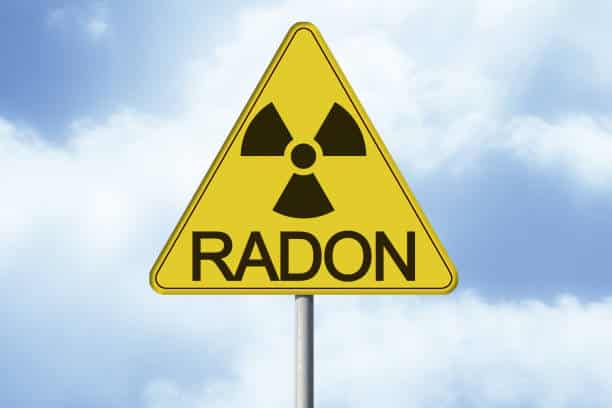
- Radon is a radioactive gas that forms naturally when uranium, thorium, or radium, which are radioactive metals, break down in rocks, soil, and groundwater.
- It is an inert, colourless, and odourless gas.
- Radon gas usually exists at very low levels outdoors, but the gas can accumulate in areas without adequate ventilation, such as underground mines.
- Radon can get into homes and buildings through small cracks or holes and build up in the air.
- Radon levels may be higher in homes that are well insulated, tightly sealed, and/or built on soil rich in the elements uranium, thorium, and radium.
- As we breathe, these particles are deposited on the cells lining the airways, where they can damage DNA and potentially cause lung cancer.
- It is the second-most important cause of lung cancer after smoking and the leading cause of lung cancer among non-smokers.
- According to the WHO, radon is estimated to cause between 3% to 14% of all lung cancers in a country, depending on the national average radon level and smoking prevalence.
Q1) What is radioactivity?
Radioactivity is the property of some unstable atoms (radionuclides) to spontaneously emit nuclear radiation, usually alpha particles or beta particles often accompanied by gamma-rays. This radiation is emitted when the nucleus undergoes radioactive decay and is converted into a different isotope which may, according to its number of neutrons and protons, be either radioactive (unstable) or non-radioactive (stable). This “daughter” nucleus will usually be of a different chemical element to the original isotope
Source: Explained: Radon a silent killer and second leading cause of lung cancer with 21,000 annual deaths


 Last updated on Sep, 2026
→ UPSC 2027 Notification will be released on 13 January 2027 at upsconline.nic.in.
→ Asian Games 2026 are being held in Aichi-Nagoya, Japan, from 19 September to 4 October.
→ Check out the latest UPSC Syllabus here.
→ Download UPSC Model Answers for Mains 2026
→ UPSC Mains Question Paper 2026 is out now for Essay & GS Paper 1, 2, 3 & 4.
→ UPSC Calendar 2027 has been released.
→ Enroll in Vajiram & Ravi’s UPSC Mains Test Series 2027 for structured answer writing practice, expert evaluation, and exam-oriented feedback.
→ Join Vajiram & Ravi’s UPSC Mentorship Program 2027 for personalized guidance, strategy planning, and one-to-one support from experienced mentors.
→ Go through the UPSC Mains Previous Year Papers to enhance your preparation.
→ UPSC has released UPSC Toppers List 2025 with the Civil Services final result on its official website.
→ Also check Best UPSC Coaching in India