About Thanjavur doll
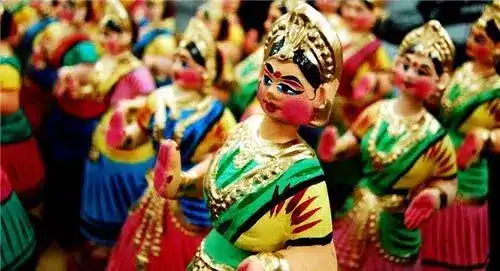
- The craft was brought to Thanjavur by Maratha ruler Raja Serfoji in the early 19th Century.
- In Tamil language, it is called Thanjavur thalayatti bommai.
- Thanjavur dolls are primarily of two kinds, one is the bobble-head version, and the other is the tilting doll version.
- Material used:
- Doll-makers use papier-mâché, plaster of Paris and other materials for the body.
- A mixture of vandal mann (fine silt deposited by rushing streams of water), kali mann (clayey riverbed mud), and manal (loose aggregate) is required to make the dolls’ pedestals.
- Copper sulphate powder is added as a fungicide.
- Process:
- All the dolls have a lightweight body made of tapioca flour, papier-mache and plaster of Paris cooked and kneaded to the consistency of ‘roti’ dough.
- Each toy is made in halves, by pressing the rolled-out ‘doll dough’ into cement moulds, with liberal dusting of chalk powder.
- Dolls pass through at least seven stages from mould to assembly before they are packed for despatch, with each step, such as painting the facial features and costume embellishments, requiring a skilled artisan’s attention
- The dancing doll has four sections (including the arms that are individually glued to the torso), each balancing on the other with the help of inner metal loop hooks that create the light bobbing movement.
- It earned the Geographical Indication tag in 2009.
Q1) What Is Geographical Indication (GI) tag?
It is a sign used on products that have a specific geographical origin and possess qualities or a reputation that are due to that origin. This is typically used for agricultural products, foodstuffs, wine and spirit drinks, handicrafts and industrial products.
Source: Keeping Thanjavur doll industry out of the doldrums is no child’s play


 Last updated on Sep, 2026
→ UPSC 2027 Notification will be released on 13 January 2027 at upsconline.nic.in.
→ Asian Games 2026 are being held in Aichi-Nagoya, Japan, from 19 September to 4 October.
→ Check out the latest UPSC Syllabus here.
→ Download UPSC Model Answers for Mains 2026
→ UPSC Mains Question Paper 2026 is out now for Essay & GS Paper 1, 2, 3 & 4.
→ UPSC Calendar 2027 has been released.
→ Enroll in Vajiram & Ravi’s UPSC Mains Test Series 2027 for structured answer writing practice, expert evaluation, and exam-oriented feedback.
→ Join Vajiram & Ravi’s UPSC Mentorship Program 2027 for personalized guidance, strategy planning, and one-to-one support from experienced mentors.
→ Go through the UPSC Mains Previous Year Papers to enhance your preparation.
→ UPSC has released UPSC Toppers List 2025 with the Civil Services final result on its official website.
→ Also check Best UPSC Coaching in India