About Farsi
- Farsi, also known as Persian Language, is the most widely spoken member of the Iranian branch of the Indo-Iranian languages, a subfamily of the Indo-European languages.
- It is the official language of Iran, and two varieties of Persian known as Dari and Tajik are official languages in Afghanistan and Tajikistan, respectively.
- Significant populations of Farsi speakers can be found in other Persian Gulf countries (Bahrain, Iraq, Oman, Yemen, and the United Arab Emirates), as well as large communities in the US.
- It has about 62 million native speakers, ranking it among the world’s 20 most widely spoken first languages.
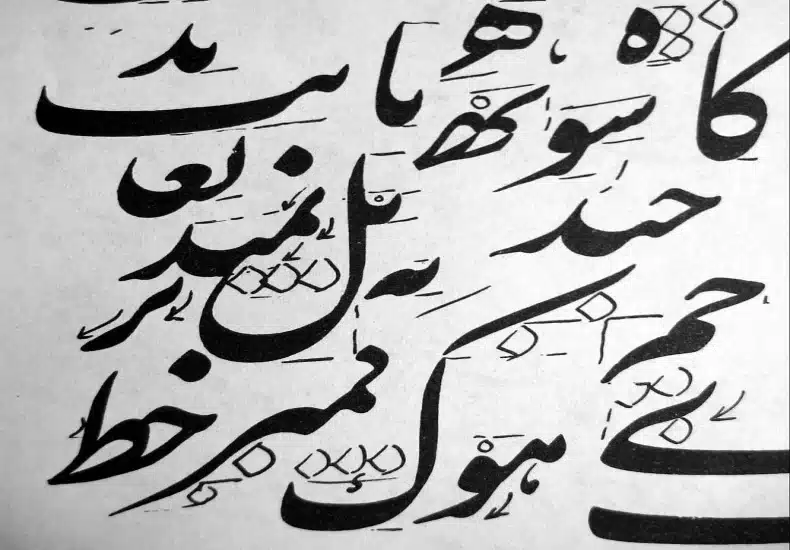
- Farsi in Iran is written in a variety of the Arabic script called Perso-Arabic, which has some innovations to account for Persian phonological differences. This script came into use in Persia after the Islamic conquest in the seventh century.
- Its relatives are the languages of northern India and, more distantly, the major European languages including English.
Key Facts about Classical Languages in India:
- Criteria evolved by Government of India to determine declaration of a language as a Classical language is as under: –
- High antiquity of its early texts/recorded history over a period of 1500-2000 years;
- A body of ancient literature/texts, which is considered a valuable heritage by generations of speakers;
- The literary tradition be original and not borrowed from another speech community;
- The classical language and literature being distinct from modern, there may also be a discontinuity between the classical language and its later forms or its offshoots.
- Currently, six languages enjoy the ‘Classical’ status: Tamil (declared in 2004), Sanskrit (2005), Kannada (2008), Telugu (2008), Malayalam (2013), and Odia (2014).
- The benefits it provides once a language is notified as a Classical language:
- Two major annual international awards for scholars of eminence in classical Indian languages.
- A Centre of Excellence for studies in Classical Languages is set up.
- The University Grants Commission is requested to create, to start with at least in the Central Universities, a certain number of Professional Chairs for the Classical Languages so declared.”
Q1) What are Indo-European languages?
Indo-European is a family of languages (including most of the languages spoken in Europe, India, and Iran) descended from a common tongue spoken in the third millennium B.C. by agricultural people originating in southeastern Europe. The family of languages is the second-oldest in the world, only behind the Afroasiatic family (which includes the languages of ancient Egypt and early Semitic languages). In terms of written evidence, the earliest Indo-European languages that researchers have found include the Hittite, Luwian, and Mycenaean Greek languages.
Source: Farsi to be one of India’s nine classical languages: Jaishankar


 Last updated on Oct, 2026
→ UPSC 2027 Notification will be released on 13 January 2027 at upsconline.nic.in.
→ Check Nobel Prize 2026 Winners List here.
→ Download PIB PRiSM Monthly Magazine 2026 here.
→ Check UPSC Monthly Current Affairs Magazine The Recitals here.
→ Check out the latest UPSC Syllabus here.
→ Download UPSC Model Answers for Mains 2026
→ UPSC Mains Question Paper 2026 is out now for Essay & GS Paper 1, 2, 3 & 4.
→ UPSC Calendar 2027 has been released.
→ Enroll in Vajiram & Ravi’s UPSC Mains Test Series 2027 for structured answer writing practice, expert evaluation, and exam-oriented feedback.
→ Join Vajiram & Ravi’s UPSC Mentorship Program 2027 for personalized guidance, strategy planning, and one-to-one support from experienced mentors.
→ Go through the UPSC Mains Previous Year Papers to enhance your preparation.
→ UPSC has released UPSC Toppers List 2025 with the Civil Services final result on its official website.
→ Also check Best UPSC Coaching in India