About Qanat system
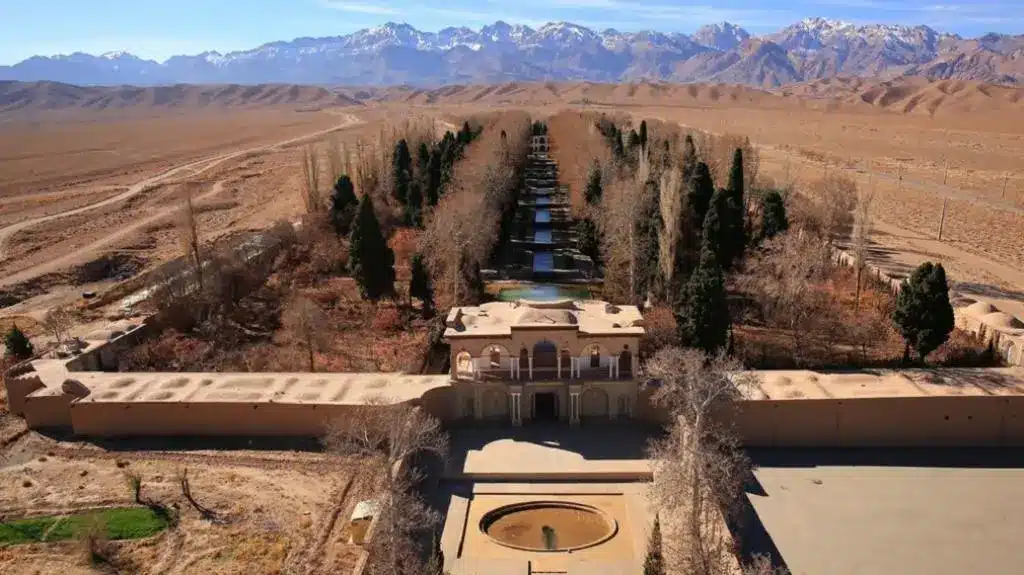
- It is an ancient type of water-supply system, developed and still used in arid regions of the world.
- It taps underground mountain water sources trapped in and beneath the upper reaches of alluvial fans and channels the water downhill through a series of gently sloping tunnels.
- The qanats have been used for centuries in arid and semi-arid parts of north Africa, the Middle East and Asia, where water supplies are limited.
- It’s known by a variety of names, “foggara” in north Africa, “falaj” in Oman and “qarez” in parts of Asia.
- Many old qanāts are still used in Iran and Afghanistan, chiefly for irrigation.
- It’s a system that’s managed by everyone and its benefits are shared.
- Some of the region’s qanat systems, like those in Iran, are protected under heritage status.
- Significance of the system
- The qanat is sustainable as it works with gravity and no electricity is needed. It can even be used to create clean energy.
- Water lost to evaporation is minimal in comparison to surface water supplies.
- It can have a wide scale impact. Qanats are multiple kilometres long and once this water hits a floodplain, it can irrigate multiple hectares of land.
- It fosters social cohesion. Many people, with different skills, are involved in maintaining the system.
- The lifespan of the system extends beyond that of a deep water well, which is only about 20 years. Tunnels do not clog as easily as wells.
- The quality of water coming from the mountains is much better than water on the plains. It’ll have lower salinity and be better for crops and people.
Q1) What is Evaporation?
It is the process that changes liquid water to gaseous water (water vapor). Water moves from the Earth’s surface to the atmosphere via evaporation. Evaporation occurs when energy (heat) forces the bonds that hold water molecules together to break.
Source: An ancient system that could bring water to dry areas


 Last updated on Sep, 2026
→ UPSC 2027 Notification will be released on 13 January 2027 at upsconline.nic.in.
→ Asian Games 2026 are being held in Aichi-Nagoya, Japan, from 19 September to 4 October.
→ Check out the latest UPSC Syllabus here.
→ Download UPSC Model Answers for Mains 2026
→ UPSC Mains Question Paper 2026 is out now for Essay & GS Paper 1, 2, 3 & 4.
→ UPSC Calendar 2027 has been released.
→ Enroll in Vajiram & Ravi’s UPSC Mains Test Series 2027 for structured answer writing practice, expert evaluation, and exam-oriented feedback.
→ Join Vajiram & Ravi’s UPSC Mentorship Program 2027 for personalized guidance, strategy planning, and one-to-one support from experienced mentors.
→ Go through the UPSC Mains Previous Year Papers to enhance your preparation.
→ UPSC has released UPSC Toppers List 2025 with the Civil Services final result on its official website.
→ Also check Best UPSC Coaching in India