About Universal Service Obligation Fund (USOF)
- USOF was set up by an Act of Parliament in December 2003 by amending the Indian Telegraph Act, 1885.
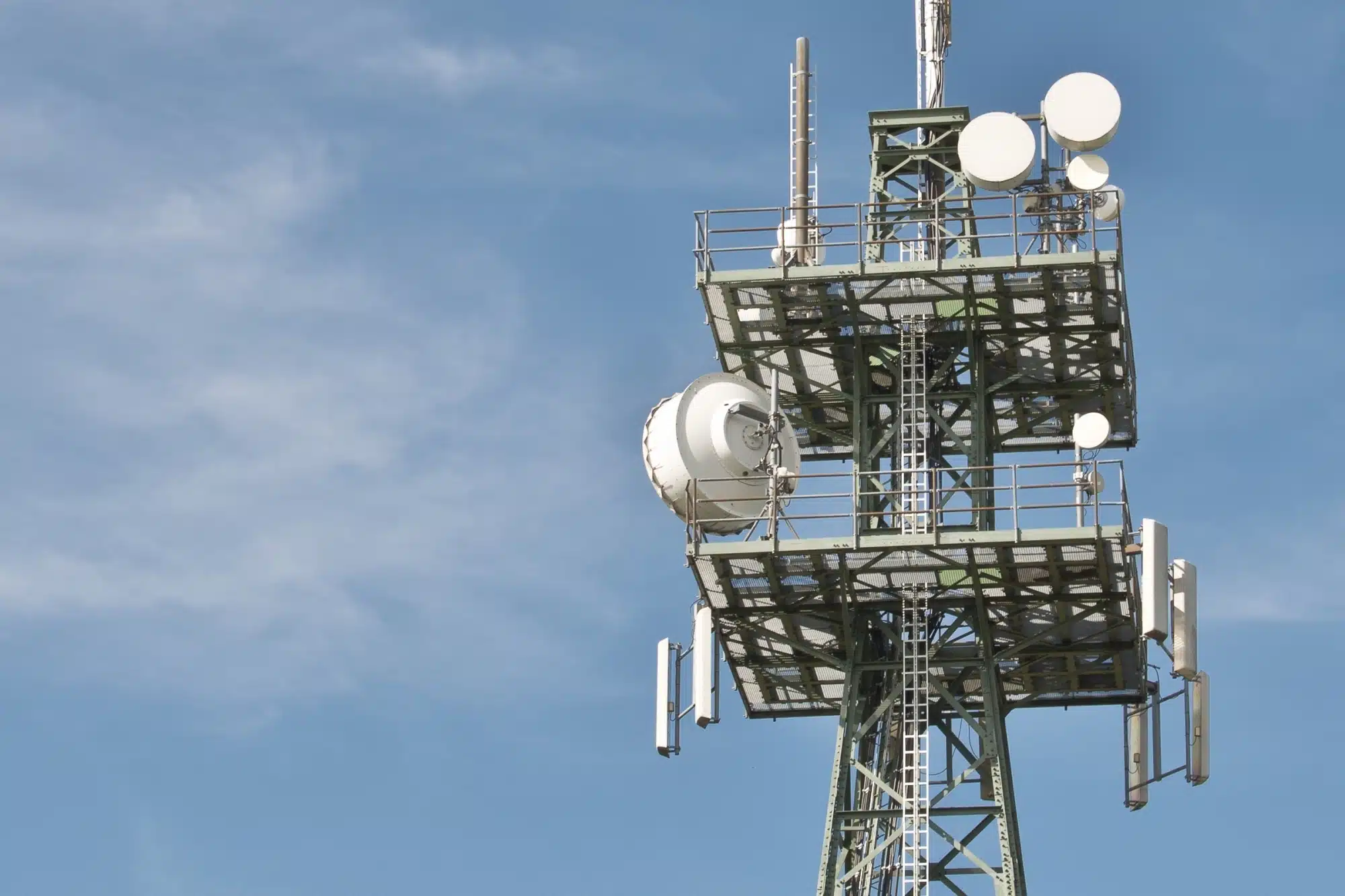
- The objective of the USOF is to provide access to telecom services in a nondiscriminatory manner to people in rural and remote areas at affordable and reasonable prices, thereby bridging the rural-urban digital divide.
- For commercially non-viable rural and remote areas, USOF provides subsidy support in the form of Net Cost or Viability Gap Funding (VGF) to incentivize telecom service providers for the expansion of telecommunications and broadband services in those areas.
- Funding Mechanism:
- The USOF is funded through a levy on the revenue earned by telecom operators.
- The government imposes a Universal Service Levy (USL) on the gross revenue of the telecom companies, which is a percentage of their Adjusted Gross Revenue (AGR).
- This levy is collected and deposited into the USOF.
- Administration:
- USOF is headed by the Administrator, USO Fund who is appointed by the Central Government, for the administration of the fund.
- It is an attached office of the Department of Telecommunications (DoT), Ministry of Communications.
What is the Telecom Technology Development Fund (TTDF)?
- USOF officially launched the TTDF Scheme on October 1st, 2022.
- The TTDF Scheme is aimed at domestic companies and institutions involved in technology design, development, and commercialization of telecommunication products and solutions to enable affordable broadband and mobile services in rural and remote areas.
- This initiative helps to connect schools with varied volunteers from the Indian Diaspora, namely, young professionals, retired teachers, retired Government officials, retired professionals, NGOs, Private Sector and Public Sector Companies, Corporate Institutions, and many others.
- Under the scheme, USOF is also targeting to develop standards to meet countrywide requirements and create an ecosystem for research, design, prototyping, use cases, pilots, and proof-of-concept testing, among others.
- The scheme entails grants to Indian entities to encourage and induct indigenous technologies tailor-made to meet domestic needs.
Q1) What is adjusted gross revenue (AGR)?
Telecom operators are required to pay license fee and spectrum charges in the form of ‘revenue share’ to the Government. The revenue amount used to calculate this revenue share is known as AGR.
Source: Budget 2024-25: Telecom industry wants govt to junk USOF, slash duties


 Last updated on Sep, 2026
→ UPSC 2027 Notification will be released on 13 January 2027 at upsconline.nic.in.
→ Asian Games 2026 are being held in Aichi-Nagoya, Japan, from 19 September to 4 October.
→ Check out the latest UPSC Syllabus here.
→ Download UPSC Model Answers for Mains 2026
→ UPSC Mains Question Paper 2026 is out now for Essay & GS Paper 1, 2, 3 & 4.
→ UPSC Calendar 2027 has been released.
→ Enroll in Vajiram & Ravi’s UPSC Mains Test Series 2027 for structured answer writing practice, expert evaluation, and exam-oriented feedback.
→ Join Vajiram & Ravi’s UPSC Mentorship Program 2027 for personalized guidance, strategy planning, and one-to-one support from experienced mentors.
→ Go through the UPSC Mains Previous Year Papers to enhance your preparation.
→ UPSC has released UPSC Toppers List 2025 with the Civil Services final result on its official website.
→ Also check Best UPSC Coaching in India