About International Single Species Action Plan
- It is the key instrument developed under the Agreement on the Conservation of African-Eurasian Migratory Waterbirds (AEWA).
- Purpose: It is for the purpose of implementing coordinated measures to restore migratory waterbird species to a favourable conservation status.
- International cooperation among the species’ range states is essential for implementation of these action plans.
What is AEWA?
- It is an intergovernmental treaty dedicated to the conservation of migratory waterbirds and their habitats across Africa, Europe, the Middle East, Central Asia, Greenland and the Canadian Archipelago.
- It is developed under the framework of the Convention on Migratory Species (CMS) and administered by the United Nations Environment Programme (UNEP).
- It brings together countries and the wider international conservation community in an effort to establish coordinated conservation and management of migratory waterbirds throughout their entire migratory range.
- It covers 255 species of migratory waterbirds that are ecologically dependent on wetlands for at least part of their annual cycle.
- The Agreement area stretches from the northern reaches of Canada and the Russian Federation to the southernmost tip of Africa, covering 119 Range States from Africa, Europe, the Middle East and parts of Asia and Canada
- The Agreement has three main bodies:
- Meeting of the Parties (MOP), the governing body of AEWA;
- Standing Committee (StC), responsible for steering the operations between sessions of the MOP;
- Technical Committee (TC), responsible for providing scientific and technical advice.
- The Agreement’s Secretariat (UNEP/AEWA Secretariat) based in Bonn, Germany, supports the Parties and services the bodies of the Agreement.
Q1) What is the United Nations Environment Programme?
It is responsible for coordinating responses to environmental issues within the United Nations system. It was established by Maurice Strong, its first director, after the United Nations Conference on the Human Environment in Stockholm in June 1972.
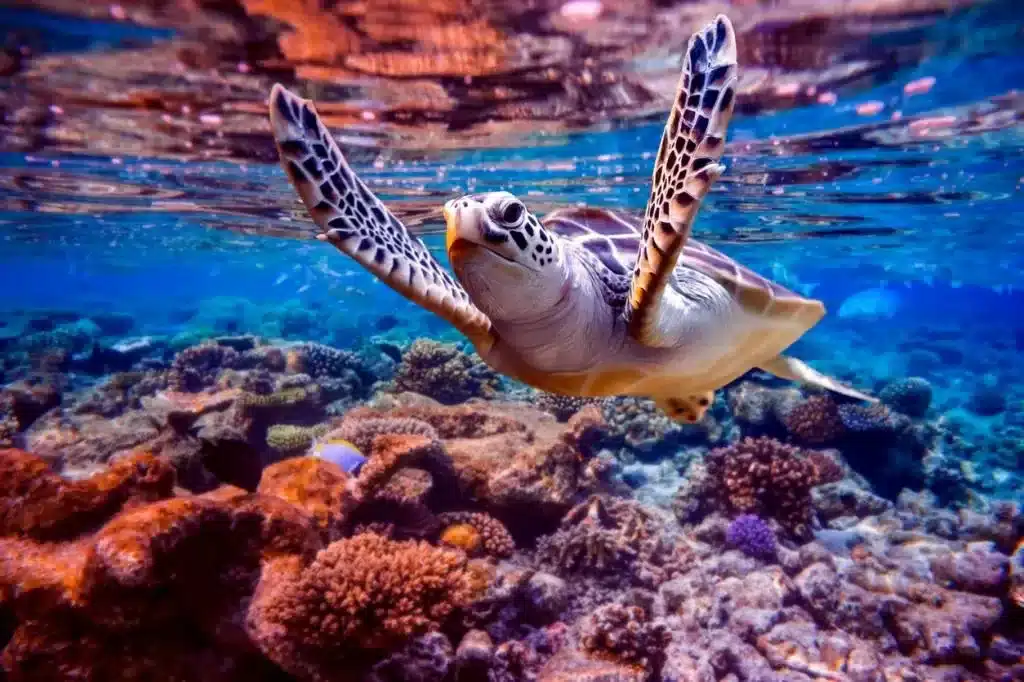
Source: CMS COP14: Draft resolution for conservation of hawksbill turtle & angelshark adopted


 Last updated on Sep, 2026
→ UPSC 2027 Notification will be released on 13 January 2027 at upsconline.nic.in.
→ Asian Games 2026 are being held in Aichi-Nagoya, Japan, from 19 September to 4 October.
→ Check out the latest UPSC Syllabus here.
→ Download UPSC Model Answers for Mains 2026
→ UPSC Mains Question Paper 2026 is out now for Essay & GS Paper 1, 2, 3 & 4.
→ UPSC Calendar 2027 has been released.
→ Enroll in Vajiram & Ravi’s UPSC Mains Test Series 2027 for structured answer writing practice, expert evaluation, and exam-oriented feedback.
→ Join Vajiram & Ravi’s UPSC Mentorship Program 2027 for personalized guidance, strategy planning, and one-to-one support from experienced mentors.
→ Go through the UPSC Mains Previous Year Papers to enhance your preparation.
→ UPSC has released UPSC Toppers List 2025 with the Civil Services final result on its official website.
→ Also check Best UPSC Coaching in India