Human Papillomavirus (HPV) Latest News
The Union Health Ministry is set to launch a nationwide Human Papillomavirus (HPV) vaccination programme targeting girls aged 14 years.
About Human Papillomavirus (HPV)
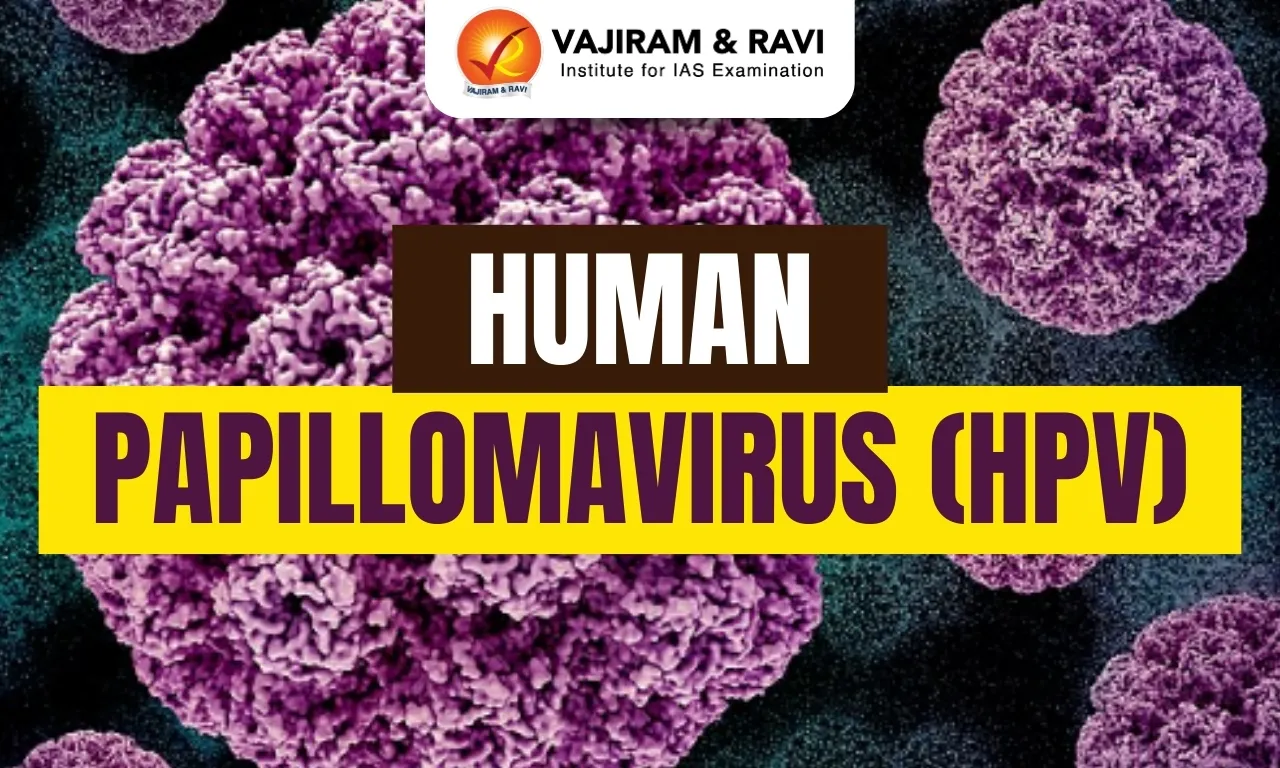
- HPV is the most common sexually transmitted infection (STI), and there are more than 100 types of HPV. Most do not cause health problems.
- However, some types of HPV infection cause skin growths called warts, and some types of HPV infection can cause cancer.
- More than 95% of cervical cancer is caused by the HPV virus.
- Transmission:
- The virus that causes HPV infection is transmitted through skin-to-skin contact.
- Most people get a genital HPV infection through direct sexual contact, including vaginal, anal, and oral sex.
- About 80% of people – both men and women – will get an HPV infection at some point in their lives.
- Most people with HPV don’t know they’re infected and never develop symptoms.
- The body most often clears the virus before it causes any health problems.
- But for some, the infection persists and can lead to precancerous changes.
- Symptoms may include warts on the genitals or anus or cancerous growths in the mouth or throat.
- Treatment:
- There’s no cure for HPV.
- HPV vaccination is the most effective way to prevent HPV-related cancers.


HPV Vaccination
- The HPV vaccine is a series of shots that can protect you from an HPV infection.
- It prevents HPV infections that can progress to cancer or genital warts.
- The HPV vaccination is more efficacious if given between the age group of 9-26 years.
- Once a person gets HPV, the vaccine may not be as effective.
- The HPV vaccine isn’t given during pregnancy.
Source: TH

 Last updated on Sep, 2026
→ UPSC 2027 Notification will be released on 13 January 2027 at upsconline.nic.in.
→ Asian Games 2026 are being held in Aichi-Nagoya, Japan, from 19 September to 4 October.
→ Check out the latest UPSC Syllabus here.
→ Download UPSC Model Answers for Mains 2026
→ UPSC Mains Question Paper 2026 is out now for Essay & GS Paper 1, 2, 3 & 4.
→ UPSC Calendar 2027 has been released.
→ Enroll in Vajiram & Ravi’s UPSC Mains Test Series 2027 for structured answer writing practice, expert evaluation, and exam-oriented feedback.
→ Join Vajiram & Ravi’s UPSC Mentorship Program 2027 for personalized guidance, strategy planning, and one-to-one support from experienced mentors.
→ Go through the UPSC Mains Previous Year Papers to enhance your preparation.
→ UPSC has released UPSC Toppers List 2025 with the Civil Services final result on its official website.
→ Also check Best UPSC Coaching in India
Human Papillomavirus (HPV) FAQs
Q1. What is Human Papillomavirus (HPV)?+
Q2. What conditions can certain types of Human Papillomavirus (HPV) cause?+
Q3. How is Human Papillomavirus (HPV) transmitted?+
Q4. What is the most effective way to prevent HPV-related cancers?+
Tags: human papillomavirus prelims pointers upsc prelims current afffairs