About Gold Nanoparticles
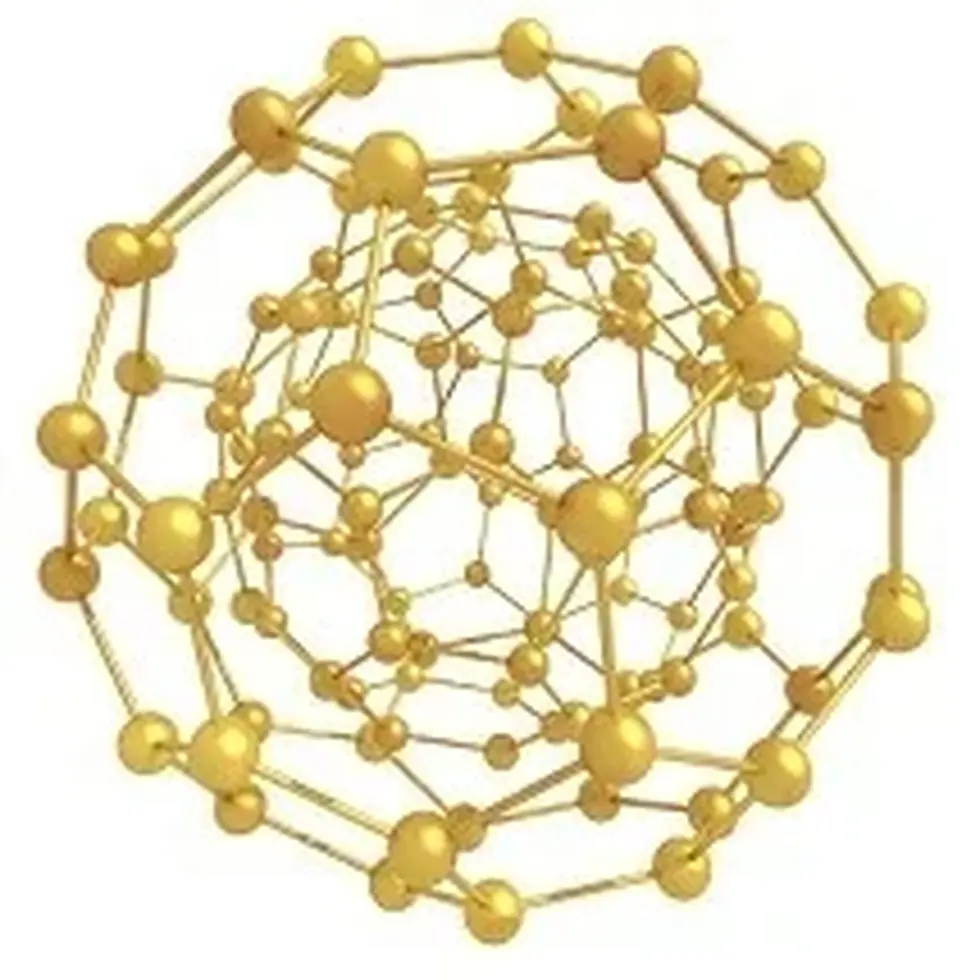
- Gold nanoparticles (AuNPs) are small gold particles with a diameter of 1 to 100 nm.
- Once dispersed in water, AuNPs are also known as colloidal gold.
- These are also called as ‘gold bhasma,’
- Properties
- Spherical AuNPs possess useful attributes such as size- and shape-related optoelectronic properties, large surface-to-volume ratio, excellent biocompatibility, and low toxicity.
- Important physical properties of AuNPs include surface plasmon resonance (SPR) and the ability to quench fluorescence.
- Spherical AuNPs exhibit a range of colors (e.g., brown, orange, red and purple) in aqueous solution as the core size increases from 1 to 100 nm.
- These are not – toxic, not phototoxic, not genotoxic, non-irritant and non-sensitizing
- Applications
- Electronics: Gold nanoparticles are designed for use as conductors from printable inks to electronic chips. Nanoscale gold nanoparticles are being used to connect resistors, conductors, and other elements of an electronic chip.
- Photodynamic Therapy: Near-IR absorbing gold nanoparticles produce heat when excited by light at wavelengths from 700 to 800 nm. This enables these nanoparticles to eradicate targeted tumors.
- Therapeutic Agent Delivery: Therapeutic agents can also be coated onto the surface of gold nanoparticles. The large surface area-to-volume ratio of gold nanoparticles enables their surface to be coated with hundreds of molecules
- Sensors – These are used in a variety of sensors. For example, a colorimetric sensor based on gold nanoparticles can identify if foods are suitable for consumption.
- Diagnostics: These are also used to detect biomarkers in the diagnosis of heart diseases, cancers, and infectious agents.
Q1) What is nanotechnology?
Nanotechnology is the manipulation of matter on a near-atomic scale to produce new structures, materials and devices. The technology promises scientific advancement in many sectors such as medicine, consumer products, energy, materials, and manufacturing.
Source: Gold nanoparticles can help arrest ageing: Experts


 Last updated on Sep, 2026
→ UPSC 2027 Notification will be released on 13 January 2027 at upsconline.nic.in.
→ Asian Games 2026 are being held in Aichi-Nagoya, Japan, from 19 September to 4 October.
→ Check out the latest UPSC Syllabus here.
→ Download UPSC Model Answers for Mains 2026
→ UPSC Mains Question Paper 2026 is out now for Essay & GS Paper 1, 2, 3 & 4.
→ UPSC Calendar 2027 has been released.
→ Enroll in Vajiram & Ravi’s UPSC Mains Test Series 2027 for structured answer writing practice, expert evaluation, and exam-oriented feedback.
→ Join Vajiram & Ravi’s UPSC Mentorship Program 2027 for personalized guidance, strategy planning, and one-to-one support from experienced mentors.
→ Go through the UPSC Mains Previous Year Papers to enhance your preparation.
→ UPSC has released UPSC Toppers List 2025 with the Civil Services final result on its official website.
→ Also check Best UPSC Coaching in India