About Maillard Reaction:
- It was named after the early 20th-century French scientist Louis-Camille Maillard.
- The Maillard reaction is a chemical process that occurs when amino acids, which are the building blocks of proteins, and sugars are heated. The process affects the flavours, aromas, and textures of foods.
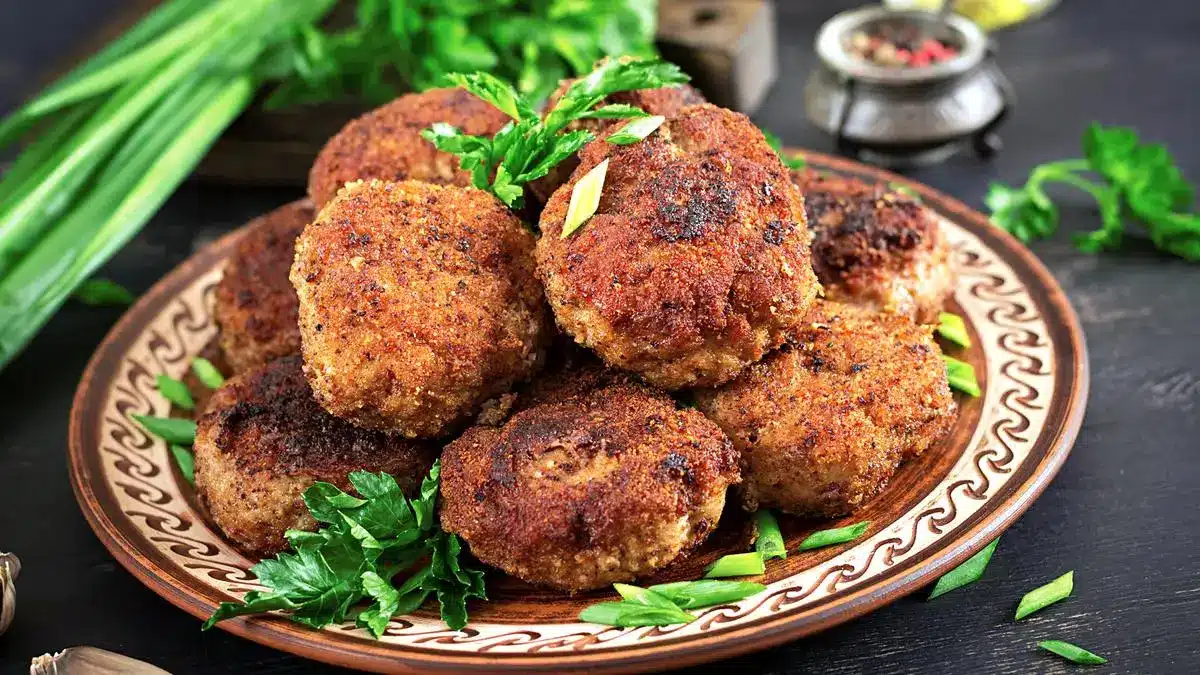
- This reaction is a form of non-enzymatic browning of food, which means that the colour change occurs without the activity of enzymes.
How does the Maillard reaction cause browning of food?
- It is a complex chemical mechanism that leads to the formation of multiple products through the process. Chemist J.E. Hodge in 1953 was the first to break down the reaction into steps for simplification.
- A variety of foods, including meats, bread, vegetables, coffee beans etc., contain both sugars and protein units.
- When food is heated, these sugars and proteins undergo a condensation reaction to form a protein-sugar compound called unstable Schiff base.
- When the Schiff base is rearranged and dehydrated, various intermediate compounds form. These compounds react further to produce important flavour compounds and contribute to the development of characteristic aromas in the food.
- Some of the intermediate compounds undergo a rearrangement, which results in the reorganisation of the atoms in the Schiff base, creating a more stable product. These products are important precursors for melanoidins, which are responsible for the brown coloration of the food.
- These compounds undergo further changes like condensation and polymerisation, leading to the formation of melanoidins — nitrogen-containing compounds that give food the distinct brown colour.
- Factors affecting the reaction
- The rate and extent of this reaction depend on several factors, including temperature, acidity, moisture content, and the types and concentrations of proteins and sugars in the food.
- Ideal Temperature: These are in the range of 110 degrees C and 170 degrees C, and temperatures higher than that can burn the food and render bitter flavours.
- Generally, higher temperatures accelerate the reaction while acidic conditions and the presence of water can inhibit it.
- This is the reason that foods brown more quickly at higher temperatures and dry foods, such as bread crusts, can develop a deep brown colour during baking.
Q1: What are Polymers?
These are materials made of long, repeating chains of molecules. The materials have unique properties, depending on the type of molecules being bonded and how they are bonded. Some polymers bend and stretch, like rubber and polyester. Others are hard and tough, like epoxies and glass.
Source: Science for All | What causes the browning of food?


 Last updated on Sep, 2026
→ UPSC 2027 Notification will be released on 13 January 2027 at upsconline.nic.in.
→ Check out the latest UPSC Syllabus here.
→ Download UPSC Model Answers for Mains 2026
→ UPSC Mains Question Paper 2026 is out now for Essay & GS Paper 1, 2, 3 & 4.
→ UPSC Calendar 2027 has been released.
→ Enroll in Vajiram & Ravi’s UPSC Mains Test Series 2027 for structured answer writing practice, expert evaluation, and exam-oriented feedback.
→ Join Vajiram & Ravi’s UPSC Mentorship Program 2027 for personalized guidance, strategy planning, and one-to-one support from experienced mentors.
→ Go through the UPSC Mains Previous Year Papers to enhance your preparation.
→ UPSC has released UPSC Toppers List 2025 with the Civil Services final result on its official website.
→ Also check Best UPSC Coaching in India