About Genetic Drift:
- It is one of the basic mechanisms of evolution.
- It takes place when the occurrence of variant forms of a gene, called alleles, increases and decreases by chance over time in a population.
- This occurs due to random sampling and the random events that influence the survival and reproduction of those individuals.
- These variations in the presence of alleles are measured as changes in allele frequencies.
- Small populations are more susceptible to genetic drift than large populations, whose larger numbers can buffer the population against chance events.
- Once it begins, genetic drift will continue until the involved allele is either lost by a population or until it is the only allele present in a population at a particular locus.
- Both possibilities decrease the genetic diversity of a population.
- It could also cause initially rare allelestobecome much more frequent, and even fixed.
- Genetic drift is common after population bottlenecks, which are events that drastically decrease the size of a population.
- In these cases, genetic drift can result in the loss ofrare alleles and decrease the gene pool.
- Genetic drift can cause a new population to be genetically distinct from its original population, which has led to the hypothesis that genetic drift plays a role in the evolution of new species.
Genetic Drift vs Natural Selection:
- Genetic drift is the converse of natural selection.
- The theory of natural selection maintains that some individuals in a population have traitsthatenable them to survive and produce more offspring, while other individuals have traits that are detrimental and may cause them to die before reproducing.
- Over successive generations, these selection pressures can change the gene pooland the traits within the population.
- Thus, organisms that are more adapted to their environment are more likely to surviveand pass on the genes that aided their success. This process causes species to change and diverge over time.
Unlike natural selection, genetic drift describes the effect of chance on populations in the absence of positive or negative selection pressure.
Q1: What is Gene?
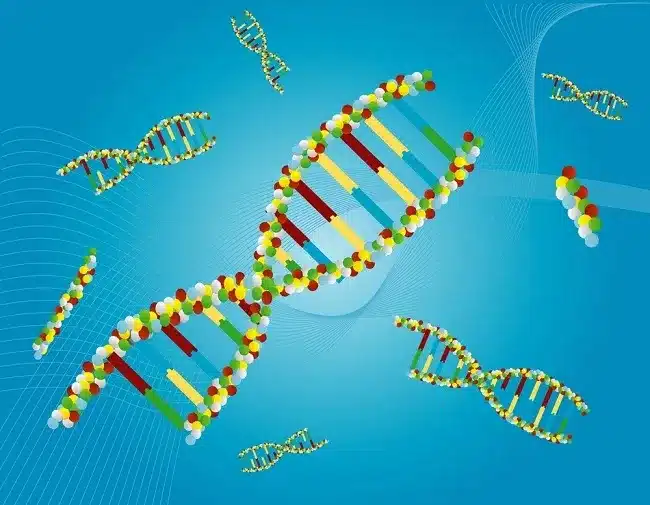
A gene is the basic physical and functional unit of heredity. Genes are made up of DNA. Some genes act as instructions to make molecules called proteins. However, many genes do not code for proteins. In humans, genes vary in size from a few hundred DNA bases to more than 2 million bases.Every person has two copies of each gene, one inherited from each parent. Most genes are the same in all people, but a small number of genes (less than 1 percent of the total) are slightly different between people. Alleles are forms of the same gene with small differences in their sequence of DNA bases.


 Last updated on Oct, 2026
→ UPSC 2027 Notification will be released on 13 January 2027 at upsconline.nic.in.
→ Check Nobel Prize 2026 Winners List here.
→ Download PIB PRiSM Monthly Magazine 2026 here.
→ Check UPSC Monthly Current Affairs Magazine The Recitals here.
→ Check out the latest UPSC Syllabus here.
→ Download UPSC Model Answers for Mains 2026
→ UPSC Mains Question Paper 2026 is out now for Essay & GS Paper 1, 2, 3 & 4.
→ UPSC Calendar 2027 has been released.
→ Enroll in Vajiram & Ravi’s UPSC Mains Test Series 2027 for structured answer writing practice, expert evaluation, and exam-oriented feedback.
→ Join Vajiram & Ravi’s UPSC Mentorship Program 2027 for personalized guidance, strategy planning, and one-to-one support from experienced mentors.
→ Go through the UPSC Mains Previous Year Papers to enhance your preparation.
→ UPSC has released UPSC Toppers List 2025 with the Civil Services final result on its official website.
→ Also check Best UPSC Coaching in India