About Vaccine-derived poliovirus:
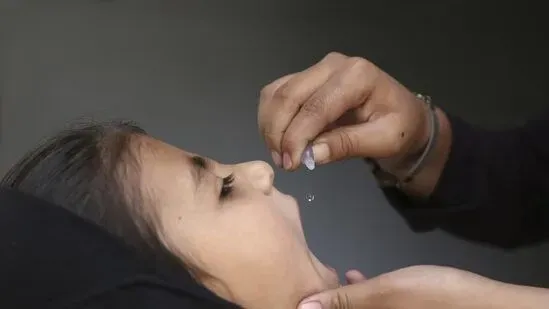
- It is a documented variant of poliovirus that originates from the strain used in the oral polio vaccine (OPV).
- The OPV includes a live, weakened poliovirus that temporarily replicates in the intestine, stimulating the immune system to produce antibodies and develop immunity.
- Understanding Vaccine-Derived Polio (VDPV)
- Vaccine composition: The Oral Polio Vaccine (OPV) contains a weakened form of the poliovirus, which stimulates an immune response.
- cVDPV development: On rare occasions, in under-immunized populations, the excreted vaccine virus can circulate, undergo genetic changes, and potentially revert to a form capable of causing paralysis. This is known as circulating vaccine-derived poliovirus (cVDPV).
- Global context: Since 2000, over 10 billion doses of OPV have been administered globally, resulting in 24 cVDPV outbreaks in 21 countries, with fewer than 760 cases.
- Prevention: To stop cVDPV transmission, WHO recommends multiple rounds of high-quality immunisation campaigns.
- Key Facts about Polio:
- Polio overview: Polio is a viral infectious disease that can cause irreversible paralysis and even death by affecting the nervous system.
- Wild Poliovirus strains: There are three distinct strains of wild poliovirus:
- Wild Poliovirus Type 1 (WPV1)
- Wild Poliovirus Type 2 (WPV2)
- Wild Poliovirus Type 3 (WPV3)
- Although symptomatically similar, each strain has genetic and virological differences, necessitating separate eradication efforts.
- Transmission: The virus primarily spreads through the fecal-oral route and can multiply in the intestine, where it can invade the nervous system. It predominantly affects children under five.
- Available vaccines:
- Oral Polio Vaccine (OPV): Administered as a birth dose, followed by three primary doses at 6, 10, and 14 weeks, and a booster dose at 16-24 months.
- Injectable Polio Vaccine (IPV): This vaccine is given as an additional dose along with the third DPT (Diphtheria, Pertussis, and Tetanus) vaccine under the Universal Immunization Programme (UIP).
India’s polio-free status: India was declared polio-free by the World Health Organization (WHO) in 2014, with the last wild poliovirus case reported in 2011.
Q1. What is a vaccine?
A vaccine is a biological preparation that stimulates the body’s immune response to specific diseases. It can be administered via needle injections, orally, or as a nasal spray, helping the immune system recognize and fight pathogens effectively.
Source: Centre says Meghalaya polio case is vaccine-derived – The Hindu


 Last updated on Sep, 2026
→ UPSC 2027 Notification will be released on 13 January 2027 at upsconline.nic.in.
→ Asian Games 2026 are being held in Aichi-Nagoya, Japan, from 19 September to 4 October.
→ Check out the latest UPSC Syllabus here.
→ Download UPSC Model Answers for Mains 2026
→ UPSC Mains Question Paper 2026 is out now for Essay & GS Paper 1, 2, 3 & 4.
→ UPSC Calendar 2027 has been released.
→ Enroll in Vajiram & Ravi’s UPSC Mains Test Series 2027 for structured answer writing practice, expert evaluation, and exam-oriented feedback.
→ Join Vajiram & Ravi’s UPSC Mentorship Program 2027 for personalized guidance, strategy planning, and one-to-one support from experienced mentors.
→ Go through the UPSC Mains Previous Year Papers to enhance your preparation.
→ UPSC has released UPSC Toppers List 2025 with the Civil Services final result on its official website.
→ Also check Best UPSC Coaching in India