


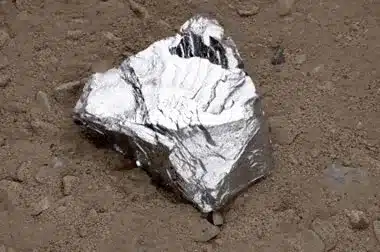
About Zinc:
- It is a silvery blue-grey metal with a relatively low melting and boiling point.
- Both lead & zinc are found to occur together in ore along with other metals like silver and cadmium.
- It is the fourth most widely used metal across the globe, trailing only steel, aluminium and copper. India has self-sufficiency in respect of zinc.
- In India, Rajasthan is endowed with the largest reserves/resources of lead – zinc ore, followed by Andhra Pradesh (3.03%), Madhya Pradesh (1.98%), Bihar etc.
- Global reservoirs of Zinc: Australia accounts for 27% of world’s zinc reserves, followed by China (18%), Russia & Mexico (9% each), Peru(8%), Kazakhstan(5%), USA(4%), etc.
- Uses:
- The largest consumer of zinc is the Galvanising Industry. Owing to its corrosion resistance in varied types of environment, zinc is used for protecting steel by way of galvanizing.
- Large quantities of zinc are used to produce die-castings, which are important in the automobile, electrical and hardware industries.
- Zinc oxide is widely used in the manufacture of very many products such as paints and rubber etc.
- Biological role
- It is a trace mineral, meaning that the body only needs small amounts, and yet it is necessary for almost 100 enzymes to carry out vital chemical reactions.
- It is a major player in the creation of DNA, growth of cells, building proteins, healing damaged tissue, and supporting a healthy immune system.
Key findings
- It found that zinc in plantsaids in nitrogen fixation, a process where atmospheric nitrogen is converted into ammonia, an essential nutrient for plants.
- Legume crops form a symbiotic relationship with rhizobia, a bacteria that fixes atmospheric nitrogen in root nodules.
- However, these nodules are sensitive to environmental factors such as temperature, drought, flooding, soil salinity, and high soil nitrogen levels.
- Another vital finding of this study is the identification of a crucial transcription factor that controls nodule breakdown when soil nitrogen levels are high.
- The researchers discovered that legumes also use zinc as a secondary signal to integrate environmental factors and regulate nitrogen fixation efficiency. The mechanism works due to a transcriptional regulator called Fixation Under Nitrate (FUN).
- FUN is inactivated by zinc through the formation of large filament structures, which are dismantled to release active FUN when zinc levels are low.
Q1: What is galvanisation?
It is the process of applying a protective zinc coating to iron or steel, to prevent rusting. The most common method is hot dip galvanizing, in which steel sections are submerged in a bath of molten zinc.
Source: Unexpected discovery reveals zinc’s crucial role in making legumes resilient to climate change


 Last updated on Sep, 2026
→ UPSC 2027 Notification will be released on 13 January 2027 at upsconline.nic.in.
→ Check out the latest UPSC Syllabus here.
→ Download UPSC Model Answers for Mains 2026
→ UPSC Mains Question Paper 2026 is out now for Essay & GS Paper 1, 2, 3 & 4.
→ UPSC Calendar 2027 has been released.
→ Enroll in Vajiram & Ravi’s UPSC Mains Test Series 2027 for structured answer writing practice, expert evaluation, and exam-oriented feedback.
→ Join Vajiram & Ravi’s UPSC Mentorship Program 2027 for personalized guidance, strategy planning, and one-to-one support from experienced mentors.
→ Go through the UPSC Mains Previous Year Papers to enhance your preparation.
→ UPSC has released UPSC Toppers List 2025 with the Civil Services final result on its official website.
→ Also check Best UPSC Coaching in India








