What’s in today’s article?
- Why in News?
- What is the Premise of this Bio-computer Technology?
- What is the new ‘Bio-computer’?
- What are the Opportunities for ‘Bio-computers’?
- Are ‘Bio-computers’ Ready for Commercial Use?
Why in News?
- Scientists at Johns Hopkins University (JHU) recently outlined a plan for a potentially revolutionary new area of research called “organoid intelligence”, which aims to create “biocomputers”.
What is the Premise of this Bio-computer Technology?
- Traditionally, researchers have used rat brains to investigate various human neurological disorders.
- However, there are several differences in structure, function and cognitive capacities of rodents and humans.
- In a quest to develop systems that are more relevant to humans, scientists are building 3D cultures of brain tissue in the lab, also called brain organoids.
- These “mini-brains”, built using human stem cells, however, have certain limitations –
- No input sensory inputs (touch, smell, vision, etc.)/output connection
- No blood circulation
- When inserted in a rat shows different behavioural interpretation


What is the new ‘Bio-computer’?
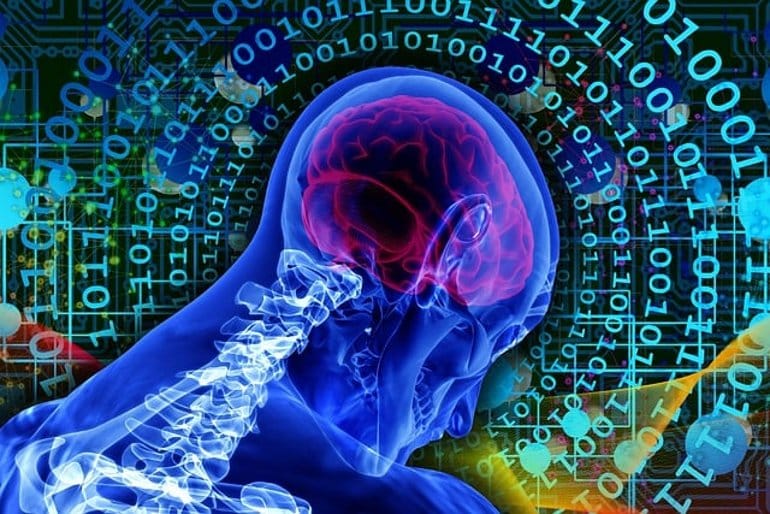
- The JHU researchers’ scheme will combine brain organoids (with multiple electrodes similar to those used to take EEG readings from the brain) with modern computing methods (machine learning) to create “bio-computers”.
- These brain cultures (organoids) grown in the lab are coupled to real-world sensors and input/output devices to develop into the complex organ.
- The scientists were able to grow human neurons on top of a microelectrode array that could both record and stimulate these neurons.

Image Caption: About Bio-computer
What are the Opportunities for ‘Bio-computers’?
- While human brains are slower than computers (say, simple arithmetic), they outshine machines at processing complex information.
- Comparing the data on brain structure, connections, and signalling between ‘healthy’ and ‘patient-derived’ organoids can reveal the biological basis of human cognition, learning, and memory.
- They could also help decode the pathology of and drug development for devastating neurodevelopmental and degenerative diseases such as Parkinson’s disease.
Are ‘Bio-computers’ Ready for Commercial Use?
- Currently, brain organoids have a diameter of less than 1 mm and have fewer than 100,000 cells, which make it roughly three-millionth the size of an actual human brain.
- So scaling up the brain organoid is key to improving its computing capacity.
- Researchers will also have to develop microfluidic systems to transport oxygen and nutrients, and remove waste products.
- They will also need to develop and use advanced analytical techniques to correlate the structural and functional changes in the brain organoids to the various output variables.
- The first, very-primitive forms of learning are already around, and the challenge is now to establish long-term memory, which may take more time.
- There is also a proposal to have an ethics team to parallelly identify, discuss, and analyse ethical issues as they arise in the course of this work.
Q1) What is the significance of creating a bio-computer?
Bio-computers are created by combining brain organoids with modern computing methods (machine learning) to create “bio-computers”. They can reveal the biological basis of human cognition, learning, and memory and could also help decode diseases such as Parkinson’s disease
Source: Explained | What are ‘bio-computers’ and what can they tell us about the human brain?

 Last updated on Sep, 2026
→ UPSC 2027 Notification will be released on 13 January 2027 at upsconline.nic.in.
→ Asian Games 2026 are being held in Aichi-Nagoya, Japan, from 19 September to 4 October.
→ Check out the latest UPSC Syllabus here.
→ Download UPSC Model Answers for Mains 2026
→ UPSC Mains Question Paper 2026 is out now for Essay & GS Paper 1, 2, 3 & 4.
→ UPSC Calendar 2027 has been released.
→ Enroll in Vajiram & Ravi’s UPSC Mains Test Series 2027 for structured answer writing practice, expert evaluation, and exam-oriented feedback.
→ Join Vajiram & Ravi’s UPSC Mentorship Program 2027 for personalized guidance, strategy planning, and one-to-one support from experienced mentors.
→ Go through the UPSC Mains Previous Year Papers to enhance your preparation.
→ UPSC has released UPSC Toppers List 2025 with the Civil Services final result on its official website.
→ Also check Best UPSC Coaching in India