What in Today’s Article?
- Why in News?
- Government’s Approach and the Need for the Advisory to the AI Industry
- Key Highlights of the Advisory to the AI Industry
- What Response has the AI Industry Advisory Received?
Why in News?
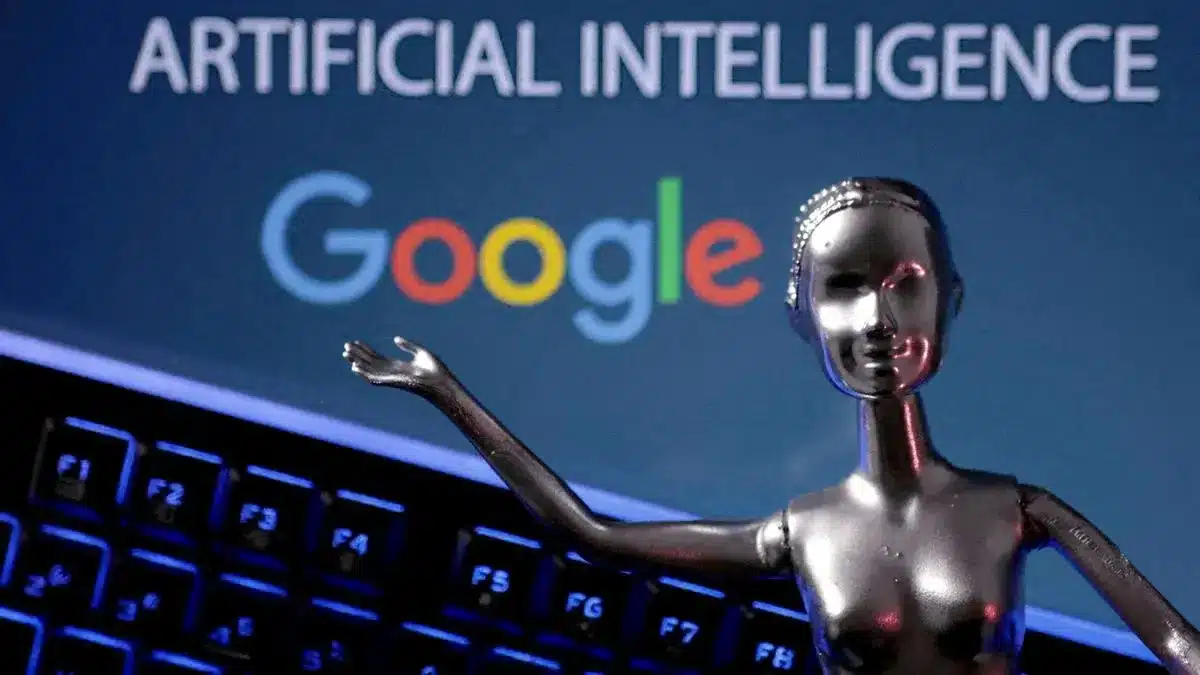
- The Ministry of Electronics and Information Technology (MeitY) issued an advisory to the Artificial Intelligence (AI) industry.
- It stated that all generative AI products would have to be made public with the explicit approval of the Government of India if they are “under-testing/ unreliable”.


Government’s Approach and the Need for the Advisory to the AI Industry:
- Until recently, the government shared confidence in AI, with Big Tech firms frequently striking a balance between seeking regulation and attempting to influence the path these rules take.
- The MeitY categorically said that the government is not considering bringing a law or regulating the growth of AI in the country.
- However, in recent months, MeitY has expressed concern with AI models that generate uncomfortable answers.
- For example, it reacted sharply to Google’s Gemini chatbot, whose response to a query, “Is the current Indian PM a fascist?” went viral.
- According to the MeitY, the ambivalent response by the chatbot violated India’s IT law.
- “You can’t ‘trial’ a car on the road and when there is an accident say, whoops, it is just on trial.”
- Hence, the recent advisory on all generative AI products (such as LLMs similar to ChatGPT and Google’s Gemini) represents a starkly different approach to AI research and policy that the government had previously signalled.
Key Highlights of the Advisory to the AI Industry:
- The rules were intended for large tech firms and wouldn’t apply to startups.
- Under the Rule 3(1)(b) of the Information Technology (Intermediary Guidelines and Digital Media Ethics Code) Rules 2021, the platforms will have clear legal obligations.
- The Rule 3(1)(b) prohibits unlawful content like defamation, pornography, disinformation and anything that “threatens the unity and sovereignty of India.”
- This means, there were legal consequences under existing laws (both criminal and tech laws) for platforms that enable or directly output unlawful content.
- The advisory also contained a requirement for AI-generated imagery to be labelled as such, something the industry has hesitated from making genuine efforts to achieve.
What Response has the AI Industry Advisory Received?
- The advisory has divided industry and observers on a key question: was this an ‘advisory’ or a ‘mandate’?
- The document instructed recipients to submit an action taken-cum-status Report to the Ministry within 15 days.
- The government hasn’t elaborated in detail on how IT laws can apply to automated AI systems.
- According to a technology lawyer, the advisory was “legally unsound” and compared it to the Draft National Encryption Rules 2015, a quickly withdrawn proposal to outlaw strong encryption of data in India.
- Amazon Web Services has tried implementing an ‘invisible’ watermark on the AI-generated imagery, but has expressed concern that such a move would be of little use as watermarks can be removed easily.
Q1) What is generative AI?
Generative AI is a type of AI tech that can produce various types of content, including text, imagery, audio and synthetic data. The tech has been driven by the simplicity of new user interfaces for creating high-quality text, graphics and videos in a matter of seconds.
Q2)What are the emergency provisions of the IT (Intermediary Guidelines and Digital Media Ethics Code) Rules 2021?
Rule 16 of the IT Rules 2021 provides for the emergency powers of the executive to block access to information on digital platforms. This allows them to bypass the tests of necessity and proportionality of a blocking request.

 Last updated on Sep, 2026
→ UPSC 2027 Notification will be released on 13 January 2027 at upsconline.nic.in.
→ Asian Games 2026 are being held in Aichi-Nagoya, Japan, from 19 September to 4 October.
→ Check out the latest UPSC Syllabus here.
→ Download UPSC Model Answers for Mains 2026
→ UPSC Mains Question Paper 2026 is out now for Essay & GS Paper 1, 2, 3 & 4.
→ UPSC Calendar 2027 has been released.
→ Enroll in Vajiram & Ravi’s UPSC Mains Test Series 2027 for structured answer writing practice, expert evaluation, and exam-oriented feedback.
→ Join Vajiram & Ravi’s UPSC Mentorship Program 2027 for personalized guidance, strategy planning, and one-to-one support from experienced mentors.
→ Go through the UPSC Mains Previous Year Papers to enhance your preparation.
→ UPSC has released UPSC Toppers List 2025 with the Civil Services final result on its official website.
→ Also check Best UPSC Coaching in India