What’s in Today’s Article?
- India’s Obesity Crisis Latest News
- Obesity Trends – Global and Indian
- Defining Obesity
- Vulnerable Section
- Health Risks Associated with Obesity
- Causes of the Obesity Epidemic
- Solutions to Address Obesity
- India’s Obesity Crisis FAQs
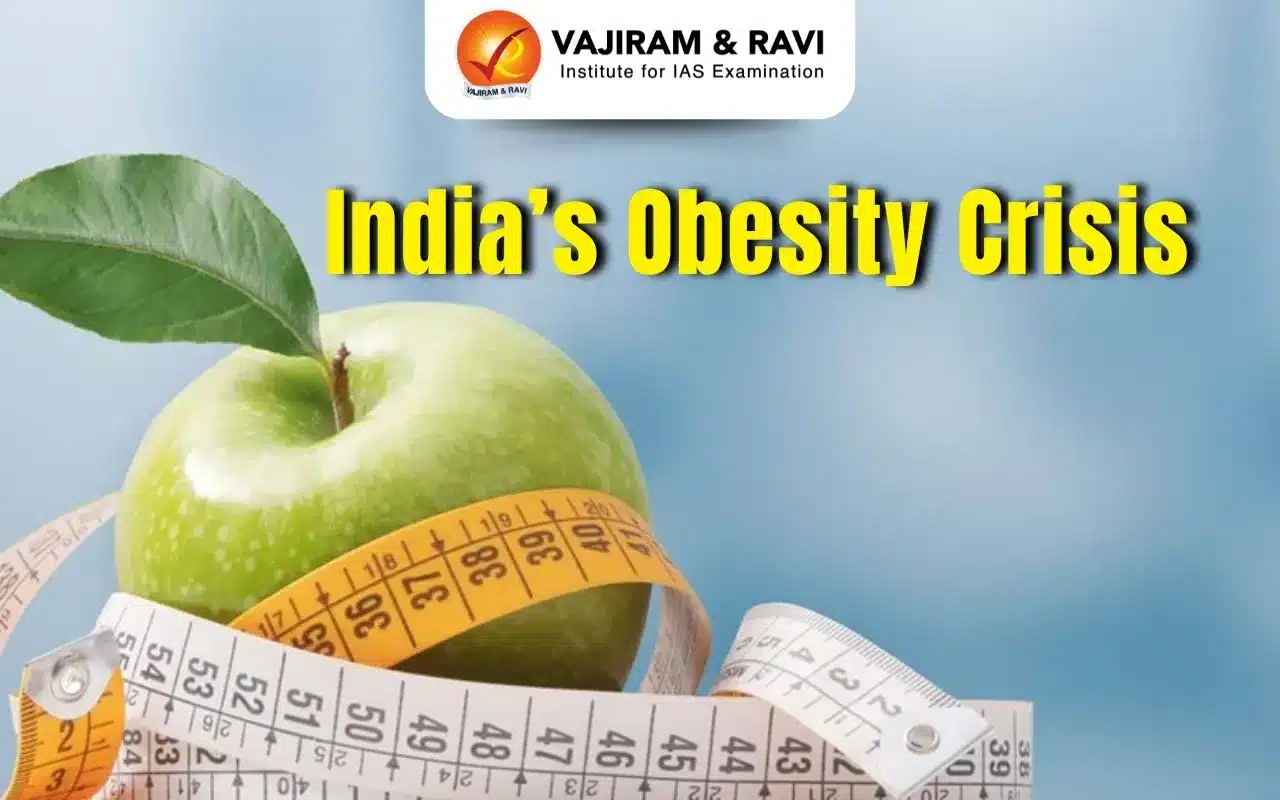
India’s Obesity Crisis Latest News
- PM Modi, in a public address in Silvassa, highlighted obesity as the “root cause of many diseases” and urged Indians to reduce oil consumption.
- He referenced projections from The Lancet, stating that 44 crore people in India could be obese by 2050.


Obesity Trends – Global and Indian
- According to studies published in The Lancet, a majority of adults and a third of children worldwide will be overweight or obese by 2050.
- In 2021, there were 211 crore overweight or obese individuals globally, making up 45% of the world’s population.
- Half of the world’s overweight and obese adults were from eight countries:
- China (40.2 crore)
- India (18 crore)
- USA (17.2 crore)
- Brazil (8.8 crore)
- Russia (7.1 crore)
- Mexico (5.8 crore)
- Indonesia (5.2 crore)
- Egypt (4.1 crore)
Defining Obesity
- Obesity is commonly measured using Body Mass Index (BMI), which is the ratio of a person’s weight to their height squared.
- BMI > 30 → Obese
- BMI 25-30 → Overweight
- For children and adolescents (ages 5-17), the International Obesity Task Force’s weight-for-age and gender criteria are used.
- A Lancet commission recommended updating this definition by introducing “clinical obesity” and “preclinical obesity”:
- A clinical obesity diagnosis should consider two of four body size parameters: BMI, waist circumference, waist-to-hip ratio, and waist-to-height ratio.
- The presence of obesity-related symptoms (e.g., breathlessness, sleep apnea, fatigue, joint pain) is crucial in diagnosis.
- Individuals with high body size parameters but no symptoms would be categorized as preclinical obesity.
- This revision ensures a more accurate assessment of obesity-related health risks, particularly for those with excessive abdominal fat but normal BMI or muscular individuals with high BMI.
Vulnerable Section
- The prevalence of obesity is rising in India, and by 2050, India may surpass China in some obesity categories.
- The number of obese children is particularly alarming, as they are likely to grow into obese adults.
- Studies indicate that childhood and adolescent obesity has increased by 244% in the last 30 years and is projected to rise by 121% in the next 30 years.

Health Risks Associated with Obesity
- Obesity significantly increases the risk of lifestyle diseases, including:
- Type-2 diabetes
- Heart ailments
- Certain cancers
- In countries with aging populations and lower birth rates, managing obesity-related chronic illnesses will become more challenging and expensive.
- Aging patients with obesity require more surgeries and incur higher treatment costs.
- Obesity increases susceptibility to infections and severe diseases (e.g., COVID-19).
Causes of the Obesity Epidemic
- One major driver of the obesity epidemic is the shift in dietary patterns, with an increase in:
- Calorie-dense foods high in sugar, salt, and fats
- Processed foods with long shelf lives replacing traditional diets
- Multinational food and beverage corporations have moved investments from high-income to low- and middle-income countries, where regulations are weaker.
- Between 2009 and 2019, the largest growth in per capita sales of ultra-processed foods was seen in Cameroon, India, and Vietnam.
Solutions to Address Obesity
- Promoting Traditional Food Systems
- Supporting local agriculture and food distribution to counter corporate-driven food systems.
- Introducing additional taxes on unhealthy products, such as sugary beverages.
- Strengthening Healthcare Responses
- Investing in clinical management and treatment of obesity and related conditions.
- Developing national policies to combat obesity (currently, only 40% of countries have such policies, with even lower adoption in low- and middle-income nations).
- Expanding Obesity Intervention Research
- Most obesity intervention studies focus on high-income countries, necessitating research in low-income regions.
- Advancing Medical Treatments
- New obesity drugs (e.g. semaglutide and terzapatide) show promise.
- Past obesity drugs had significant side effects, limiting their use.
- Cost and access remain challenges, but cheaper generic versions may improve availability.
India’s Obesity Crisis FAQs
Q1. Why is obesity increasing in India?
Ans. Changing diets, processed foods, and corporate-driven food systems are key factors fueling India’s rising obesity rates.
Q2. What are the major health risks of obesity?
Ans. Obesity increases risks of type-2 diabetes, heart diseases, cancers, infections, and higher medical costs, especially in aging populations.
Q3. How is childhood obesity affecting India’s future?
Ans. Childhood obesity surged by 244% in 30 years, leading to more obese adults and rising chronic disease burdens in India.
Q4. What role does diet play in obesity?
Ans. Increased consumption of calorie-dense, processed foods with high sugar, salt, and fats significantly contributes to India’s obesity epidemic.
Q5. How can India tackle the obesity crisis?
Ans. Strengthening healthcare, supporting traditional diets, taxing unhealthy foods, expanding research, and improving medical treatments can help control obesity.
Source: IE

 Last updated on Sep, 2026
→ UPSC 2027 Notification will be released on 13 January 2027 at upsconline.nic.in.
→ Asian Games 2026 are being held in Aichi-Nagoya, Japan, from 19 September to 4 October.
→ Check out the latest UPSC Syllabus here.
→ Download UPSC Model Answers for Mains 2026
→ UPSC Mains Question Paper 2026 is out now for Essay & GS Paper 1, 2, 3 & 4.
→ UPSC Calendar 2027 has been released.
→ Enroll in Vajiram & Ravi’s UPSC Mains Test Series 2027 for structured answer writing practice, expert evaluation, and exam-oriented feedback.
→ Join Vajiram & Ravi’s UPSC Mentorship Program 2027 for personalized guidance, strategy planning, and one-to-one support from experienced mentors.
→ Go through the UPSC Mains Previous Year Papers to enhance your preparation.
→ UPSC has released UPSC Toppers List 2025 with the Civil Services final result on its official website.
→ Also check Best UPSC Coaching in India