


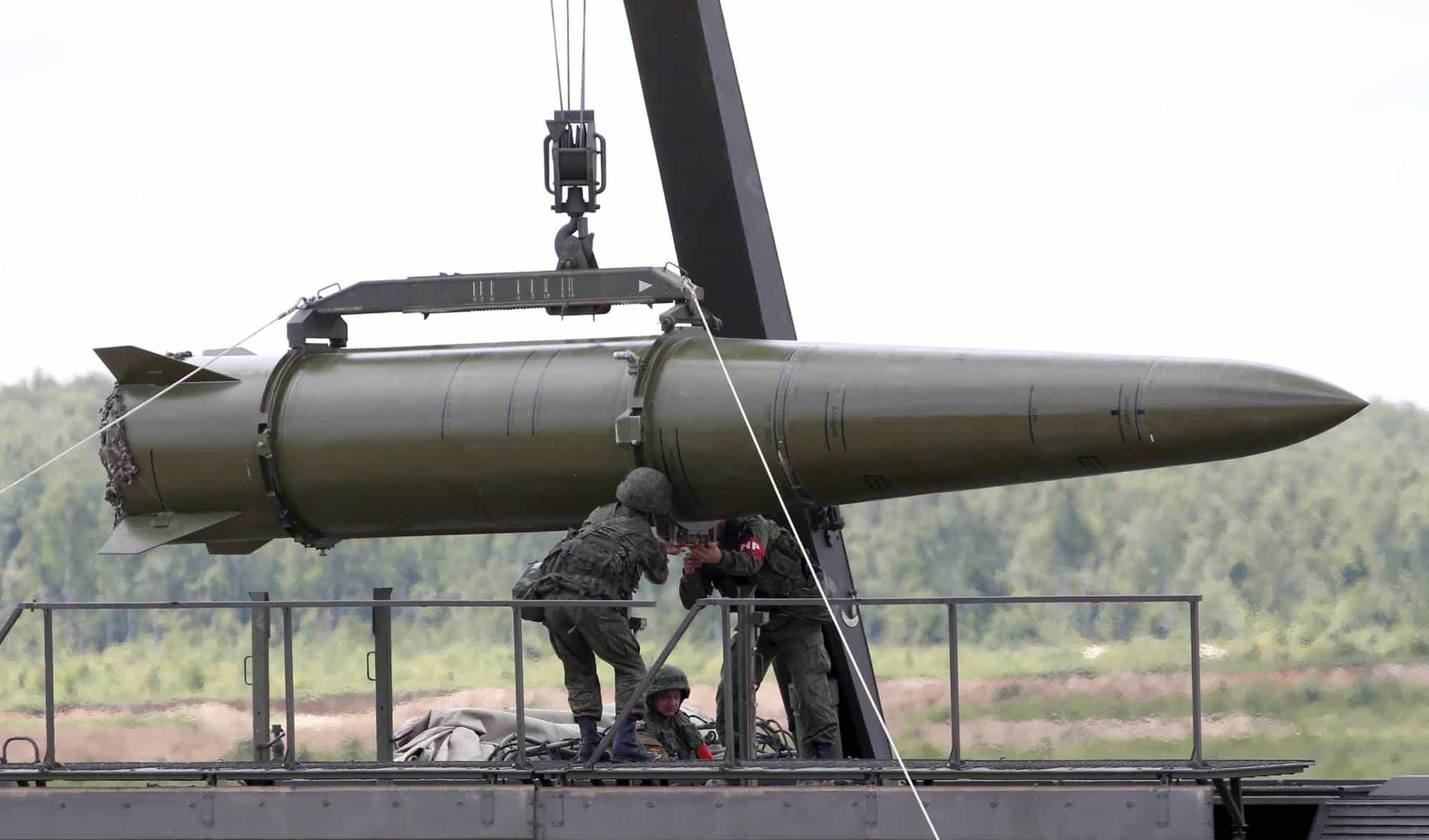
About Tactical Nuclear Weapons:
- Nuclear weapons, just like other weapons, can be categorised into two types — strategic and tactical.
- Strategic Nuclear Weapons: They refer to nuclear weapons that have bigger objectives, such as destroying cities or larger targets, with larger war-waging objectives in mind.
- Tactical Nuclear Weapons (TNWs):
- They are nuclear weapons used for specific tactical gains on the battlefield.
- They are intended to devastate enemy targets in a specific area without causing widespread destruction and radioactive fallout.
- These are designed for use in battle as part of an attack with conventional weapon forces.
- These warheads can be delivered via a variety of missiles, torpedoes and gravity bombs from naval, air or ground forces. They could even be simply driven into an area and detonated.
- The explosive yield of tactical nuclear weapons can range from under one kiloton to about 100 kilotons, whereas strategic nuclear weapons can have a yield of up to one thousand kilotons.
- Delivery systems for tactical nuclear weapons also tend to have shorter ranges, typically under 310 miles (500 kilometres), compared with strategic nuclear weapons, which are typically designed to cross continents.
- They are the least-regulated category of nuclear weapons covered in arms control agreements.
- Countries possessing TNWs:
- Nine countries have tactical nuclear weapons, according to the Federation of American Scientists.
- They are Russia, the United States, China, France, the United Kingdom, Pakistan, India, Israel and North Korea.
- Russia has a stockpile of an estimated 2,000 tactical nuclear missiles.
- The U.S. has an estimated 200 tactical nuclear bombs, half of which are at bases in Europe.
Q1) What is a Nuclear Weapon?
A nuclear weapon is a device that uses a nuclear reaction to create an explosion. This explosion is much more powerful than that of conventional explosives (like TNT). When a nuclear weapon explodes, it gives off four types of energy: a blast wave, intense light, heat, and radiation. Nuclear weapons can be in the form of bombs or missiles.
Source: Russia Will Deploy Tactical Nuclear Weapons In Belarus, Says Putin


 Last updated on Oct, 2026
→ UPSC 2027 Notification will be released on 13 January 2027 at upsconline.nic.in.
→ Check Nobel Prize 2026 Winners List here.
→ Download PIB PRiSM Monthly Magazine 2026 here.
→ Check UPSC Monthly Current Affairs Magazine The Recitals here.
→ Check out the latest UPSC Syllabus here.
→ Download UPSC Model Answers for Mains 2026
→ UPSC Mains Question Paper 2026 is out now for Essay & GS Paper 1, 2, 3 & 4.
→ UPSC Calendar 2027 has been released.
→ Enroll in Vajiram & Ravi’s UPSC Mains Test Series 2027 for structured answer writing practice, expert evaluation, and exam-oriented feedback.
→ Join Vajiram & Ravi’s UPSC Mentorship Program 2027 for personalized guidance, strategy planning, and one-to-one support from experienced mentors.
→ Go through the UPSC Mains Previous Year Papers to enhance your preparation.
→ UPSC has released UPSC Toppers List 2025 with the Civil Services final result on its official website.
→ Also check Best UPSC Coaching in India








