Gadgil Report Latest News
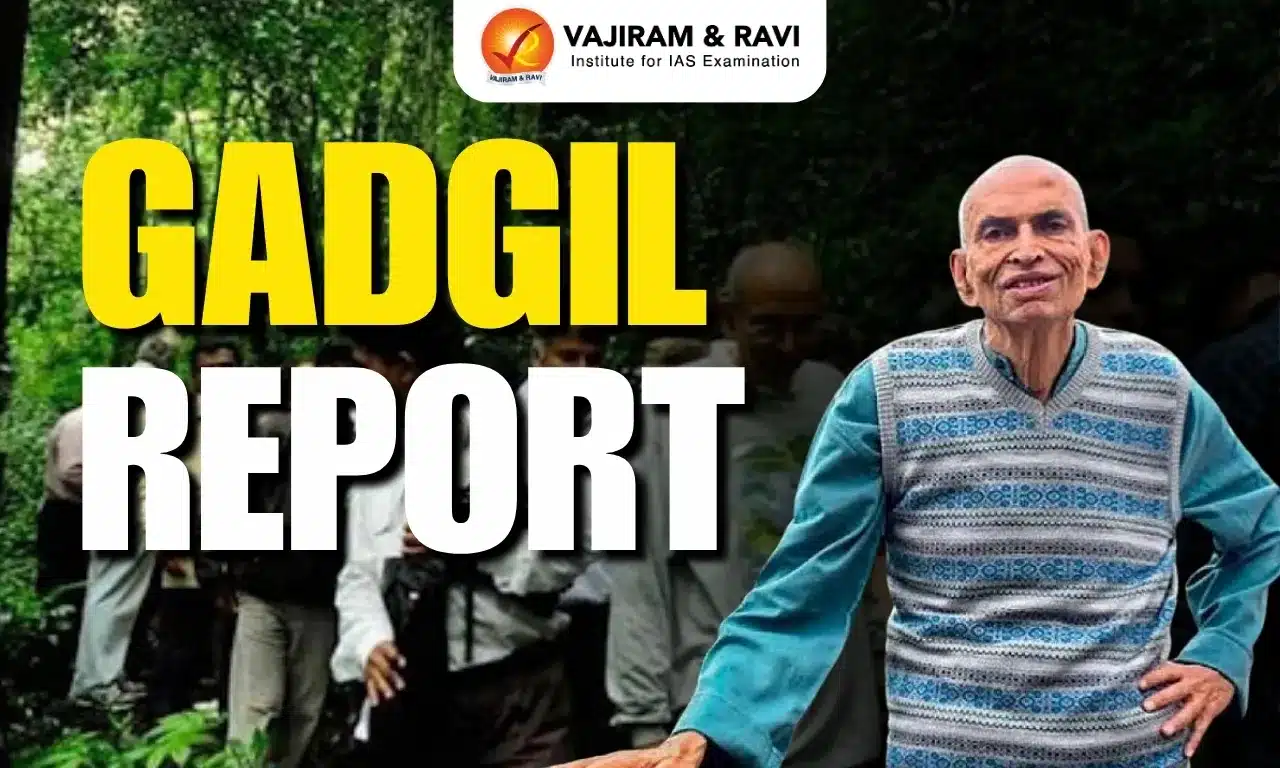
- Eminent ecologist Madhav Gadgil passed away at 83 in Pune, leaving behind a lasting environmental legacy.
- Among his many contributions, his role as chair of the Western Ghats Ecology Expert Panel (WGEEP) remains the most influential.
- Although the panel’s report was rejected by the then government, Gadgil consistently advocated for safeguarding the fragile Western Ghats from unregulated development.
- Years on, the report’s warnings and recommendations continue to resurface in public debate, especially after landslides and ecological disasters in the region, underscoring its enduring relevance.
A Prescription for Protecting the Western Ghats
- The Western Ghats stretch from Gujarat to Kerala and Tamil Nadu and act as the water tower of peninsular India.
- Major rivers like the Cauvery, Godavari, Krishna, Periyar and Netravathi originate here.
- The region is a global biodiversity hotspot with high endemism, hosting species found nowhere else.
Why the WGEEP Was Set Up
- In March 2010, the Western Ghats Ecology Expert Panel (WGEEP) was constituted due to the region’s ecological sensitivity, complex geography and growing threats from climate change and unregulated development.
- The panel’s formation was triggered by a 2010 meeting of the Save Western Ghats movement in the Nilgiris, attended by then Environment Minister Jairam Ramesh. The deliberations led to the creation of WGEEP.
- The panel was tasked with:
- assessing the ecology of the Western Ghats, identifying ecologically sensitive areas,
- recommending ecologically sensitive zones, and
- proposing conservation, rejuvenation and governance mechanisms for sustainable development.


Recommendations of the Gadgil Panel
- Entire Western Ghats as Ecologically Sensitive – The Gadgil-led panel designated the entire 1,29,037 sq km of the Western Ghats as an Ecologically Sensitive Area (ESA), reflecting the region’s overall ecological fragility.
- Three-Tier Sensitivity Zoning – The Ghats were divided into three categories — ESZ 1, ESZ 2 and ESZ 3 — based on levels of ecological sensitivity, with stricter controls in the more fragile zones.
- Restrictions on Development Activities – The panel proposed banning genetically modified crops, new special economic zones and new hill stations across ESZs.
- It called for no new mining licences and the phase-out of existing mines within five years in ESZ 1 and 2, and a complete ban on new quarrying in ESZ 1.
- Limits on Infrastructure Expansion – New railway lines and major roads were to be avoided in ESZ 1 and 2, except where absolutely essential, to minimise ecological disruption.
- Creation of a Statutory Authority – The report recommended setting up a 24-member Western Ghats Ecology Authority (WGEA) under the Environment Protection Act to regulate, manage and plan activities across all ecologically sensitive zones in the six Western Ghats States.
- Composition of the Authority – The proposed authority was to include domain and resource experts, along with representatives from key nodal ministries, ensuring coordinated, multi-state environmental governance.
Political Opposition to the Gadgil Panel Report
- The Gadgil panel submitted its draft report in March 2011 and the final version in August 2011.
- The report was not made public and was instead shared with State governments for comments.
- Environmental groups challenged the secrecy through RTI applications.
- After intervention by the Chief Information Commissioner and subsequent court proceedings, the report was finally made public in May 2012.
- Gadgil argued that the report promoted inclusive development and recommended placing its proposals before Gram Sabhas to move away from exclusionary models of conservation and growth.
State-Level Resistance
- The report faced strong opposition from Kerala and Maharashtra.
- Maharashtra objected to the proposed Western Ghats Ecology Authority, calling it a parallel structure to existing institutions.
- Kerala argued that declaring large areas as ecologically sensitive would hurt agriculture and livelihoods in districts such as Idukki and Wayanad.
- Political leaders and the Catholic Church warned of economic disruption and displacement of local communities.
The Kasturirangan Panel and the Scaled-Down Western Ghats Plan
- After widespread opposition to the Gadgil report, the Environment Ministry set up a High-Level Working Group in 2012 under space scientist K. Kasturirangan to review the recommendations.
Key Recommendations of the 2013 Report
- The Kasturirangan panel proposed declaring about 56,825 sq km of the Western Ghats as ecologically sensitive.
- It supported curbs on mining, polluting industries, thermal power plants, and large townships, but adopted a narrower approach than the Gadgil panel.
- Unlike the earlier report, the panel identified specific villages as ecologically sensitive and released state-wise lists, making the proposal more targeted and administratively feasible.
Policy Deadlock Continues
- Based on the report, the Centre has issued six draft ESA notifications, the latest in August 2024.
- However, disagreements with States persist, and a committee led by former Director General of Forests Sanjay Kumar is still working to finalise the boundaries.

 Last updated on Sep, 2026
→ UPSC 2027 Notification will be released on 13 January 2027 at upsconline.nic.in.
→ Asian Games 2026 are being held in Aichi-Nagoya, Japan, from 19 September to 4 October.
→ Check out the latest UPSC Syllabus here.
→ Download UPSC Model Answers for Mains 2026
→ UPSC Mains Question Paper 2026 is out now for Essay & GS Paper 1, 2, 3 & 4.
→ UPSC Calendar 2027 has been released.
→ Enroll in Vajiram & Ravi’s UPSC Mains Test Series 2027 for structured answer writing practice, expert evaluation, and exam-oriented feedback.
→ Join Vajiram & Ravi’s UPSC Mentorship Program 2027 for personalized guidance, strategy planning, and one-to-one support from experienced mentors.
→ Go through the UPSC Mains Previous Year Papers to enhance your preparation.
→ UPSC has released UPSC Toppers List 2025 with the Civil Services final result on its official website.
→ Also check Best UPSC Coaching in India
Gadgil Report FAQs
Q1. What is the Gadgil Report and why is it significant?+
Q2. Why was the Gadgil Report prepared?+
Q3. What were the key recommendations of the Gadgil Report?+
Q4. Why did States oppose the Gadgil Report?+
Q5. How does the Gadgil Report remain relevant today?+
Tags: Gadgil report mains articles upsc current affairs upsc mains current affairs