About Biomass Pellets:
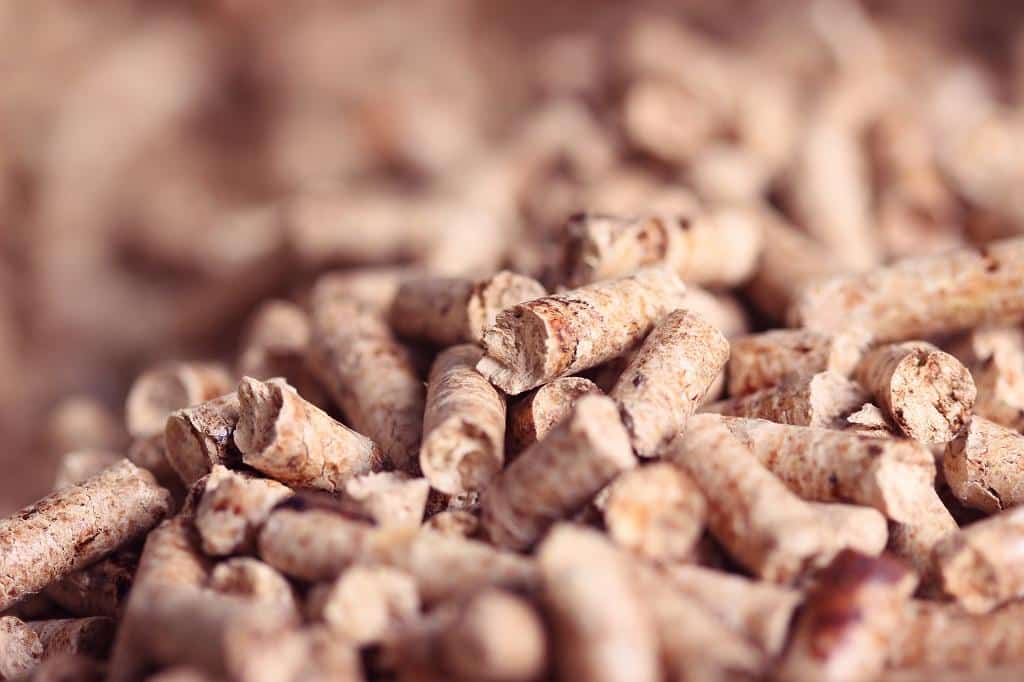
- These are a type of renewable fuel made from organic materials such as wood, agricultural residues, and energy crops.
- These are produced by compressing organic materials under high pressure.
- The compression process removes the moisture content and increases the energy density of the biomass.
- It is mandatory in India to use biomass or agricultural residue as combustion fuel along with coal in coal-fired thermal power plants.
- The biomass used for co-combustion in the power plants is processed and refined into pellets with a calorific value comparable to coal.
- These are two kinds
- Torrefied: It is processed at 250-350°C in the absence of oxygen, leading to the formation of torrefied biomass.
- Non-torrefied: In this biomass is shredded, grinded and sent to a pellet reactor, where it is compressed into pellet form with the help of binders such as sawdust, bagasse, molasses, starch and others.
What is Torrefaction?
- It is a thermochemical process that aims to decrease the water and volatile contents from the biomass, thus improving some of its fuel properties like higher energy density, hydrophobic behaviour, elimination of biological activity etc.
Key Facts about Central Pollution Control Board
- It is a statutory body under the Ministry of Environment, Forest and Climate Change.
- It was constituted under the Water (Prevention and Control of Pollution) Act, 1974.
- It is entrusted with the powers and functions under the Air (Prevention and Control of Pollution) Act, 1981.
- It serves as a field formation and also provides technical services to the Ministry of Environment and Forests of the provisions of the Environment (Protection) Act, 1986.
- The principal Functions of the CPCB, as spelt out in the Water (Prevention and Control of Pollution) Act, 1974, and the Air (Prevention and Control of Pollution) Act, 1981 are;
- To promote the cleanliness of streams and wells in different areas of the States by prevention, control and abatement of water pollution, and
- To improve the quality of air and to prevent, control or abate air pollution in the country.
Q1) What is Biomass?
Biomass refers to organic matter, such as plant materials and animal waste,that can be used as a source of energy. It is a renewable energy source that can be converted into biofuels, biogas, and other forms of energy through various processes.
Source: Biomass pellets: CPCB’s revised grants are highly inadequate to close demand-supply gap


 Last updated on Sep, 2026
→ UPSC 2027 Notification will be released on 13 January 2027 at upsconline.nic.in.
→ Check out the latest UPSC Syllabus here.
→ Download UPSC Model Answers for Mains 2026
→ UPSC Mains Question Paper 2026 is out now for Essay & GS Paper 1, 2, 3 & 4.
→ UPSC Calendar 2027 has been released.
→ Enroll in Vajiram & Ravi’s UPSC Mains Test Series 2027 for structured answer writing practice, expert evaluation, and exam-oriented feedback.
→ Join Vajiram & Ravi’s UPSC Mentorship Program 2027 for personalized guidance, strategy planning, and one-to-one support from experienced mentors.
→ Go through the UPSC Mains Previous Year Papers to enhance your preparation.
→ UPSC has released UPSC Toppers List 2025 with the Civil Services final result on its official website.
→ Also check Best UPSC Coaching in India