


Arteries Latest News
Pain in your legs when you walk can be a warning sign that the arteries carrying blood to your legs are becoming blocked, a condition called peripheral artery disease (PAD).
About Arteries
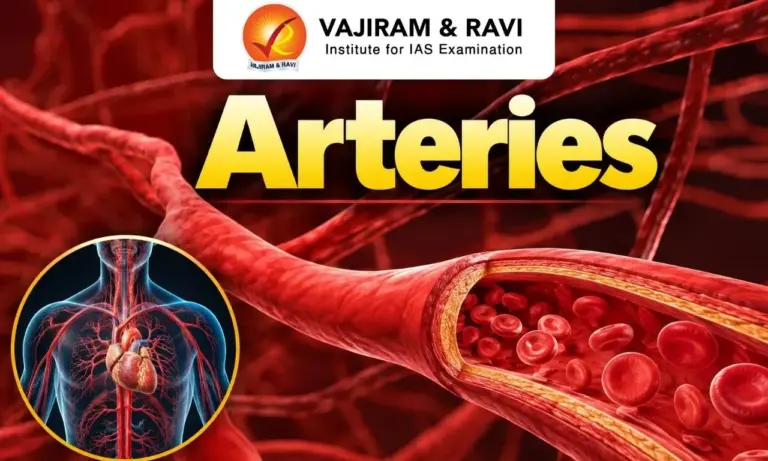
- Arteries are the blood vessels that bring oxygen-rich blood from your heart to all of your body’s cells.
- Arteries make up a major part of the circulatory system, with the veins and heart being the other main components.
- They play a crucial role in distributing oxygen, nutrients, and hormones throughout your body.
- Your heart pumps oxygen-rich blood into the biggest artery in your body — your aorta.
- This branches off into parts that feed smaller and smaller arteries, eventually reaching your entire body.
- Arteries keep your body alive and healthy by delivering what your cells and tissues need.
- Roughly 10% of your body’s blood is in your arteries at any point in time.
- Your arteries have three layers:
- Tunica intima, or inner layer: Has tissue with elastic fiber.
- Tunica media, or middle layer: This is mostly smooth muscle that lets your arteries get tighter or more open as needed.
- Tunica externa, or outer layer: Interacts with other tissues, including nerves that send commands to pull in or expand.
- The two types of arteries are:
- Elastic: Have more elastic tissue than muscular arteries and are located close to your heart. Examples: Aorta and pulmonary artery.
- Muscular: Have more smooth muscle than elastic arteries. Examples: Femoral, radial, and brachial arteries.
- Specific arteries provide blood to organs or certain parts of your body, such as:
- Coronary arteries: Heart.
- Carotid arteries: Brain, head, face and neck.
- Vertebral arteries: Brain and spine.
- Iliac arteries: Pelvis.
- Femoral artery: Legs.
- Subclavian arteries: Head, neck, and arms.
- Celiac and mesenteric arteries: Digestive system.
- Conditions that can harm your arteries include:
- Atherosclerosis, a condition in which plaque builds up inside your arteries.
- Over time, plaque hardens and causes your arteries to narrow.
- That limits the flow of oxygen-rich blood to your body.
- Aneurysm (a stretch or bulge in an artery that can break open).
- Blood clot.
- Coronary artery disease (atherosclerosis in your coronary arteries).
- Carotid artery disease (atherosclerosis in your carotid artery).
- High blood pressure.
- High cholesterol.
- Peripheral artery disease (PAD): A common condition in which narrowed arteries reduce blood flow to the arms or legs.
- Vasculitis.
- Atherosclerosis, a condition in which plaque builds up inside your arteries.


How are Arteries Different from Veins?
- Arteries:
- Take oxygen-rich blood away from your heart and distribute it to your whole body.
- Have strong, muscular walls that can handle the high pressure of blood your heart pumps out with each heartbeat.
- Don’t need valves because the force of the blood coming from your heart ensures the blood only goes in one direction.
- Veins:
- Bring blood back to your heart after your body’s cells and tissues have taken the oxygen out of it. This is known as oxygen-poor blood or deoxygenated blood.
- Have thinner walls because the pressure inside them isn’t as high as it is in arteries.
- Have valves inside them to keep blood from moving in the wrong direction.
News: MED

 Last updated on Oct, 2026
→ UPSC 2027 Notification will be released on 13 January 2027 at upsconline.nic.in.
→ Check Nobel Prize 2026 Winners List here.
→ Download PIB PRiSM Monthly Magazine 2026 here.
→ Check UPSC Monthly Current Affairs Magazine The Recitals here.
→ Check out the latest UPSC Syllabus here.
→ Download UPSC Model Answers for Mains 2026
→ UPSC Mains Question Paper 2026 is out now for Essay & GS Paper 1, 2, 3 & 4.
→ UPSC Calendar 2027 has been released.
→ Enroll in Vajiram & Ravi’s UPSC Mains Test Series 2027 for structured answer writing practice, expert evaluation, and exam-oriented feedback.
→ Join Vajiram & Ravi’s UPSC Mentorship Program 2027 for personalized guidance, strategy planning, and one-to-one support from experienced mentors.
→ Go through the UPSC Mains Previous Year Papers to enhance your preparation.
→ UPSC has released UPSC Toppers List 2025 with the Civil Services final result on its official website.
→ Also check Best UPSC Coaching in India
Arteries FAQs
Q1. What are arteries?+
Q2. Which blood vessel is the largest artery in the human body?+
Q3. What are the three layers of an artery?+
Q4. What is atherosclerosis?+
Tags: arteries








