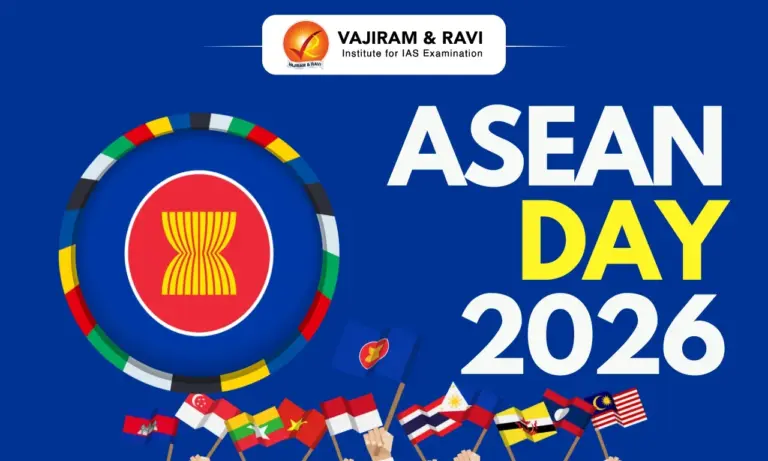
ASEAN Day is celebrated every year on August 8 to mark the founding of the Association of Southeast Asian Nations in 1967. It highlights the spirit of unity and cooperation among Southeast Asian countries, showing how nations with diverse cultures and backgrounds have come together to promote peace, stability, and economic growth. Over the years, ASEAN has grown into an important regional organization that plays a key role in global affairs, and ASEAN Day serves as a reminder of its journey, achievements, and shared vision for a more connected and prosperous future.
What is ASEAN Day and Why is it Celebrated?
- ASEAN Day is celebrated every year on August 8 to mark the establishment of the Association of Southeast Asian Nations in 1967. This historic event took place in Bangkok, where five Southeast Asian nations came together to sign the Bangkok Declaration.
- The day is not just about remembering a date, it represents the beginning of regional unity and cooperation among countries that once faced political tensions and instability.
- ASEAN Day highlights the organization’s main goal: to create a region that is peaceful, stable, and economically strong, while respecting each country’s independence.
- Over the years, it has become a symbol of collective identity and shared progress, showing how countries with different cultures, languages, and histories can work together.
- Celebrations across member nations often include cultural events, official ceremonies, and awareness programs, promoting ASEAN’s values among citizens.
History and Significance of ASEAN Day 2026
- ASEAN was formed during a time when Southeast Asia was dealing with post-colonial challenges, conflicts, and global political pressure. The founding nations believed that cooperation was the best way to ensure peace and growth.
- ASEAN was originally established by five countries: Indonesia, Malaysia, the Philippines, Singapore, and Thailand and gradually expanded to include all Southeast Asian nations, making it a complete regional grouping of 11 members.
- A major milestone was the introduction of the ASEAN Charter in 2008, which gave ASEAN a formal legal identity and a structured framework for governance.
- ASEAN Day is significant because it reflects how the region has transformed from conflict-prone areas into one of the fastest-growing economic regions in the world.
- It also reminds member nations of the importance of peaceful dialogue, mutual respect, and long-term cooperation in solving regional issues.


ASEAN Day 2026: Theme, Importance, and Key Highlights
- In 2026, ASEAN is chaired by the Philippines, bringing a renewed focus on collaboration under the theme “Navigating Our Future, Together.”
- This theme emphasizes the need for ASEAN countries to work collectively to face global challenges, such as economic uncertainty, climate change, and technological transformation.
- The 2026 agenda is built around three key priorities:
- Peace and Security: Strengthening regional peace through diplomacy, international law, and cooperation in addressing both traditional and emerging security threats.
- Economic Growth and Connectivity: Promoting trade, digital innovation, and infrastructure development to ensure shared prosperity across the region.
- People-Centered Development: Focusing on inclusivity, social welfare, and empowering communities to actively participate in ASEAN’s growth.
- Another major highlight of 2026 is the 50th anniversary of the Treaty of Amity and Cooperation (TAC), which reinforces ASEAN’s commitment to peaceful relations.
- ASEAN is expected to become one of the largest economies in the world by 2030, making its role even more important on the global stage.
Role of ASEAN in Regional Cooperation and Development
- ASEAN has played a crucial role in maintaining peace and stability in Southeast Asia, mainly through dialogue and a policy of non-interference in member states’ internal affairs.
- It promotes economic integration by encouraging trade agreements, reducing tariffs, and creating a more connected regional market.
- The ASEAN Summit, the organization’s top decision-making platform, allows leaders to discuss and address key regional and international issues.
- ASEAN also works in important sectors such as:
- Education and Cultural Exchange: Encouraging student mobility and cultural understanding.
- Technology and Innovation: Supporting digital transformation and smart economies.
- Disaster Management: Coordinating responses to natural disasters, which are common in the region.
- Environmental Protection: Addressing climate change and promoting sustainable development.
- Through forums like the East Asia Summit and ASEAN Regional Forum, ASEAN maintains its central role in shaping the Indo-Pacific region’s political and security architecture.
India-ASEAN Relations
- India joined the ASEAN Regional Forum (ARF) in 1996, marking its growing role in regional security and strategic discussions.
- From 2002, annual ASEAN-India Summits began, improving high-level engagement and boosting collaboration across sectors.
- In 2004, both sides adopted a roadmap for cooperation at the summit in Vientiane, focusing on peace, progress, and shared prosperity.
- Economic ties strengthened with the ASEAN-India Free Trade Area (2009), followed by agreements on services and investment in 2015, expanding economic integration.
- In 2012, the relationship was elevated to a Strategic Partnership, and further deepened with India’s Act East Policy (2014) focusing on connectivity and defence cooperation.
- The 2018 Delhi Summit marked 25 years of relations, while in 2022, ties were upgraded to a Comprehensive Strategic Partnership, covering new areas like digital economy, maritime security, and emerging technologies.
- Regular interactions such as the ASEAN-India Summit and Senior Officials’ Meetings (SOM) help in maintaining close cooperation.
- Key areas of collaboration include:
- Trade and Economy: ASEAN is one of India’s largest trading partners, with growing investments and business opportunities.
- Digital and Technological Cooperation: Joint initiatives like the ASEAN-India digital work plan promote innovation and connectivity.
- Maritime Security: Both work together to ensure safety and stability in the Indo-Pacific, especially in crucial sea routes.
- Cultural and People-to-People Ties: Shared historical and cultural links strengthen mutual understanding.
- ASEAN plays a central role in India’s Indo-Pacific vision by supporting a free, open, and rules-based regional order, which is essential for global peace and economic growth.

 Last updated on Oct, 2026
→ UPSC 2027 Notification will be released on 13 January 2027 at upsconline.nic.in.
→ Asian Games 2026 are being held in Aichi-Nagoya, Japan, from 19 September to 4 October.
→ Check Nobel Prize 2026 Winners List here.
→ Download PIB PRiSM Monthly Magazine 2026 here.
→ Check UPSC Monthly Current Affairs Magazine The Recitals here.
→ Check out the latest UPSC Syllabus here.
→ Download UPSC Model Answers for Mains 2026
→ UPSC Mains Question Paper 2026 is out now for Essay & GS Paper 1, 2, 3 & 4.
→ UPSC Calendar 2027 has been released.
→ Enroll in Vajiram & Ravi’s UPSC Mains Test Series 2027 for structured answer writing practice, expert evaluation, and exam-oriented feedback.
→ Join Vajiram & Ravi’s UPSC Mentorship Program 2027 for personalized guidance, strategy planning, and one-to-one support from experienced mentors.
→ Go through the UPSC Mains Previous Year Papers to enhance your preparation.
→ UPSC has released UPSC Toppers List 2025 with the Civil Services final result on its official website.
→ Also check Best UPSC Coaching in India
ASEAN Day 2026 FAQs
Q1. What is ASEAN Day?+
Q2. Why is ASEAN Day celebrated?+
Q3. When was ASEAN established?+
Q4. Which countries founded ASEAN?+
Q5. How many countries are members of ASEAN today?+
Q6. What is the main aim of ASEAN?+
Q7. What is the theme of ASEAN Day 2026?+
Q8. What is the significance of the ASEAN Charter?+
Q9. How does ASEAN contribute to the global economy?+
Q10. What is the importance of India-ASEAN relations?+
Tags: ASEAN day ASEAN day 2026 international relations international relations notes