


Atherosclerosis Latest News
A new study in mice and patients shows that atherosclerosis meets the criteria for an autoimmune disease.
About Atherosclerosis
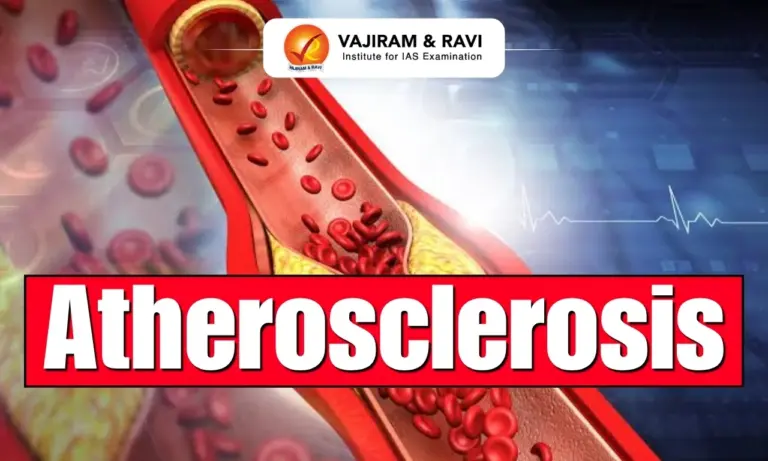
- It is a condition in which plaque builds up inside your arteries.
- Arteries are blood vessels that carry oxygen-rich blood to organs and tissues throughout your body.
- Plaque is a sticky substance made up of cholesterol, fat, blood cells, calcium, and other substances found in the blood.
- Over time, plaque hardens and causes your arteries to narrow. That limits the flow of oxygen-rich blood to your body.
- Some people may confuse atherosclerosis and arteriosclerosis, but they are not the same thing:
- Arteriosclerosis is hardening of the arteries, which means that the arteries thicken and become less flexible. It can have several different causes.
- Atherosclerosis, which develops from plaque buildup, is a common type of arteriosclerosis.
- What causes atherosclerosis?
- Plaque often starts to build up during childhood and gets worse with age.
- The exact cause is unknown, but researchers believe that this buildup happens when there is damage to the arteries. This damage may be caused by unhealthy lifestyle habits, medical conditions, and your genes.
- Recent studies also point that atherosclerosis meets the criteria for an autoimmune disease.
- Atherosclerosis can affect most of the arteries in the body. It has different names, based on which arteries are affected:
- Coronary artery disease (CAD) is plaque buildup in the arteries of your heart.
- Peripheral artery disease (PAD) is plaque buildup in the arteries that carry blood away from the heart to other parts of the body. It most often affects the arteries of your legs, but it can also affect the arteries of your arms or pelvis.
- Carotid artery disease is plaque buildup in the neck arteries. It reduces blood flow to the brain.
- Renal artery stenosis is plaque buildup in the arteries that supply blood to your kidneys.
- Vertebral artery disease is plaque buildup in the arteries that supply blood to the back of your brain.
- Mesenteric artery ischemia is plaque buildup in the arteries that supply your intestines with blood.
- Symptoms:
- Atherosclerosis symptoms often don’t start until an artery is very narrow or blocked.
- Many people don’t know they have plaque buildup until they have a medical emergency like a heart attack or stroke.
- Symptoms usually depend on the arteries that are affected, and the most common include:
- chest pain (or angina)
- feeling confused, as a result of limited blood flow to your brain
- difficulty breathing
- feeling very tired (fatigued)
- pain in any of your limbs, where there may be a blocked artery
- weak muscles.
- Atherosclerosis can cause other health problems, or complications.
- For example, if a plaque bursts, a blood clot may form.
- The clot could block the artery completely or travel to another part of the body.
- Blockages in different parts of the body can lead to complications such as a heart attack, stroke, vascular dementia, or limb loss.
- Treatment: Treating atherosclerosis may include having a heart-healthy lifestyle and taking medicines.
News: NM


 Last updated on Oct, 2026
→ UPSC 2027 Notification will be released on 13 January 2027 at upsconline.nic.in.
→ Check Nobel Prize 2026 Winners List here.
→ Download PIB PRiSM Monthly Magazine 2026 here.
→ Check UPSC Monthly Current Affairs Magazine The Recitals here.
→ Check out the latest UPSC Syllabus here.
→ Download UPSC Model Answers for Mains 2026
→ UPSC Mains Question Paper 2026 is out now for Essay & GS Paper 1, 2, 3 & 4.
→ UPSC Calendar 2027 has been released.
→ Enroll in Vajiram & Ravi’s UPSC Mains Test Series 2027 for structured answer writing practice, expert evaluation, and exam-oriented feedback.
→ Join Vajiram & Ravi’s UPSC Mentorship Program 2027 for personalized guidance, strategy planning, and one-to-one support from experienced mentors.
→ Go through the UPSC Mains Previous Year Papers to enhance your preparation.
→ UPSC has released UPSC Toppers List 2025 with the Civil Services final result on its official website.
→ Also check Best UPSC Coaching in India
Atherosclerosis FAQs
Q1. What is atherosclerosis?+
Q2. What happens to plaque over time in atherosclerosis?+
Q3. How does atherosclerosis affect blood flow?+
Q4. How is atherosclerosis related to arteriosclerosis?+
Q5. What factors may contribute to damage to the arteries leading to atherosclerosis?+
Tags: atherosclerosis prelims pointers upsc current affairs upsc prelims current affairs








