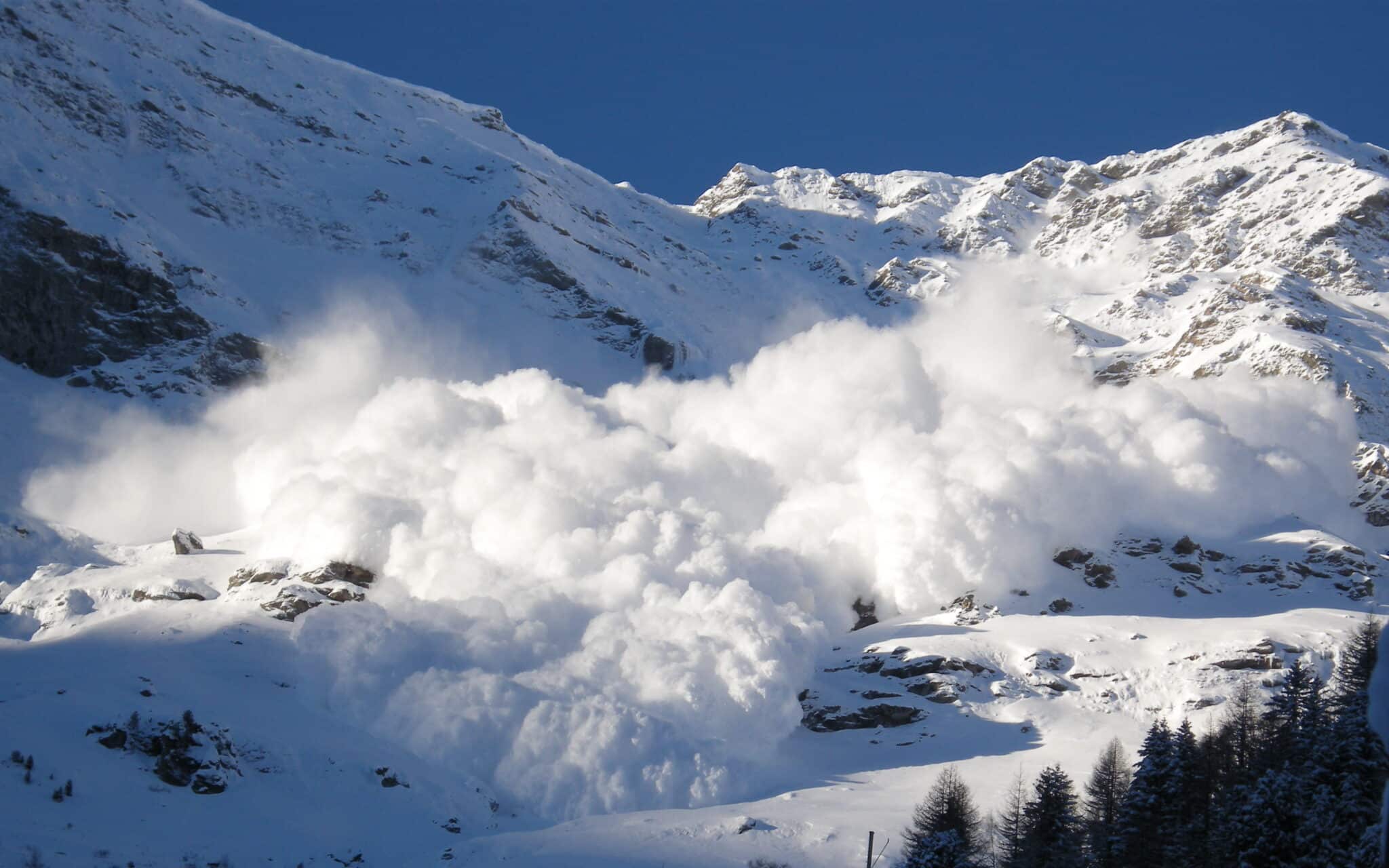
What’s in today’s article?
- Why in News?
- What is an Avalanche?
- What are the Main Types of Snow Avalanches?
- What are the Factors that Destabilise the Snowpack?
- What are the Avalanches Prone Areas in India?
- What are the Measures to Control Avalanches?
Why in News?
- A day after two workers were killed in an avalanche near the Zojila tunnel in Sonamarg, Jammu and Kashmir, the area was struck by twin avalanches.
- The State Disaster Management Authority (SDMA) issued a warning regarding avalanches above 2,000 meters over Anantnag, Bandipora, Baramula, Doda, Poonch, etc., in the next 24 hours.
What is an Avalanche?
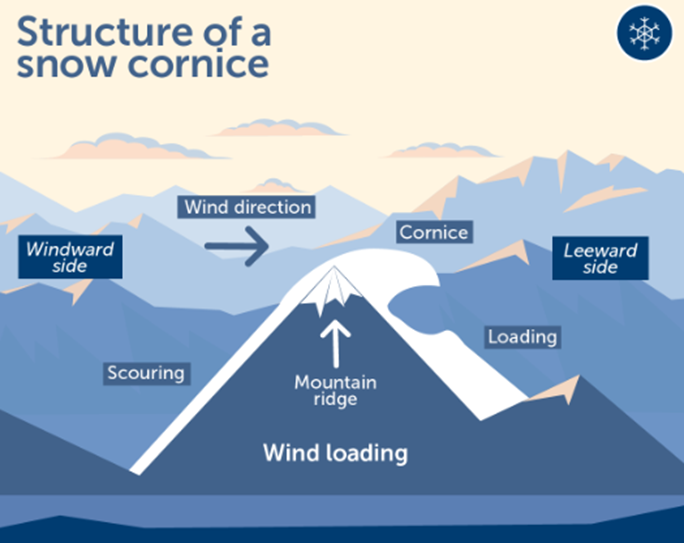
Image Caption: Mechanism behind an Avalanche
- When a mass of snow, rock, ice, soil, and other material slides rapidly down a mountainside it leads to an Avalanche.
- Avalanches of rocks or soil are often called landslides, while snow slides are the most common kind of avalanche.
- A snow avalanche begins when an unstable mass of snow breaks away from a slope and picks up speed and more snow as it moves downhill, producing a river of snow and a cloud of icy particles that rises high into the air.
- A large, fully developed avalanche can weigh as much as a million tons and can travel faster than 320 kms per hour and may lead to loss of life or property.


What are the main types of Snow Avalanches?
- Sluff Avalanches is a small slide of dry, powdery snow that occurs when the weak layer of a snowpack is on the top.
- Slab Avalanches occur when the weak layer lies lower down in a snowpack and when it breaks off it pulls all the layers on top of it down the slope.
What are the Factors that Destabilise the Snowpack?
- Snow avalanches are most likely to occur after a fresh snowfall adds a new layer to a snowpack.
- Avalanches can be triggered by natural forces, such as the pull of gravity on a steep slope, earthquakes, warming temperatures (weakening the bonds between the layers), wind, terrain, vegetation and general snowpack conditions.
- They can also be caused by human activity, such as the load of a skier, construction/development activities or by use of explosives (to set off hazardous slopes) as part of avalanche control.
What are the Avalanches Prone Areas in India?
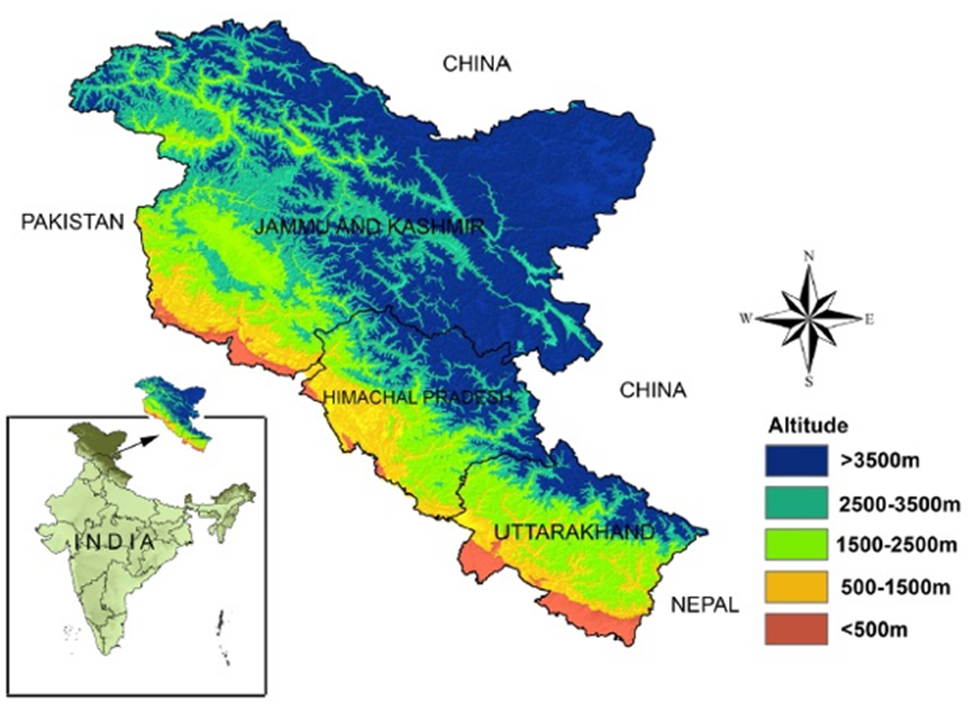
Image Caption: Most Vulnerable Avalanche Prone Area in India (Western Himalayas)
- The Himalayas are well known for the occurrence of snow Avalanches particularly Western Himalayas – the snowy regions of Jammu and Kashmir, Himachal Pradesh and Western Uttar Pradesh.
- There are three types of snow avalanche zones –
- Red Zone: The most dangerous zone that have an impact pressure of more than 3 tonnes per square metre.
- Blue Zone: Where the avalanche force is less than 3 tonnes per square metre and where living and other activities may be permitted.
- Yellow Zone: Where snow avalanche occurs only occasionally.
What are the Measures to Control Avalanches?
- Currently, scientists are not able to predict with certainty when and where avalanches will happen.
- However, they can estimate hazard levels and designate vulnerable zones by checking on the snowpack, temperature and wind conditions.
- By building large, sturdy structures to anchor snowpacks and ban unsustainable developmental and tourism activities in Avalanche hazardous zones.
Q1) What is the difference between a snow Avalanche and a Landslide?
When a mass of snow, rock, ice, soil, and other material slides rapidly down a mountainside it leads to an Avalanche. Avalanches of rocks or soil are often called landslides, while snow slides are the most common kind of avalanche.
Q2) What are the causes of a snow Avalanche?
Avalanches can be triggered by natural forces, such as the pull of gravity on a steep slope, earthquakes, warming temperatures, wind, terrain, vegetation and general snowpack conditions. They can also be caused by human activity, such as the load of a skier, construction/development activities or by use of explosives as part of avalanche control.
Source: Jammu & Kashmir: Twin avalanches hit Sarbal, no loss of life reported | Mint | National Geographic | Himachal.nic.in

 Last updated on Oct, 2026
→ UPSC 2027 Notification will be released on 13 January 2027 at upsconline.nic.in.
→ Check Nobel Prize 2026 Winners List here.
→ Download PIB PRiSM Monthly Magazine 2026 here.
→ Check UPSC Monthly Current Affairs Magazine The Recitals here.
→ Check out the latest UPSC Syllabus here.
→ Download UPSC Model Answers for Mains 2026
→ UPSC Mains Question Paper 2026 is out now for Essay & GS Paper 1, 2, 3 & 4.
→ UPSC Calendar 2027 has been released.
→ Enroll in Vajiram & Ravi’s UPSC Mains Test Series 2027 for structured answer writing practice, expert evaluation, and exam-oriented feedback.
→ Join Vajiram & Ravi’s UPSC Mentorship Program 2027 for personalized guidance, strategy planning, and one-to-one support from experienced mentors.
→ Go through the UPSC Mains Previous Year Papers to enhance your preparation.
→ UPSC has released UPSC Toppers List 2025 with the Civil Services final result on its official website.
→ Also check Best UPSC Coaching in India