Bamboo-Based Ethanol Plant Latest News
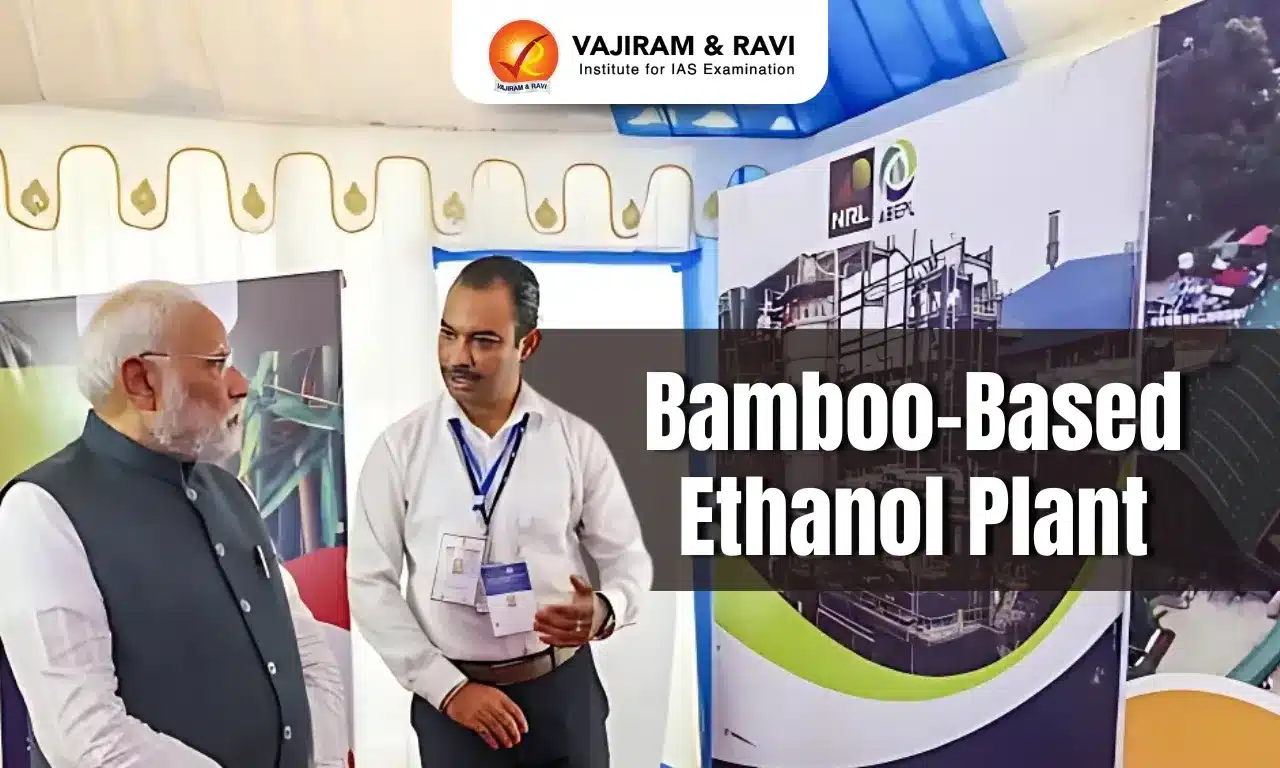
- India inaugurated its first bamboo-based ethanol plant in Assam’s Golaghat, marking a major step in green energy and rural development.
Introduction
- India has been steadily advancing toward renewable energy as part of its clean energy transition.
- Ethanol blending, a central component of this strategy, has gained momentum with sugarcane and maize-based ethanol.
- Now, India has achieved a milestone by inaugurating the world’s first green bamboo-based ethanol plant in Golaghat, Assam.
- This facility represents both a technological innovation and an economic opportunity for the Northeast, linking biofuel production with rural livelihoods.


Working of Bamboo-Based Ethanol Plants
- Feedstock and Processing
- Bamboo, a lignocellulosic biomass, serves as the primary raw material.
- It contains cellulose and hemicellulose, which can be broken down into fermentable sugars through biochemical processes.
- Pre-treatment – Bamboo undergoes mechanical and chemical pre-treatment to separate cellulose and hemicellulose from lignin.
- Hydrolysis – Enzymes break down cellulose into glucose and hemicellulose into xylose and other sugars.
- Fermentation – Specialised microorganisms convert these sugars into ethanol.
- Distillation – Ethanol is purified to achieve fuel-grade quality suitable for blending with petrol.
- Co-Products and Zero-Waste Approach
- Besides ethanol, the Golaghat facility will also produce acetic acid, furfural, and food-grade liquid CO₂, creating multiple revenue streams.
- Lignin-rich residues can be used for power generation, making the plant energy self-sufficient.
- Advantages Over Traditional Ethanol
- Non-food biomass – Unlike sugarcane, bamboo does not compete with food crops.
- Sustainability – Bamboo regenerates quickly, making it an abundant renewable resource.
- Localised benefits – Northeast India, with vast bamboo reserves, can integrate farmers and tribal communities into the bio-economy.
News Summary
- On September 14, 2025, Prime Minister Narendra Modi inaugurated the bamboo-based ethanol plant.
- The plant will use five lakh tonnes of bamboo annually from Assam and nearby states to produce:
- 48,900 MT ethanol
- 11,000 MT acetic acid
- 19,000 MT furfural
- 31,000 MT liquid CO₂
- It is expected to boost Assam’s rural economy by Rs. 200 crore annually.
- Foundation laid for a Rs. 7,230 crore polypropylene plant at Numaligarh Refinery to strengthen industrial growth.
- PM Modi emphasised that this project reflects India’s broader goal of energy self-sufficiency and the Viksit Bharat vision.
Significance of the Project
- Energy Security: Reduces dependence on imported crude oil, saving foreign exchange.
- Rural Development: Enhances farmer income and supports tribal livelihoods.
- Green Economy: Reinforces India’s climate commitments by cutting emissions through biofuel adoption.
- Regional Growth: Strengthens Assam’s role in India’s industrial map through Make in Assam and Make in India initiatives.

 Last updated on Oct, 2026
→ UPSC 2027 Notification will be released on 13 January 2027 at upsconline.nic.in.
→ Check Nobel Prize 2026 Winners List here.
→ Download PIB PRiSM Monthly Magazine 2026 here.
→ Check UPSC Monthly Current Affairs Magazine The Recitals here.
→ Check out the latest UPSC Syllabus here.
→ Download UPSC Model Answers for Mains 2026
→ UPSC Mains Question Paper 2026 is out now for Essay & GS Paper 1, 2, 3 & 4.
→ UPSC Calendar 2027 has been released.
→ Enroll in Vajiram & Ravi’s UPSC Mains Test Series 2027 for structured answer writing practice, expert evaluation, and exam-oriented feedback.
→ Join Vajiram & Ravi’s UPSC Mentorship Program 2027 for personalized guidance, strategy planning, and one-to-one support from experienced mentors.
→ Go through the UPSC Mains Previous Year Papers to enhance your preparation.
→ UPSC has released UPSC Toppers List 2025 with the Civil Services final result on its official website.
→ Also check Best UPSC Coaching in India
Bamboo-Based Ethanol Plant FAQs
Q1. Where was India’s first bamboo-based ethanol plant inaugurated?+
Q2. How much bamboo will the plant source annually?+
Q3. What is the ethanol production capacity of the plant?+
Q4. Who are the key partners in this project?+
Q5. What is the estimated economic impact of the project on Assam’s rural economy?+
Tags: bamboo-based ethanol plant mains articles upsc current affairs upsc mains current affairs