Why in the News?
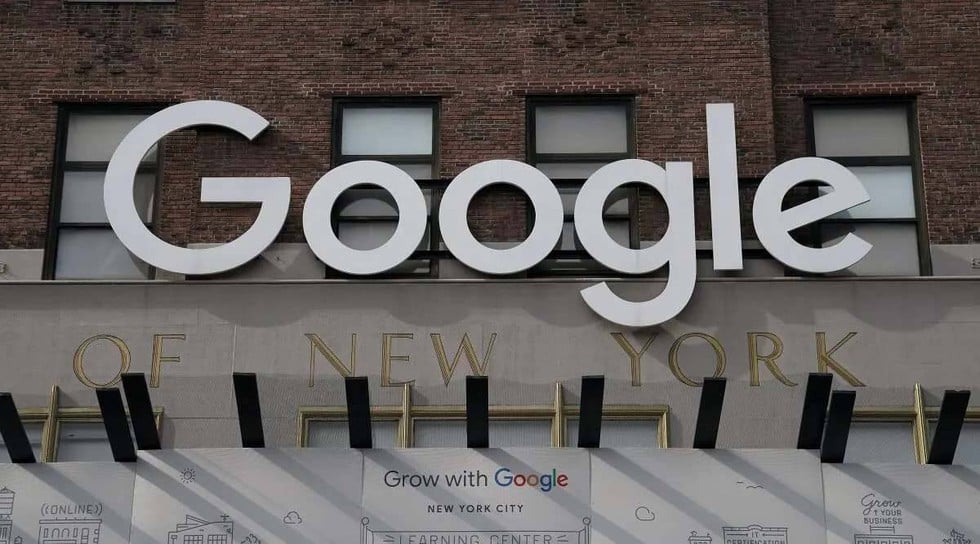
Google, was slapped with a fine of Rs 1,338 crore by CCI after being found guilty of anti-competitive behaviour in the Android mobile application ecosystem
What are Anticompetitive practices?
- It refers to a wide range of business practices in which a firm or group of firms may engage to restrict inter-firm competition to maintain or increase their relative market position and profits without necessarily providing goods and services at a lower cost or of higher quality.
What is CCI?
- The Competition Commission of India (CCI) was established in March 2009 by the Government of India under the Competition Act, 2002 for the administration, implementation, and enforcement of the Act.
- Composition of the CCI
- The Commission consists of one Chairperson and six Memberswho shall be appointed by the Central Government.
- It is a quasi-judicial body which gives opinions to statutory authorities and also deals with other cases.
- The Chairperson and other Members shall be whole-time Members
- Objectives:
- It will eliminate practices having adverse effects on competition.
- To Promote and sustain competition.
- It helps in protecting the interests of consumers.
- Ensuring freedom of trade in the markets of India.
- It will Establish a robust competitive environment through:
What is NCLAT?
- It was constituted under Section 410 of the Companies Act, 2013 for hearing appeals against the orders of the National Company Law Tribunal(s) (NCLT), with effect from 1st June 2016.
- Functions:
- Hearing appeals against the orders passed by NCLT(s) under Section 61 of the Insolvency and Bankruptcy Code, 2016 (IBC).
- To hear and dispose of appeals against any direction issued or decision made or order passed by the Competition Commission of India (CCI).
- It also hears and disposes of appeals against the orders of the National Financial Reporting Authority.
Q1) What are the effects of anti-competitive practices?
The most obvious effect of such practices is seen in the form of price increases in markets involving output-restricting or price- fixing cartels and dominant firms abusing their market power. In such cases, consumers are the ones who suffer directly from restricted competition.
Source: Google moves NCLAT over CCI fine on ‘dominance


 Last updated on Oct, 2026
→ UPSC 2027 Notification will be released on 13 January 2027 at upsconline.nic.in.
→ Asian Games 2026 are being held in Aichi-Nagoya, Japan, from 19 September to 4 October.
→ Check Nobel Prize 2026 Winners List here.
→ Download PIB PRiSM Monthly Magazine 2026 here.
→ Check UPSC Monthly Current Affairs Magazine The Recitals here.
→ Check out the latest UPSC Syllabus here.
→ Download UPSC Model Answers for Mains 2026
→ UPSC Mains Question Paper 2026 is out now for Essay & GS Paper 1, 2, 3 & 4.
→ UPSC Calendar 2027 has been released.
→ Enroll in Vajiram & Ravi’s UPSC Mains Test Series 2027 for structured answer writing practice, expert evaluation, and exam-oriented feedback.
→ Join Vajiram & Ravi’s UPSC Mentorship Program 2027 for personalized guidance, strategy planning, and one-to-one support from experienced mentors.
→ Go through the UPSC Mains Previous Year Papers to enhance your preparation.
→ UPSC has released UPSC Toppers List 2025 with the Civil Services final result on its official website.
→ Also check Best UPSC Coaching in India