About Central Vigilance Commission:
- Background:
- The Central Vigilance Commission was initially set up through Resolution in 1964 of Government of India, on the recommendations of Committee on Prevention of Corruption formed under the Chairmanship of Shri K. Santhanam.
- In 1997, The Supreme Court gave directions to Government of India to confer statutory status upon the Central Vigilance Commission.
- Then Centre government given statutory status to Central Vigilance Commission in 2003.
- Vision:
- To eliminate corrupt and unethical practices in public administration and to bring about transparency, fair-play, objectivity, accountability and responsiveness to the aspirations of the citizen from administration.
- Composition: Central Vigilance Commission consists of a Central Vigilance Commissioner as Chairperson and not more than two Vigilance Commissioners as Members.
- Organization Structure:
- The Central Vigilance Commission has its own Secretariat, Chief Technical Examiners’ Wing (CTE) and a wing of Commissioners for Departmental Inquiries (CDI).
- Chief Technical Examiners’ Wing (CTE) – Technical audit of construction works of Governmental organisations from a vigilance angle and Investigation of specific cases of complaints relating to construction works.
- Commissioners for Departmental Inquiries (CDIs) – The CDIs function as inquiry Officer to conduct oral inquries in departmental proceeding itiated against public servants.
- Removal: The Central Vigilance Commissioner or any Vigilance Commissioner shall be removed from his office only by order of the President on the ground of proved misbehavior or incapacity after the Supreme Court, on a reference made to it by the President, has, on inquiry, reported that the Central Vigilance Commissioner or any Vigilance Commissioner ought on such ground be removed.
Q1) What does Central Vigilance Commissioner do?
It has the status of an autonomous body, free of control from any executive authority, charged with monitoring all vigilance activity under the Central Government of India, advising various authorities in central Government organizations in planning, executing, reviewing and reforming their vigilance work.
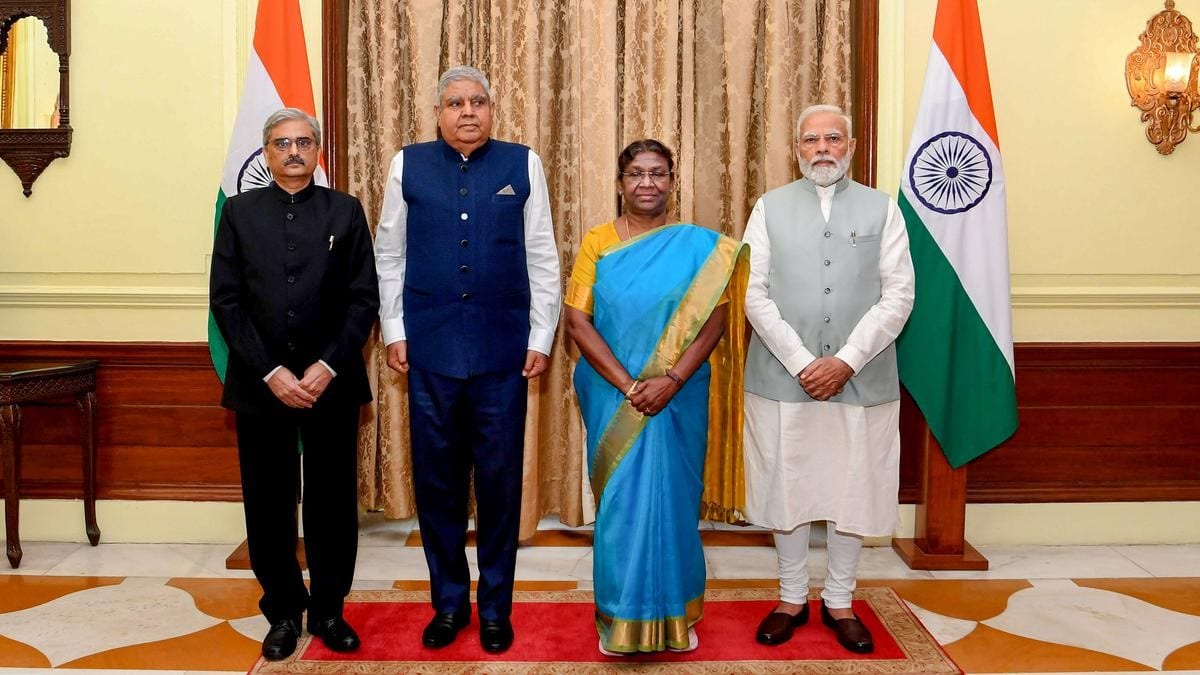
Source: Praveen Kumar Srivastava sworn in as Central Vigilance Commissioner.


 Last updated on Oct, 2026
→ UPSC 2027 Notification will be released on 13 January 2027 at upsconline.nic.in.
→ Asian Games 2026 are being held in Aichi-Nagoya, Japan, from 19 September to 4 October.
→ Check Nobel Prize 2026 Winners List here.
→ Download PIB PRiSM Monthly Magazine 2026 here.
→ Check UPSC Monthly Current Affairs Magazine The Recitals here.
→ Check out the latest UPSC Syllabus here.
→ Download UPSC Model Answers for Mains 2026
→ UPSC Mains Question Paper 2026 is out now for Essay & GS Paper 1, 2, 3 & 4.
→ UPSC Calendar 2027 has been released.
→ Enroll in Vajiram & Ravi’s UPSC Mains Test Series 2027 for structured answer writing practice, expert evaluation, and exam-oriented feedback.
→ Join Vajiram & Ravi’s UPSC Mentorship Program 2027 for personalized guidance, strategy planning, and one-to-one support from experienced mentors.
→ Go through the UPSC Mains Previous Year Papers to enhance your preparation.
→ UPSC has released UPSC Toppers List 2025 with the Civil Services final result on its official website.
→ Also check Best UPSC Coaching in India