About Cephalopods:
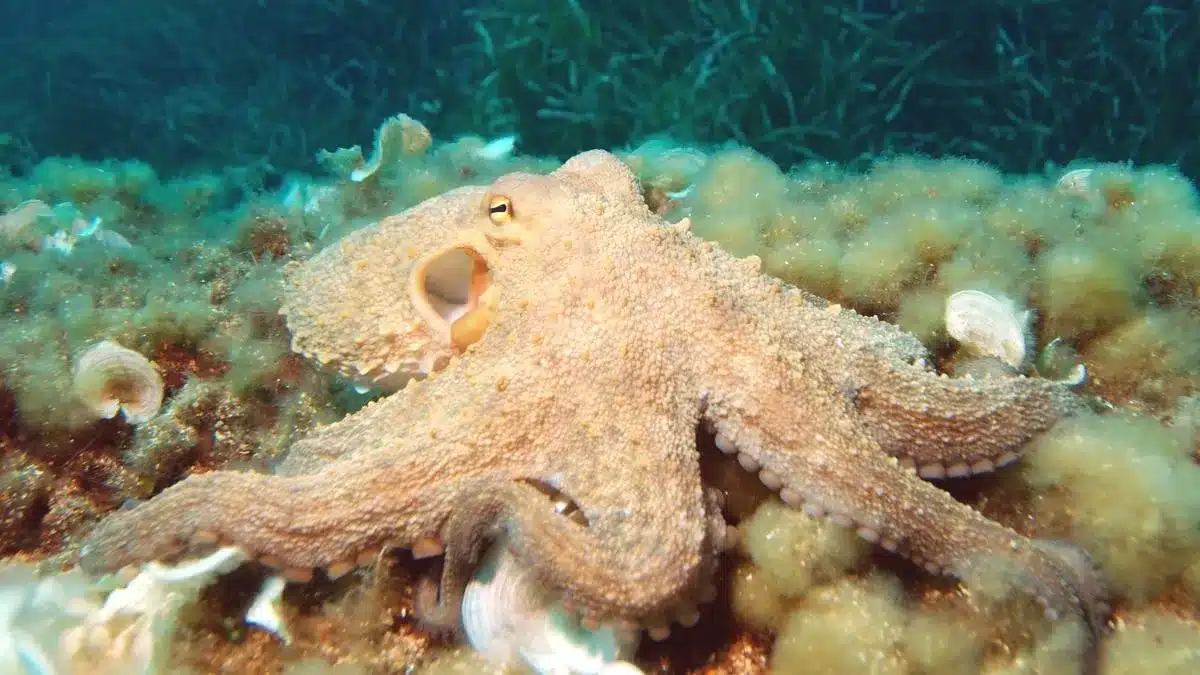
- It is the most morphologically and behaviorally complex class in phylum Mollusca.
- Characteristics
- They are characterized by a completely merged head and foot, with a ring of arms and/or tentacles surrounding the head. The arms, tentacles, and funnel are all derivatives of the foot.
- Locomotion in cephalopods is accomplished mainly by jet propulsion.
- Diet: All cephalopods are carnivorous. Many are skilled hunters, but some feed passively on floating debris.
- They possess well-developed nervous systems and complex sensory organs.
- They contain pigment-rich cells in the epidermis surrounded by cells containing contractile fibers.
- One of the highly complex behaviours that many cephalopods show is visual camouflage. They can open and close tiny sacs just below their skin that contain coloured pigments and reflectors, revealing specific colours.
- The Australian giant cuttlefish, Sepia apama, uses its chromatophores to communicate, creating patterns that attract mates and warn off aggressors.
- This ability can also come in handy for hunting; many cephalopods are ambush predators that blend into the background or even lure their prey.
- It includes the coleoids – cuttlefish, octopus and squid – as well as the chambered nautilus.
- Some Cephalopods live alone in the nearly featureless darkness of the deep ocean; others live socially on active, sunny coral reefs.
- Some cephalopods may be capable of more complicated forms of learning, such as reversal learning – learning to flexibly adjust behaviour when different stimuli signal reward.
Q1: What are Corals?
These are invertebrate animals belonging to a large group of colourful and fascinating animals called Cnidaria. Other animals in this group that you may have seen in rock pools or on the beach include jelly fish and sea anemones.
News: TH


 Last updated on Oct, 2026
→ UPSC 2027 Notification will be released on 13 January 2027 at upsconline.nic.in.
→ Check Nobel Prize 2026 Winners List here.
→ Download PIB PRiSM Monthly Magazine 2026 here.
→ Check UPSC Monthly Current Affairs Magazine The Recitals here.
→ Check out the latest UPSC Syllabus here.
→ Download UPSC Model Answers for Mains 2026
→ UPSC Mains Question Paper 2026 is out now for Essay & GS Paper 1, 2, 3 & 4.
→ UPSC Calendar 2027 has been released.
→ Enroll in Vajiram & Ravi’s UPSC Mains Test Series 2027 for structured answer writing practice, expert evaluation, and exam-oriented feedback.
→ Join Vajiram & Ravi’s UPSC Mentorship Program 2027 for personalized guidance, strategy planning, and one-to-one support from experienced mentors.
→ Go through the UPSC Mains Previous Year Papers to enhance your preparation.
→ UPSC has released UPSC Toppers List 2025 with the Civil Services final result on its official website.
→ Also check Best UPSC Coaching in India
Tags: cephalopods prelims pointers upsc current affairs upsc prelims current affairs