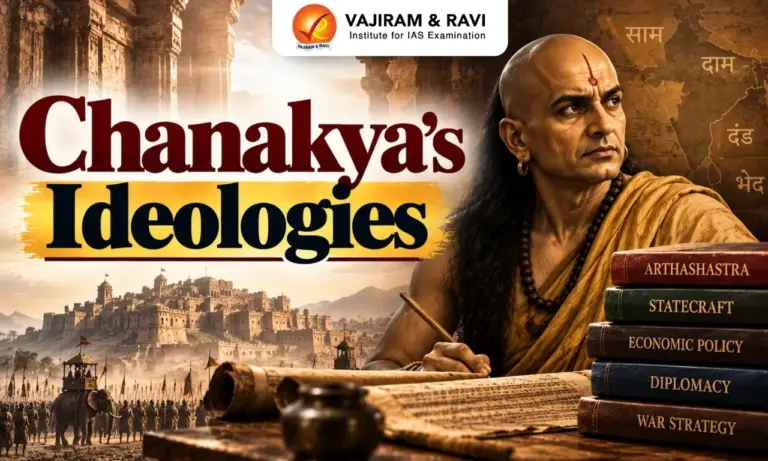
Chanakya’s ideologies cover politics, economics, governance, diplomacy, social welfare and personal ethics. Also known as Kautilya or Vishnugupta, he is traditionally associated with the Arthashastra, an important ancient Indian text on statecraft and administration. His ideas emphasise strong leadership, public welfare, economic stability, strategic planning and national security.
Who Was Chanakya?
Chanakya, also known as Kautilya or Vishnugupta, was an ancient Indian teacher, philosopher, economist, political thinker and royal advisor. He is traditionally associated with the establishment of the Maurya Empire under Chandragupta Maurya in the 4th century BCE.
His ideas combined practical wisdom, political strategy, economic planning and ethical responsibilities. He believed that a successful ruler needed intelligence, discipline, careful planning and an understanding of human behaviour.
What Are Chanakya’s Ideologies?
Chanakya’s ideologies refer to his ideas about governance, politics, economics, diplomacy and personal conduct. He believed that a strong state required effective leadership, economic prosperity, national security and the welfare of its people.
His major principles include:
- Good Governance: Protecting people and ensuring effective administration.
- Political Realism: Making decisions based on practical conditions and state interests.
- Economic Management: Promoting trade, agriculture and fair taxation.
- Strategic Diplomacy: Building alliances and managing relations with rival states.
- National Security: Using intelligence and military preparedness to protect the state.
- Personal Discipline: Emphasising education, self-control, patience and careful decision-making.


Major Texts Associated with Chanakya
Chanakya’s ideas on politics, governance, economics, diplomacy and personal conduct are associated with two major texts: the Arthashastra and Chanakya Neeti. These works discuss state administration as well as practical principles for everyday life.
1. Arthashastra
The Arthashastra is an important ancient Indian treatise on statecraft, governance, economics and political strategy. It is traditionally attributed to Chanakya, also known as Kautilya or Vishnugupta.
- Governance: Explains the duties of the king, the role of ministers and the organisation of government.
- Economic Administration: Discusses taxation, agriculture, trade, public finance and the management of state resources.
- Foreign Policy: Describes diplomacy, alliances, negotiations and strategies for dealing with rival kingdoms.
- National Security: Covers intelligence networks, espionage, military organisation and the protection of the state.
- Law and Justice: Discusses legal procedures, punishments, public order and the administration of justice.
- Welfare of People: Emphasises the importance of protecting the population and maintaining the prosperity and stability of the kingdom.
- Seven Elements of the State: Presents the Saptanga Theory, which identifies seven components of a state: the king, ministers, territory and population, fortified capital, treasury, army and allies.
- Mandala Theory: Explains relationships between neighbouring states and the use of alliances and strategic policies to protect state interests.
2. Chanakya Neeti
Chanakya Neeti is a collection of teachings traditionally attributed to Chanakya. It focuses on practical wisdom, personal discipline, human behaviour, leadership and ethical conduct.
- Personal Discipline: Highlights self-control, patience, hard work and the importance of managing one’s behaviour.
- Education and Knowledge: Emphasises learning, wisdom and the value of knowledge in making sound decisions.
- Leadership: Offers lessons on responsibility, judgement, planning and the qualities needed to guide others.
- Human Behaviour: Discusses trust, friendship, relationships and the need to understand people’s intentions.
- Decision-Making: Encourages careful planning, discretion and thinking about the possible consequences of actions.
- Use of Time: Stresses the importance of acting at the right time and avoiding unnecessary delays.
- Financial Prudence: Supports careful management of wealth and resources and warns against wasteful behaviour.
- Practical Wisdom: Encourages people to learn from experience, recognise risks and act according to circumstances.
Chanakya’s Political Ideologies
Chanakya’s political ideologies focused on strong governance, political stability, national security, strategic diplomacy and public welfare. He believed that an effective ruler should make practical decisions to protect the state and maintain law and order.
- Strong Leadership: A ruler should be disciplined, decisive, knowledgeable and responsible for the administration of the state.
- Welfare of the People: The king should prioritise the safety, prosperity and well-being of his subjects.
- Saptanga Theory: A state consists of seven elements: the king, ministers, territory and population, fortified capital, treasury, army and allies.
- Mandala Theory: States should manage relations with neighbouring kingdoms through strategic alliances, diplomacy and careful assessment of common interests.
- Diplomacy and Alliances: Negotiation, treaties and alliances should be used to protect national interests and prevent unnecessary conflicts.
- Intelligence System: The use of spies and intelligence networks was considered important for identifying threats and gathering information.
- Military Strength: A well-organised and prepared army was necessary to defend the kingdom and maintain stability.
- Law and Order: The ruler should enforce laws, punish wrongdoing and ensure effective administration of justice.
- Practical Decision-Making: Political decisions should be based on circumstances, available resources and the interests of the state.
- Merit-Based Administration: Ministers and officials should be selected based on their abilities, integrity and suitability for their responsibilities.
Raj Dharma and Welfare of the People
Chanakya’s foreign policy ideas focused on diplomacy, strategic alliances, national security and the protection of state interests. He believed that a ruler should understand the intentions and strengths of other states before making foreign policy decisions.
- Mandala Theory: Explains relationships between neighbouring states and the strategic interests that shape their interactions.
- Sandhi (Peace): Making agreements or treaties when cooperation serves the state’s interests.
- Vigraha (Conflict): Choosing confrontation when the ruler considers it necessary under the prevailing circumstances.
- Asana (Neutrality): Remaining neutral or waiting when immediate action is not beneficial.
- Yana (Military Preparation): Preparing for military action when required.
- Samsraya (Seeking Protection): Seeking support or protection from a stronger state when necessary.
- Dvaidhibhava (Dual Policy): Combining cooperation with one state and opposition to another, depending on strategic needs.
- Intelligence Gathering: Collecting reliable information about other states to assess risks and make informed decisions.
- Strategic Alliances: Building partnerships based on mutual interests, security and changing circumstances.
Chanakya’s Foreign Policy Ideologies
Chanakya’s foreign policy ideas focused on diplomacy, strategic alliances, national security and the protection of state interests. He believed that a ruler should understand the intentions and strengths of other states before making foreign policy decisions.
- Mandala Theory: Explains relationships between neighbouring states and the strategic interests that shape their interactions.
- Sandhi (Peace): Making agreements or treaties when cooperation serves the state’s interests.
- Vigraha (Conflict): Choosing confrontation when the ruler considers it necessary under the prevailing circumstances.
- Asana (Neutrality): Remaining neutral or waiting when immediate action is not beneficial.
- Yana (Military Preparation): Preparing for military action when required.
- Samsraya (Seeking Protection): Seeking support or protection from a stronger state when necessary.
- Dvaidhibhava (Dual Policy): Combining cooperation with one state and opposition to another, depending on strategic needs.
- Intelligence Gathering: Collecting reliable information about other states to assess risks and make informed decisions.
- Strategic Alliances: Building partnerships based on mutual interests, security and changing circumstances.
Mandala Theory
Mandala Theory, explained in the Arthashastra traditionally attributed to Chanakya, describes relationships between states based on their geographical position and political interests. It suggests that rulers should assess neighbouring kingdoms, potential allies and rivals before making foreign policy decisions.
- Neighbouring States: A neighbouring ruler may be a potential rival because of competing interests.
- Potential Allies: States beyond an immediate rival may become allies when their interests align.
- Strategic Alliances: Rulers should build partnerships based on mutual interests and security needs.
- Diplomacy and Negotiation: Treaties and negotiations can help achieve political objectives without unnecessary conflict.
- Assessment of Power: A ruler should evaluate the military strength, resources and intentions of other states.
- Changing Relationships: Alliances and rivalries may change as political circumstances and interests evolve.
- National Interest: Foreign policy decisions should consider the security, stability and interests of the state.
Saptanga Theory
Saptanga Theory is Chanakya’s model of the seven essential elements of a state, discussed in the Arthashastra. It explains that a stable and effective kingdom depends on the strength and coordination of all seven elements.
- Swami (The King): The ruler responsible for leadership, administration and decision-making.
- Amatya (Ministers): Officials and advisers who assist in governance and policy implementation.
- Janapada (Territory and Population): The land, natural resources and people that form the foundation of the state.
- Durga (Fortified Capital): Fortifications and protected centres that support defence and administration.
- Kosha (Treasury): The state’s financial resources required for governance, public works and defence.
- Danda or Bala (Army and Force): The military and enforcement capabilities needed to protect the state and maintain order.
- Mitra (Allies): Friendly states and external partners that provide diplomatic and strategic suppor
Chanakya’s Economic Ideologies
Chanakya considered economic prosperity essential for a strong and stable state. His economic ideas covered taxation, agriculture, trade, public finance and the responsible management of resources.
- Agricultural Development: Agriculture should receive attention because it supports livelihoods, food supplies and state revenue.
- Fair Taxation: Taxes should generate revenue for the state without placing an excessive burden on the population.
- Trade and Commerce: Markets, trade routes and commercial activities should be regulated to support economic activity.
- Public Finance: The treasury should be managed carefully to meet administrative, defence and public welfare needs.
- Resource Management: Natural resources, forests, mines and other productive assets should be managed effectively.
- Prevention of Corruption: Officials responsible for public funds should be supervised to reduce financial misconduct.
- Price and Market Regulation: The state should monitor markets and take action against practices such as fraud and unlawful trade.
- Employment and Production: Productive activities should be encouraged to strengthen livelihoods and increase state prosperity.
- Economic Security: A financially stable state is better equipped to manage emergencies, defend itself and support its people.
Chanakya’s Ethical and Personal Ideologies
Chanakya’s teachings on personal conduct emphasised discipline, knowledge, prudence, self-control and thoughtful decision-making. These principles encouraged individuals to consider the consequences of their actions and learn from experience.
- Self-Discipline: Controlling impulses and habits helps people remain focused on their goals.
- Importance of Education: Knowledge and learning improve judgement and help individuals respond to challenges.
- Careful Decision-Making: Important decisions should be based on information, planning and an understanding of possible outcomes.
- Time Management: Time should be used productively, and unnecessary delays should be avoided.
- Prudence in Relationships: People should assess trust and behaviour carefully when forming personal or professional relationships.
- Confidentiality: Sensitive plans and information should be shared thoughtfully when disclosure could create risks.
- Learning from Experience: Mistakes and past experiences can help improve future decisions.
- Financial Discipline: Saving resources and avoiding unnecessary expenditure can improve financial stability.
- Adaptability: Individuals should adjust their approach according to changing circumstances.
Chanakya’s Ideologies in the Modern World
Chanakya’s ideas remain relevant to discussions on leadership, governance, economic management, diplomacy and strategic planning. However, they should be interpreted in the context of modern democratic values, constitutional rights and ethical standards.
- Good Governance: Public institutions can apply principles of accountability, administrative efficiency and responsible use of public funds.
- Leadership and Management: Planning, delegation, discipline and performance monitoring can help leaders manage organisations effectively.
- Economic Policy: His attention to taxation, agriculture, trade and public finance offers historical perspectives on economic administration.
- Foreign Relations: Strategic assessment, negotiation and alliance-building remain important elements of international relations.
- National Security: Intelligence, risk assessment and preparedness are relevant to protecting national interests within the law.
- Anti-Corruption Measures: Monitoring officials and public expenditure can support transparency and responsible administration.
- Crisis Management: Planning ahead and managing resources carefully can help governments and organisations respond to emergencies.
- Personal Development: Self-discipline, continuous learning and careful decision-making can improve personal and professional effectiveness.
- Business Strategy: Understanding competitors, assessing risks and using resources efficiently can inform business planning.

 Last updated on Oct, 2026
→ UPSC 2027 Notification will be released on 13 January 2027 at upsconline.nic.in.
→ Check Nobel Prize 2026 Winners List here.
→ Download PIB PRiSM Monthly Magazine 2026 here.
→ Check UPSC Monthly Current Affairs Magazine The Recitals here.
→ Check out the latest UPSC Syllabus here.
→ Download UPSC Model Answers for Mains 2026
→ UPSC Mains Question Paper 2026 is out now for Essay & GS Paper 1, 2, 3 & 4.
→ UPSC Calendar 2027 has been released.
→ Enroll in Vajiram & Ravi’s UPSC Mains Test Series 2027 for structured answer writing practice, expert evaluation, and exam-oriented feedback.
→ Join Vajiram & Ravi’s UPSC Mentorship Program 2027 for personalized guidance, strategy planning, and one-to-one support from experienced mentors.
→ Go through the UPSC Mains Previous Year Papers to enhance your preparation.
→ UPSC has released UPSC Toppers List 2025 with the Civil Services final result on its official website.
→ Also check Best UPSC Coaching in India
Chanakya’s Ideologies FAQs
Q1. Who was Chanakya?+
Q2. What were Chanakya’s main ideologies?+
Q3. What is Chanakya’s Saptanga Theory?+
Q4. What is Chanakya’s Mandala Theory?+
Q5. What did Chanakya say about good governance?+
Q6. What were Chanakya’s economic ideas?+
Tags: chanakya chanakya’s chanakya’s ideologies