About Lithium brine extraction:
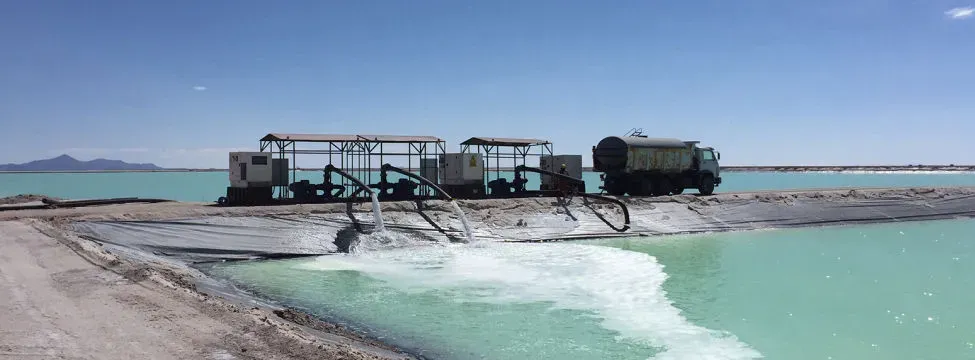
- Lithium brine extraction is a process where salt-rich water is pumped to the surface and into evaporation ponds to extract lithium.
- This method is prevalent in salt flats like Chile’s Atacama, one of the world’s largest lithium sources.
- Cause of sinking: The subsidence is occurring because the rate of lithium-rich brine pumping exceeds the natural recharge rate of the aquifers, leading to a downward movement of the Earth’s surface.
- Area of concern: The most affected region is in the southwest part of the salt flat, where lithium mining operations are concentrated.
- The sinking area measures approximately 8 km from north to south and 5 km from east to west.
What is Lithium?
- Lithium, often referred to as “white gold,” is a highly sought-after metal crucial for the production of rechargeable batteries used in laptops, mobile phones, and electric vehicles—an essential component in global efforts to combat climate change.
Environmental impact of Lithium Mining:
- Water scarcity: The extraction process is water-intensive; it requires approximately 2,000 tons of water to produce just one ton of lithium.
- This is particularly problematic in the Atacama Desert, where water is already scarce, affecting indigenous communities and local wildlife.
- Chemical contamination: Chemicals like sulfuric acid and sodium hydroxide used in lithium extraction contaminate the soil and water, posing a severe threat to ecosystems and endangering species.
Impact on Wildlife: A 2022 study highlighted that lithium mining has led to a decline in the flamingo population in the Atacama region due to reduced water levels, affecting their reproduction.
Q1. What is Lithium-ion battery?
A lithium-ion battery is a type of rechargeable battery that uses lithium ions as the primary component in its electrochemical system. It is widely used in portable electronic devices, electric vehicles, and various energy storage applications.


 Last updated on Sep, 2026
→ UPSC 2027 Notification will be released on 13 January 2027 at upsconline.nic.in.
→ Asian Games 2026 are being held in Aichi-Nagoya, Japan, from 19 September to 4 October.
→ Check out the latest UPSC Syllabus here.
→ Download UPSC Model Answers for Mains 2026
→ UPSC Mains Question Paper 2026 is out now for Essay & GS Paper 1, 2, 3 & 4.
→ UPSC Calendar 2027 has been released.
→ Enroll in Vajiram & Ravi’s UPSC Mains Test Series 2027 for structured answer writing practice, expert evaluation, and exam-oriented feedback.
→ Join Vajiram & Ravi’s UPSC Mentorship Program 2027 for personalized guidance, strategy planning, and one-to-one support from experienced mentors.
→ Go through the UPSC Mains Previous Year Papers to enhance your preparation.
→ UPSC has released UPSC Toppers List 2025 with the Civil Services final result on its official website.
→ Also check Best UPSC Coaching in India