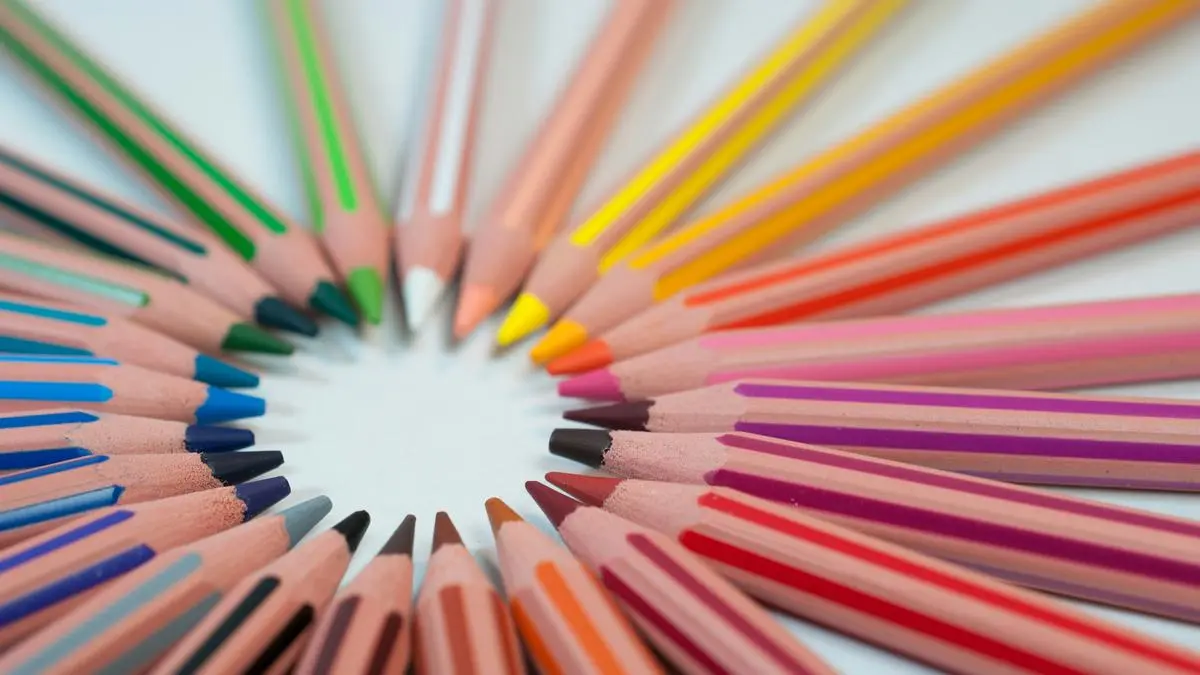
About Colours:
- It is a type of information our eyes receive and process based on electromagnetic radiation.
- An object is said to have a colour based on frequencies of visible-light radiation it absorbs, reflects, and/or scatters, we can perceive the object to have a particular colour.
- How do human eyes identify colours?
- In the human eye, the rod and the cone cells receive information in the light that strikes the eye: the rod cells record brightness while the cone cells record the wavelengths, which the human brain interprets as colour.
- Human beings have three types of cone cells. Each type is sensitive to light of a different wavelength, and they work together to input colour information to the brain.
- The possession of three types of cone cells is why humans are called trichromats.
- Similarly, while human vision is restricted to wavelengths from 400 nm to 700 nm (visible light), honeybees can also ‘see’ ultraviolet light and mosquitoes and some beetles can access information in some wavelengths of infrared radiation.
How are colours rendered?
- There are two broad ways to render colours:
- Additive colouring: In this, light of different wavelengths is ‘mixed’ to yield light of one combined colour. The colours on your smartphone screens and television sets are produced in this way.
- Subtractive colouring: In subtractive colouring, a colour is rendered by passing white light through a medium that absorbs, or takes away, specific wavelengths of light, leaving the rest to render a particular colour.
- The typical examples include dyes, pigments, and inks.
Q1: What is a Neuromorphic camera?
A neuromorphic camera mimics the way the human retina converts light into electrical impulses.
Source: What are colours and how do people understand them? | Explained


 Last updated on Oct, 2026
→ UPSC 2027 Notification will be released on 13 January 2027 at upsconline.nic.in.
→ Check Nobel Prize 2026 Winners List here.
→ Download PIB PRiSM Monthly Magazine 2026 here.
→ Check UPSC Monthly Current Affairs Magazine The Recitals here.
→ Check out the latest UPSC Syllabus here.
→ Download UPSC Model Answers for Mains 2026
→ UPSC Mains Question Paper 2026 is out now for Essay & GS Paper 1, 2, 3 & 4.
→ UPSC Calendar 2027 has been released.
→ Enroll in Vajiram & Ravi’s UPSC Mains Test Series 2027 for structured answer writing practice, expert evaluation, and exam-oriented feedback.
→ Join Vajiram & Ravi’s UPSC Mentorship Program 2027 for personalized guidance, strategy planning, and one-to-one support from experienced mentors.
→ Go through the UPSC Mains Previous Year Papers to enhance your preparation.
→ UPSC has released UPSC Toppers List 2025 with the Civil Services final result on its official website.
→ Also check Best UPSC Coaching in India