Key Findings
- Previous analyses of ancient genomic data have suggested that two major genetic turnover events occurred in Western Eurasia;
- One associated with the spread of farming around 7,000-6,000 BC and a second resulting from the expansion of pastoralist groups from the Eurasian steppe starting around 3,300 BC.
- The period between these two events, the Copper Age, was characterized by a new economy based on metallurgy, wheel and wagon transportation, and horse domestication.
- However, what happened between the demise of Copper Age settlements (around 4,250 BC) and the expansion of pastoralists is not well understood.
- The recent study revealed that early contact and admixture between Copper Age farming groups from south-eastern Europe and Neolithic groups from the steppe zone in today’s southern Ukraine, possibly starting in the 5,500 BC when settlement densities shifted further north.
- The early admixture during the Neolithic appears to be local to the NW Black Sea region of the fourth millennium BC and did not affect the hinterland in southeastern Europe.
About Copper Age:
- The Chalcolithic period, also known as the Copper Age.
- It describes a transitional period in human prehistory between the Neolithic period (New Stone Age) and the Bronze Age.
- It is characterized by the use of both stone tools and the beginning of metalworking, specifically the utilization of copper.
- One of the defining characteristics of this period is the simultaneous use of stone tools and early metal objects, primarily copper.
- In India, it spanned around 2000 BC to 700 BC.
- This culture was mainly seen in the Pre-Harappan phase, but at many places it extended to the Post-Harappan phase too.
- The people were mostly rural and lived near hills and rivers.
- The Chalcolithic culture corresponds to the farming communities, namely Kayatha, Ahar or Banas, Malwa, and Jorwe.
- The people of this age started doing animal husbandry and agriculture.
- Apart from wheat, rice, they used to grow pulse crops like millet, lentil, urad and moong etc.
Q1) What is the Neolithic period?
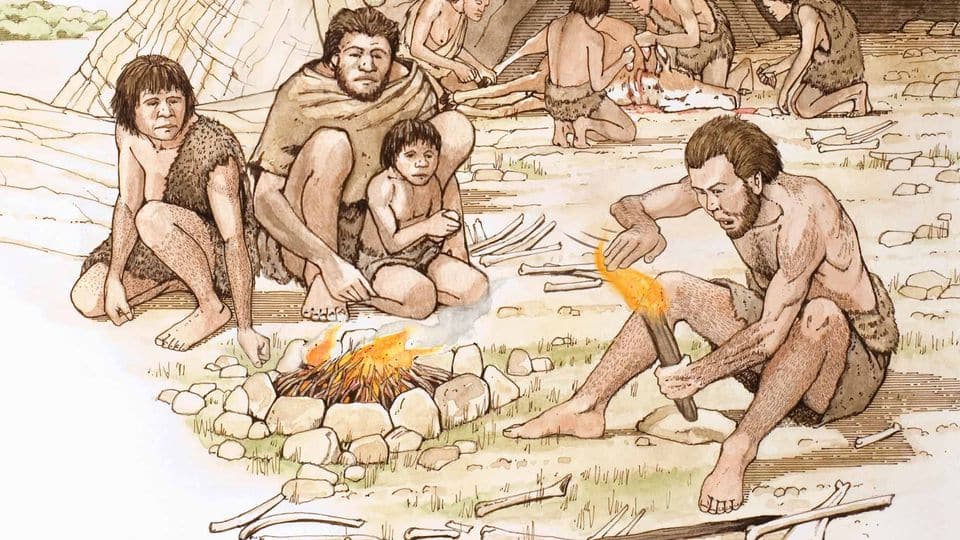
The Neolithic period, also known as the New Stone Age, is a significant period in human history that represents the transition from a nomadic, hunter-gatherer lifestyle to settled agriculture and the domestication of plants and animals.
Source: Ancient genomic data shed light on the demise of the Copper Age


 Last updated on Oct, 2026
→ UPSC 2027 Notification will be released on 13 January 2027 at upsconline.nic.in.
→ Check Nobel Prize 2026 Winners List here.
→ Download PIB PRiSM Monthly Magazine 2026 here.
→ Check UPSC Monthly Current Affairs Magazine The Recitals here.
→ Check out the latest UPSC Syllabus here.
→ Download UPSC Model Answers for Mains 2026
→ UPSC Mains Question Paper 2026 is out now for Essay & GS Paper 1, 2, 3 & 4.
→ UPSC Calendar 2027 has been released.
→ Enroll in Vajiram & Ravi’s UPSC Mains Test Series 2027 for structured answer writing practice, expert evaluation, and exam-oriented feedback.
→ Join Vajiram & Ravi’s UPSC Mentorship Program 2027 for personalized guidance, strategy planning, and one-to-one support from experienced mentors.
→ Go through the UPSC Mains Previous Year Papers to enhance your preparation.
→ UPSC has released UPSC Toppers List 2025 with the Civil Services final result on its official website.
→ Also check Best UPSC Coaching in India